Artwork
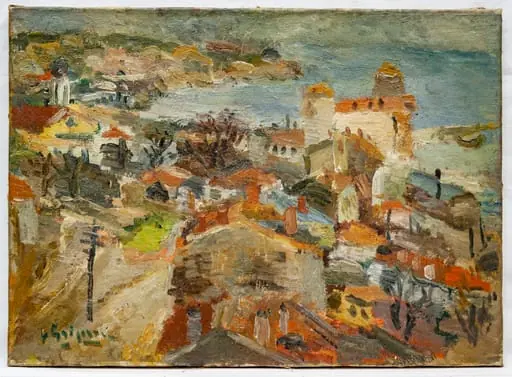
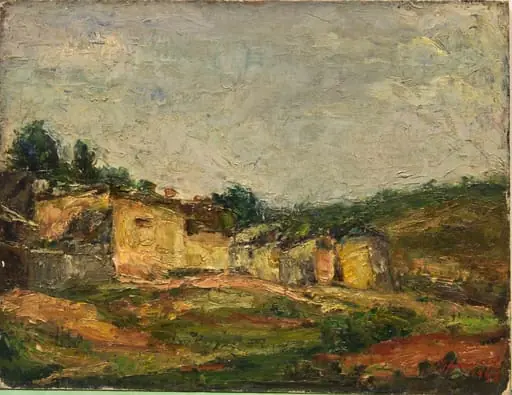
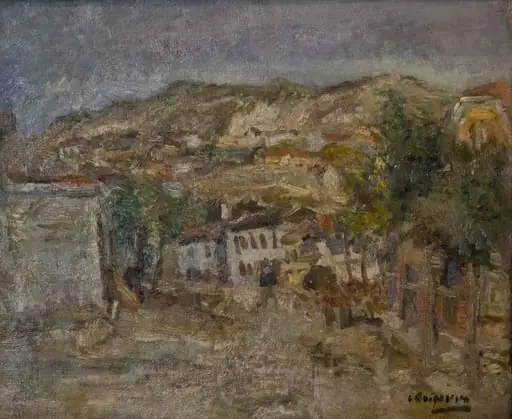
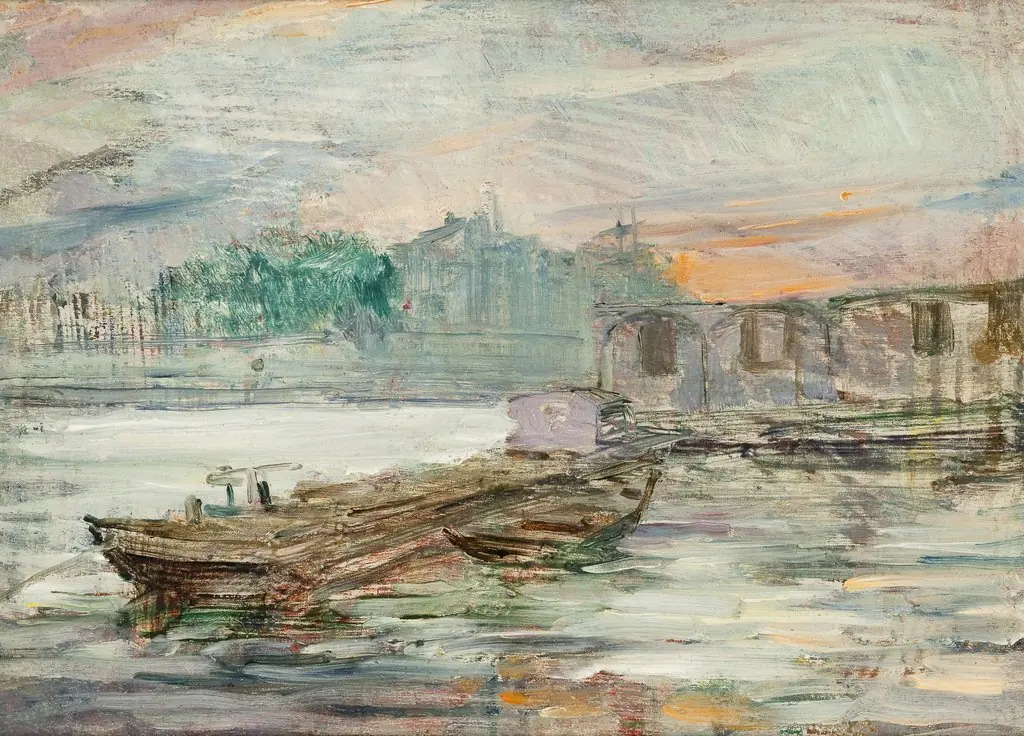
Marinha perto de Marselha (Aldeia Fantástica)
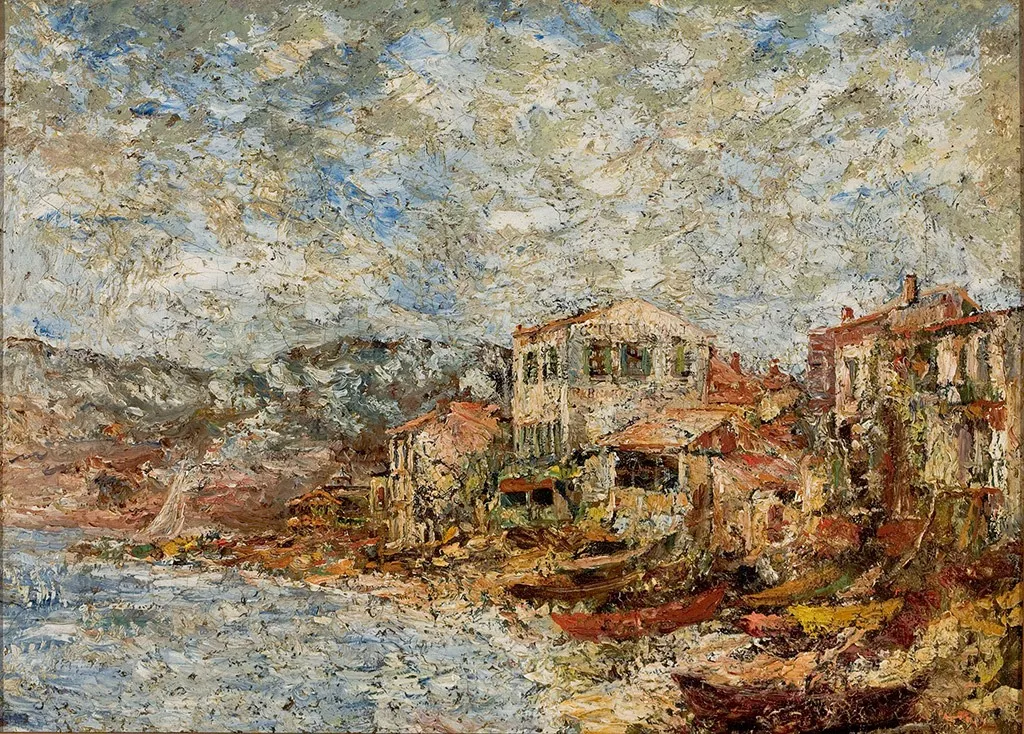
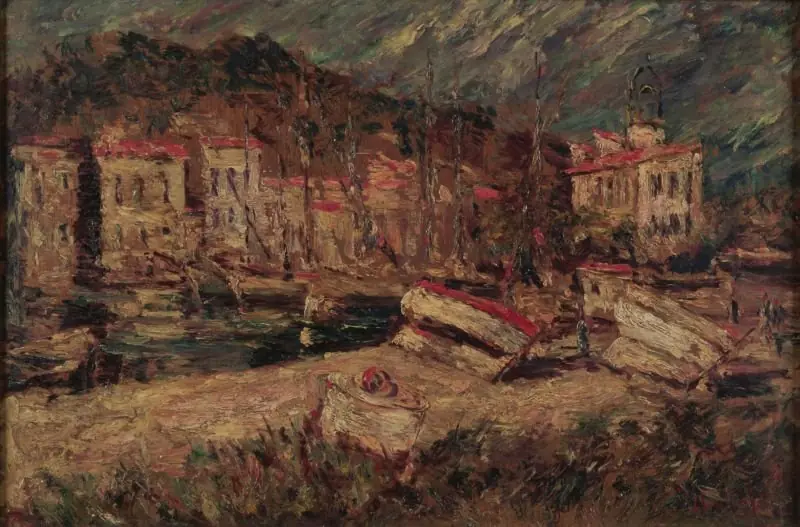
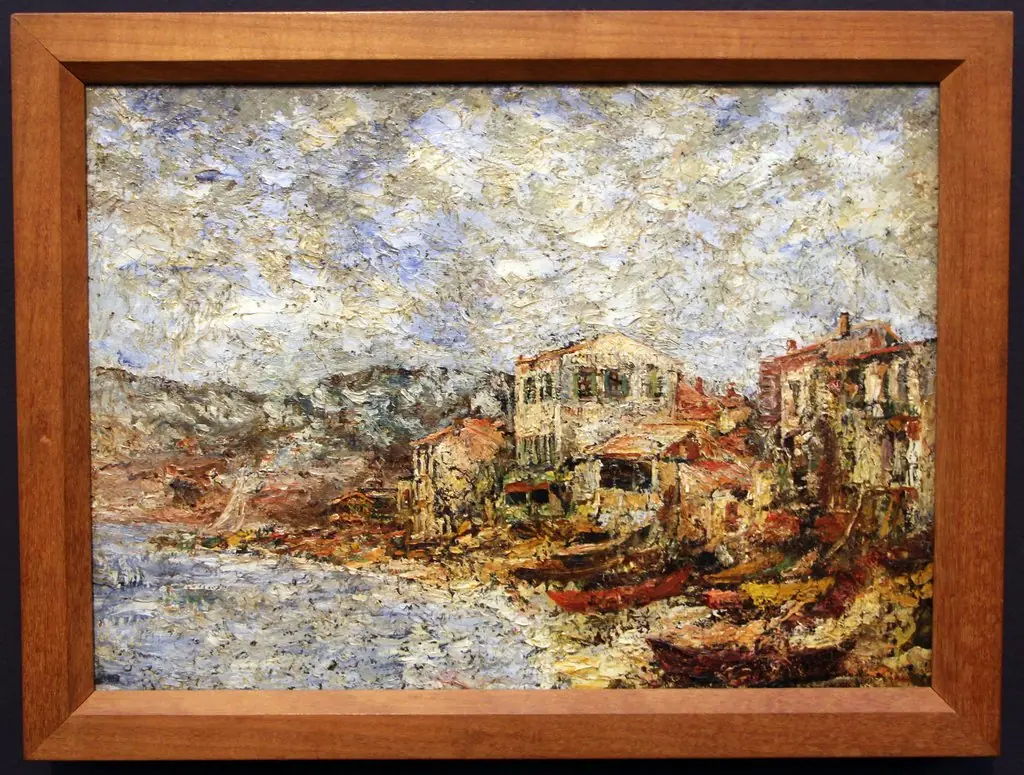
Marinha perto de Marselha (Aldeia Fantástica) is an oil painting by the French Romanticist artist Adolphe Joseph Thomas Monticelli. It dates from 1865 and is held in the collection of the São Paulo Museum of Art.
About this work
Overview
Though active in the decades before Impressionism emerged, his approach diverged from strict realism, favoring atmospheric suggestion over precise detail.
Adolphe Joseph Thomas Monticelli painted *Marinha perto de Marselha (Aldeia Fantástica)* circa 1865, using oil on canvas to capture a coastal scene near Marseille. Though active in the decades before Impressionism emerged, his approach diverged from strict realism, favoring atmospheric suggestion over precise detail. The work resides today in the São Paulo Museum of Art, where it stands as an example of his distinctive, emotionally charged landscapes.
Subject & Meaning
The painting presents a quiet Mediterranean shoreline, with clustered buildings hugging the coast and calm water reflecting the sky. Distant mountains frame the horizon, anchoring the scene in geographical reality while the title’s reference to a 'fantastic village' hints at an idealized, almost dreamlike quality. Monticelli does not document a specific place but evokes a mood of stillness and poetic retreat from urban life.
Technique & Style
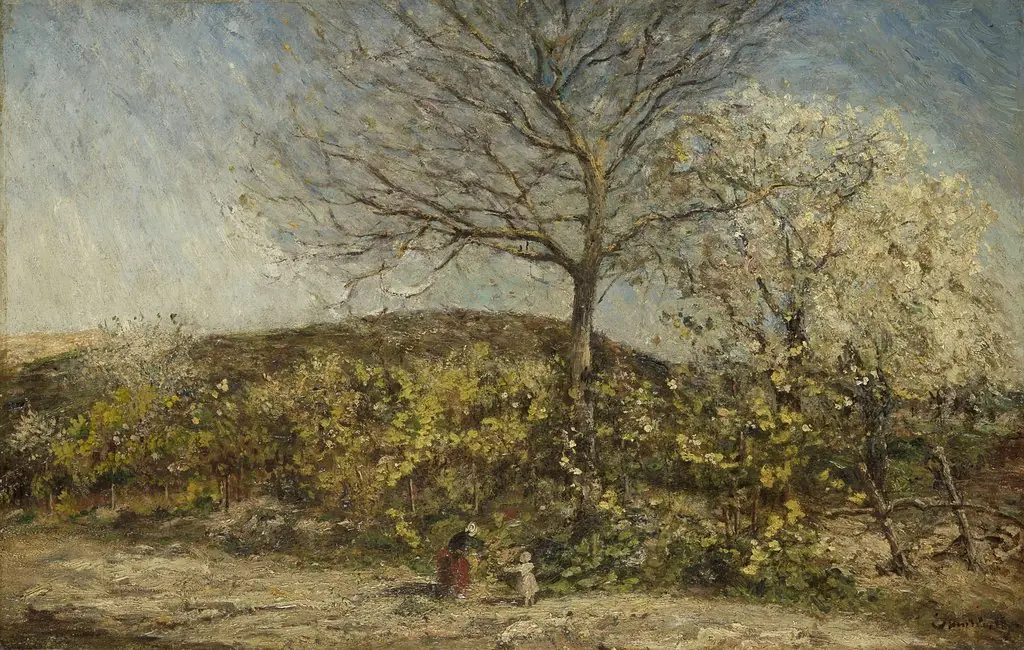
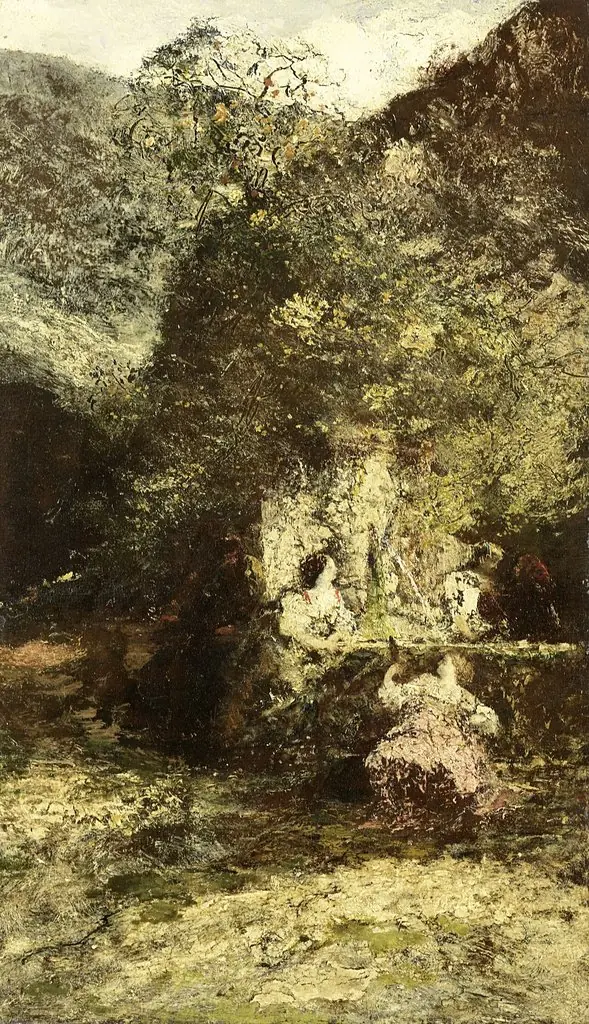
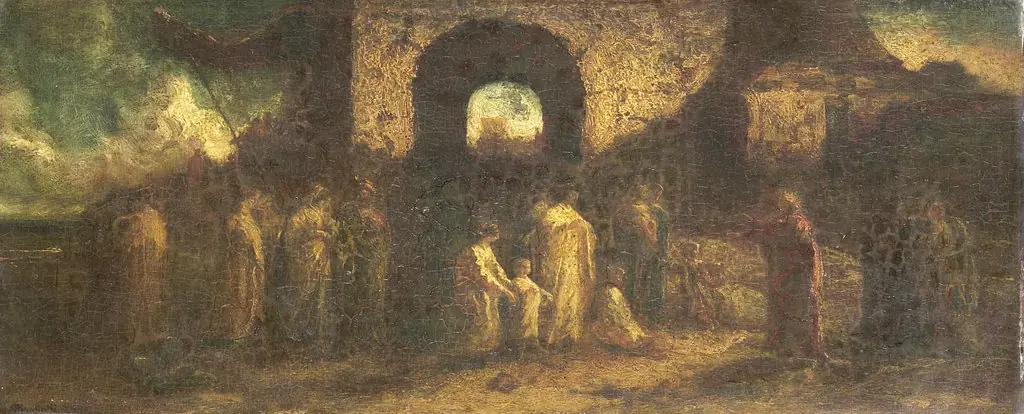
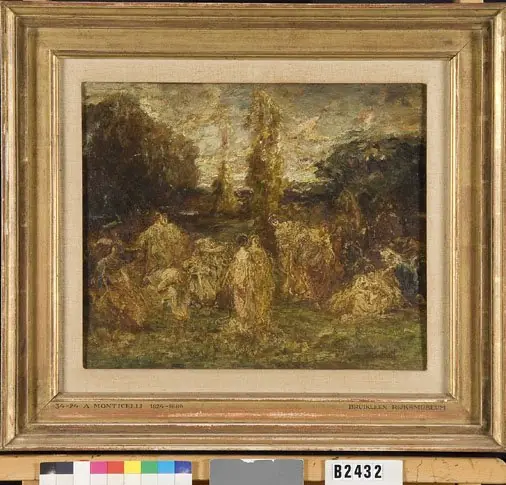
Monticelli applied oil paint with thick, textured brushwork, building surfaces that catch light unevenly and suggest movement. His palette leans toward subdued blues, greens, and earth tones, with occasional brighter accents that draw the eye without disrupting harmony. The loose handling of forms and emphasis on tone over line align with Romantic sensibilities, prioritizing emotional resonance over topographical accuracy.
History & Provenance
Created in the mid-1860s, the painting entered the collection of the São Paulo Museum of Art in the 20th century, likely through acquisitions focused on 19th-century European works. Its journey from France to Brazil reflects broader patterns of transatlantic art collecting. Monticelli’s reputation during his lifetime was modest, and this work remained relatively obscure until later scholarly interest in post-Romantic painters revived attention to his unique style.
Context
Monticelli worked during a period when French painting was shifting from Romanticism toward Realism and Impressionism. While contemporaries like Courbet sought objective truth, Monticelli pursued lyrical expression, influenced by Delacroix’s colorism and the emotional intensity of early Romanticism. His work, though not widely exhibited in his time, anticipated the expressive brushwork later embraced by the Impressionists and Post-Impressionists.
Legacy
Though largely overlooked in his lifetime, Monticelli’s bold brushwork and emotional color use later attracted the attention of artists such as Cézanne, who admired his freedom from academic conventions. *Marinha perto de Marselha (Aldeia Fantástica)* exemplifies this bridge between Romanticism and modernism, offering a quiet but influential model for how paint itself could convey inner feeling rather than external reality.
Artist & collection

Artist
Adolphe Joseph Thomas Monticelli
Adolphe Joseph Thomas Monticelli (October 14, 1824 – June 29, 1886) was a French painter of the generation preceding the Impressionists.