Artwork
Forest of Pierrefonds
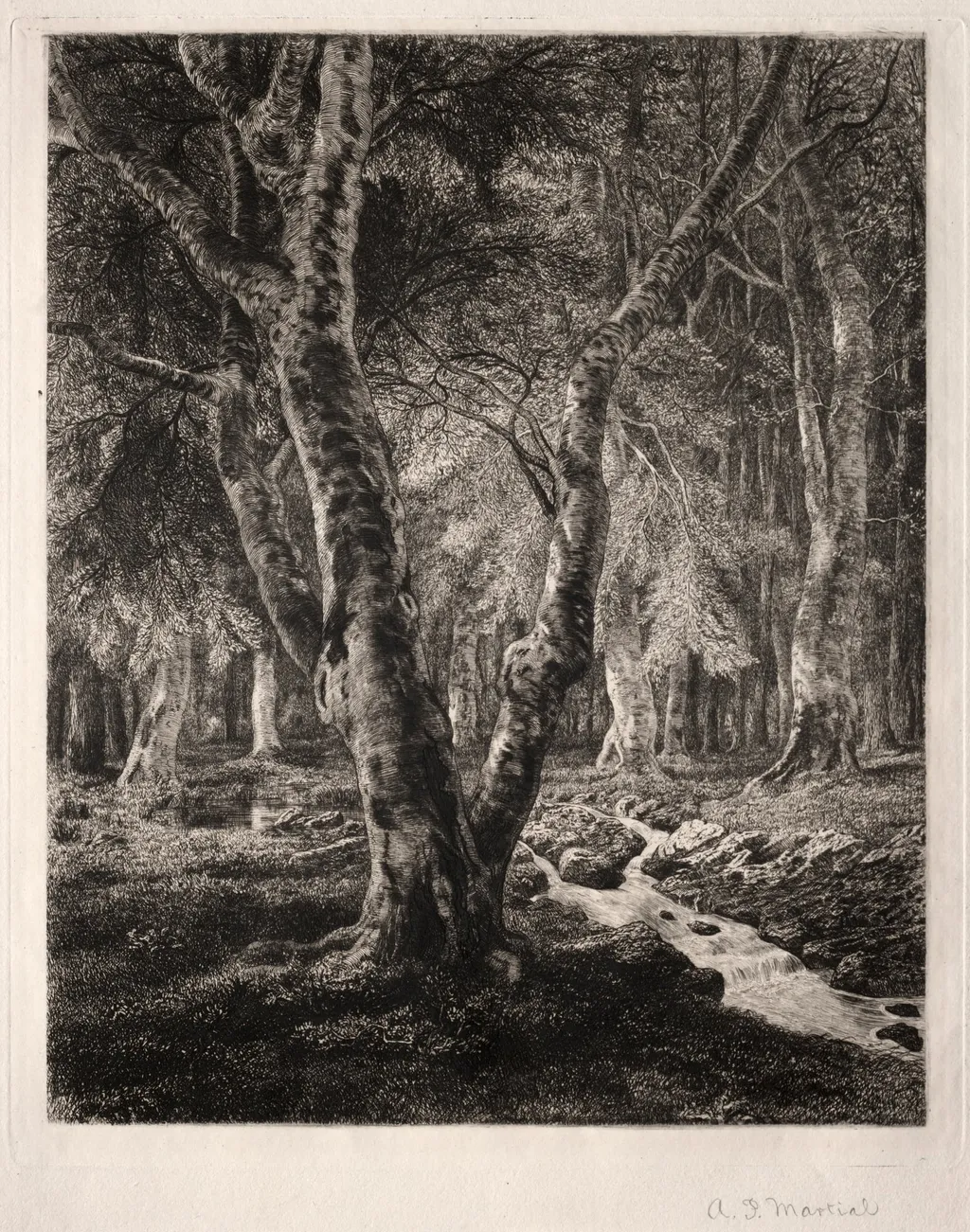
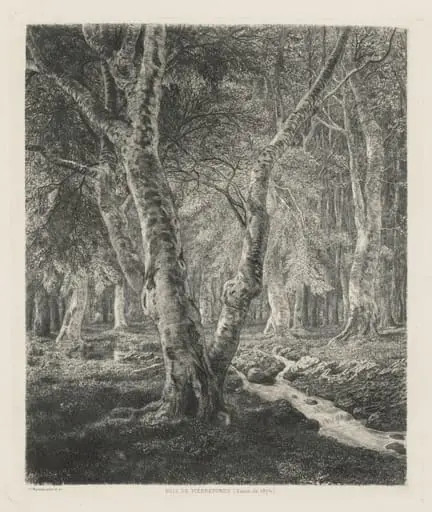
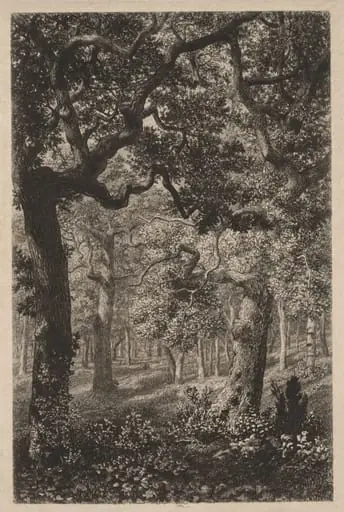
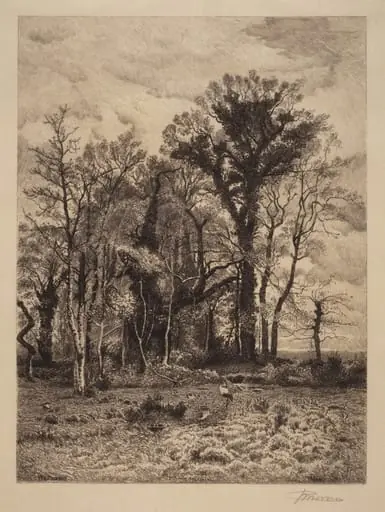
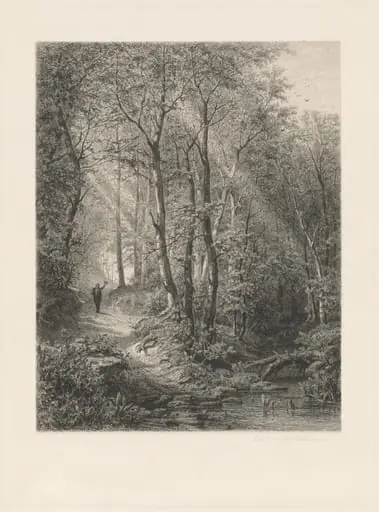
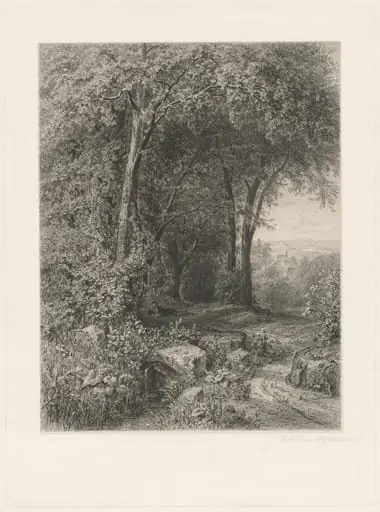
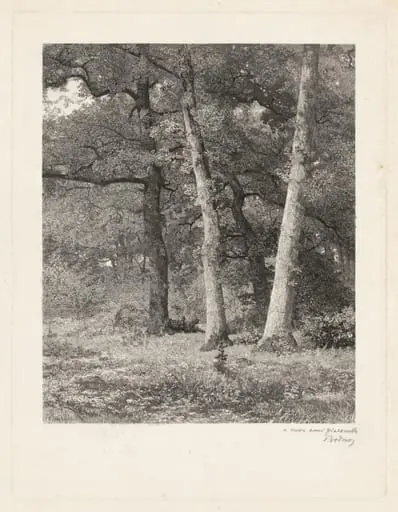
Forest of Pierrefonds is a print by the Impressionist artist Adolphe Martial-Potémont. It dates from 1874 and is held in the collection of the Cleveland Museum of Art. Created in 1874 by Adolphe Théodore Jules Martial Potémont, this print depicts a dense woodland near Pierrefonds.
About this work
Overview
Created in 1874 by Adolphe Théodore Jules Martial Potémont, this print depicts a dense woodland near Pierrefonds. Executed in a tonal, atmospheric style, it captures the quiet stillness of a forest interior. The work resides in The Cleveland Museum of Art’s collection, representing a moment in French printmaking when artists turned toward unidealized natural scenes.
Subject & Meaning
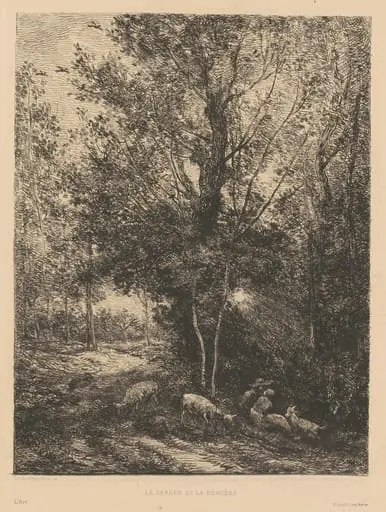
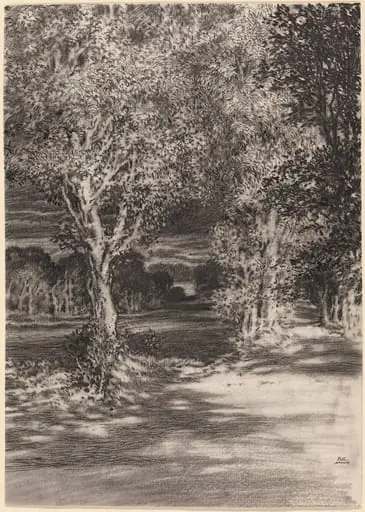
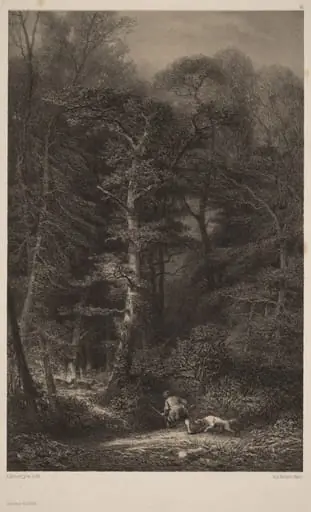
The scene portrays a secluded forest with towering trees, a narrow stream, and minimal light filtering through the canopy. No human figures appear, emphasizing solitude and the dominance of nature. The mood is introspective, suggesting a contemplative engagement with the wild, untouched landscape rather than a picturesque ideal.
Technique & Style
Potémont employed fine, incised lines to render the rough bark and deep shadows, creating texture through direct manipulation of the printing surface. The composition relies on contrast between dark, dense foliage and faint, scattered light. This approach aligns with the Realist tendency to prioritize observed detail over romanticized composition.
History & Provenance
The print was made in 1874 during a period when French artists increasingly sought authenticity in landscape representation. It entered the Cleveland Museum of Art’s collection through documented acquisition, though its earlier ownership history remains unrecorded in public sources.
Context
In 1870s France, a shift occurred in artistic practice toward depicting ordinary, unembellished nature. Artists rejected idealized pastoral scenes in favor of direct observation. Potémont’s work reflects this movement, aligning with contemporaries who valued the quiet truth of rural environments over theatrical composition.
Legacy
Though not widely exhibited today, the print stands as a quiet example of 19th-century French printmaking’s engagement with Realism. It contributes to a broader understanding of how artists used the medium to explore mood, texture, and the subtleties of natural light beyond traditional academic norms.
Own this work as a print
Artist & collection
Artist
Adolphe Martial-Potémont (1827–1883) was a French artist, born in Paris.