Artwork
Madonna with Female Saint
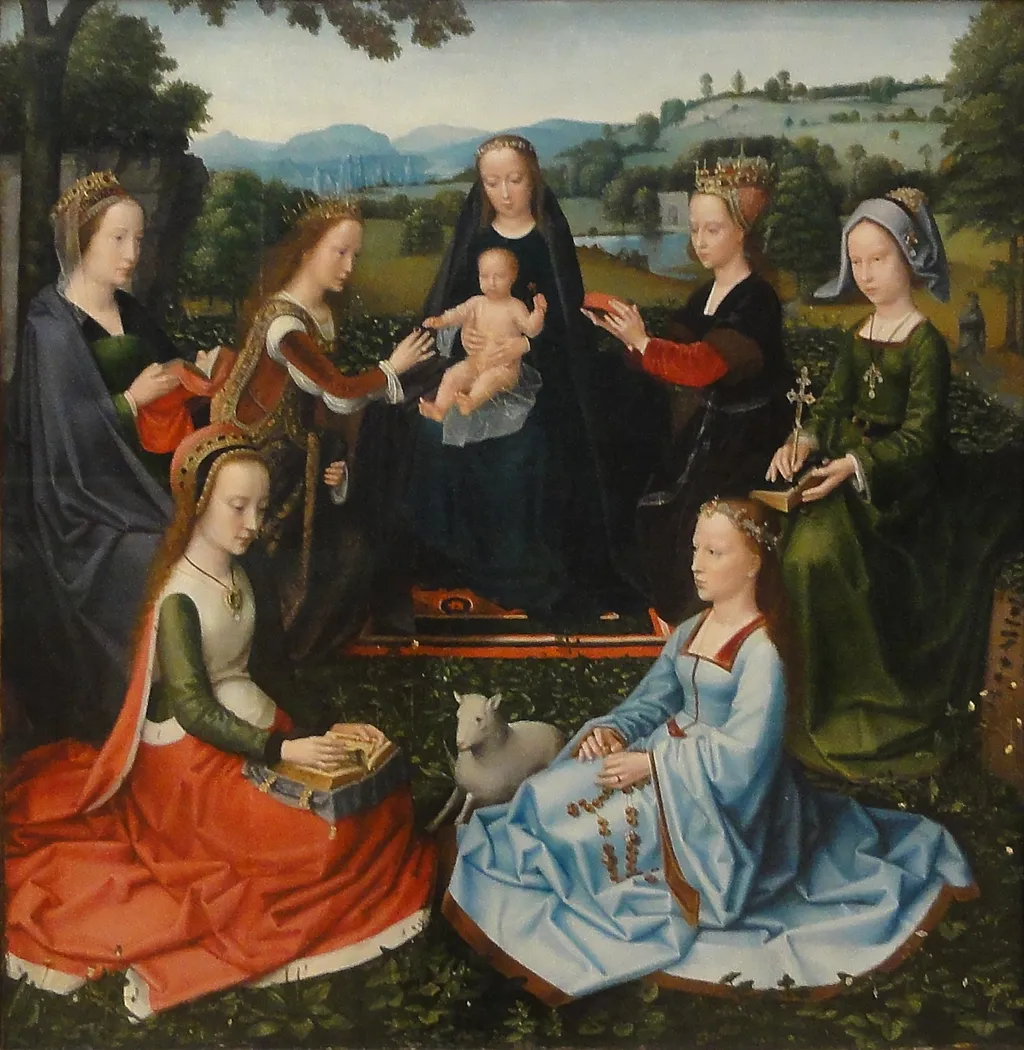
Madonna with Female Saint is an oil painting by the Early Baroque Italian artist Adriaen Isenbrandt. It dates from 1550 and is held in the collection of the Bavarian State Painting Collections.
About this work
Overview
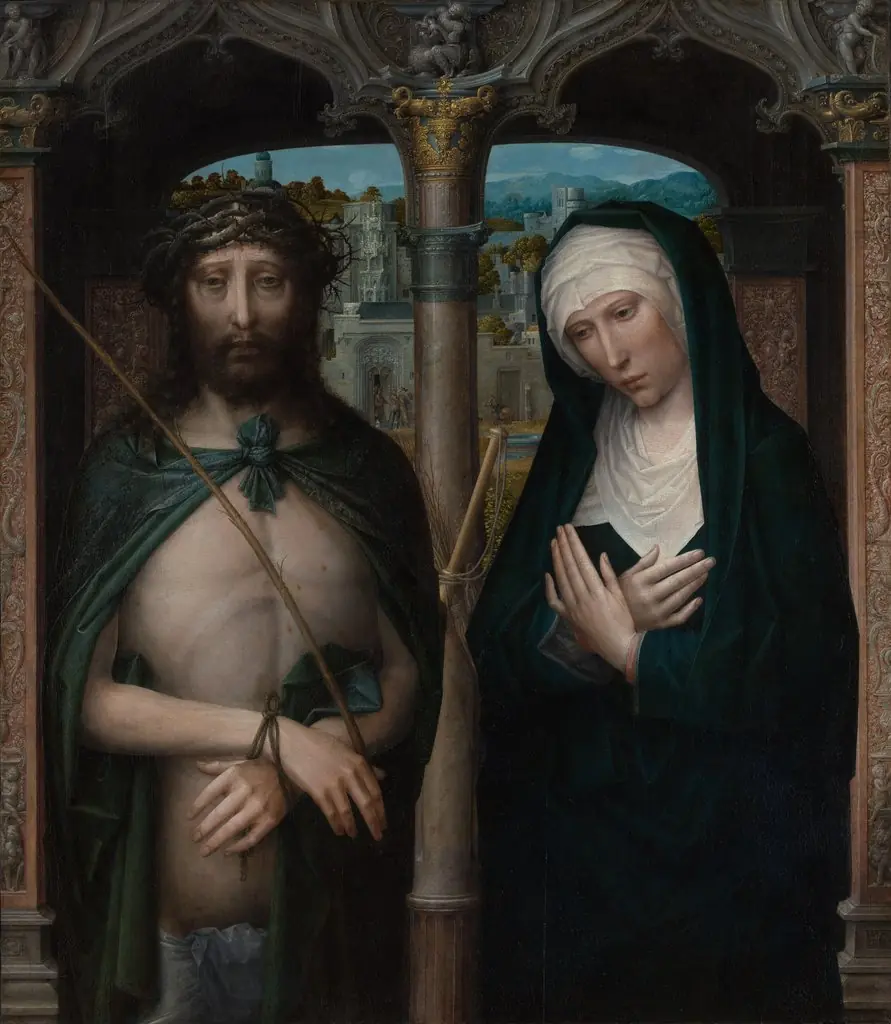
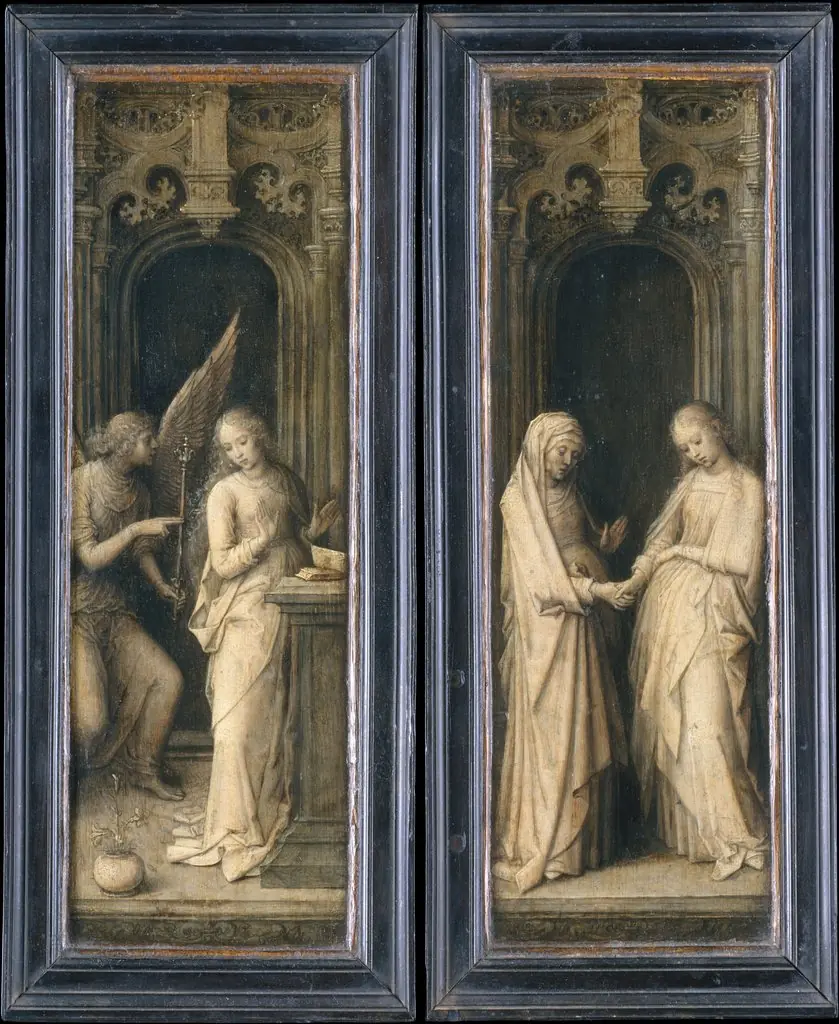
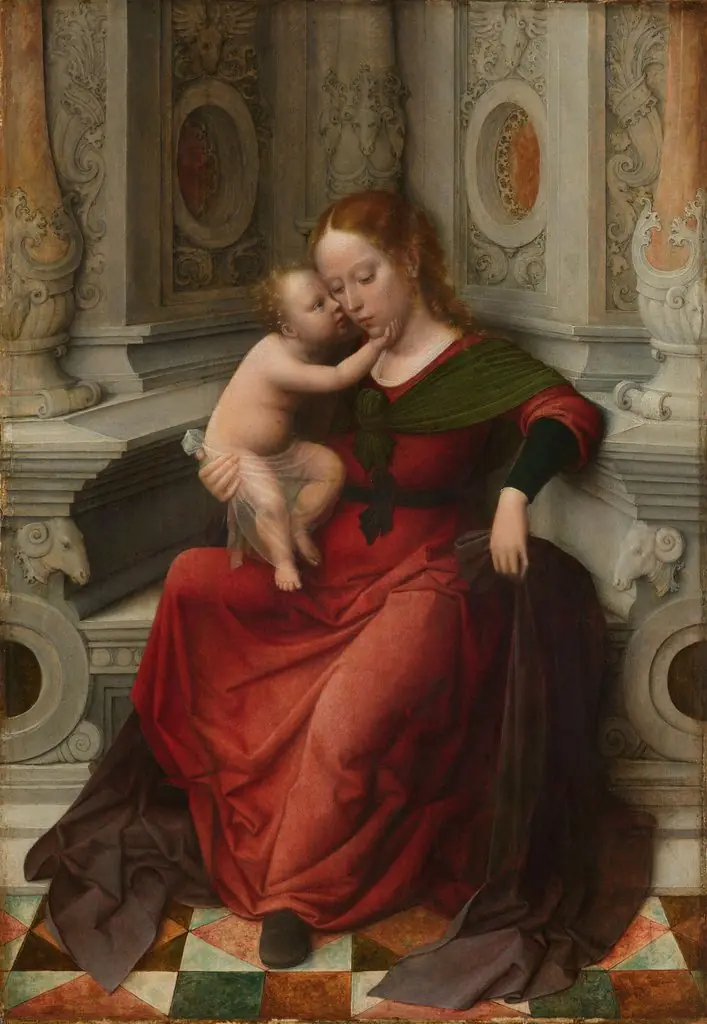
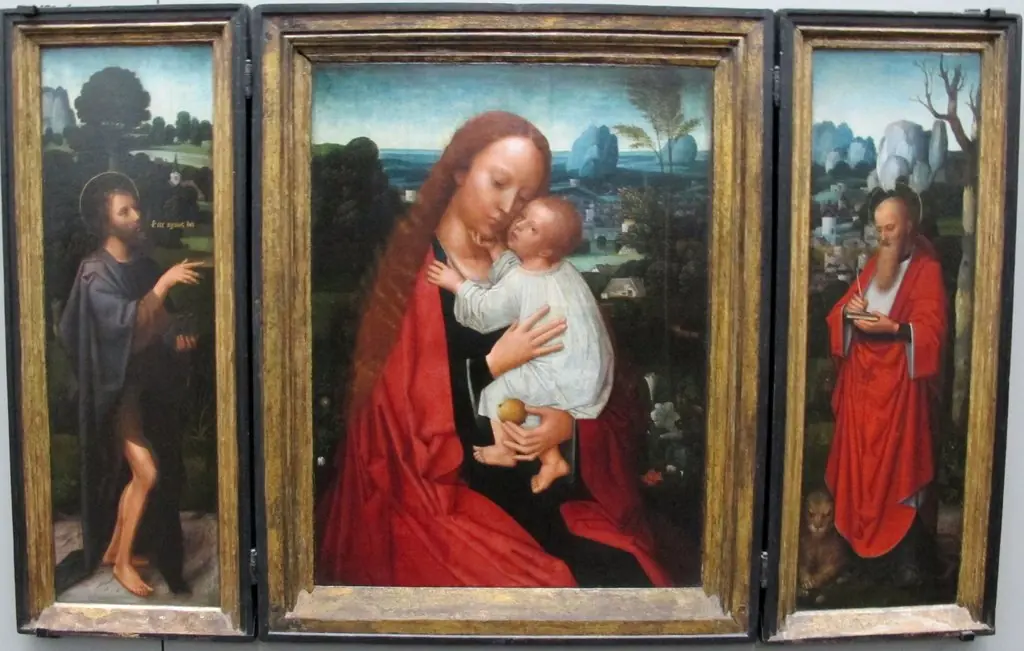
Adriaen Isenbrandt’s *Madonna with Female Saint* is an oil painting dating to roughly 1550. Executed in the Flemish tradition, it presents the Virgin Mary with the infant Christ surrounded by a group of women, one of whom holds a cross or book, while a lamb rests at their feet. The landscape behind them is populated with trees and gentle hills, creating a serene garden setting.
Subject & Meaning
The central figure, a crowned woman in dark blue, is identified as the Virgin, cradling the infant Jesus. The accompanying women, dressed in vivid reds, greens and blues, represent saints or devotional figures, their gestures and attributes—such as a cross or a book—suggesting intercessory roles. The lamb, a traditional symbol of Christ’s sacrifice, reinforces the theological focus on redemption.
Technique & Style
Isenbrandt employs the layered oil technique characteristic of early Netherlandish painters, achieving fine detail in fabrics and foliage.
Isenbrandt employs the layered oil technique characteristic of early Netherlandish painters, achieving fine detail in fabrics and foliage. The luminous color palette and delicate modeling of faces reflect a conservative workshop approach, preserving the devotional realism of earlier Flemish art while incorporating subtle Renaissance spatial cues, such as a shallow depth created by the garden backdrop.
History & Provenance
Created in Bruges, the work emerged from Isenbrandt’s workshop, known for producing religious commissions for local patrons. The painting entered the collection of the Alte Pinakothek in Munich, where it remains part of the museum’s holdings of Northern Renaissance art, providing insight into mid‑16th‑century devotional practices.
Context
During the mid‑1500s, Flemish art continued to serve the devotional needs of churches and private worship, often depicting the Madonna and Child with saints as intercessors. Isenbrandt’s composition reflects this demand, aligning with contemporary iconographic conventions while maintaining the stylistic continuity of the earlier Netherlandish visual language.
Own this work as a print
Artist & collection
Artist
Adriaen Isenbrandt or Adriaen Ysenbrandt (between 1480 and 1490 – July 1551) was a painter in Bruges, in the final years of Early Netherlandish painting, and the first of the Dutch and Flemish Renaissance painting of the Northern…