Artwork
Madonna and Child with Saints Catherine and Barbara
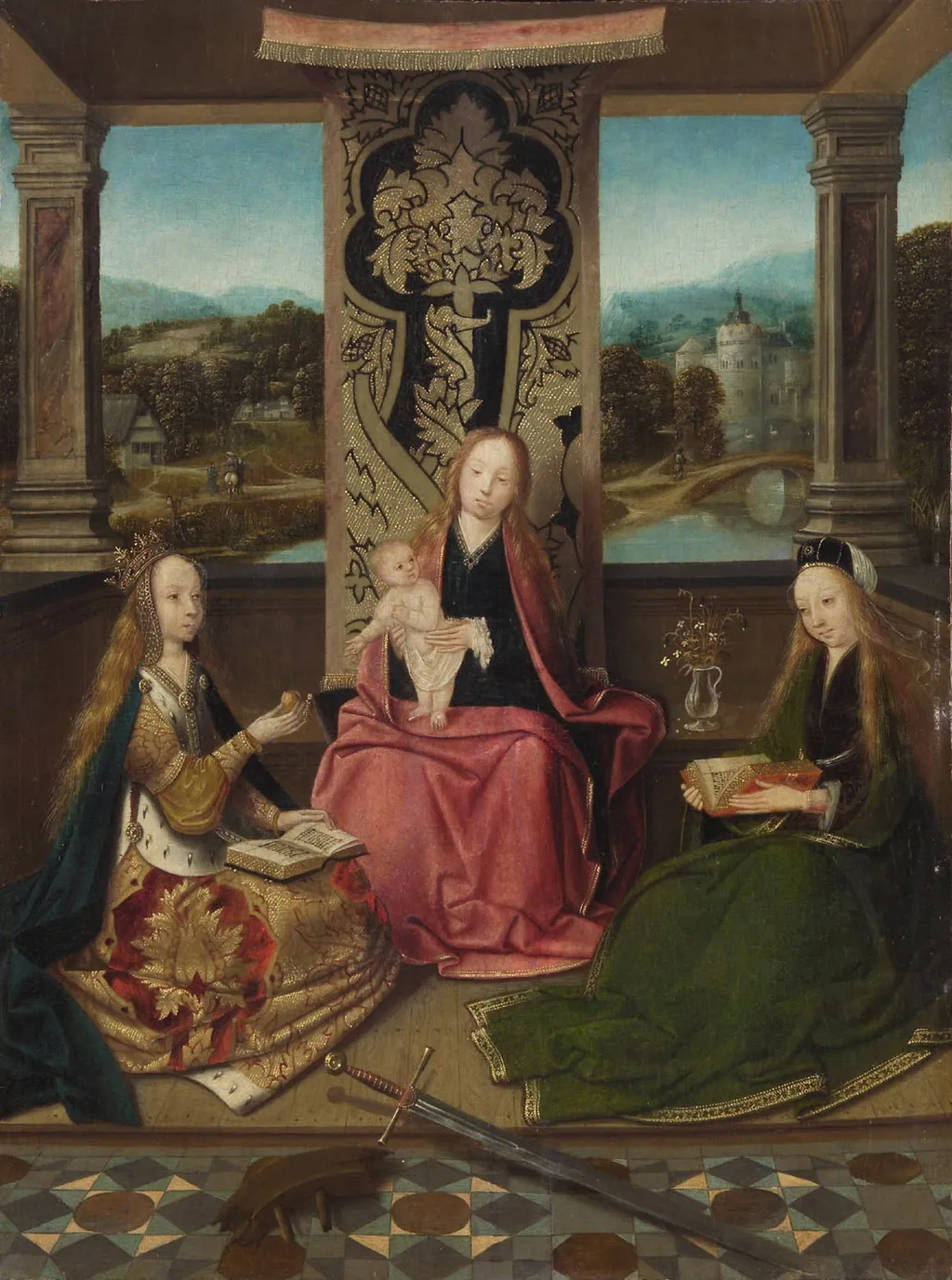
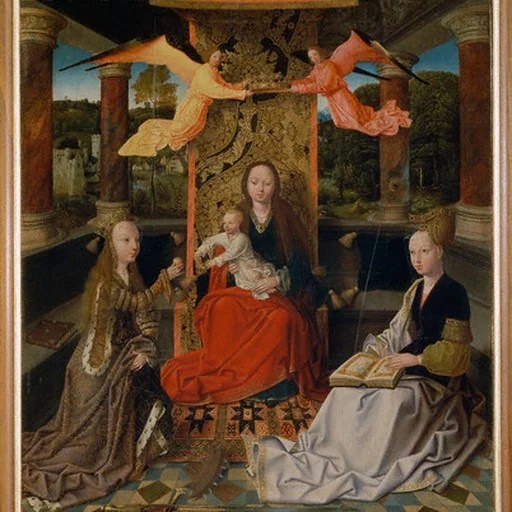
Madonna and Child with Saints Catherine and Barbara is an oil painting by the Northern Renaissance artist Master of Hoogstraeten. It dates from 1510 and is held in the collection of the Kunsthistorisches Museum. Created around 1510, this oil painting on panel presents the Virgin Mary seated with the infant Christ, accompanied by two female saints.
About this work
Overview
An elaborate gilded tree with dark foliage rises behind them, set within a richly tiled interior that opens onto a landscape through a window.
Created around 1510, this oil painting on panel presents the Virgin Mary seated with the infant Christ, accompanied by two female saints. The central figure is dressed in a red robe beneath a blue mantle, while the saints kneel on either side, one in a luminous gold garment and the other in darker attire. An elaborate gilded tree with dark foliage rises behind them, set within a richly tiled interior that opens onto a landscape through a window.
Subject & Meaning
The composition follows a familiar devotional motif of the early sixteenth century, pairing the Madonna and Child with Saints Catherine of Alexandria and Barbara. Catherine is traditionally identified by her scholarly attributes, while Barbara is often associated with a tower, reflecting her legend of martyrdom. Their presence underscores themes of intercession and piety, inviting the viewer to contemplate the protective role of these saints alongside the Virgin.
Technique & Style
Executed in oil on wood, the work displays the intricate detailing and vivid coloration characteristic of the Antwerp Mannerist circle. The painter employs a bright palette—crimson, azure, and gold—to model forms and create depth, while the gilded tree and tiled floor demonstrate a keen interest in decorative surface treatment. The figures are rendered with elongated proportions and elegant gestures, hallmarks of the workshop’s approach to Northern Renaissance elegance.
History & Provenance
Attributed to the Master of Hoogstraeten, an anonymous Flemish artist active in Antwerp, the painting reflects the output of a workshop known for religious commissions. Over the centuries it entered the collection of the Kunsthistorisches Museum in Vienna, where it remains part of the museum’s holdings of early sixteenth‑century Netherlandish art.
Context
The early 1500s in Antwerp saw a flourishing of artistic experimentation, with painters blending Gothic traditions and emerging Renaissance influences. The Master of Hoogstraeten’s work aligns with this transitional moment, incorporating elaborate architectural elements and a heightened sense of theatricality that appealed to devotional patrons seeking both visual splendor and spiritual resonance.
Artist & collection
Artist
The Master of Hoogstraeten (c. 1475 – c. 1530) is the Notname given to a Flemish painter or a collective of painters active in Antwerp in the early 16th century. The master created principally religious paintings and is…