Artwork
Viehstück
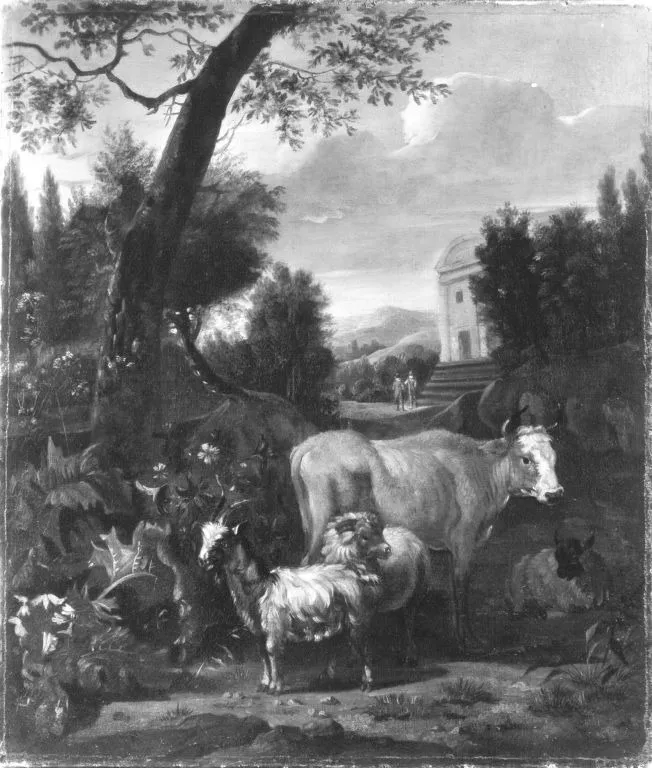
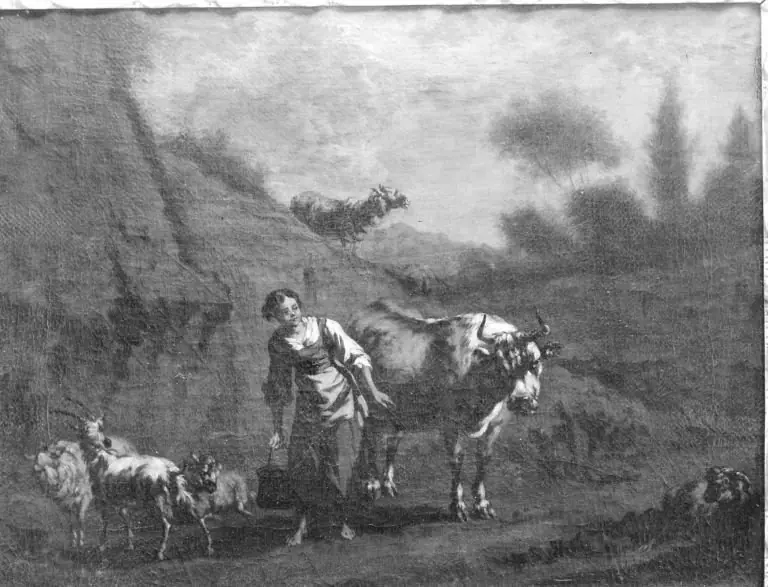
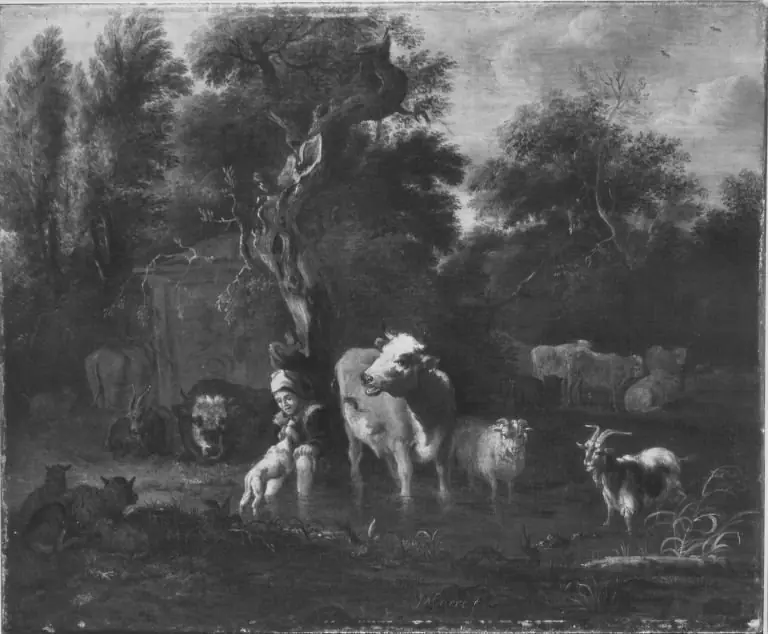
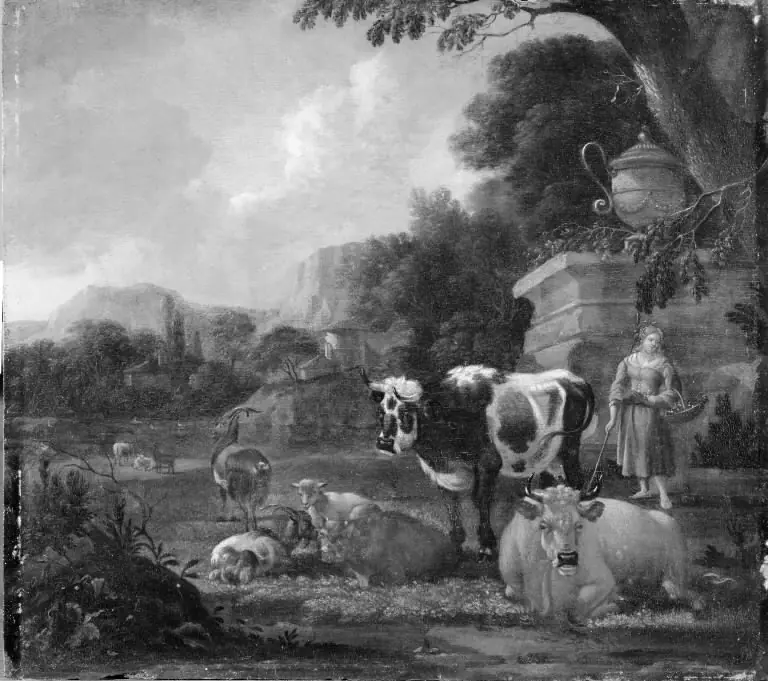
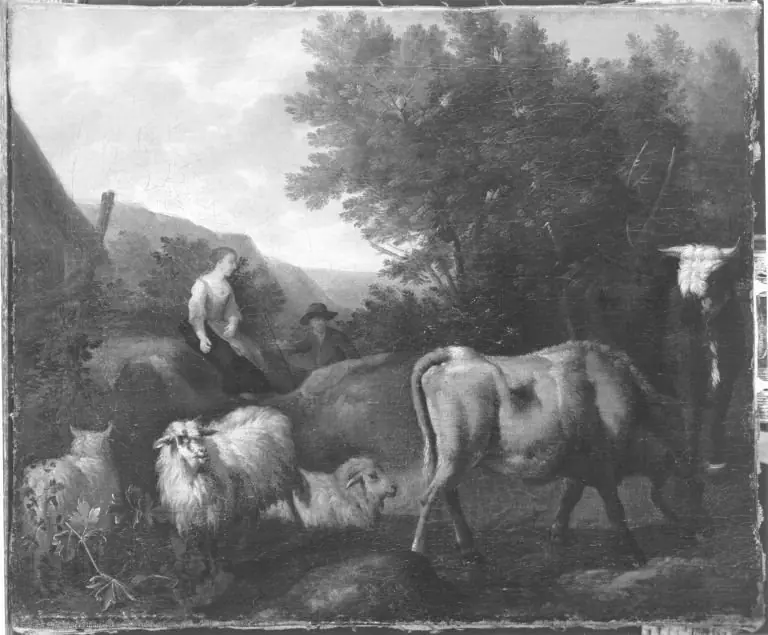
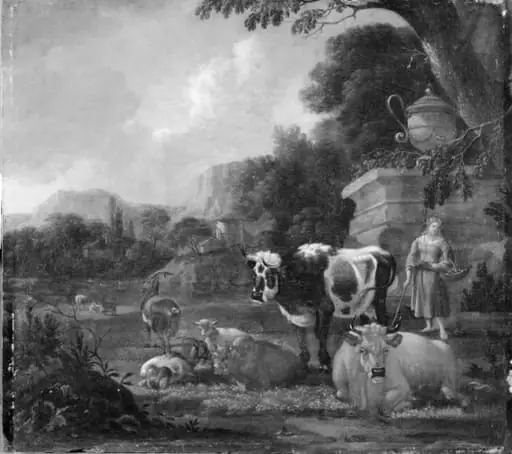
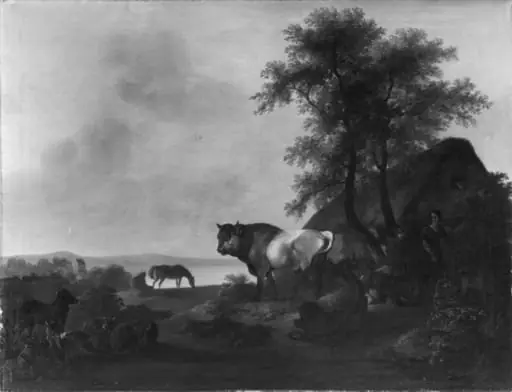
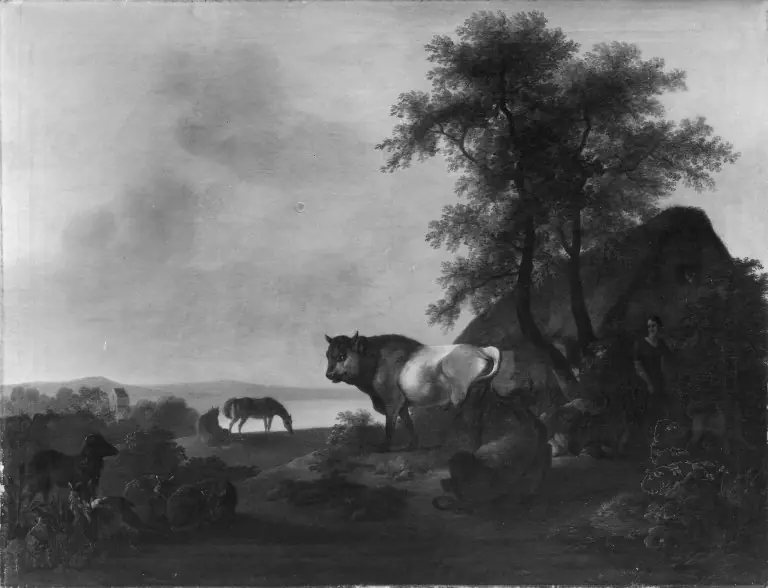
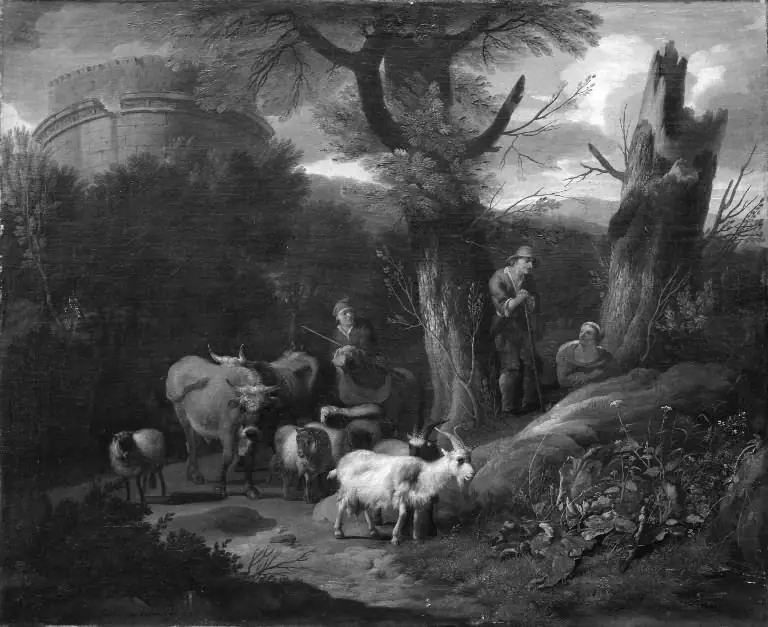
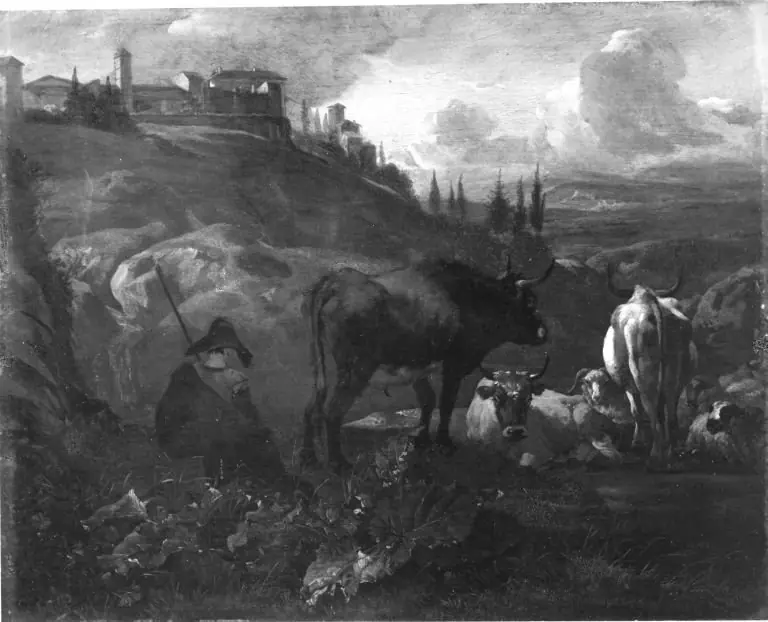
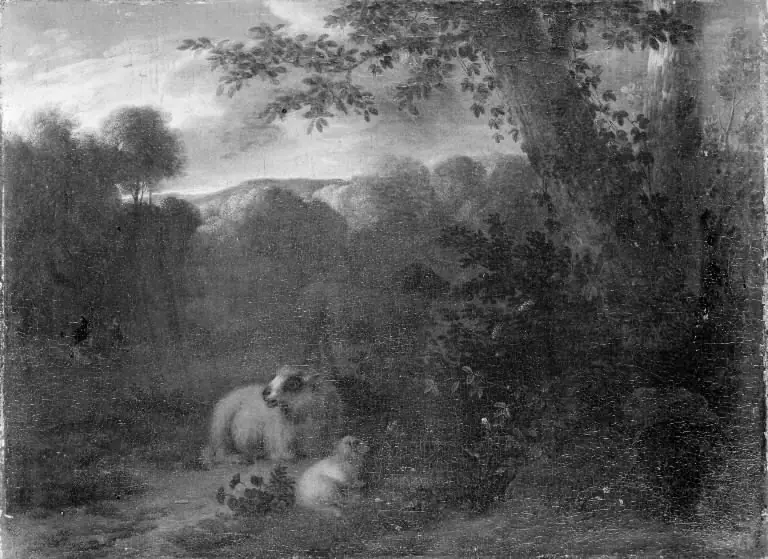
Viehstück is an unspecified painting by the Dutch Golden Age artist Adriaen Oudendijck. It dates from 1696 and is held in the collection of the Bavarian State Painting Collections.
About this work
Overview
Painted in 1696 by Dutch artist Adriaen Oudendijck, Viehstück is a small-scale oil on panel depicting livestock in a rural setting. The work resides in the Alte Pinakothek in Munich, part of its collection of Northern European paintings from the 17th century. Its modest size and subject reflect the Dutch tradition of genre scenes focused on everyday rural life.
Subject & Meaning
The painting portrays a group of cattle and sheep in a quiet pasture, rendered with quiet observation rather than dramatic narrative. There is no human presence, emphasizing the animals’ natural behavior and the tranquility of the landscape. The scene suggests an appreciation for agricultural life, common in Dutch art of the period, where animals symbolized stability and economic order.
Technique & Style
Oudendijck employed fine brushwork to capture the textures of animal fur and grassy terrain, using muted earth tones to ground the composition. Light is diffused evenly, avoiding strong contrasts, which lends the scene a calm, observational quality. The composition is tightly framed, focusing attention on the animals’ postures and interactions without embellishment or idealization.
History & Provenance
The painting entered the Alte Pinakothek’s collection in the 19th century, likely through the acquisition of private German or Dutch holdings. Its attribution to Oudendijck is based on stylistic comparison with his other known works, though documentation of its early ownership remains limited. It has remained in the museum’s care since its acquisition, with no record of significant restoration.
Context
Oudendijck’s focus on livestock aligns with a broader trend among lesser-known artists who catered to regional tastes, valuing quiet realism over grandeur.
During the late 17th century, Dutch painters increasingly turned to pastoral subjects as urban markets grew more saturated with still lifes and portraits. Oudendijck’s focus on livestock aligns with a broader trend among lesser-known artists who catered to regional tastes, valuing quiet realism over grandeur. His work reflects the enduring Dutch interest in the natural world as a subject worthy of careful depiction.
Legacy
Viehstück stands as an example of the quiet, unadorned livestock paintings that populated Dutch studios in the post-Golden Age period. While not widely exhibited or studied, it contributes to the understanding of how rural themes persisted in Dutch art beyond the era of Rembrandt and Hals. Its preservation in a major European museum underscores its role as a representative artifact of regional artistic practice.
Artist & collection