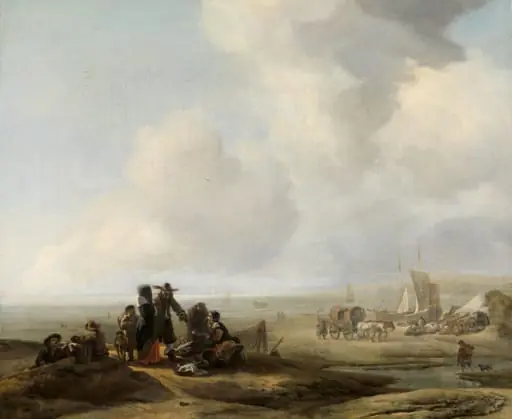
Artwork
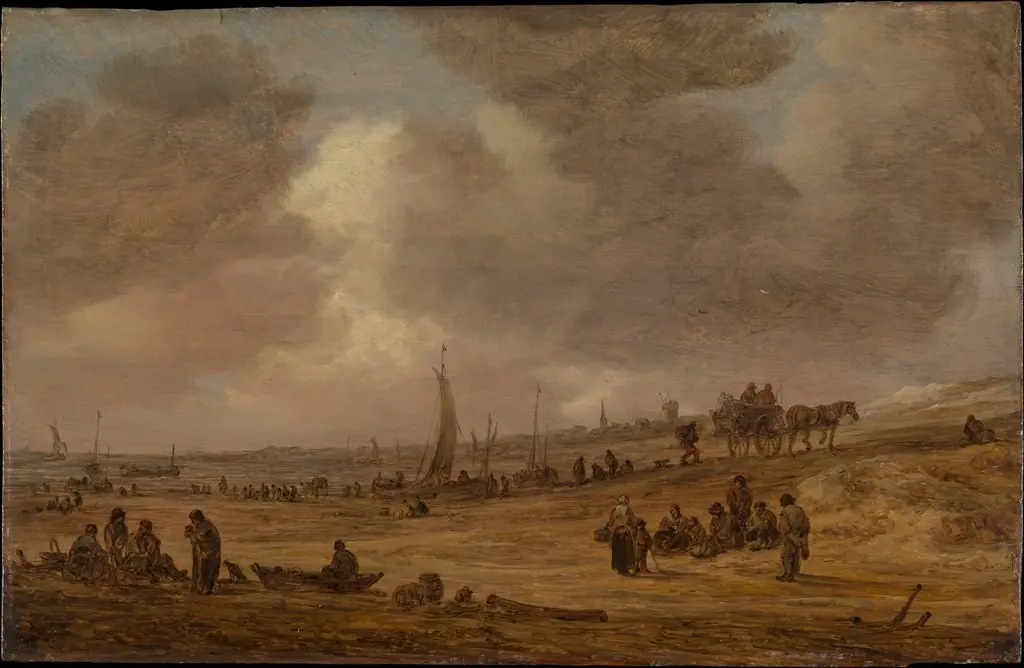
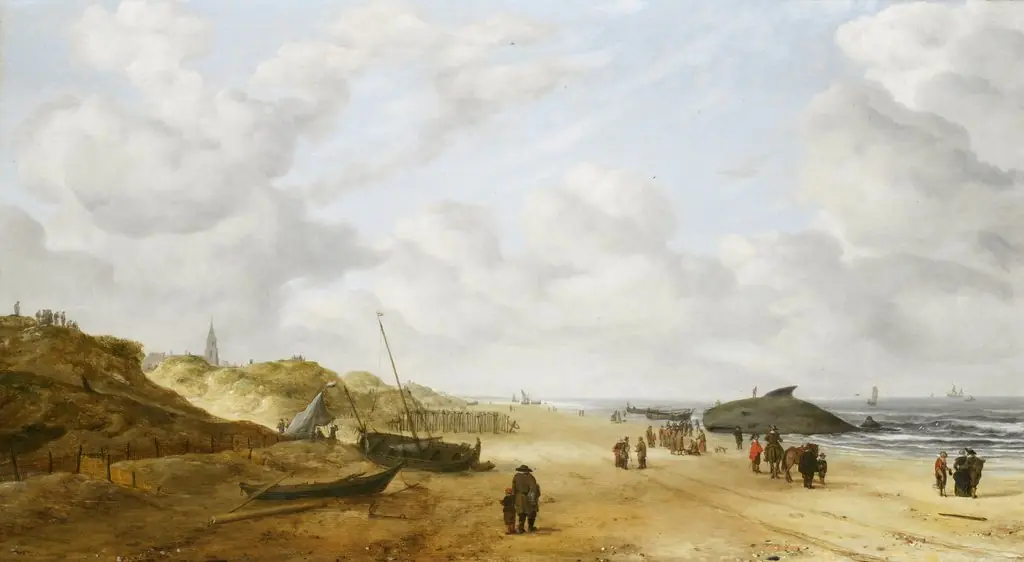
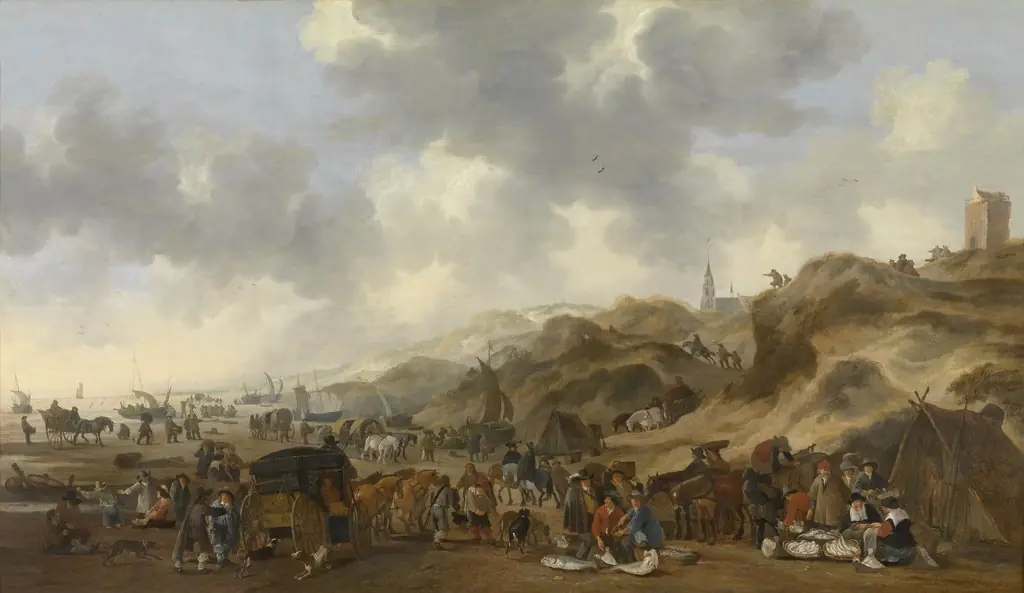
Beach at Katwijk
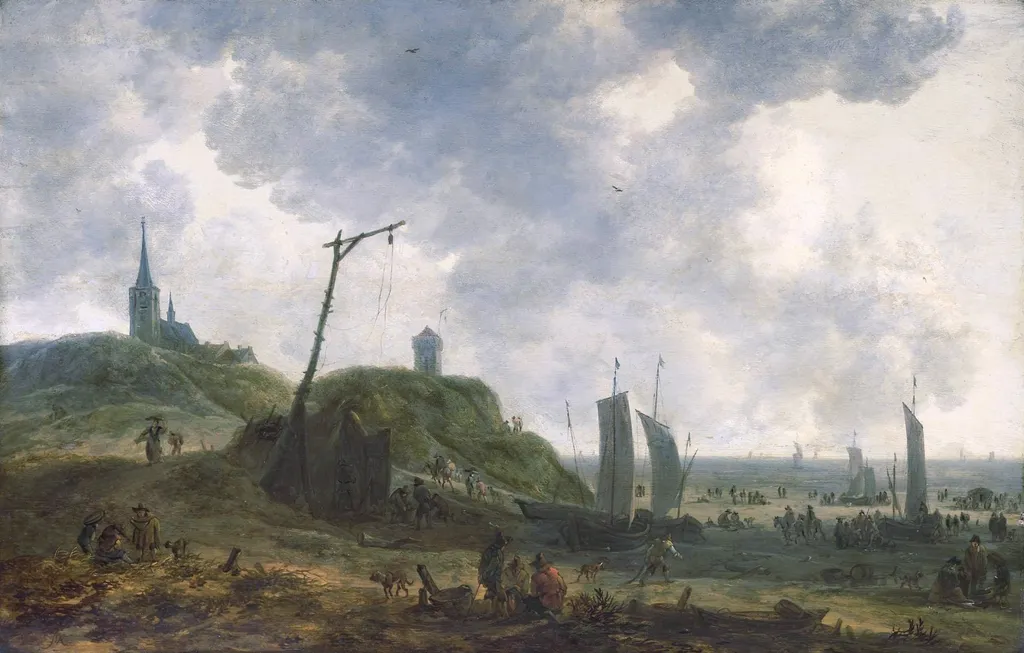
Beach at Katwijk is an oil painting by the Dutch Golden Age artist Adriaen van der Cabel. It dates from 1650 and is held in the collection of the Rijksmuseum.
About this work
Overview
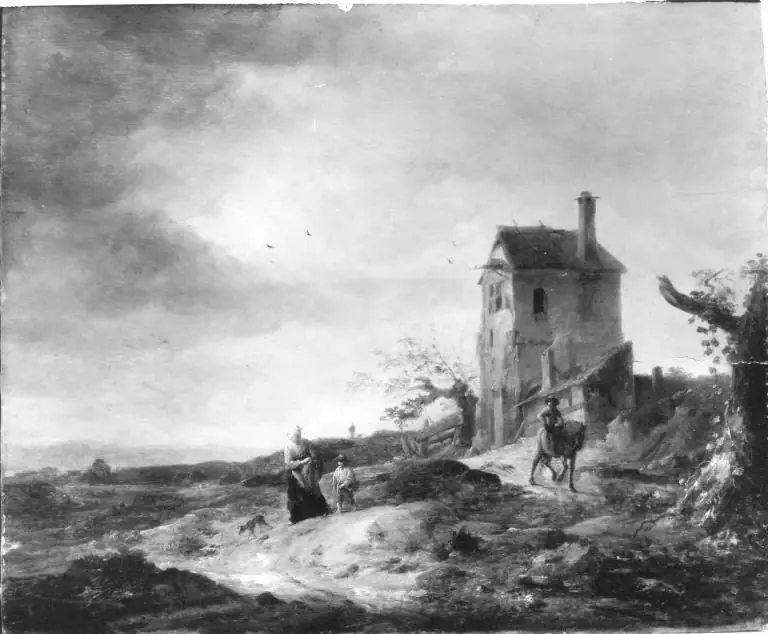
Painted around 1650 by Adriaen van der Cabel, *Beach at Katwijk* is an oil-on-canvas landscape capturing a quiet coastal moment in the Netherlands. Though van der Cabel spent much of his career in France and Italy, this work reflects his early engagement with Dutch coastal subjects. It is part of the Rijksmuseum’s collection, representing the observational rigor of Dutch Golden Age painting.
Subject & Meaning
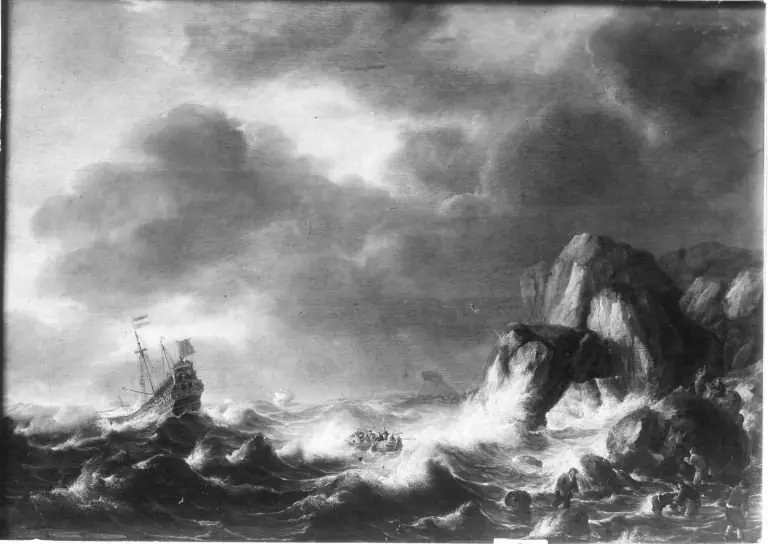
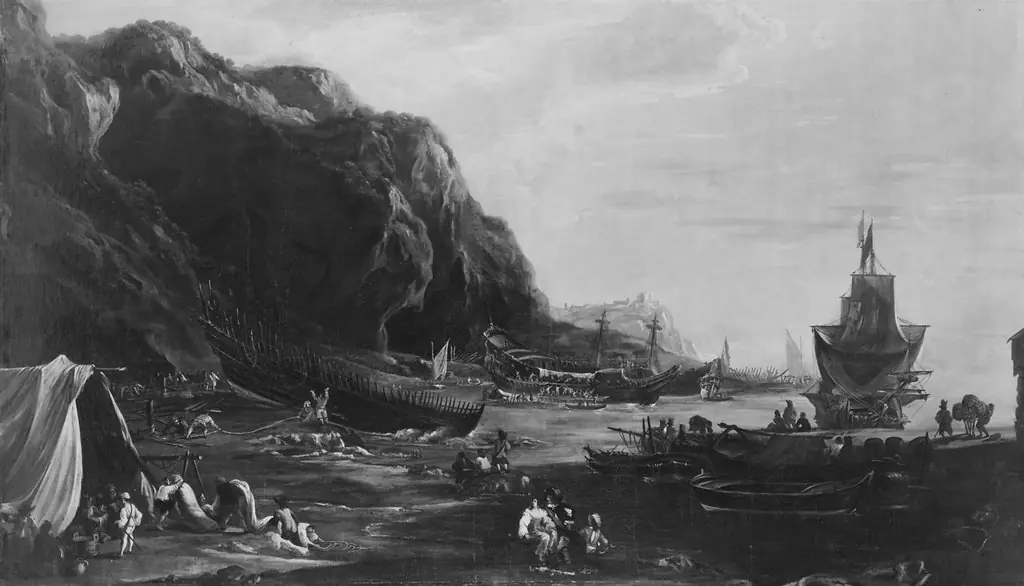
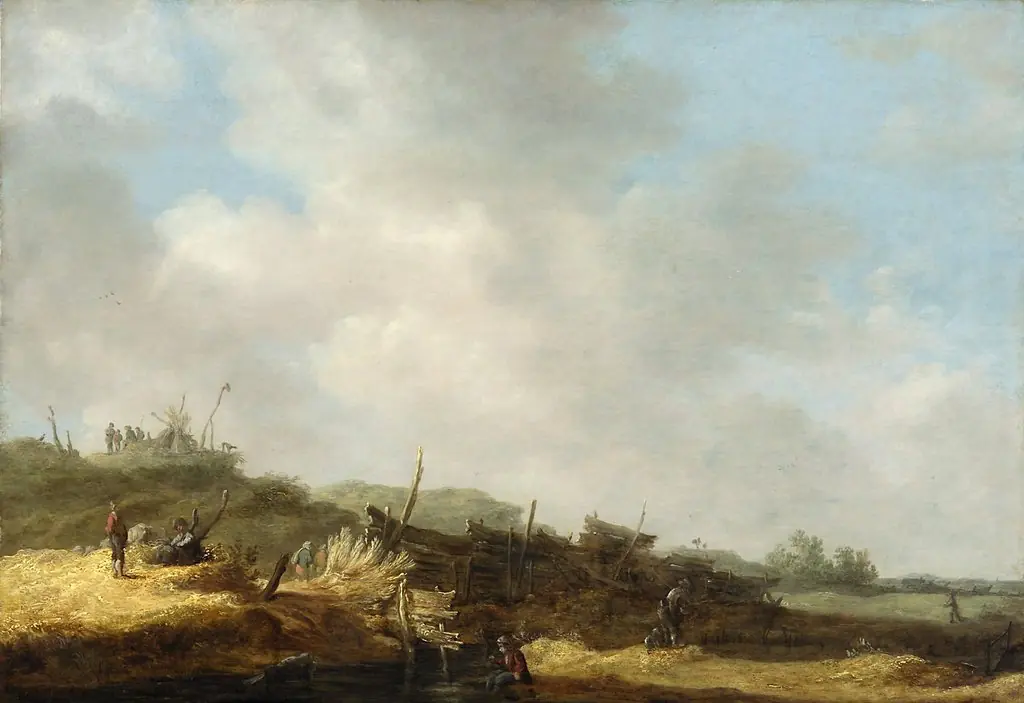
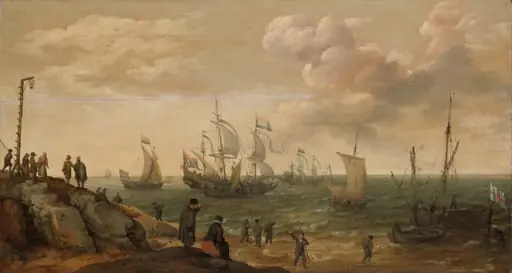
The scene portrays ordinary life along the North Sea shore: figures stroll, converse, and tend to boats; animals move among them. The presence of a church steeple on the dune suggests a settled community, grounding the activity in a specific place. Rather than idealizing nature, the painting treats the beach as a working and social space, reflecting the everyday rhythms of coastal Dutch life.
Technique & Style
Van der Cabel employs subtle chiaroscuro to model forms and suggest spatial depth. Light falls unevenly across the sand, grass, and water, creating contrasts that guide the viewer’s eye through the composition. Brushwork is precise yet unobtrusive, allowing figures and animals to emerge naturally from the landscape without theatrical emphasis, consistent with Dutch naturalism.
History & Provenance
The painting entered the Rijksmuseum’s collection in the 19th century, likely through state acquisition or donation from a Dutch private collection. Its attribution to van der Cabel has been consistently supported by stylistic analysis and archival records. No major alterations or restorations are documented, preserving its original tonal balance and surface integrity.
Context
In mid-17th-century Holland, coastal scenes gained popularity as symbols of national identity and economic vitality. Katwijk, a fishing village near Leiden, was a familiar subject for artists. Van der Cabel’s depiction aligns with a broader trend of documenting local environments with quiet realism, distinct from the grandeur of Italianate landscapes favored by contemporaries abroad.
Legacy
Though less known than some of his peers, van der Cabel’s work contributed to the development of Dutch coastal painting. *Beach at Katwijk* exemplifies how everyday scenes could be rendered with sensitivity to light and atmosphere. It remains a reference for understanding the quiet, unembellished vision that defined much of Dutch Golden Age landscape art.
Own this work as a print
Artist & collection
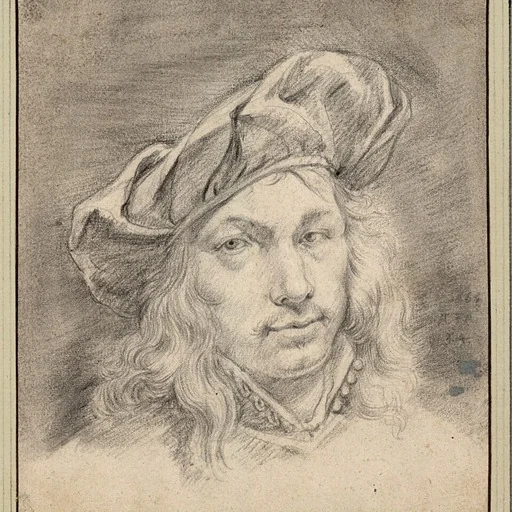
Artist
Adriaen van der Cabel or Ary van der Touw (1631 – 16 June 1705), was a Dutch Golden Age landscape painter active in France and Italy.