Artwork
Amorous couple in a park
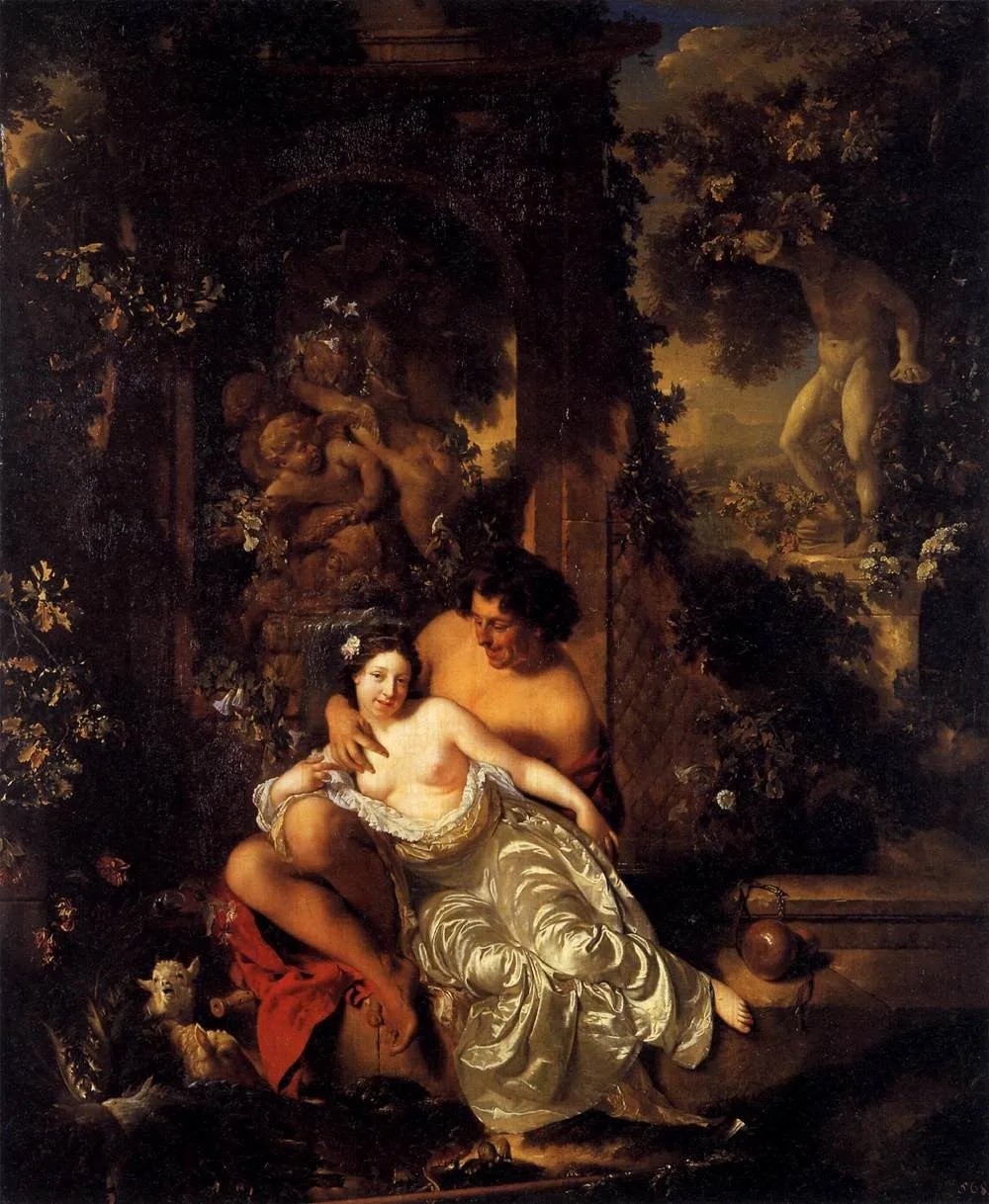
Amorous couple in a park is a paint painting by the Dutch Golden Age artist Adriaen van der Werff. It dates from 1695 and is held in the collection of the Staatliche Kunstsammlungen Dresden.
About this work
Overview
The painting captures a private moment between two figures in a natural setting, rendered with meticulous attention to texture and light.
Painted in 1695 by Adriaen van der Werff, this work belongs to the Dutch Golden Age’s broader tradition of genre painting. Though best known for portraits and religious subjects, van der Werff also explored intimate, secular themes. The painting captures a private moment between two figures in a natural setting, rendered with meticulous attention to texture and light. It is now part of the Gemäldegalerie Alte Meister’s collection in Dresden.
Subject & Meaning
The scene portrays a shepherd and a woman in a moment of quiet affection, their gazes locked in mutual tenderness. The shepherd’s bare torso and the woman’s flowing white garment suggest an idealized pastoral romance, drawing on classical motifs while grounding the scene in contemporary Dutch sensibility. The intimacy is neither overtly erotic nor overtly moralizing, instead presenting a nuanced portrayal of personal connection within a cultivated landscape.
Technique & Style
Van der Werff employs chiaroscuro to isolate the figures against a dim, atmospheric background, heightening the emotional focus. His brushwork is precise, particularly in the rendering of fabric, skin, and foliage, revealing his training in fine detail. The red cloth beneath the woman adds a subtle contrast, anchoring the composition while reinforcing the warmth of the moment. The lighting models the forms with soft gradations, avoiding theatricality in favor of quiet realism.
History & Provenance
The painting entered the collection of the Gemäldegalerie Alte Meister in Dresden during the 18th century, likely through the Saxon royal acquisitions of Dutch and Flemish works. Its presence there reflects the Electors’ interest in intimate genre scenes alongside more monumental art. No significant alterations or documented restorations are recorded, and it has remained in the same institution since its acquisition.
Context
In late 17th-century Holland, depictions of lovers in natural settings were common among artists seeking to blend moral ambiguity with aesthetic pleasure. Van der Werff’s work aligns with this trend, yet his refined technique and restrained emotion distinguish it from more overtly sensual treatments. The painting reflects a broader cultural interest in private emotion, even as public morality remained tightly regulated.
Legacy
Though van der Werff’s reputation waned after the 18th century, this painting remains a quiet example of Dutch genre painting’s capacity for psychological subtlety. It contributes to scholarly understanding of how intimacy was visually negotiated in a society wary of overt sensuality. Its preservation in a major European collection ensures continued study of its nuanced approach to human connection.
Artist & collection
Artist
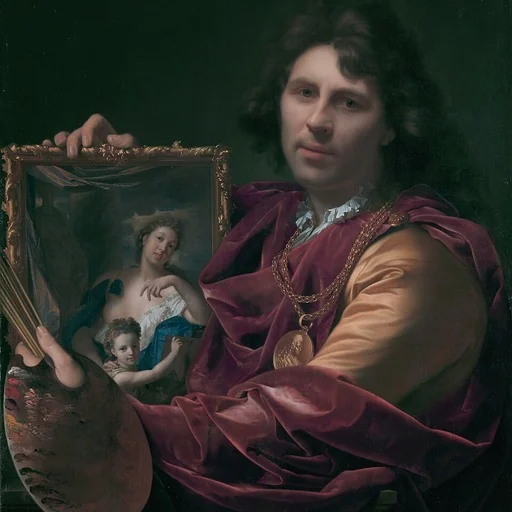
Adriaen van der Werff (21 January 1659 – 12 November 1722) was a Dutch painter of portraits and erotic, devotional and mythological scenes.

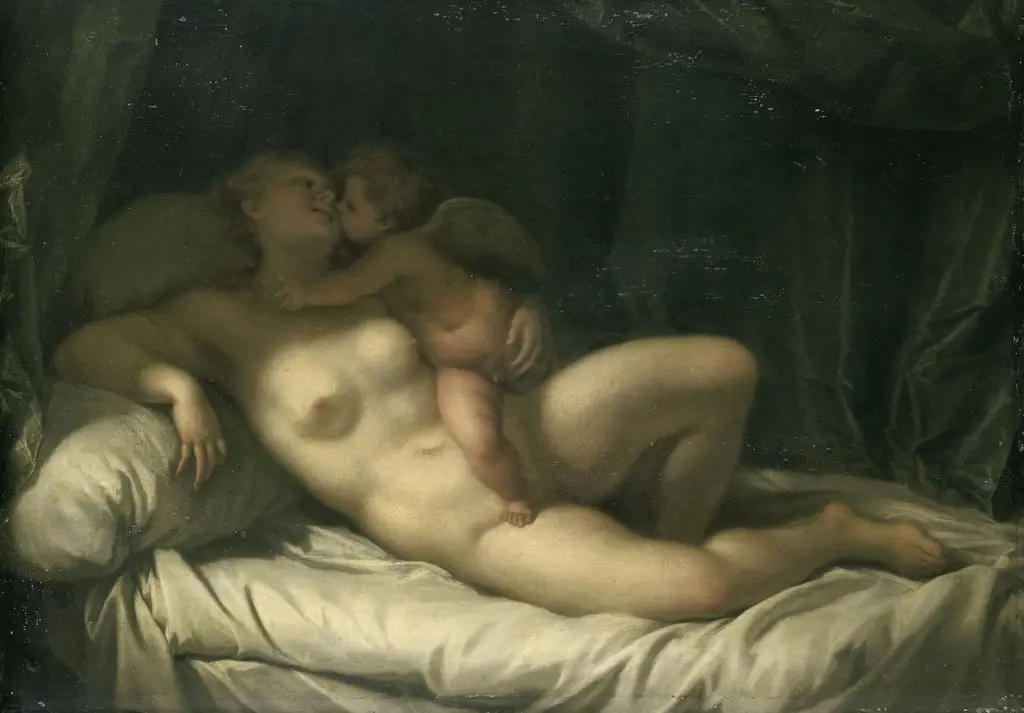 Cupid Kissing Venus (Venus Kissed by Amor)
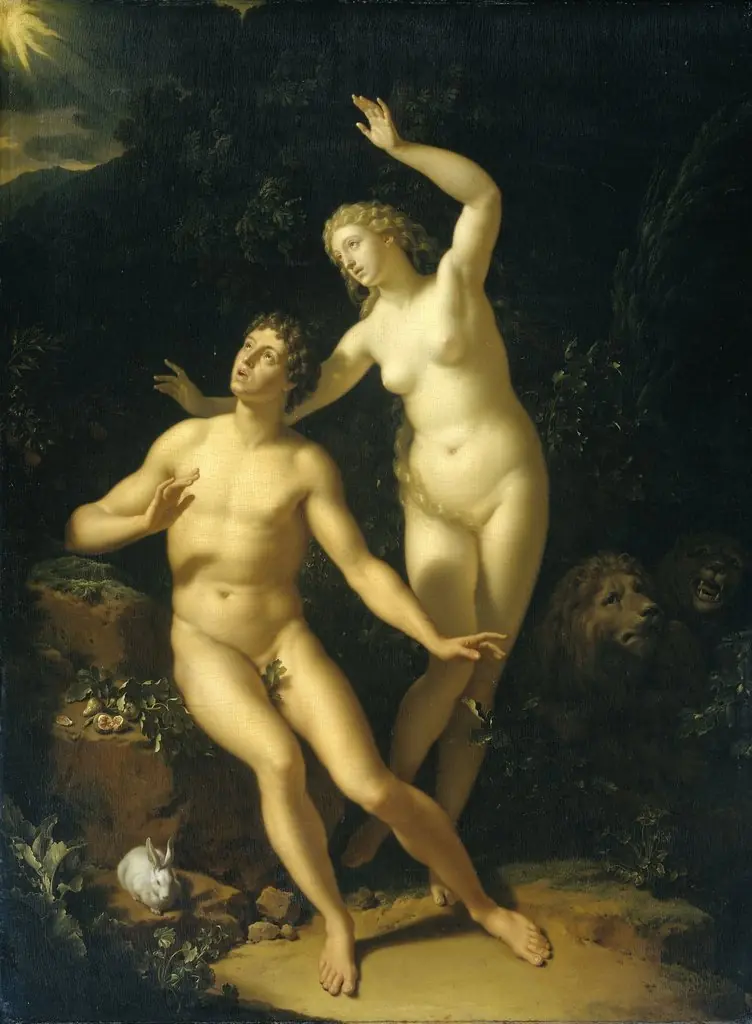 God Holds Adam and Eve Responsible
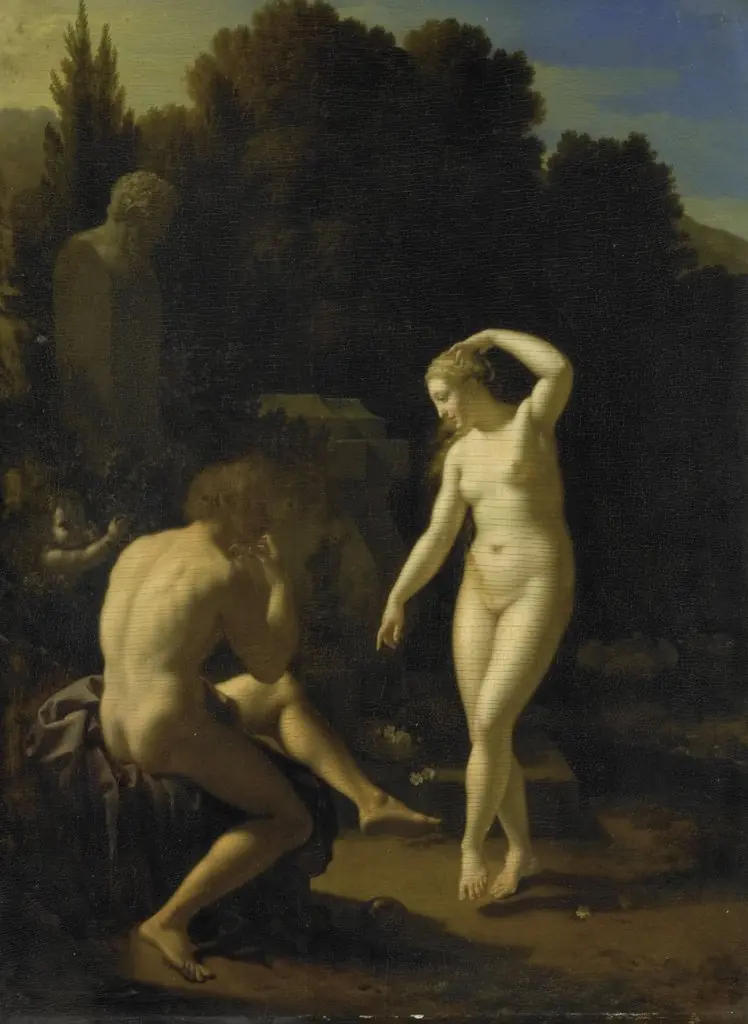 A Nymph Dancing to a Shepherd's Flute-Playing
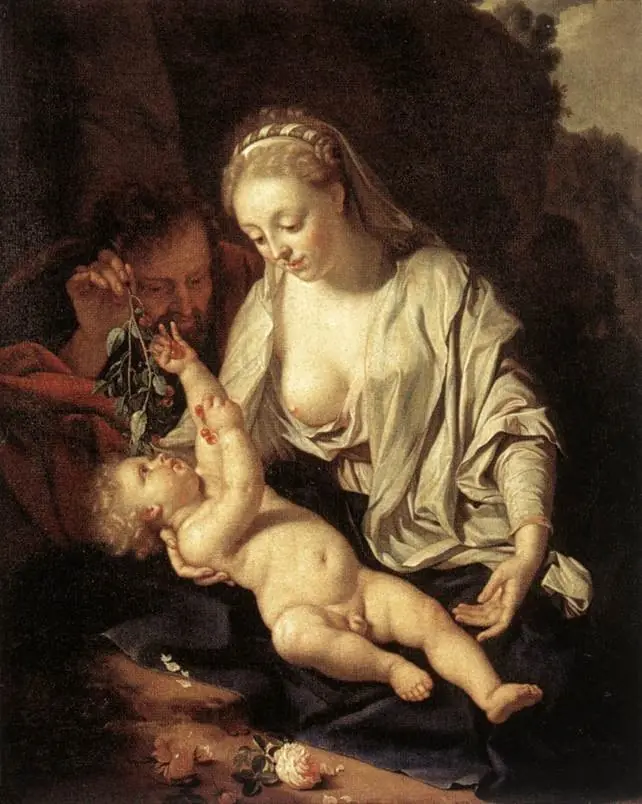 The Holy Family
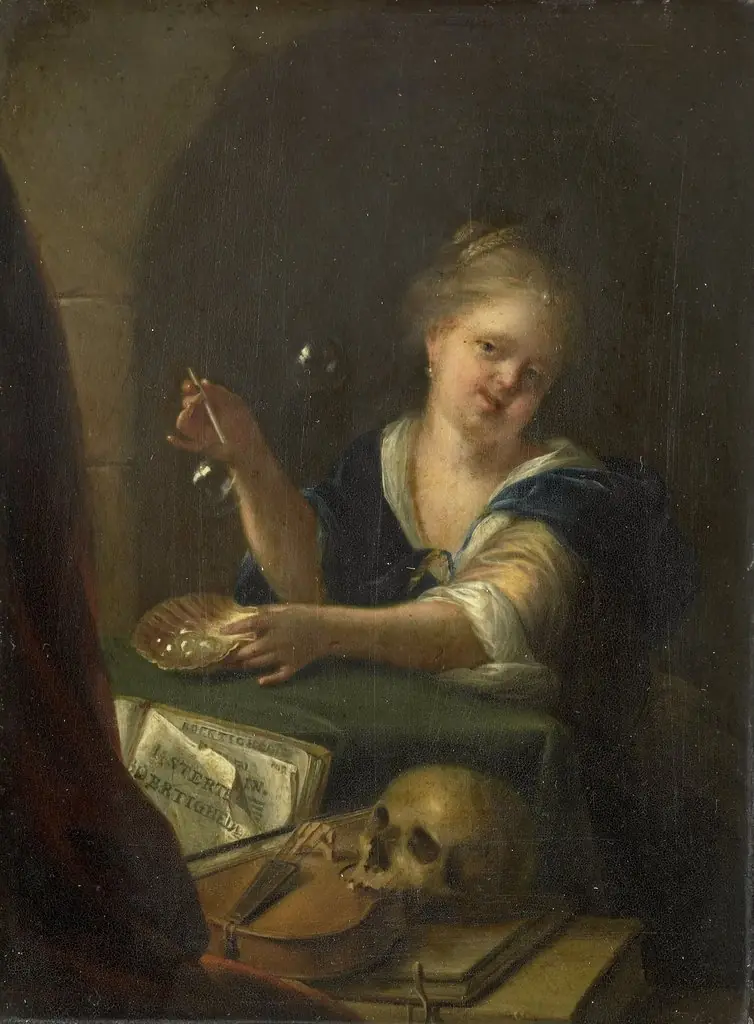 Bubble-blowing Girl with a Vanitas Still Life
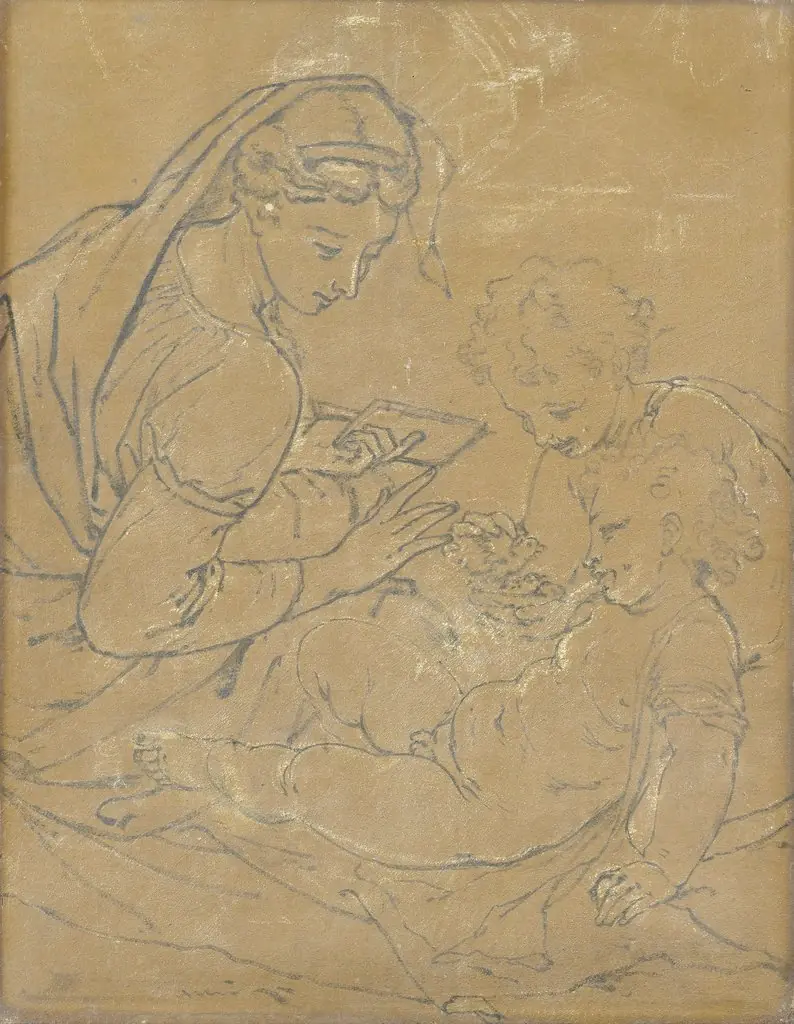 Virgin and Child with Saint John (chalk sketch)
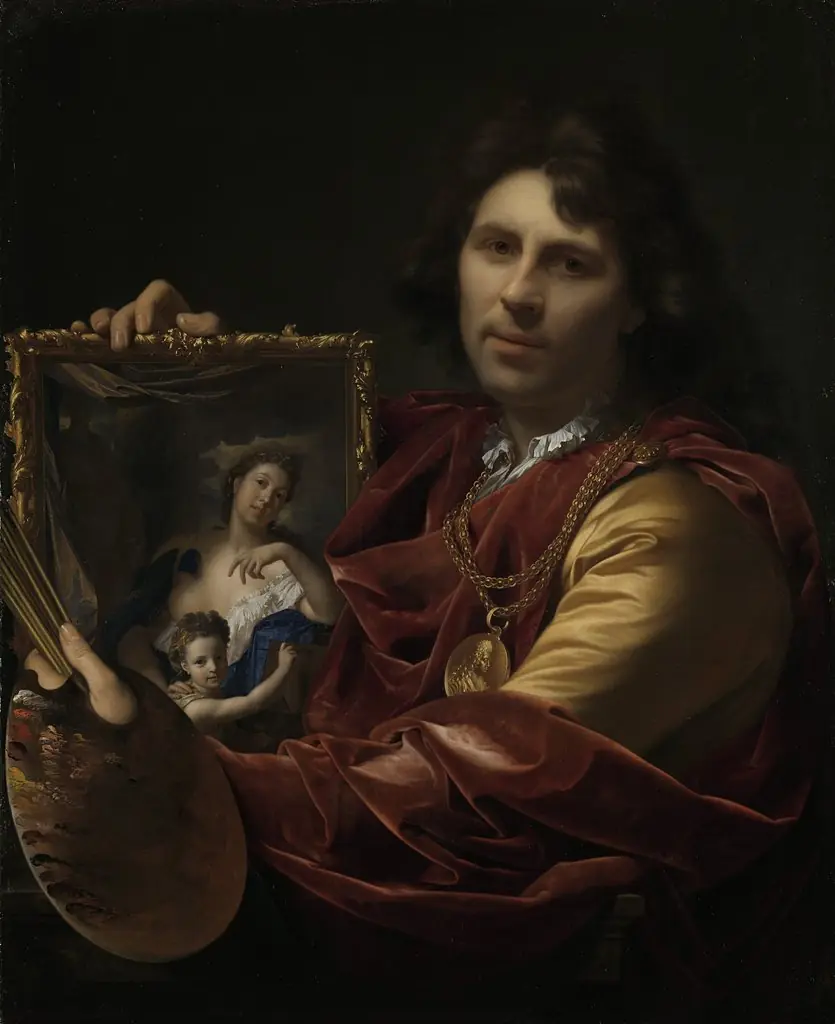 Self-portrait with the Portrait of his Wife, Margaretha van Rees, and their Daughter Maria
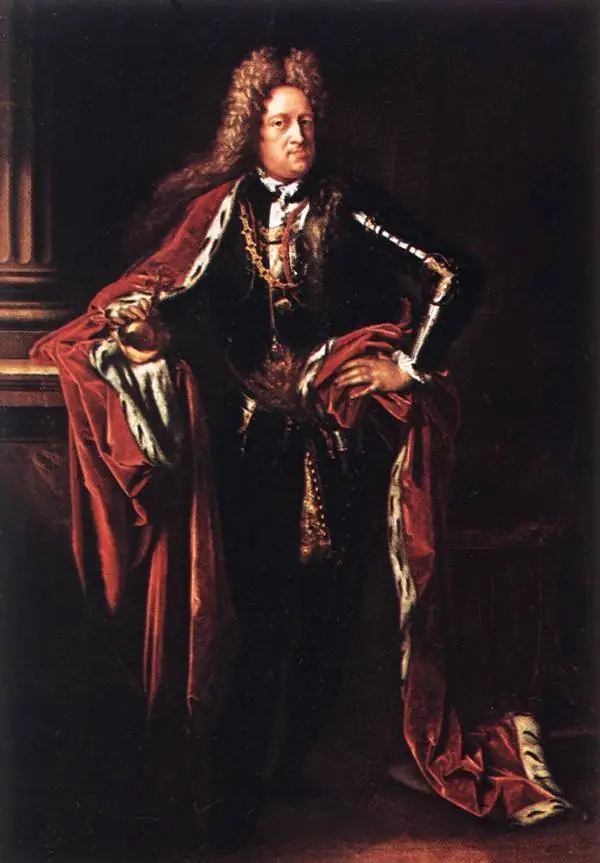 Portrait of Johann Wilhelm Elector of Palatine (1658-1716)
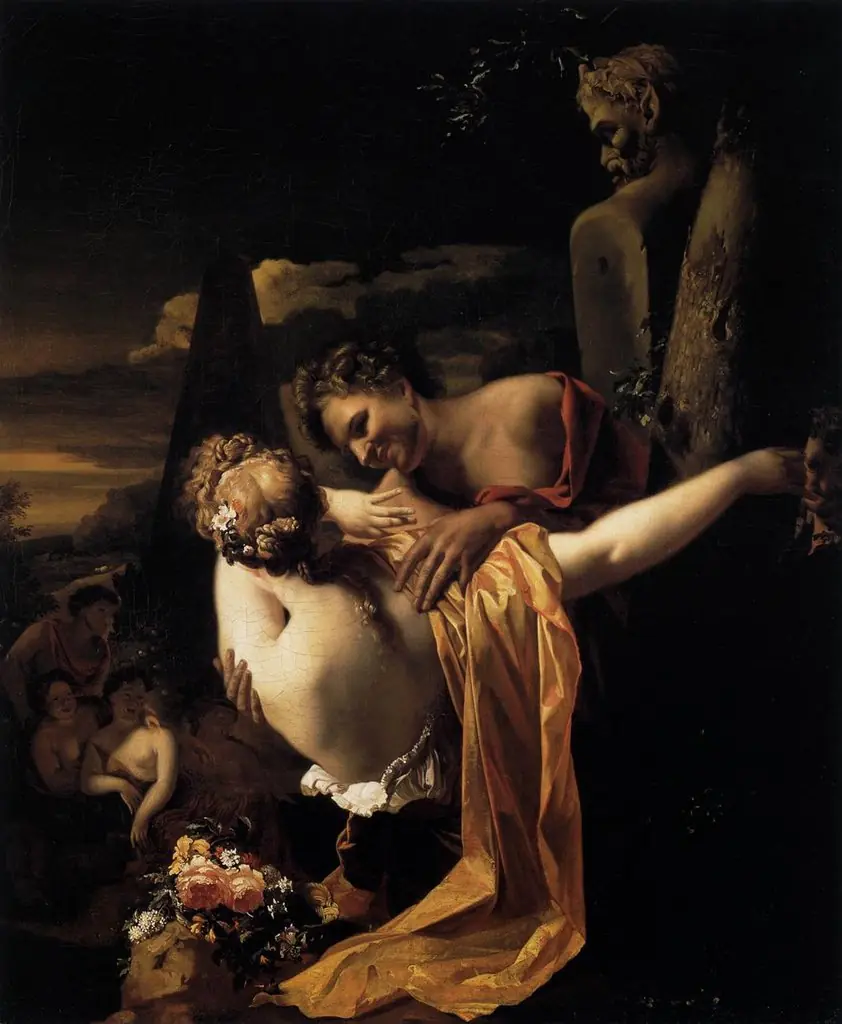 Young shepherd embracing a shepherdess
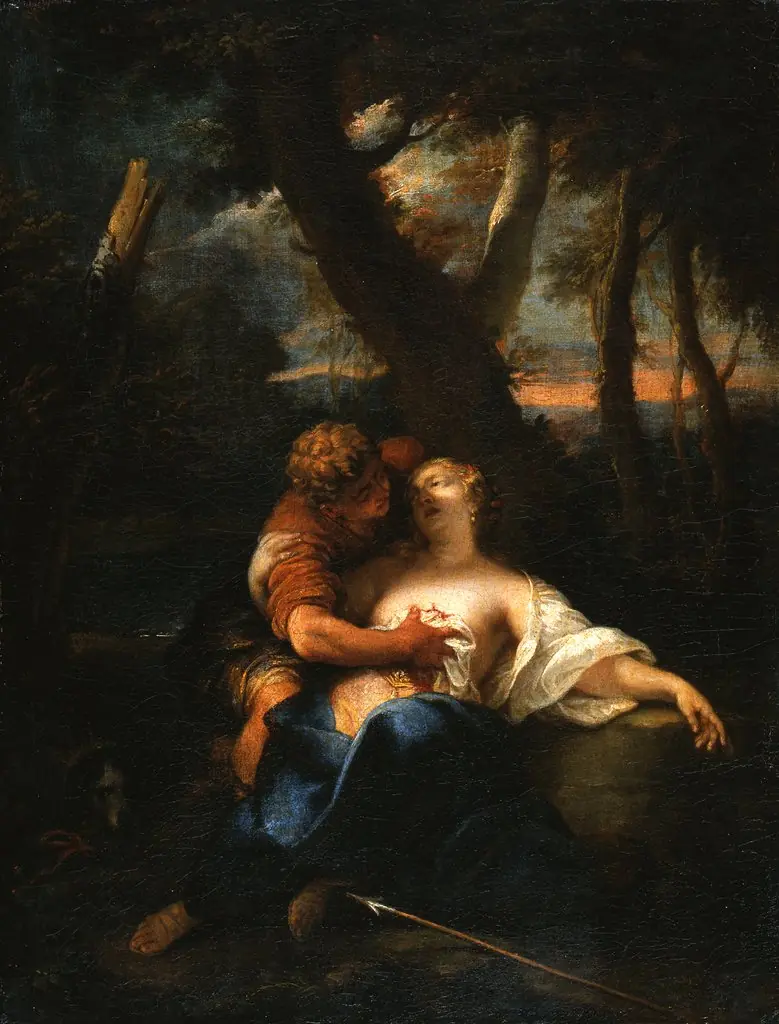 Cephalus and Procris
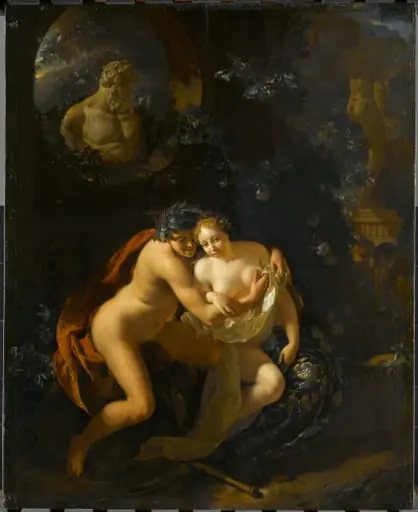 A Couple Making Love in a Park Spied on by Children
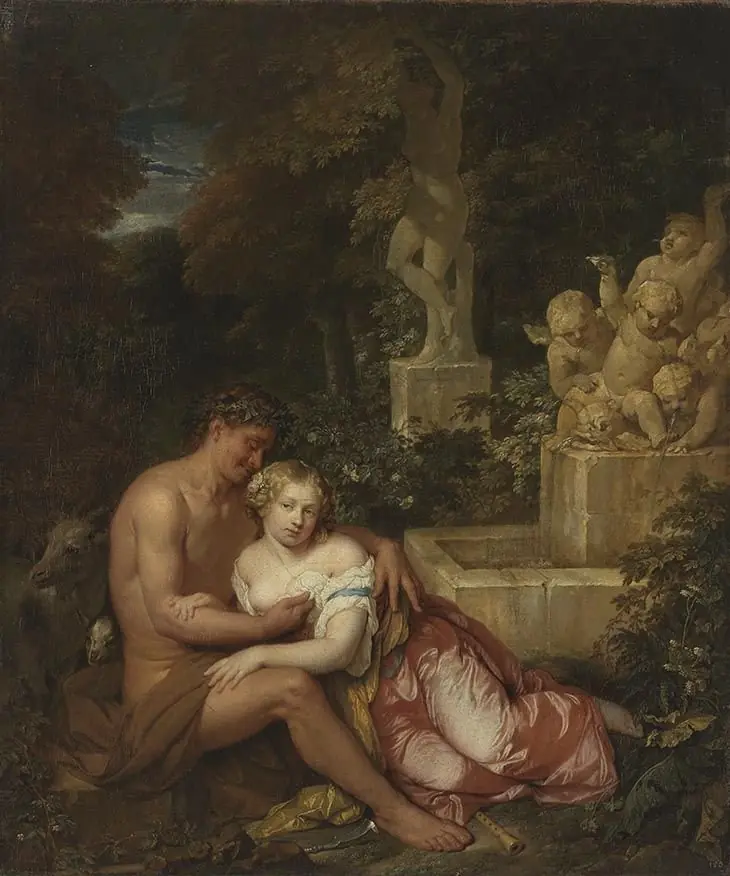 Pastoral scene
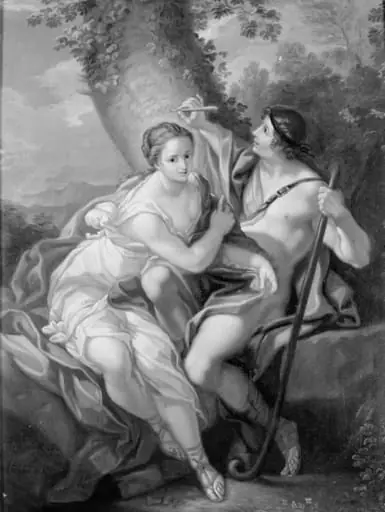 Medos og Angelica
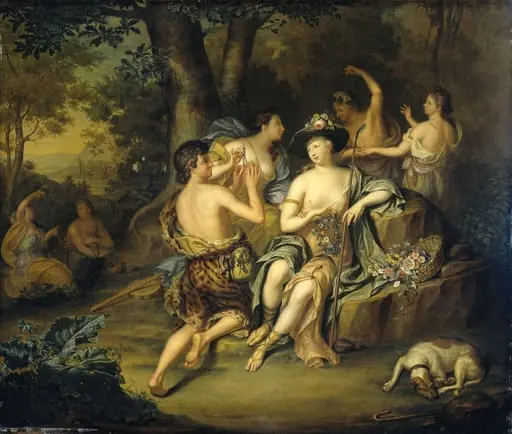 "Shepherds and Shepherdesses in a Landscape
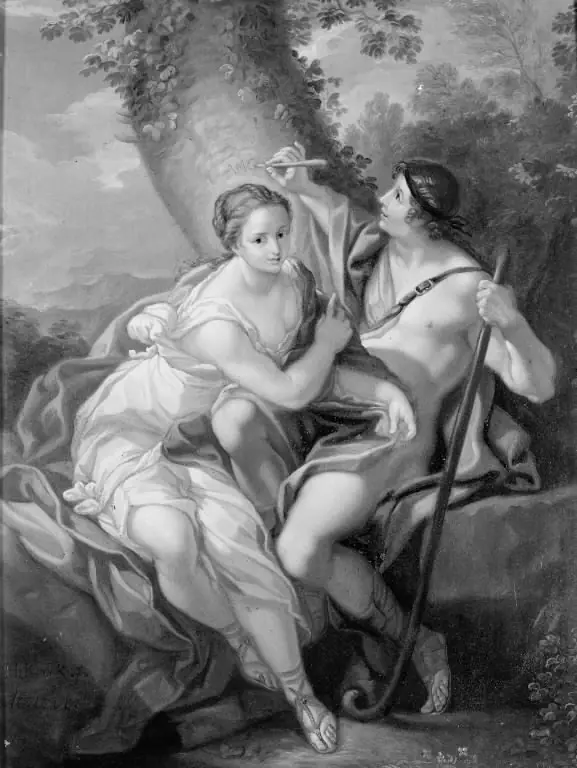 Medos og Angelica
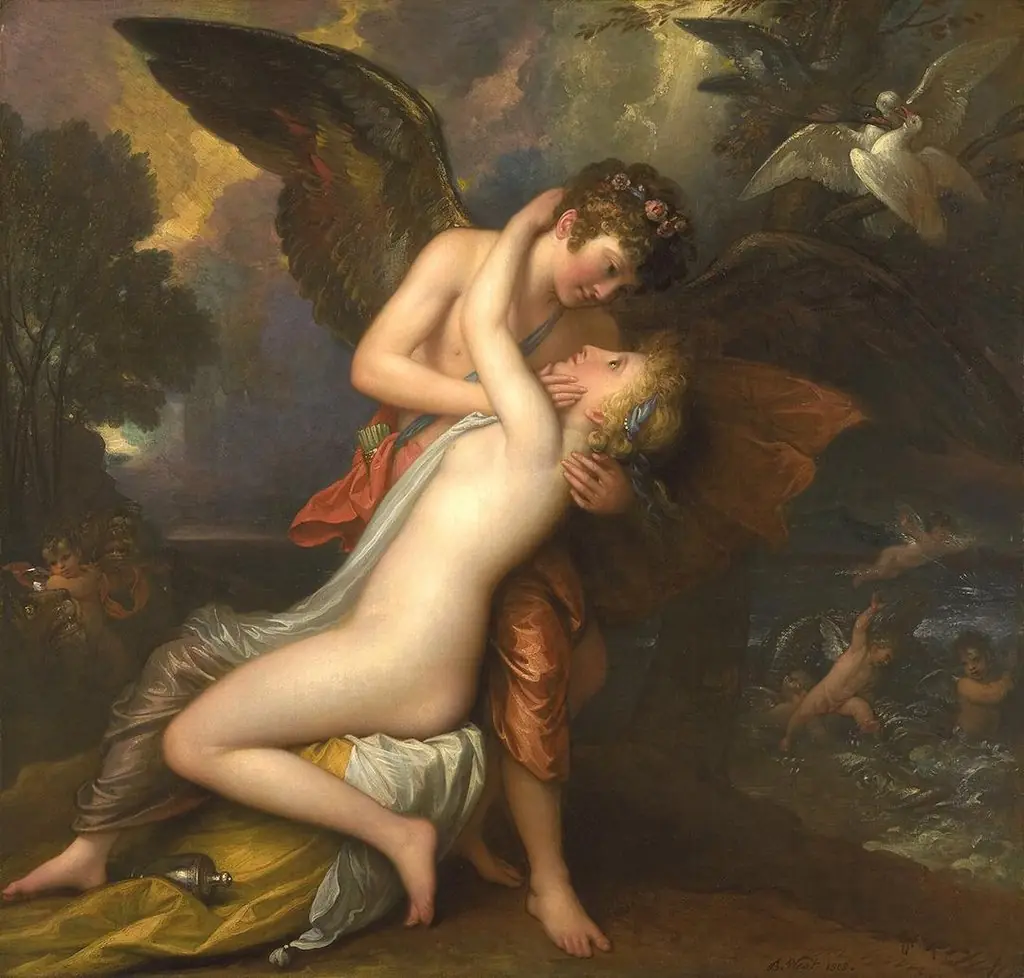 Cupid and Psyche
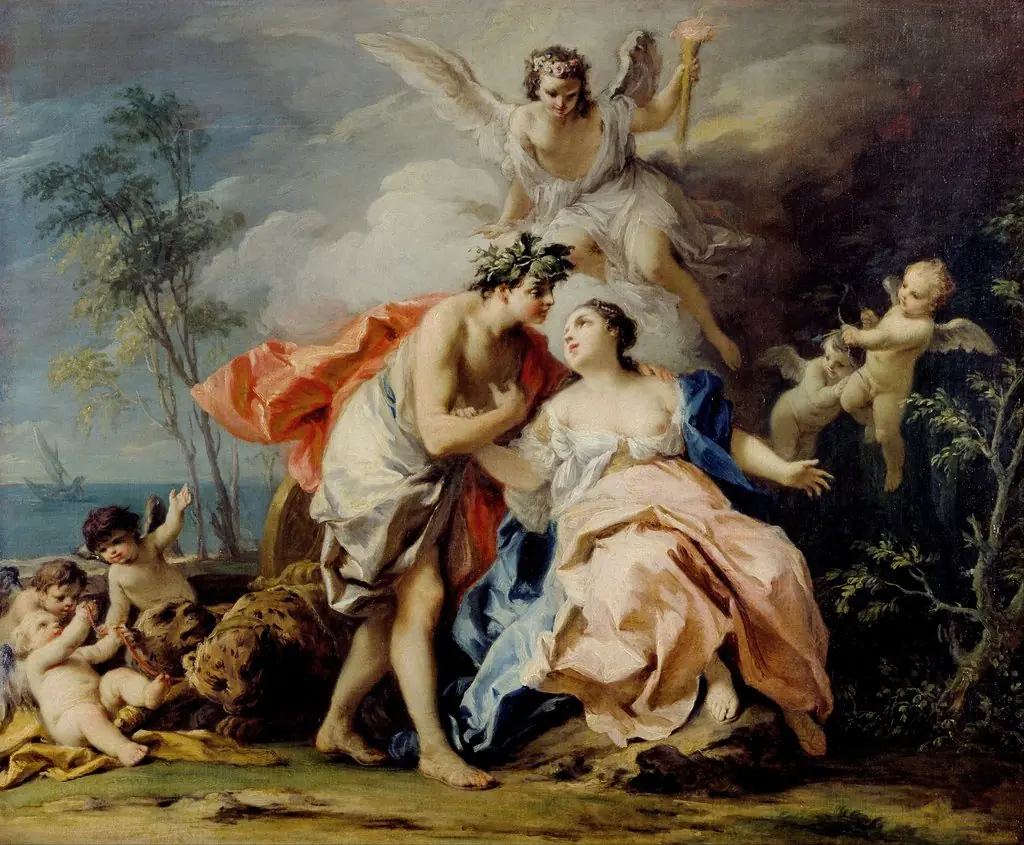 Bacchus and Ariadne
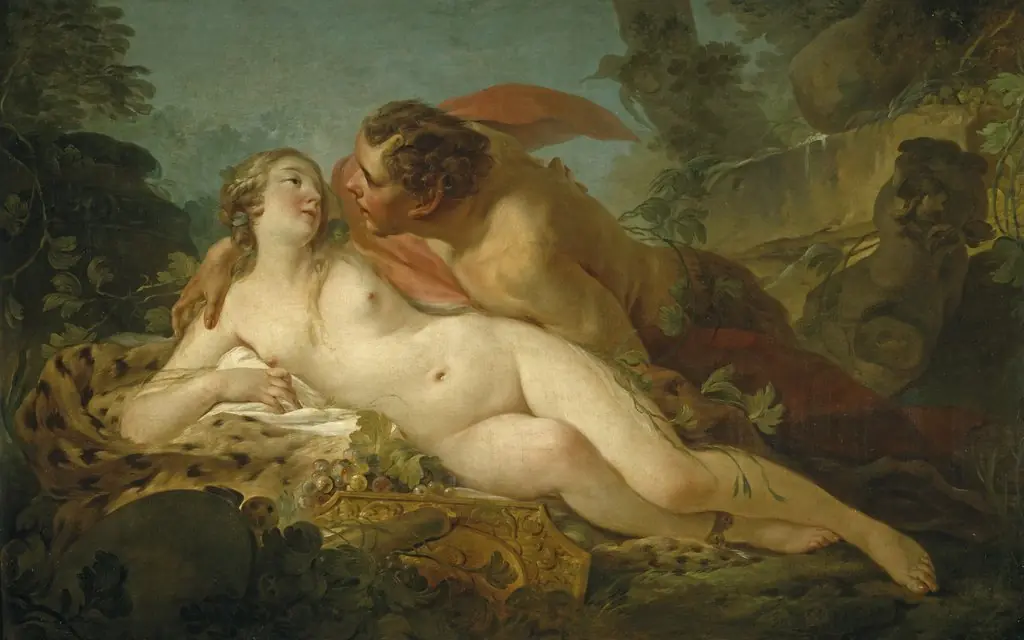 Jupiter and Antiope
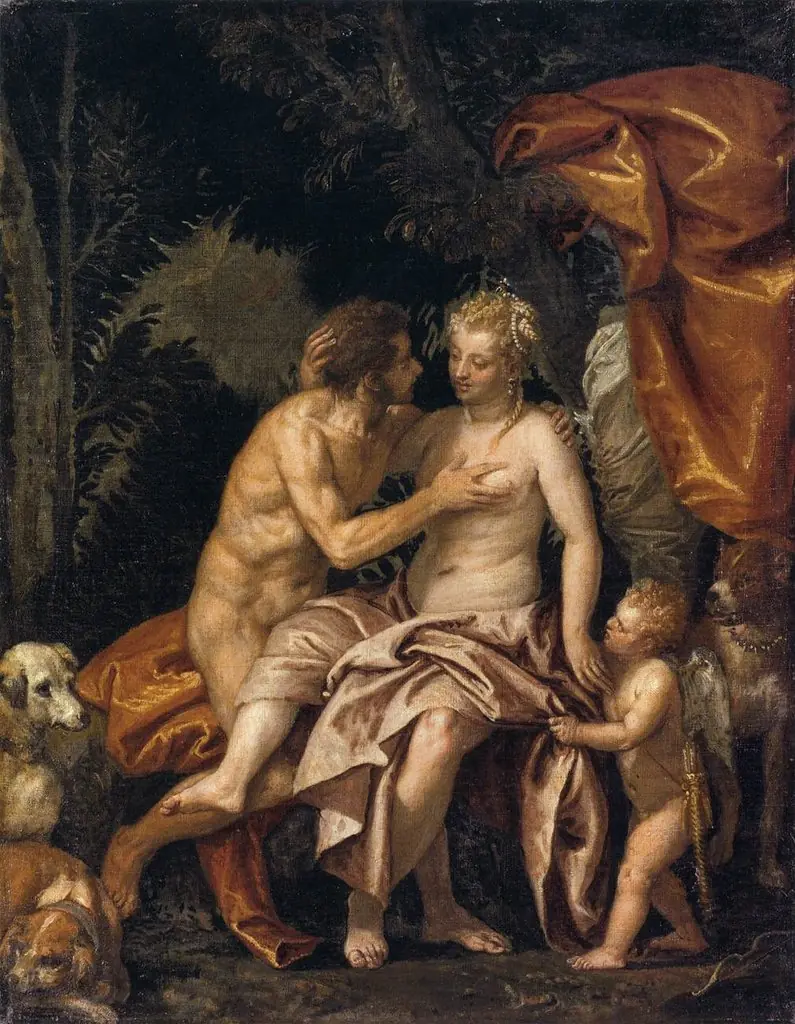 Venus and Adonis
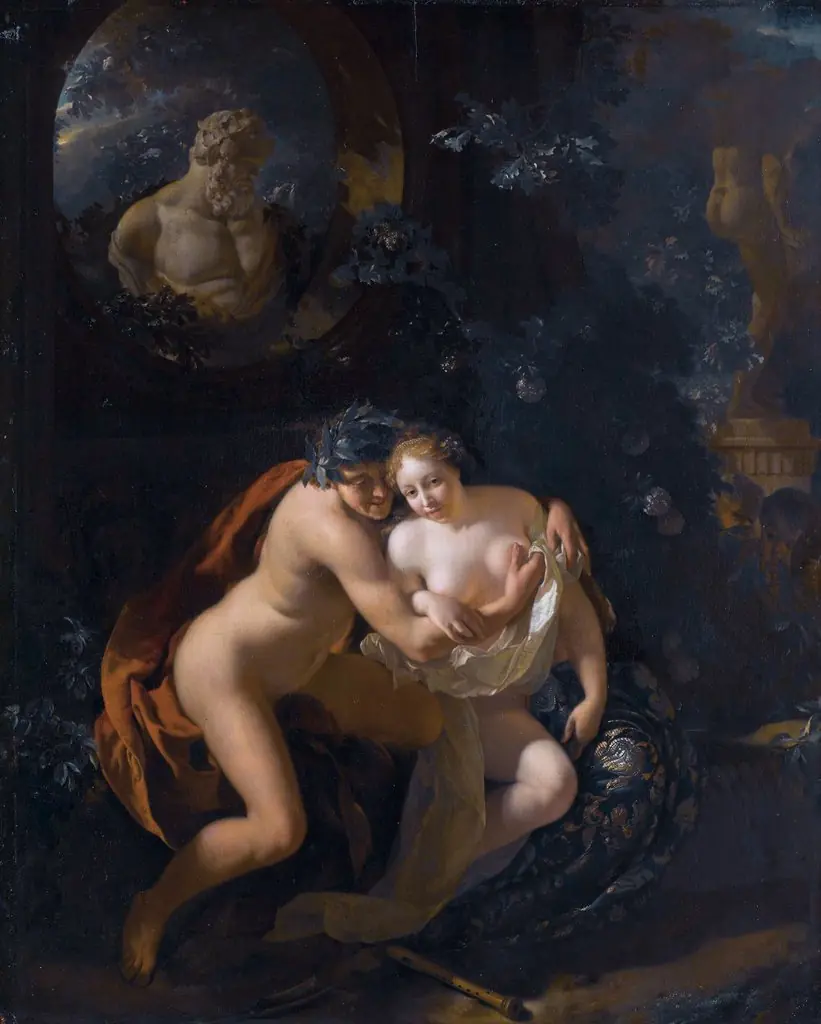 A Couple Making Love in a Park Spied on by Children