Artwork
Cupid and Psyche
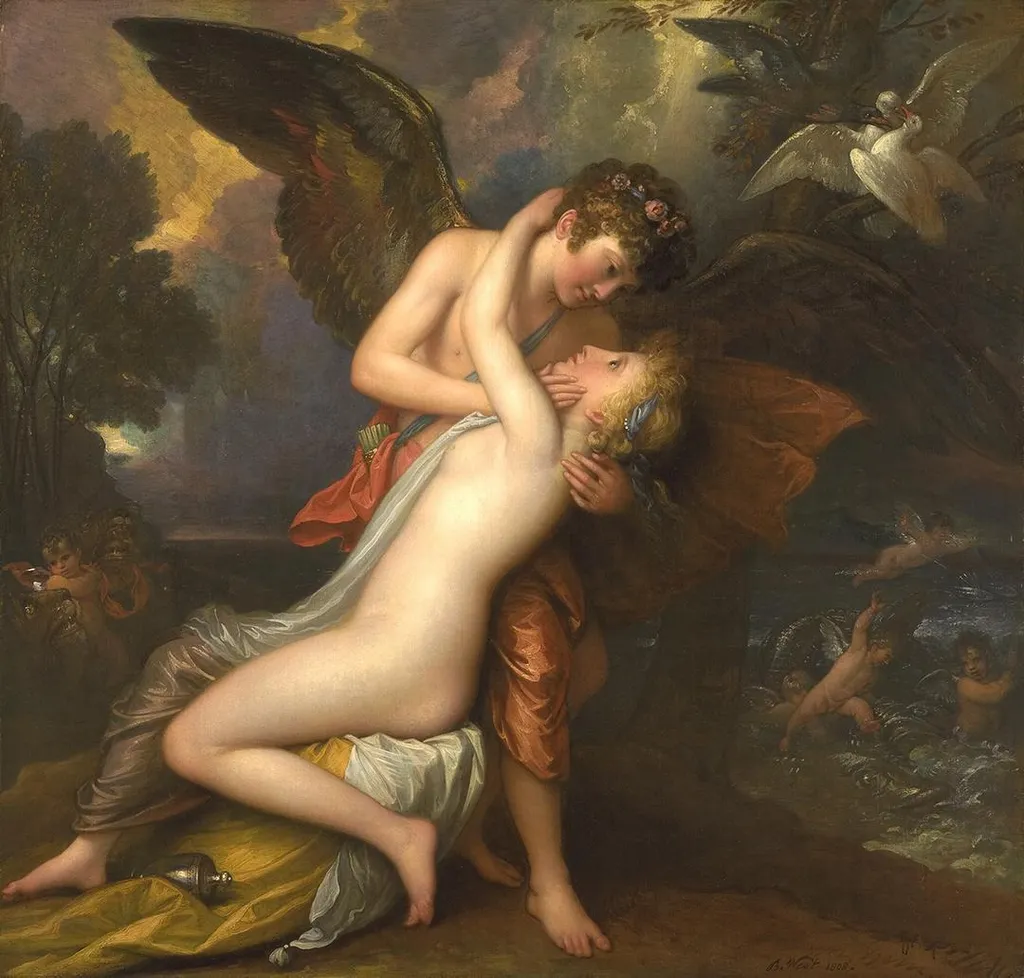
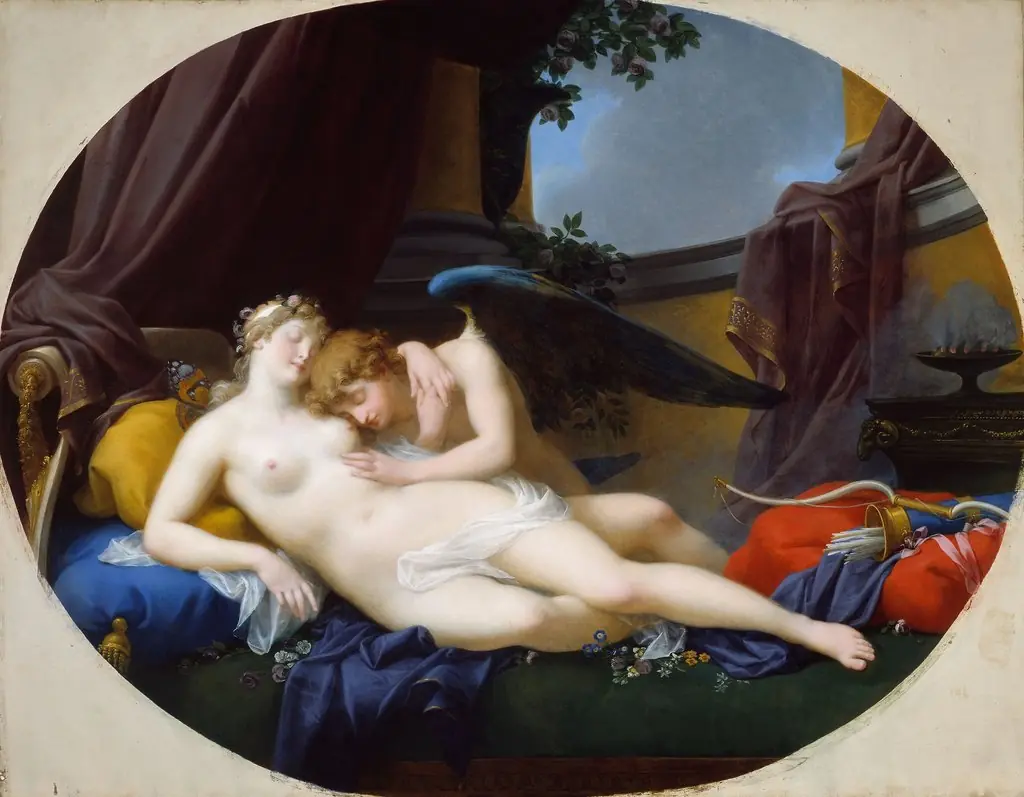
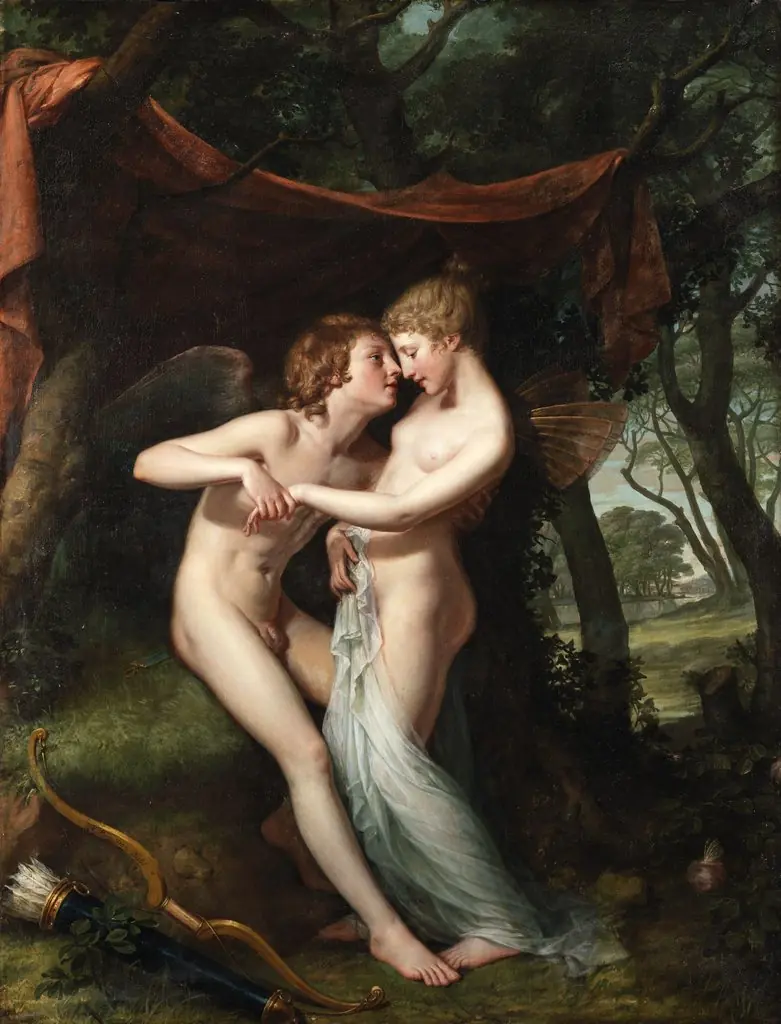
Cupid and Psyche is an oil painting by the Neoclassicist artist Benjamin West. It dates from 1808 and is held in the collection of the Crystal Bridges Museum of American Art.
About this work
Overview
Though American by birth, West spent most of his career in London, where he rose to prominence as a history painter and held official court appointments.
Benjamin West’s 1808 oil painting *Cupid and Psyche* illustrates a moment from Apuleius’s ancient tale, rendered in the neoclassical idiom favored by European academies. Though American by birth, West spent most of his career in London, where he rose to prominence as a history painter and held official court appointments. The work exemplifies his engagement with classical narratives and his mastery of formal composition, now part of the Crystal Bridges Museum of American Art’s collection.
Subject & Meaning
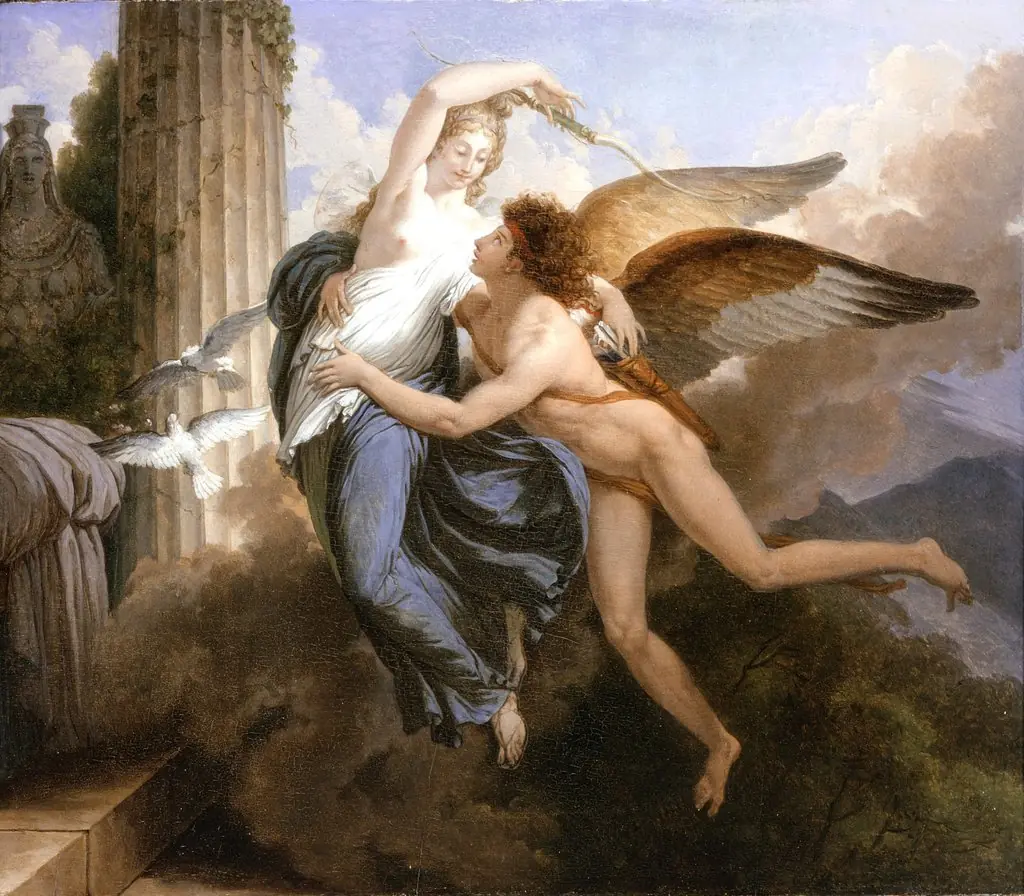
The painting captures the tender reunion of Cupid, the god of love, and Psyche, a mortal woman granted immortality. After enduring trials set by Venus, Psyche is finally embraced by her divine lover. West emphasizes emotional intimacy over dramatic action, focusing on their quiet connection. The scene symbolizes the soul’s ascent through love, a theme resonant in Enlightenment-era interpretations of classical myth.
Technique & Style
West employs smooth brushwork and controlled lighting to achieve a serene, idealized atmosphere. Figures are rendered with anatomical precision, their forms softened by subtle gradations of tone rather than stark chiaroscuro. The drapery of their garments flows naturally, anchoring them within a tranquil landscape. The background—gently modeled trees, still water, and hazy sky—enhances the sense of a private, otherworldly moment without distracting from the central figures.
History & Provenance
Commissioned during West’s tenure as historical painter to King George III, the work reflects his continued influence in British artistic circles despite his American origins. It remained in private collections for much of the 19th and 20th centuries before entering the Crystal Bridges Museum of American Art. Its acquisition there underscores its significance as a transatlantic artifact of neoclassical painting, bridging European traditions with American institutional collecting.
Context
Created during the height of neoclassicism, the painting responds to a broader cultural revival of antiquity in art and literature. West’s choice of mythological subject aligns with contemporary tastes for morally elevated themes, contrasting with emerging Romantic tendencies. His training under European masters and his position at the Royal Academy shaped his approach, making his interpretation of Cupid and Psyche both academically grounded and emotionally restrained.
Legacy
West’s *Cupid and Psyche* stands as a representative example of late 18th-century academic painting, illustrating how classical narratives were adapted for modern audiences. While less celebrated than his historical scenes, this work reveals his skill in conveying quiet emotion through idealized form. It remains a touchstone for understanding the transatlantic flow of artistic ideas and the persistence of mythological themes in early American collections.
Artist & collection

Museum
Crystal Bridges Museum of American Art
Continue through works from the same source collection.
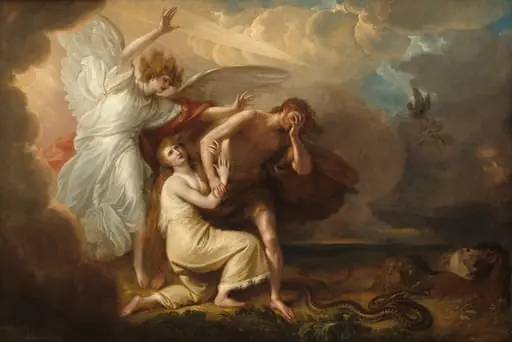 The Expulsion of Adam and Eve from Paradise
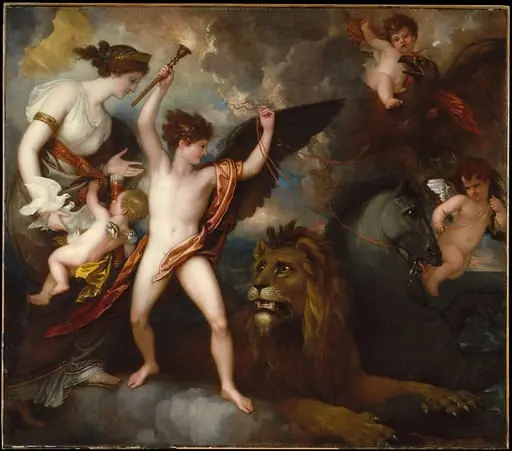 Omnia Vincit Amor, or The Power of Love in the Three Elements
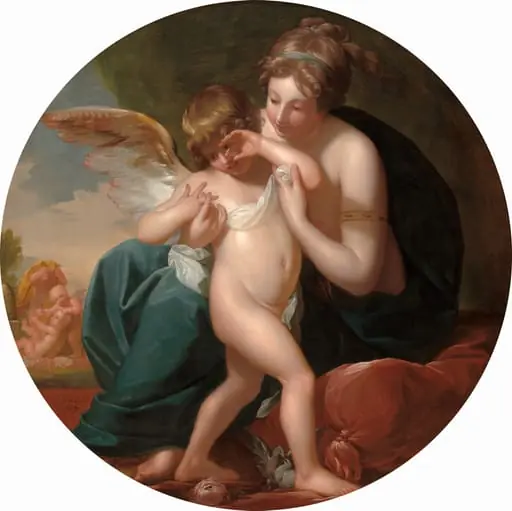 Cupid, Stung by a Bee, Is Cherished by his Mother
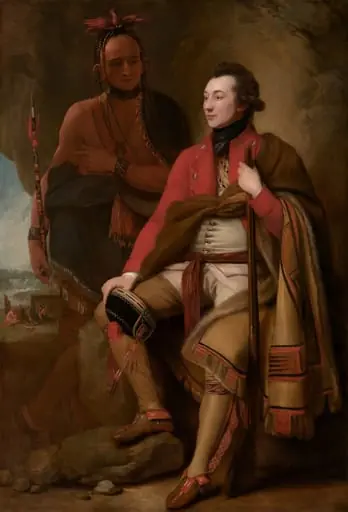 Colonel Guy Johnson and Karonghyontye (Captain David Hill)
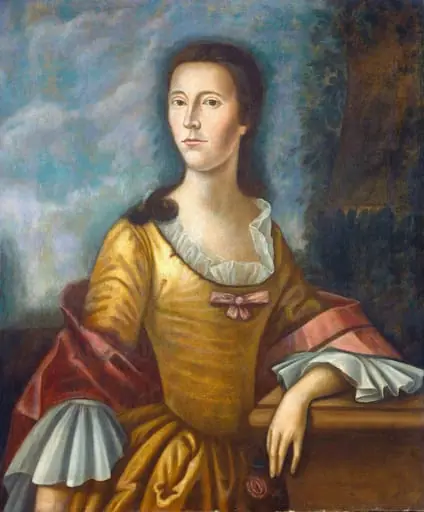 Mary Bethel Boude (Mrs. Samuel Boude)
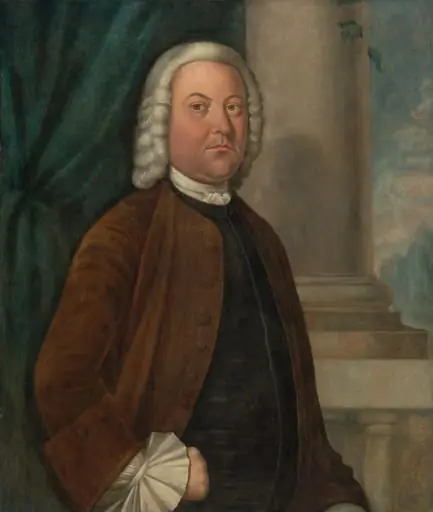 Dr. Samuel Boude
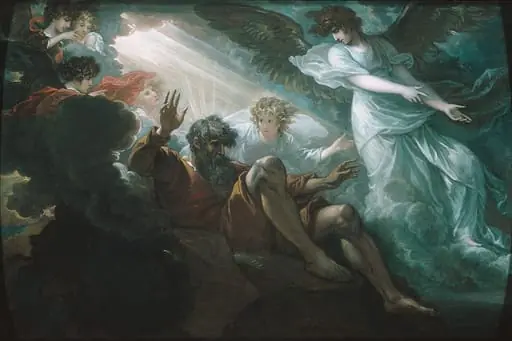 Moses Shown the Promised Land
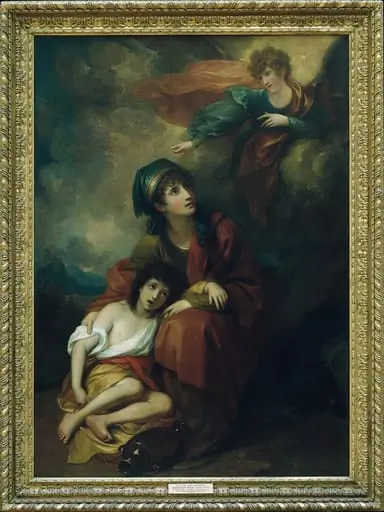 Hagar and Ishmael