Artwork
The Woman Spinning
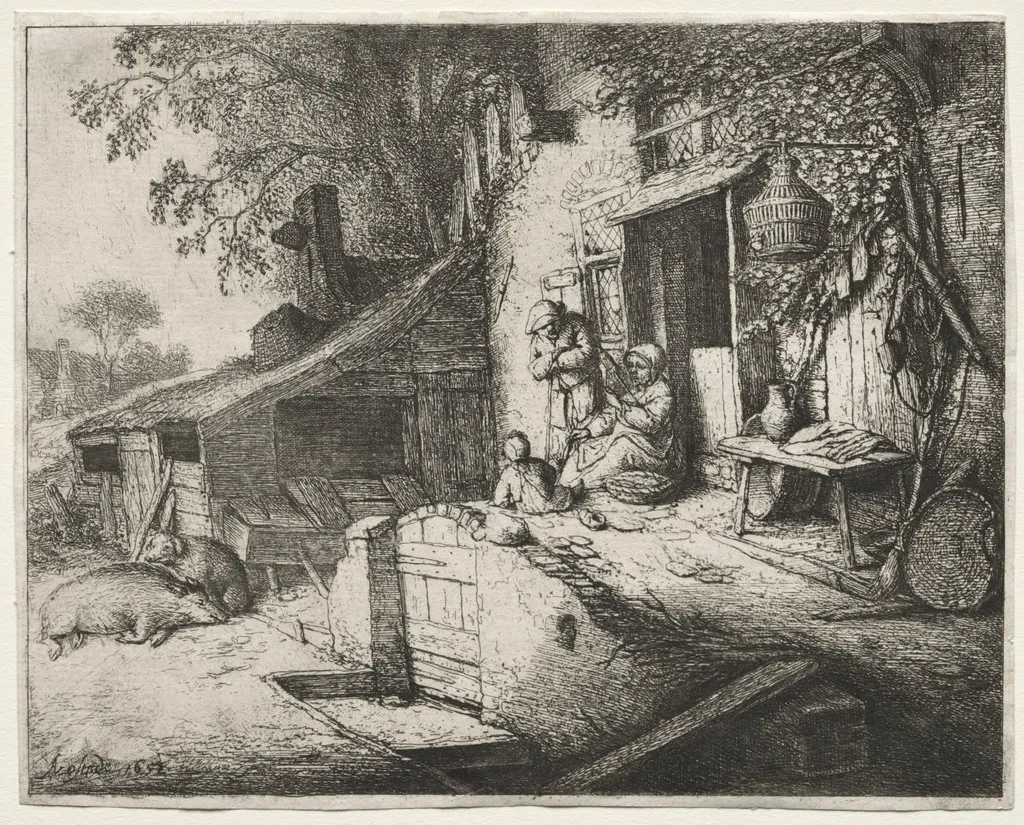
The Woman Spinning is a print by the Baroque artist Adriaen van Ostade. It dates from 1652 and is held in the collection of the Cleveland Museum of Art.
About this work
Overview
The work is part of the Cleveland Museum of Art’s collection and exemplifies the era’s interest in ordinary routines as subjects worthy of artistic attention.
Created in 1652 by Adriaen van Ostade, *The Woman Spinning* is an etching that captures a quiet domestic moment in a rural Dutch household. Van Ostade, known for his focus on peasant life during the Dutch Golden Age, used the medium of print to render intimate scenes with precision. The work is part of the Cleveland Museum of Art’s collection and exemplifies the era’s interest in ordinary routines as subjects worthy of artistic attention.
Subject & Meaning
The scene centers on a woman engaged in spinning wool, a common domestic task, while a man observes nearby and a child plays at their feet. Outside the window, a dog rests beside a barrel, and a birdcage hangs on the wall—details that suggest both labor and quiet leisure. The composition reflects the rhythm of daily life, emphasizing cooperation and stillness rather than drama, aligning with the values of modest, self-sufficient households in 17th-century Holland.
Technique & Style
Van Ostade employed sharp, controlled lines typical of etching to define textures—wooden beams, wool fibers, woven baskets—with clarity. The figures are rendered with subtle gestures, avoiding exaggeration, while the interior space feels densely populated yet orderly. The contrast between the warm interior and the muted exterior enhances the sense of enclosure, characteristic of Baroque genre scenes that found narrative depth in unadorned settings.
History & Provenance
The etching was produced during the height of van Ostade’s career, when his depictions of rural life gained recognition among collectors. It entered the Cleveland Museum of Art’s collection in the 20th century, following a trajectory common to Dutch prints of the period—passed through private hands before institutional acquisition. Its survival in good condition reflects its enduring appeal as a document of everyday culture.
Context
In mid-17th century Holland, the rise of a prosperous middle class fostered demand for art depicting domestic and rural life. Unlike religious or mythological subjects favored elsewhere in Europe, Dutch artists turned to the home, the farm, and the workshop. Van Ostade’s work fits within this trend, offering a non-idealized view of labor and family that resonated with contemporary viewers seeking authenticity.
Legacy
Van Ostade’s etchings, including *The Woman Spinning*, contributed to the broader recognition of genre painting as a legitimate artistic pursuit. His attention to detail and quiet human interaction influenced later realist traditions. While not widely celebrated in his time as a painter, his prints circulated widely, preserving his vision of ordinary life for future generations.
Artist & collection
Artist
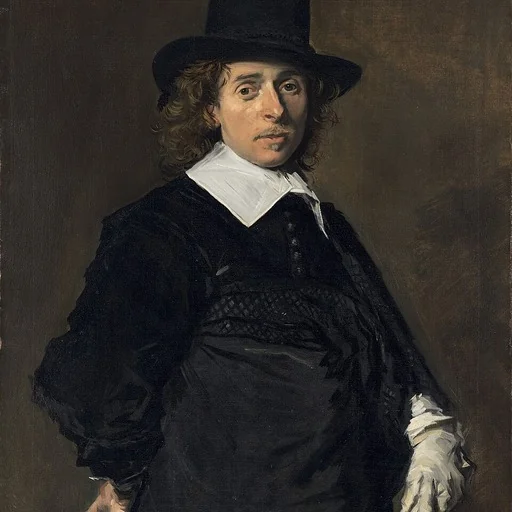
Adriaen van Ostade (baptized as Adriaen Jansz Hendricx 10 December 1610 – buried 2 May 1685) was a Dutch Golden Age painter of genre works, showing the everyday life of ordinary men and women.

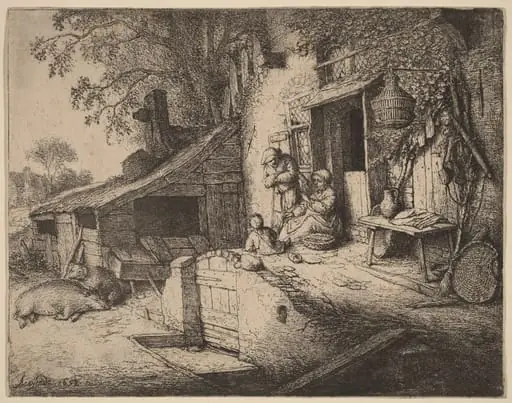 Farmstead wtih a Peasant Family Outside the Front Door, the Woman Spinning
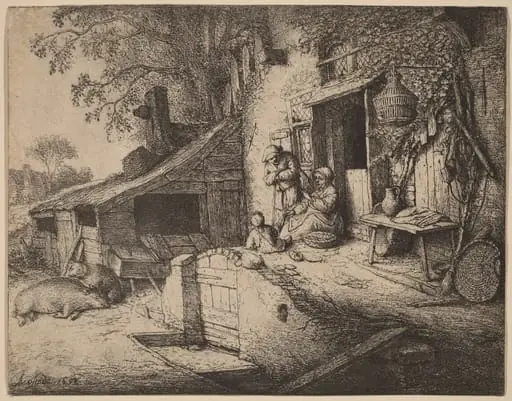 Farmstead wtih a Peasant Family Outside the Front Door, the Woman Spinning
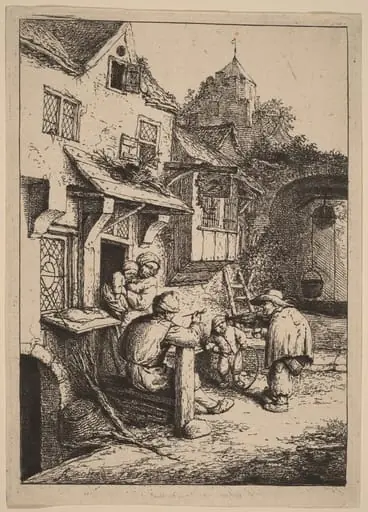 Peasant Family Entertained by a Fiddler with a Hunchback
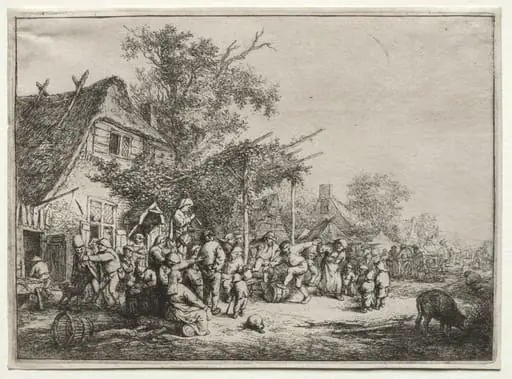 Festival Under the Trellis
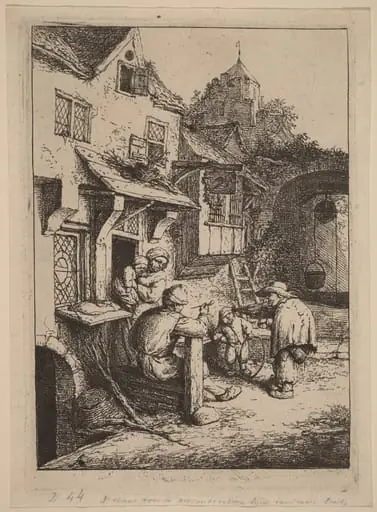 Peasant Family Entertained by a Fiddler with a Hunchback
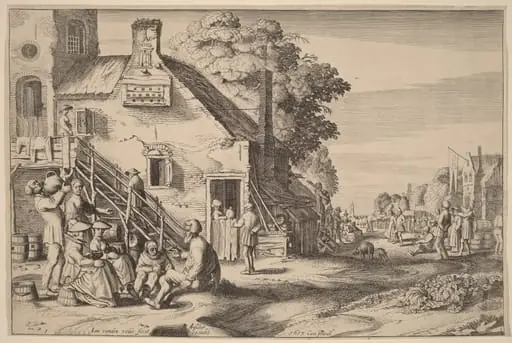 Spring (Village Fair before an Inn)
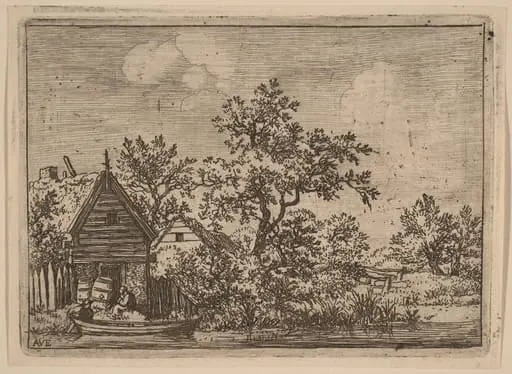 Two Casks in Front of a Cottage
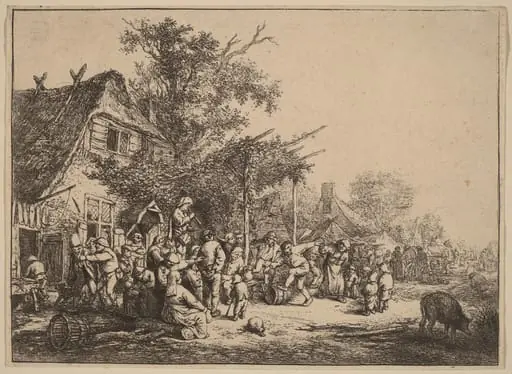 Village Kermesse with Peasants Feasting Under a Pergola
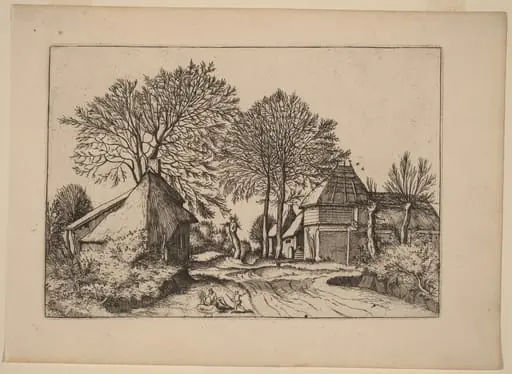 Road with Barn and Cottages
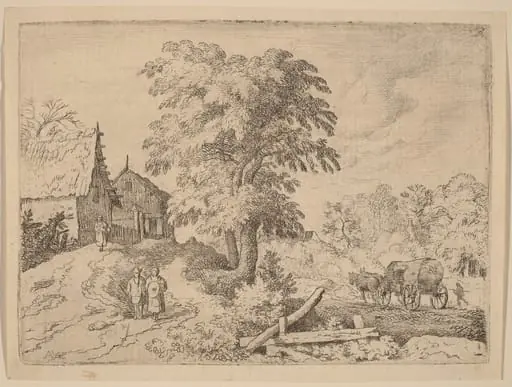 Cart with Two Draft Horses
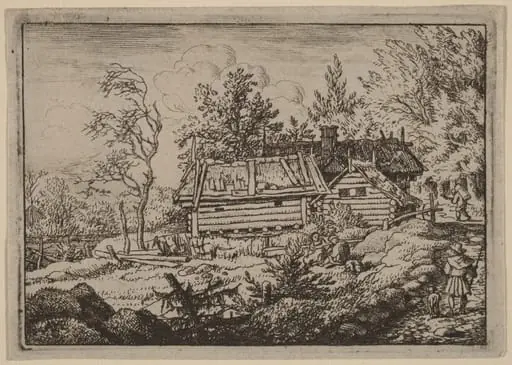 Pilgrim with a Dog
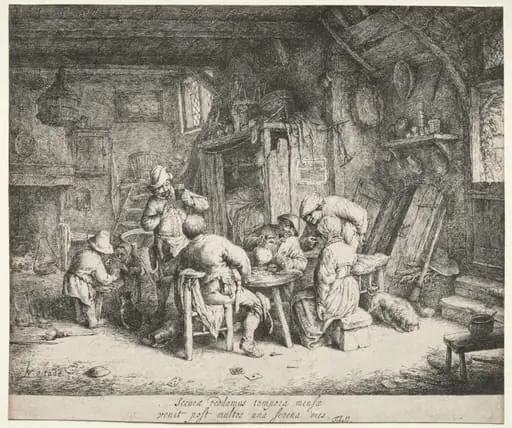 The Breakfast