Artwork
Spring (Village Fair before an Inn)
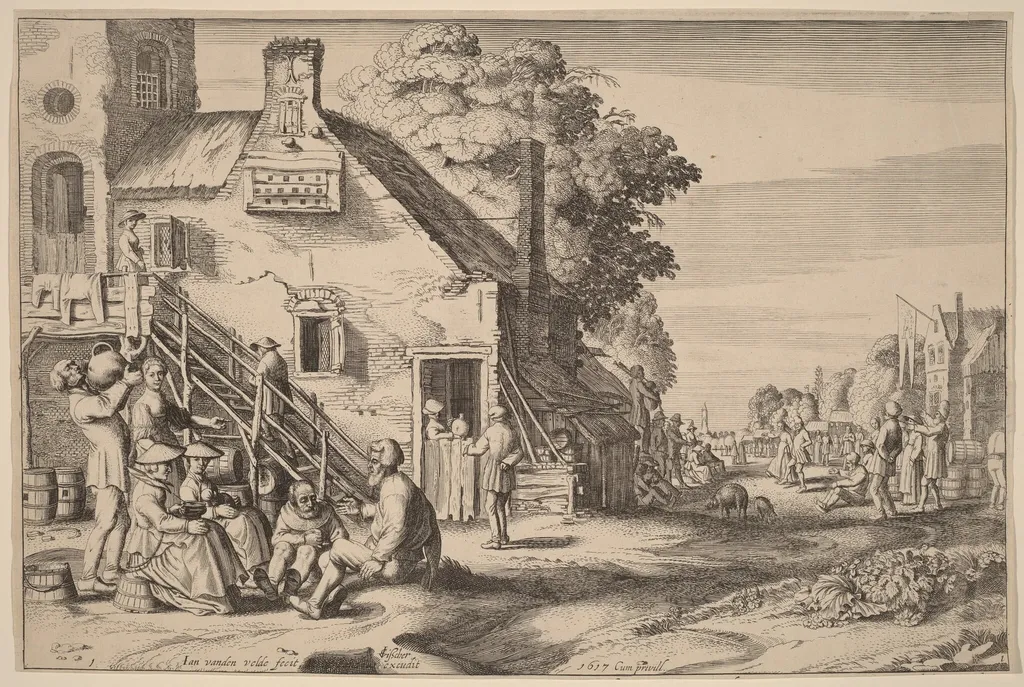
Spring (Village Fair before an Inn) is an ink print by the Baroque artist Jan van de Velde. It dates from 1617 and is held in the collection of the National Gallery of Art.
About this work
Overview
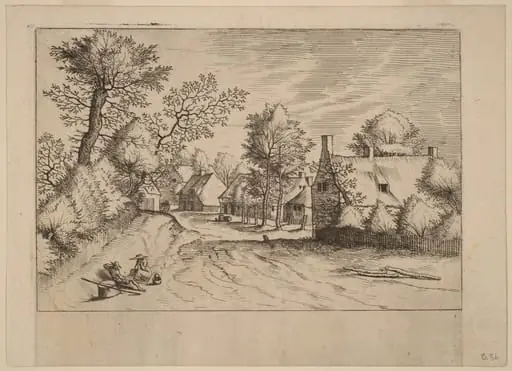
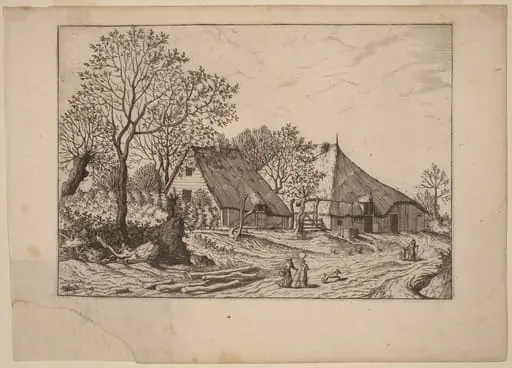
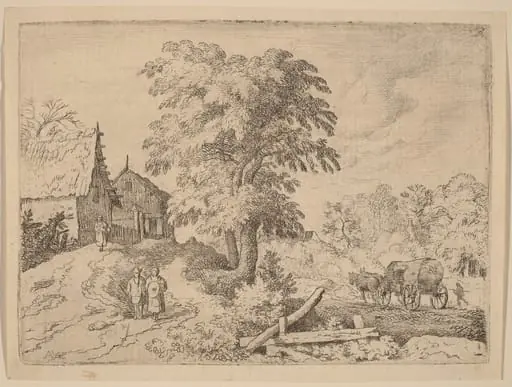
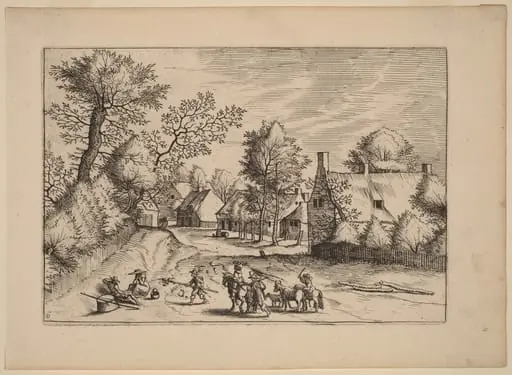
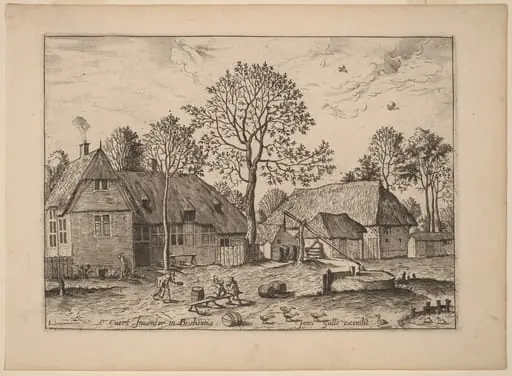
Jan van de Velde the Younger executed the etching *Spring (Village Fair before an Inn)* in 1617. The work belongs to the Dutch Golden Age and presents a bustling village fair set before an inn, framed by trees and a crowd of figures engaged in various activities.
Subject & Meaning
The composition captures a seasonal celebration, with villagers gathered around a large tree, some seated on barrels, others strolling or listening to musicians. A dog rests near the inn’s doorway, while distant buildings and a fence suggest a broader community setting, emphasizing communal leisure in a rural environment.
Technique & Style
Van de Velde employed the fine, linear qualities characteristic of early 17th‑century etching. Delicate incisions render textures such as bark, clothing folds, and architectural details, allowing a high level of surface realism while maintaining the fluidity of the medium.
History & Provenance
The artist, son of Jan van de Velde the Elder and father of still‑life painter Jan Jansz van de Velde, worked primarily in animal, landscape, and still‑life subjects. This print, dated 1617, reflects his engagement with genre scenes typical of the period, though specific ownership records for the piece are not documented.
Context
During the Dutch Golden Age, prints served both decorative and didactic purposes, disseminating images of everyday life to a broad audience. Village fairs were a popular motif, illustrating social cohesion and the prosperity of the Dutch countryside in the early 1600s.
Artist & collection
Artist
Jan van de Velde the younger (1593 – c. 1 November 1641) was a Dutch Golden Age painter and printmaker, mostly of animal, landscape and still-life subjects. He was the son of Jan van de Velde the Elder and the father of…