Artwork
Still-Life with Hare and Birds on a Ring
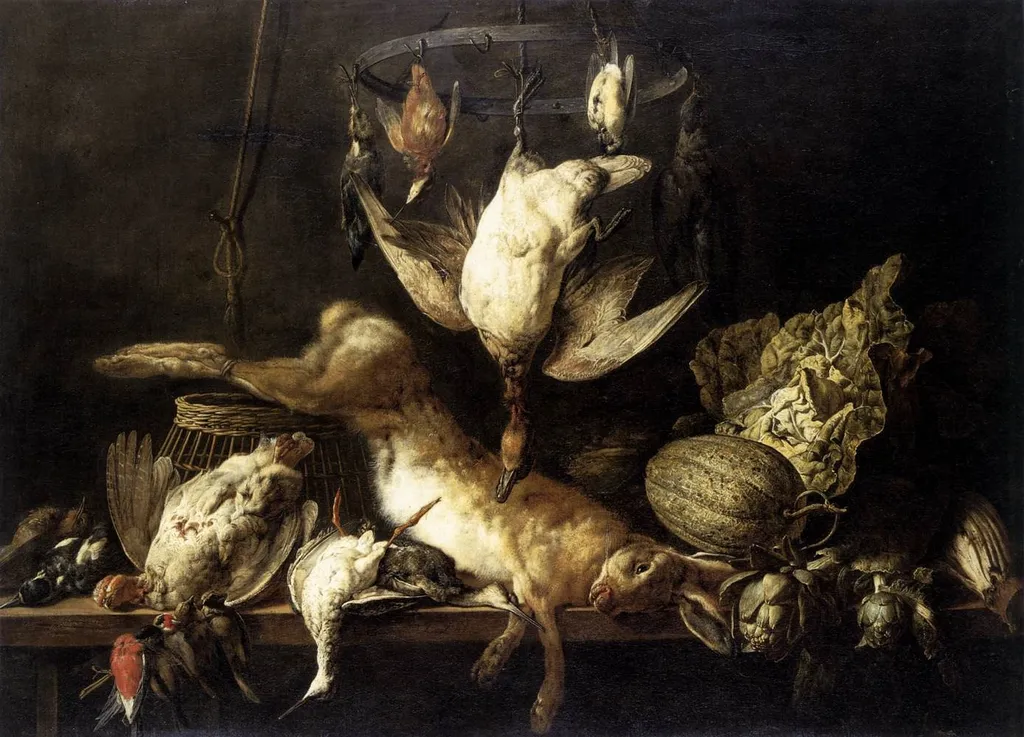
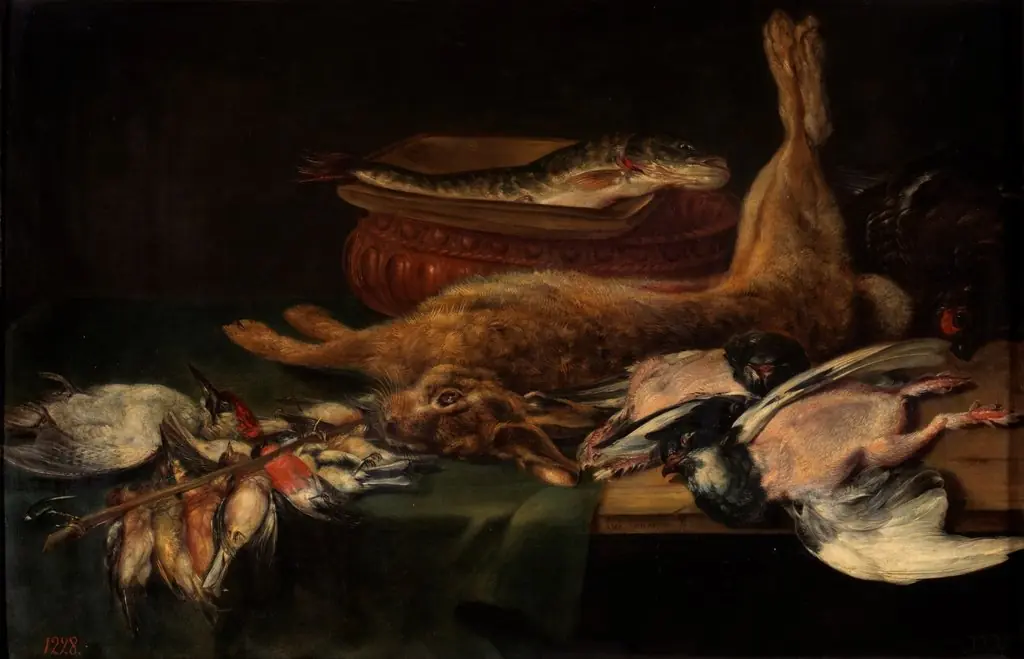
Still-Life with Hare and Birds on a Ring is an oil painting by the Dutch Golden Age artist Adriaen van Utrecht. It dates from 1646 and is held in the collection of the Gemäldegalerie Alte Meister.
About this work
Overview
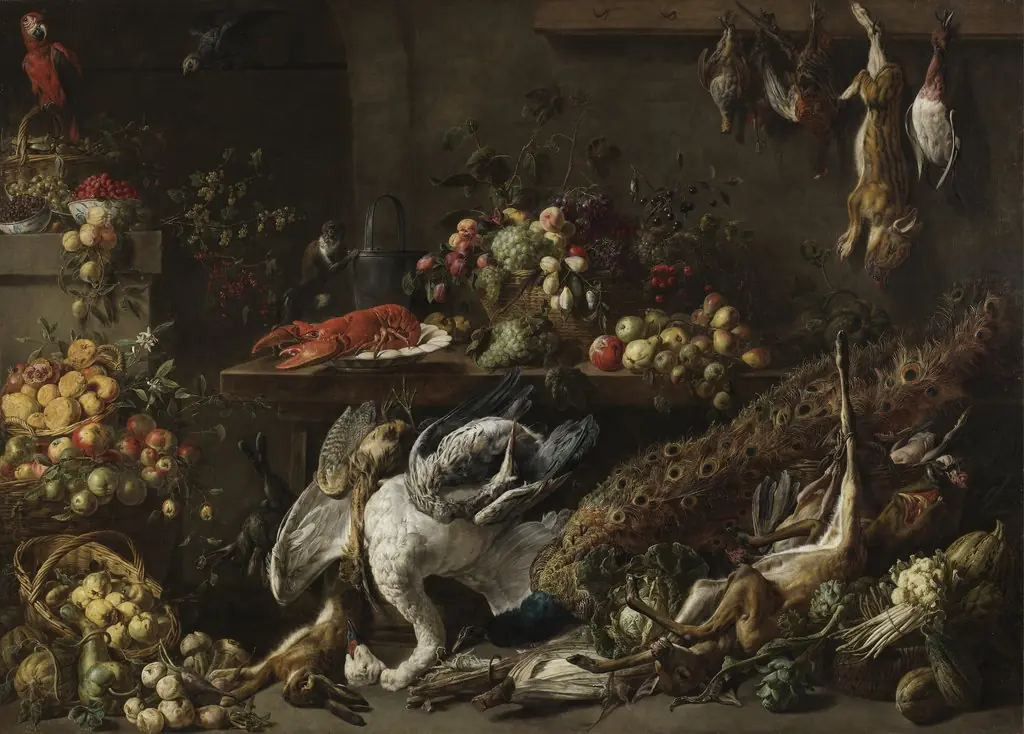
Painted in 1646 by Adriaen van Utrecht, this oil-on-canvas still life presents a quiet yet precise arrangement of hunted game and seasonal produce.
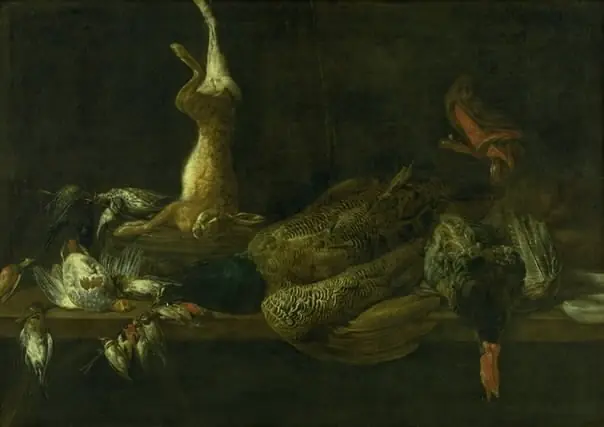
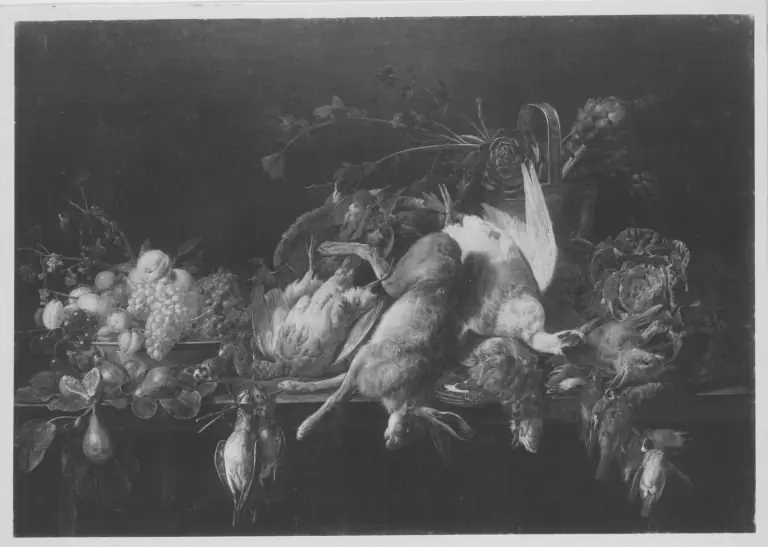
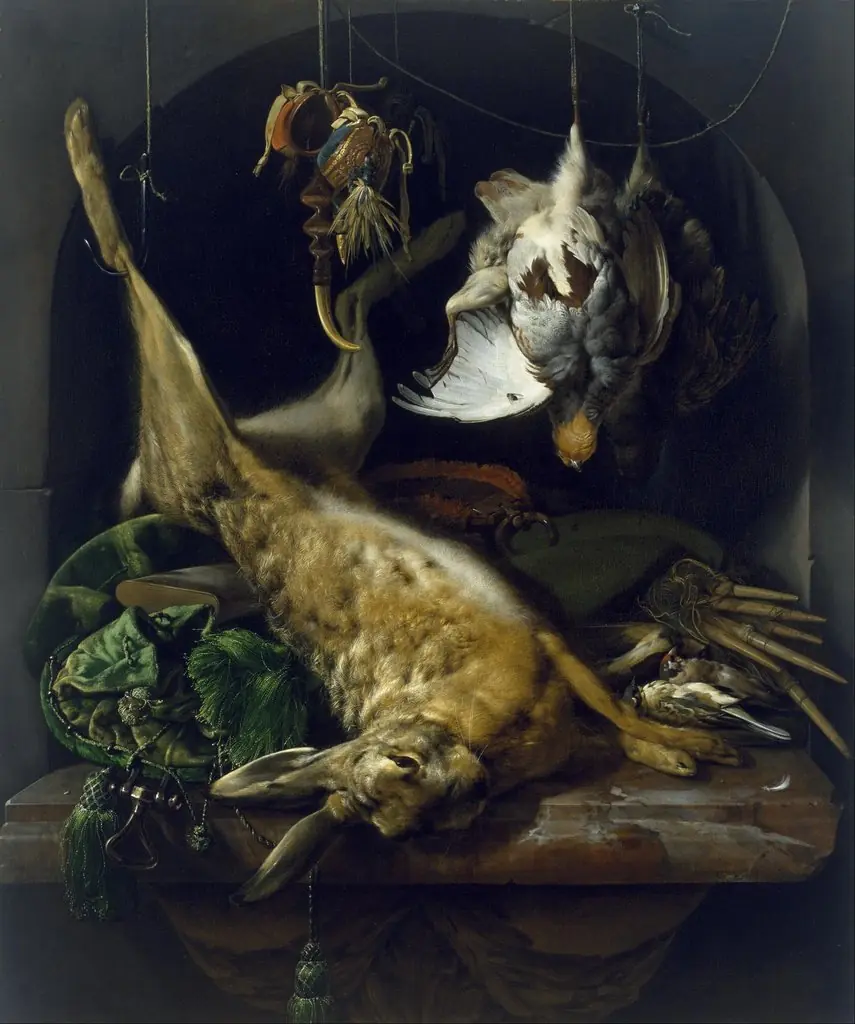
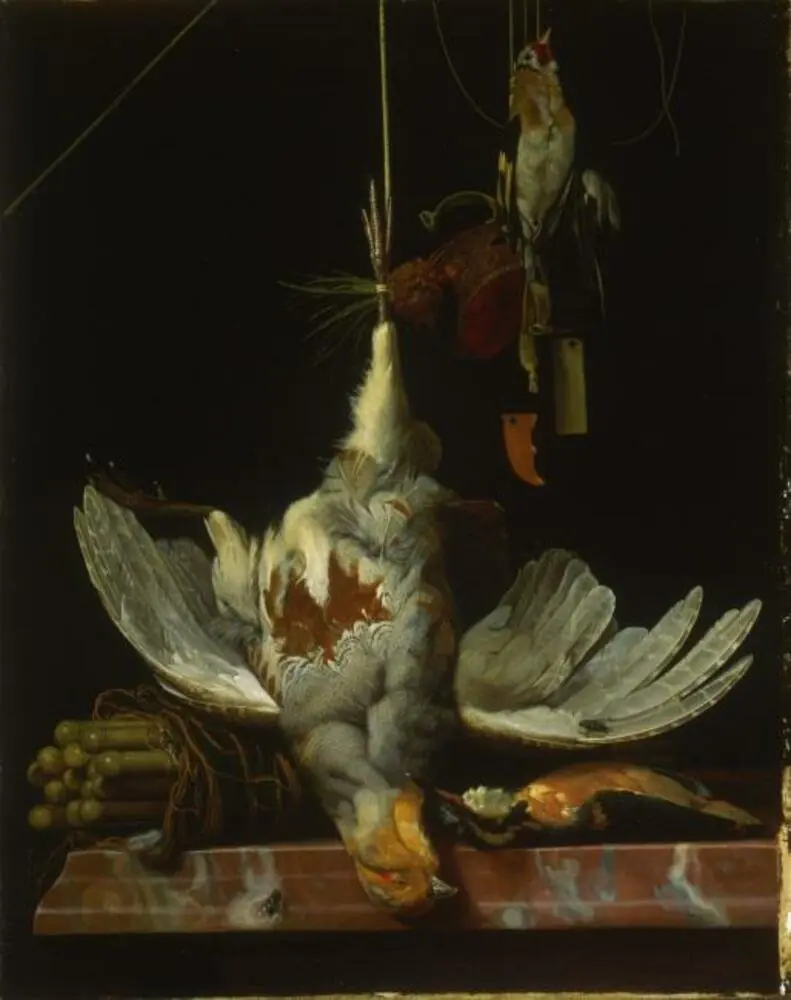
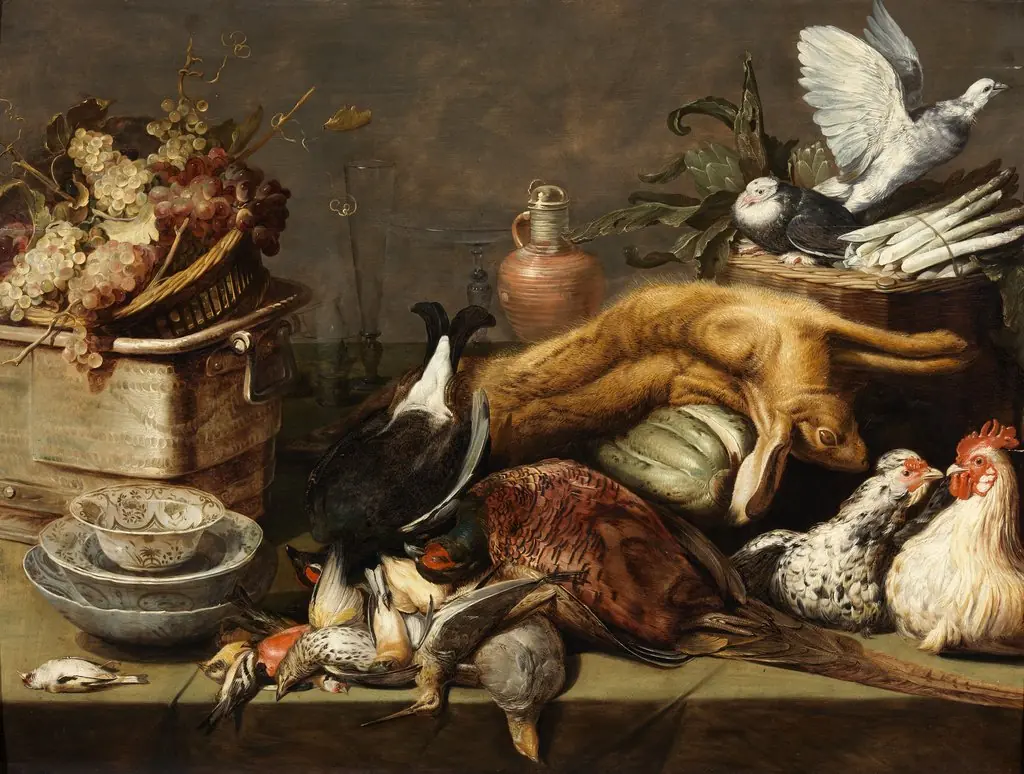
Painted in 1646 by Adriaen van Utrecht, this oil-on-canvas still life presents a quiet yet precise arrangement of hunted game and seasonal produce. The composition centers on a hare and several birds suspended from a metal ring, accompanied by vegetables and a woven basket. Rendered with meticulous attention to surface texture and weight, the scene reflects the Flemish tradition of detailed naturalism, grounded in the broader Dutch Golden Age interest in material observation.
Subject & Meaning
The arrangement of dead game and fruit evokes themes of abundance and transience. The hare and birds, once living creatures, are now static elements in a controlled display, suggesting the fleeting nature of life and the human mastery over nature. The ring, a structural and symbolic device, organizes the composition while hinting at cycles—of hunting, consumption, and seasonal renewal—without overt religious or allegorical messaging.
Technique & Style
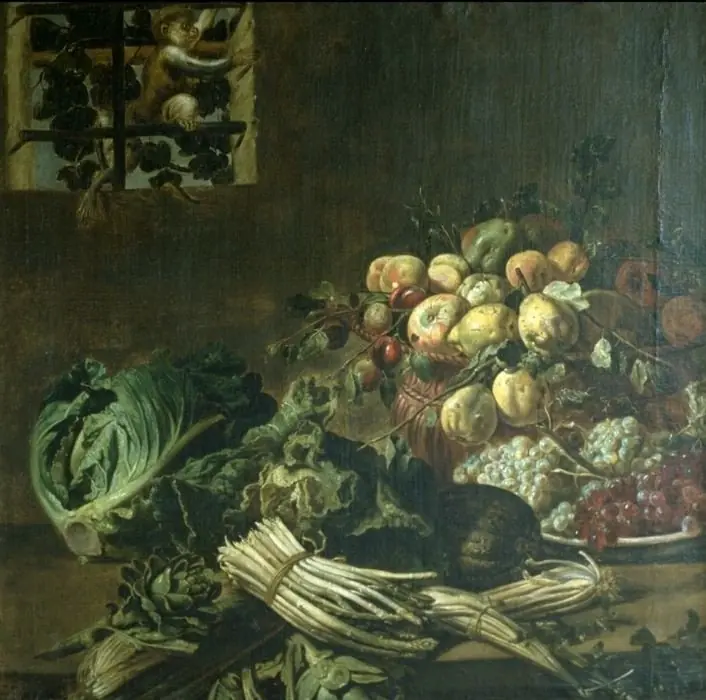
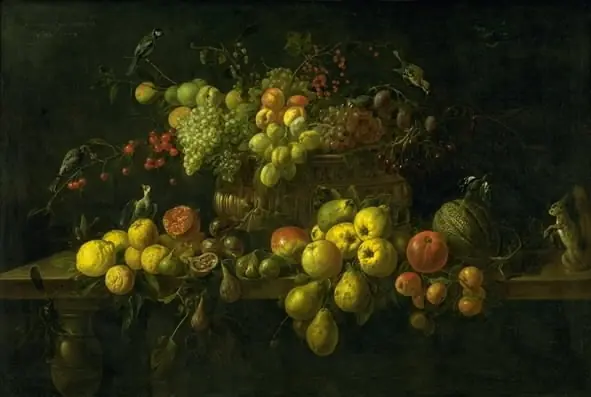
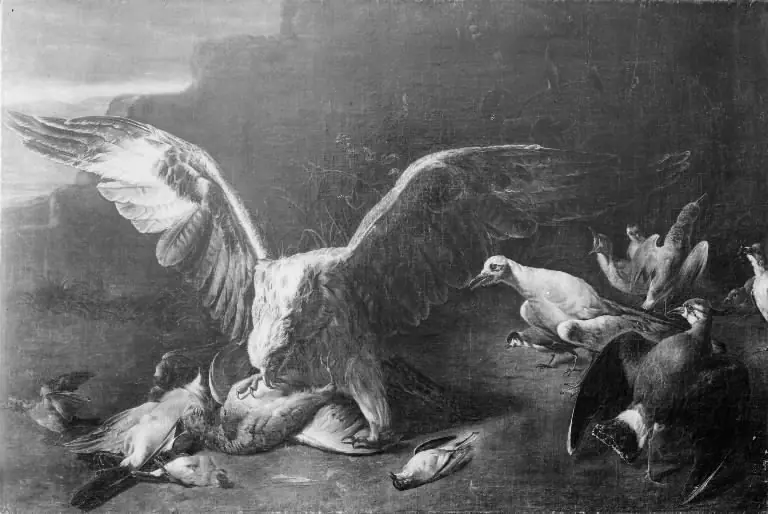
Van Utrecht employed a restrained palette dominated by earth tones—browns, grays, and muted greens—to emphasize texture over color. Brushwork is precise, capturing the roughness of fur, the sheen of feathers, and the dampness of vegetables. Dramatic chiaroscuro defines form through sharp contrasts of light and shadow, enhancing the three-dimensionality of each object and anchoring them firmly within a shallow, neutral space.
History & Provenance
Created during the height of van Utrecht’s career in Antwerp, the painting aligns with the period’s demand for elaborate still lifes among affluent collectors. Though specific early ownership records are sparse, its style and date place it within a network of Flemish artists who specialized in game pieces. It entered institutional collections in the 20th century, where it is now preserved as an example of mid-17th-century Northern European still-life practice.
Context
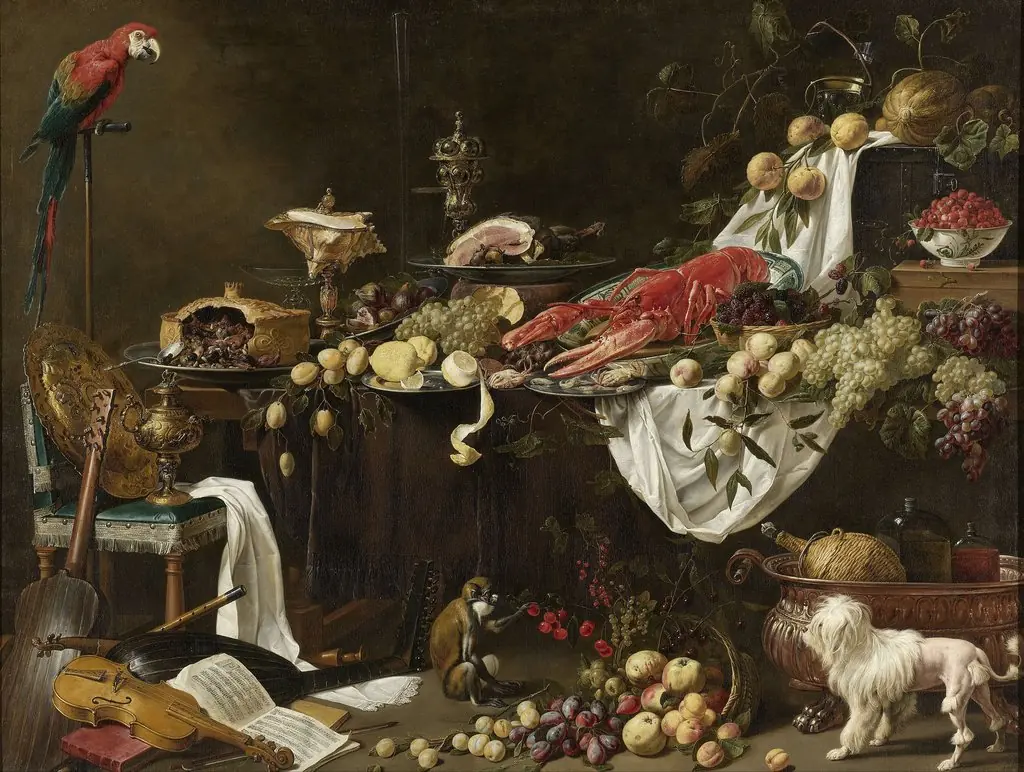
This work emerges from a cultural moment when Dutch and Flemish painters turned domestic interiors and market goods into subjects of serious artistic inquiry. Van Utrecht’s focus on hunted animals reflects broader societal engagement with hunting as both sport and sustenance. His collaboration with figures like Frans Snyders helped formalize the pronkstilleven, a genre that celebrated wealth through the accumulation of rare and seasonal goods.
Legacy
Van Utrecht’s still lifes, including this one, contributed to the codification of naturalistic representation in Northern European art. While less celebrated than contemporaries like Rembrandt or Vermeer, his precise handling of texture and composition influenced later generations of still-life painters. The painting remains a quiet testament to the era’s fascination with the tangible world and the skill required to render it with fidelity.
Artist & collection
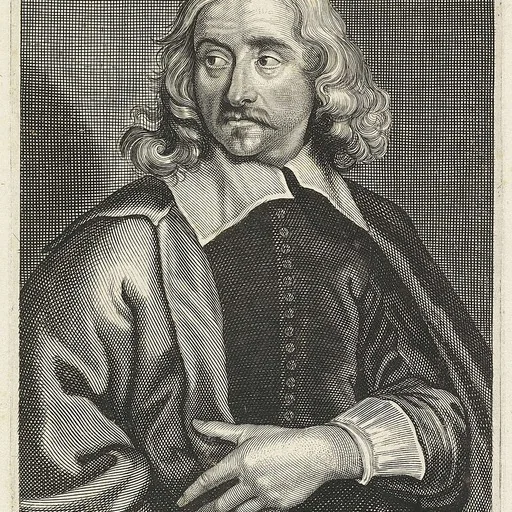
Artist
Adriaen van Utrecht (Antwerp, 12 January 1599 – 1652) was a Flemish painter known mainly for his sumptuous banquet still lifes, game and fruit still lifes, fruit garlands, market and kitchen scenes and depictions of live poultry in…