Artwork
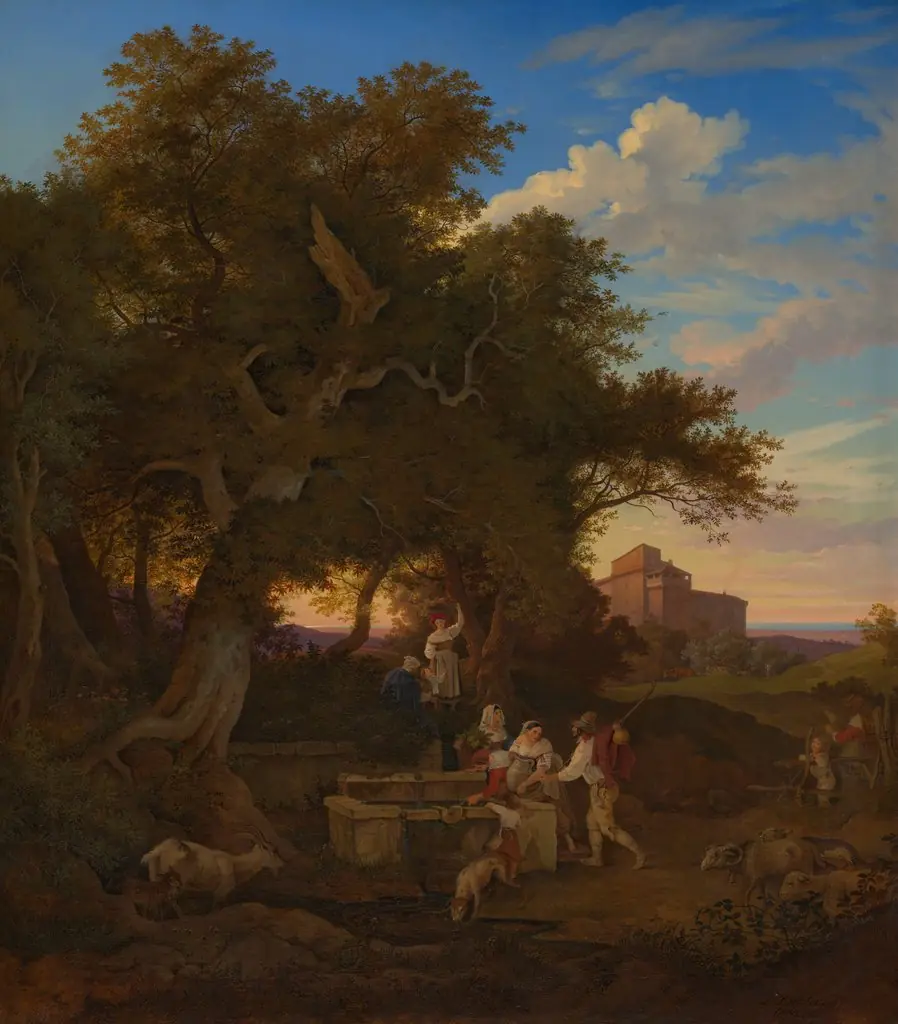
The Fountain at Grottaferrata
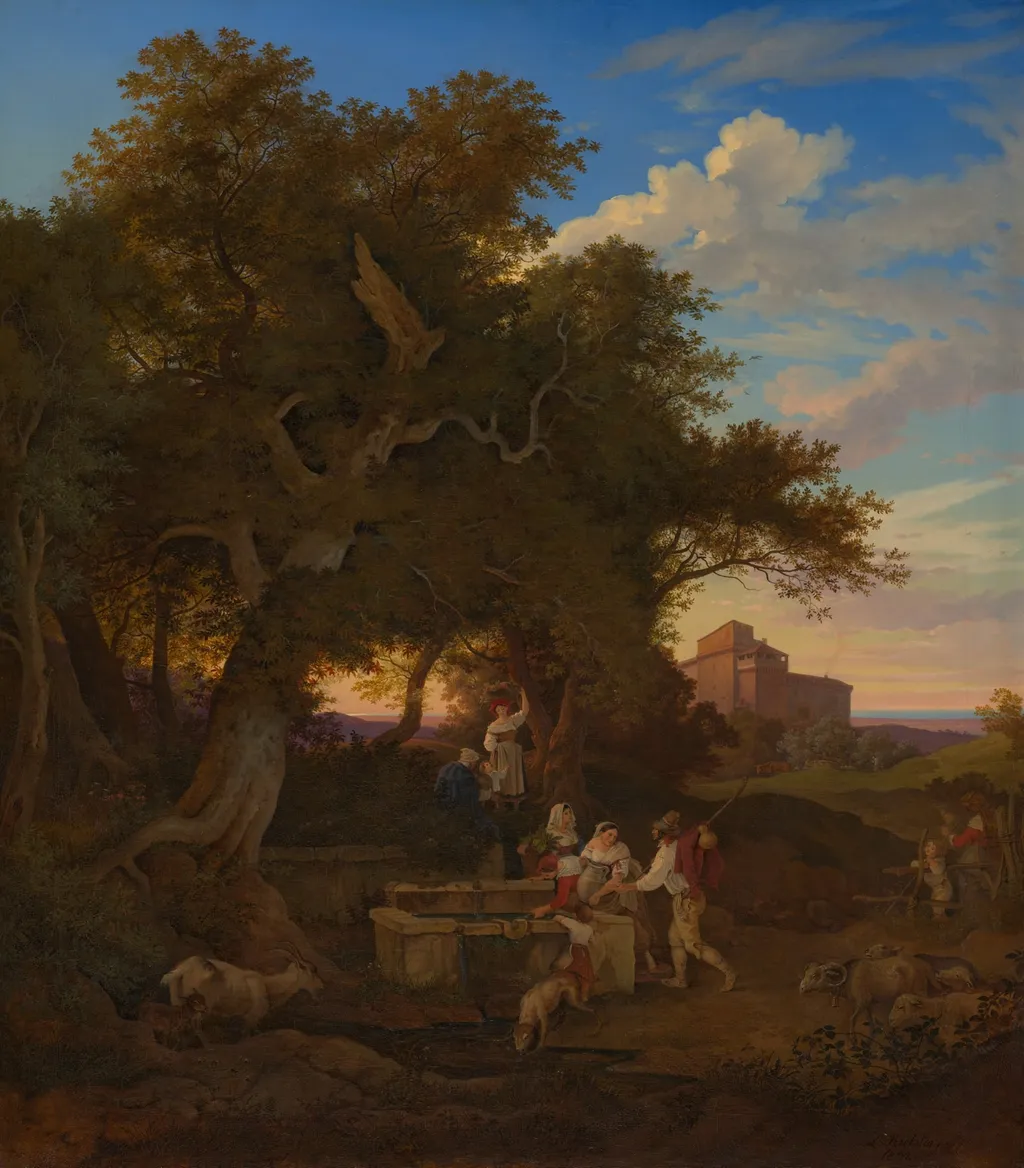
The Fountain at Grottaferrata is an oil painting by the German Romanticist artist Adrian Ludwig (Ludwig) Richter. It dates from 1832 and is held in the collection of the Art Institute of Chicago. This oil on canvas painting depicts a tranquil rural scene near Grottaferrata, Italy, rendered by the German artist Ludwig Richter.
About this work
Overview
This oil on canvas painting depicts a tranquil rural scene near Grottaferrata, Italy, rendered by the German artist Ludwig Richter. Though painted in Germany, the composition draws from sketches Richter made during his time in Rome. The work reflects a quiet, idealized vision of the Italian countryside, shaped by personal observation rather than romantic fantasy.
Subject & Meaning
The scene centers on a stone fountain surrounded by figures engaged in quiet, everyday activities—fetching water, resting, or conversing. A medieval monastery looms in the distance, anchoring the image in a specific place. Richter’s focus on ordinary life suggests a reverence for simplicity and harmony with nature, filtered through his Northern European sensibility.
Technique & Style
Richter employed soft, diffused light to unify the composition, enhancing the sense of calm. His brushwork is precise yet gentle, with careful attention to texture in stone, foliage, and fabric. While not overtly dramatic, the painting uses subtle tonal contrasts to model form and suggest depth, reflecting a restrained approach to chiaroscuro.
History & Provenance
Created after Richter’s return to Germany, the painting is grounded in on-site studies made during his stay in Rome in the 1830s. He preserved detailed sketches of Grottaferrata’s architecture and landscape, which he later translated into this studio work. The painting remained within German collections before entering its current institutional holding.
Context
Richter was part of a generation of German artists drawn to Italy in the early 19th century, seeking inspiration in classical ruins and pastoral landscapes. His work diverged from grand historical narratives, instead favoring intimate, observed moments. This shift aligned with broader Romantic trends that valued authenticity and emotional resonance over idealized grandeur.
Legacy
The painting exemplifies how Northern European artists interpreted Italian scenery through a lens of quiet contemplation. While not widely known outside specialist circles, it remains a significant example of cross-cultural artistic exchange in the 19th century, illustrating how travel and documentation shaped artistic identity beyond national borders.
Artist & collection

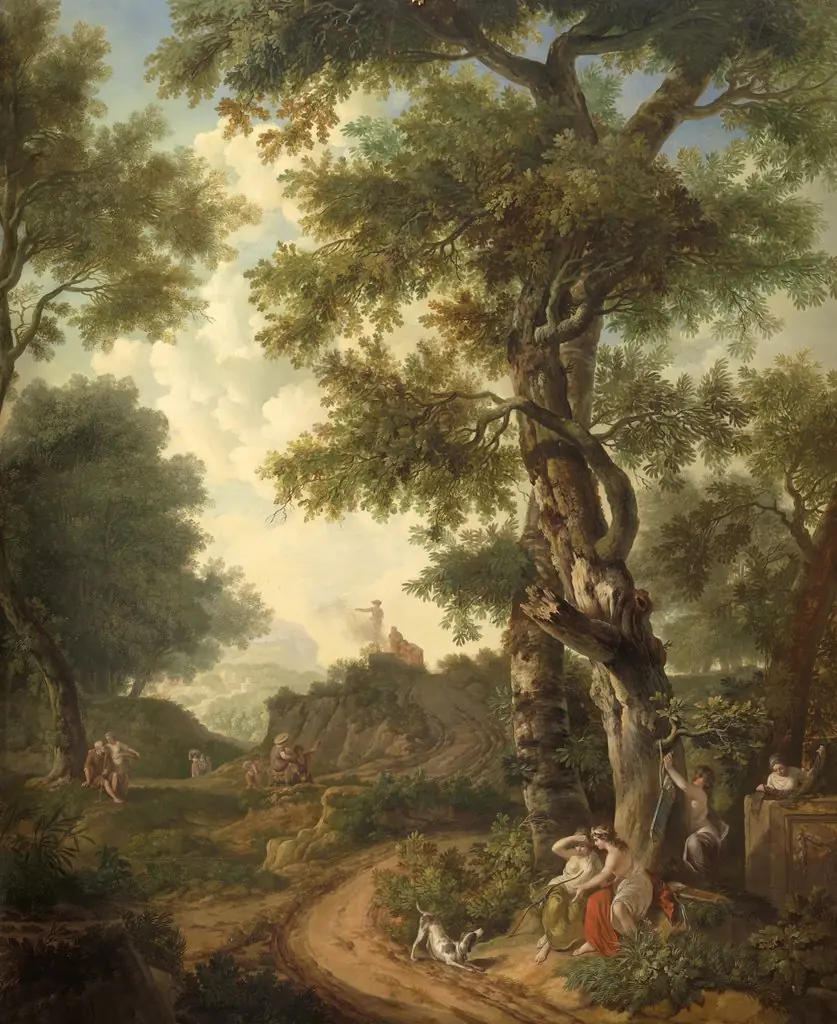 Arcadisch landschap met reizigers
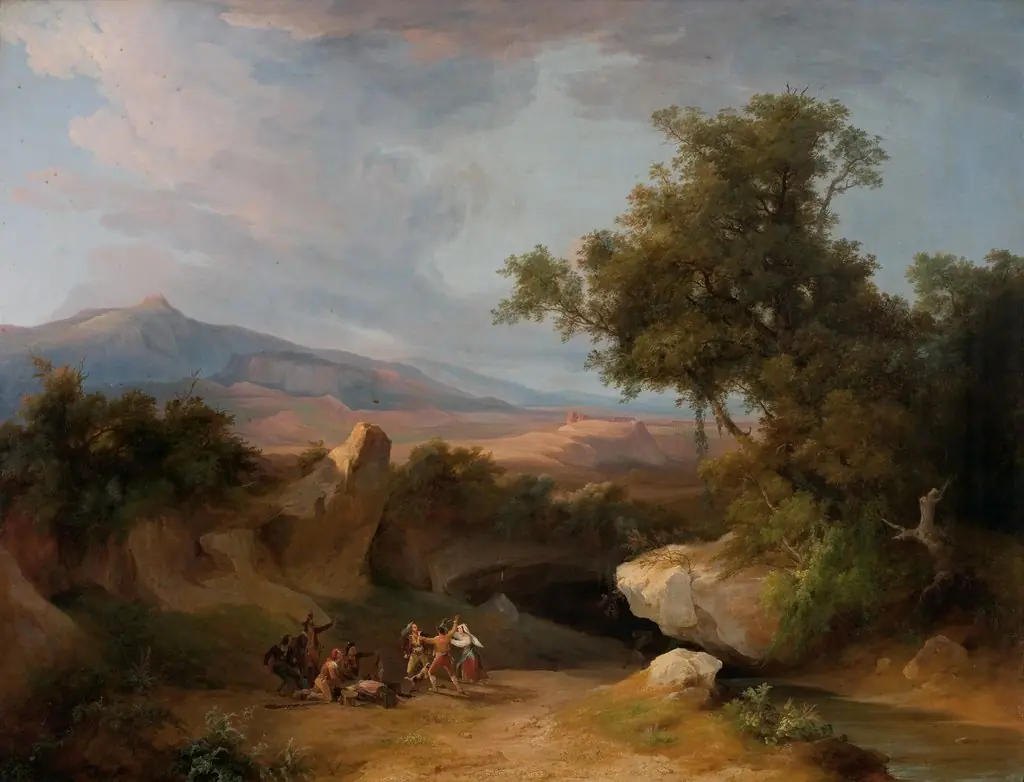 Bandits in Romagna
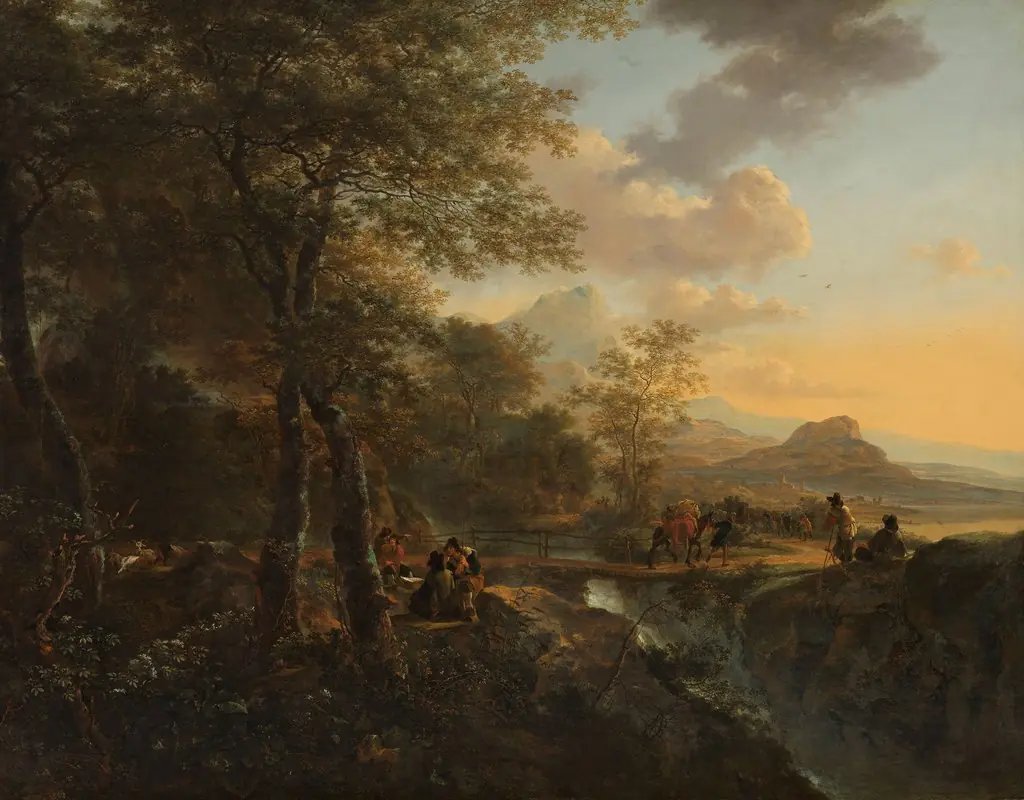 Italian Landscape with a Draughtsman
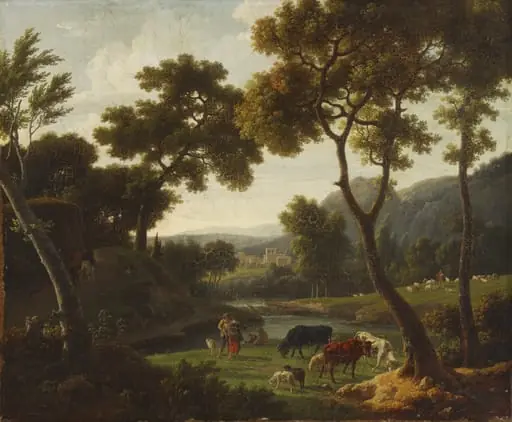 Ihanteellinen maisema
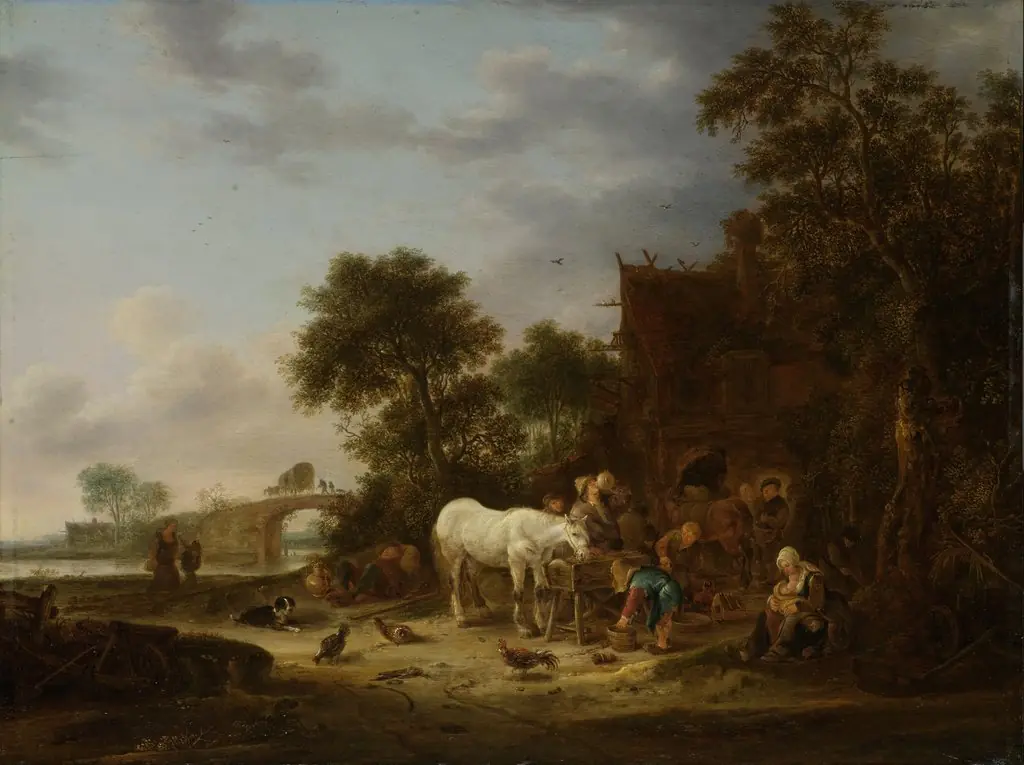 Country inn with a horse at the trough
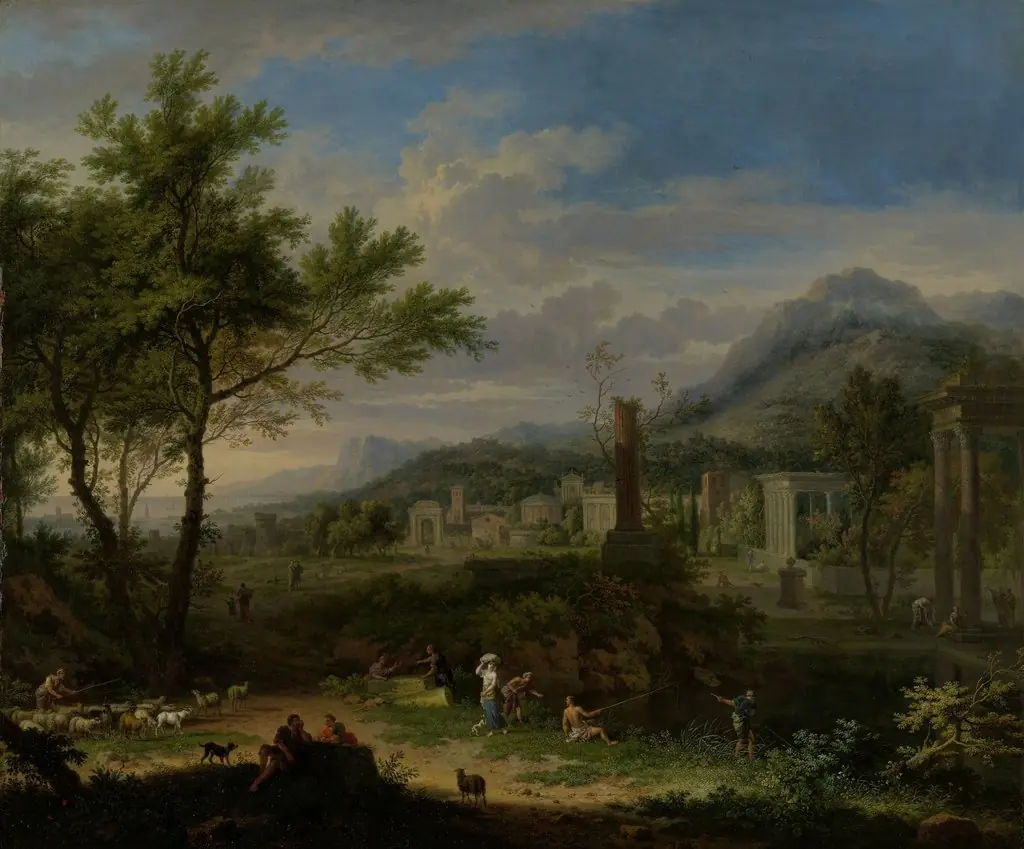 Arcadian Landscape with Fishermen
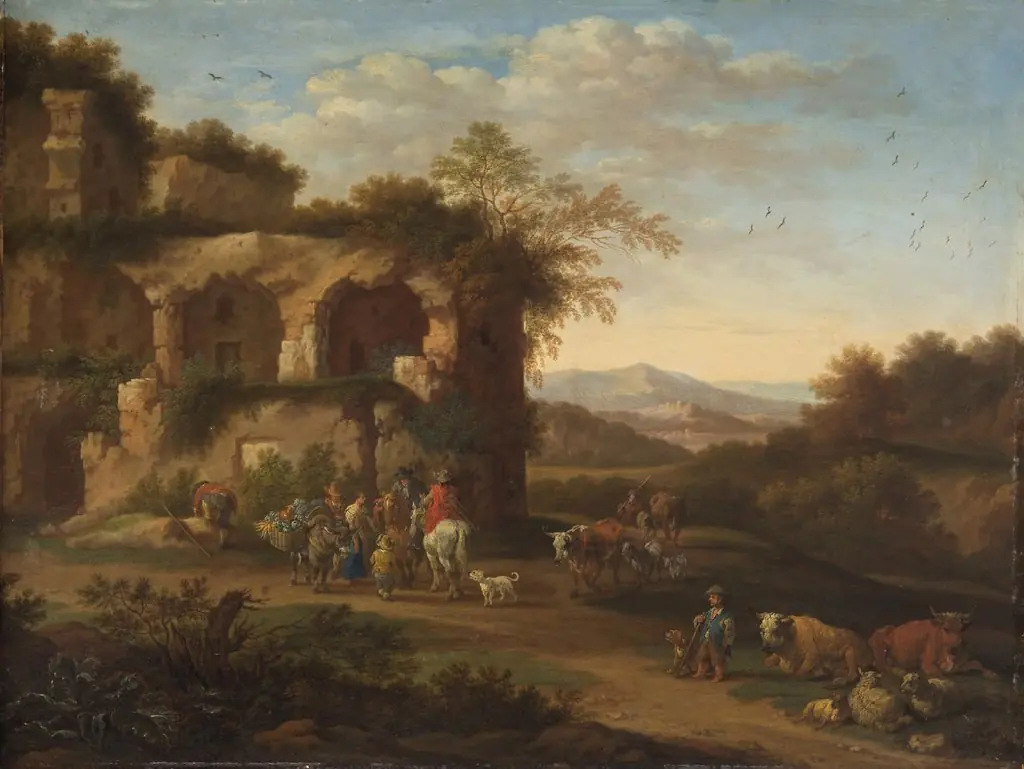 Italian landscape with antique ruins and herders
 Pastoral scene
 Italian landscape
 Bagpiper
 Italienische Landschaft
 The Fountain at Grottaferrata