Artwork
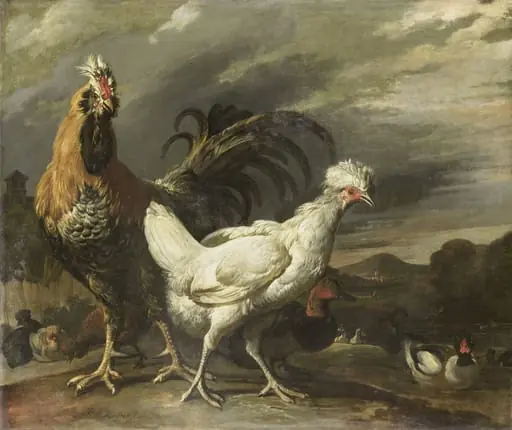
Cock and Hens in a Landscape
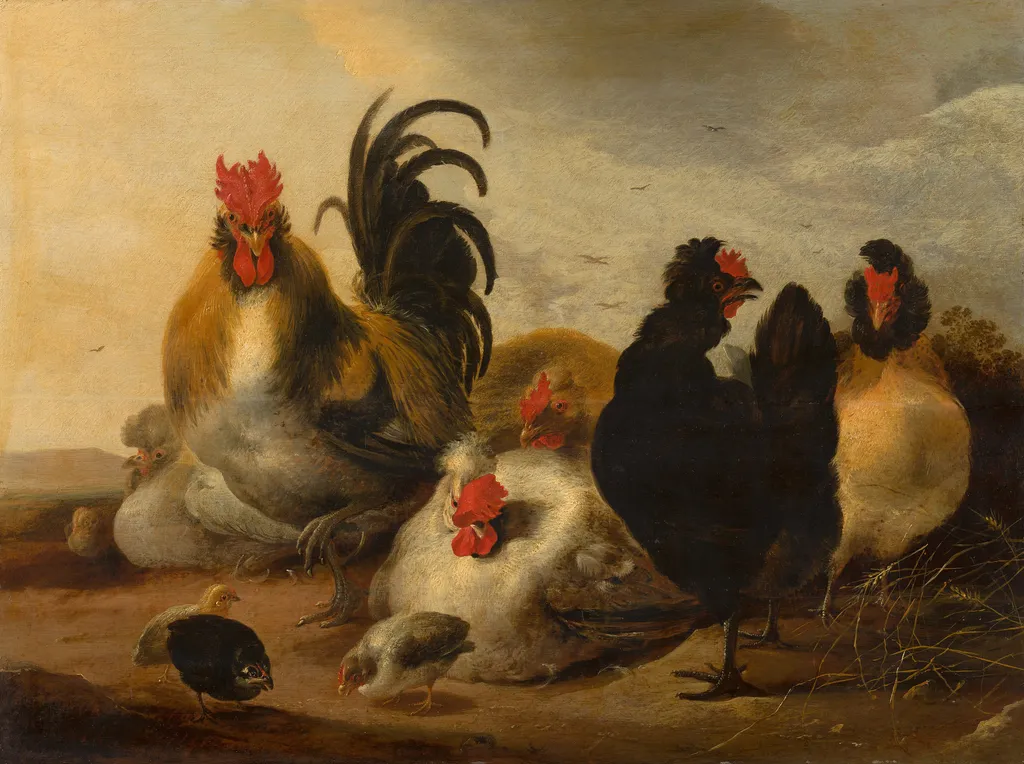
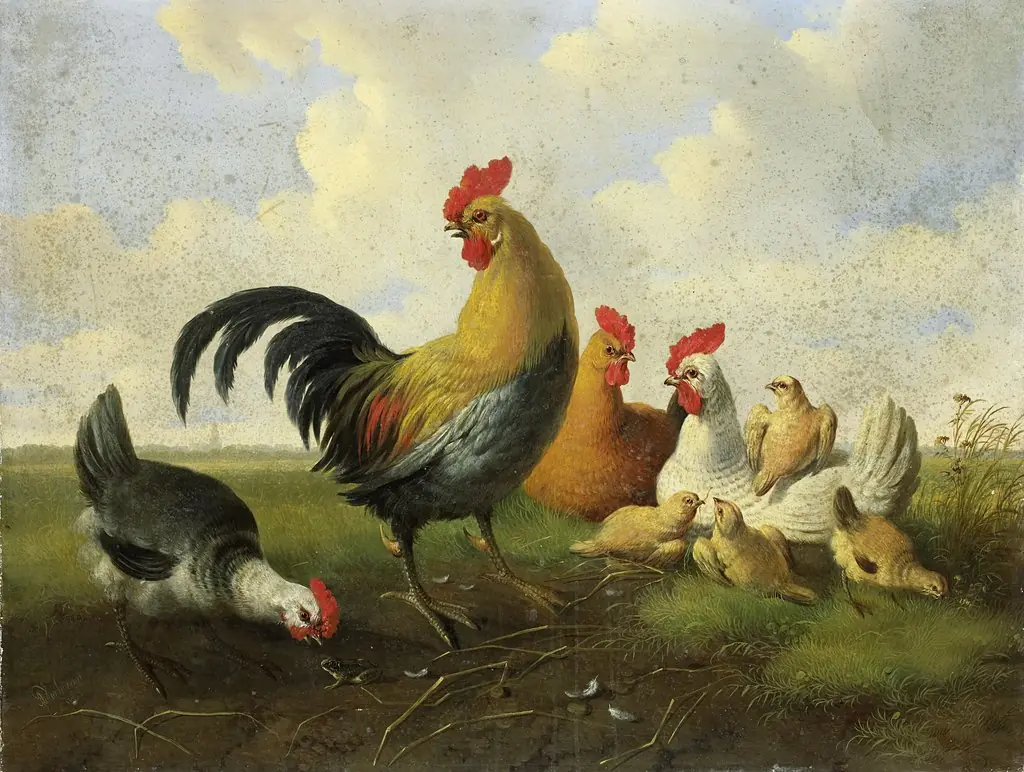
Cock and Hens in a Landscape is an oil painting by the Dutch Golden Age artist Aelbert Cuyp. It dates from 1651 and is held in the collection of the Mauritshuis.
About this work
Overview
Painted in 1651 by Aelbert Cuyp, this oil-on-canvas work presents a quiet rural scene centered on a rooster and several hens.
Painted in 1651 by Aelbert Cuyp, this oil-on-canvas work presents a quiet rural scene centered on a rooster and several hens. Cuyp, a Dordrecht-born artist trained by his father, specialized in landscapes illuminated by soft, golden light. The painting reflects his enduring interest in the Dutch countryside, where animals and terrain merge under atmospheric conditions that suggest early morning or late afternoon.
Subject & Meaning
The composition focuses on a large, vividly colored rooster standing prominently among smaller, more muted hens. Their arrangement implies a natural social hierarchy, with the rooster as the central figure. The scene avoids narrative drama, instead conveying a sense of calm domesticity. The birds are not symbolic in a traditional sense but serve as anchors to the land, grounding the viewer in the rhythms of rural life.
Technique & Style
Cuyp employed thin, layered oil glazes to achieve a luminous quality in both the birds and the landscape. Warm ochres and browns dominate, harmonizing the rooster’s plumage with the earth and sky. The hens are rendered with loose, suggestive brushwork, while the rooster’s form is more defined, drawing attention without artificial emphasis. The distant hills and cloud-filled sky are softly modeled, enhancing the painting’s atmospheric depth.
History & Provenance
The painting has remained in institutional hands since at least the 18th century and is now part of the Mauritshuis collection in The Hague. Its early ownership history is not fully documented, but its presence in the museum’s holdings reflects its recognition as a representative work of Cuyp’s mature period. It has been consistently attributed to him without significant scholarly dispute.
Context
In mid-17th-century Holland, landscape painting flourished as a reflection of national identity and rural pride. Cuyp’s works, unlike those of urban-focused contemporaries, emphasized the tranquility of the countryside. This painting aligns with a broader trend of depicting everyday nature with quiet dignity, where animals were not merely decorative but integral to the land’s character.
Legacy
Though less celebrated than Cuyp’s larger river scenes, this painting exemplifies his ability to infuse modest subjects with poetic stillness. It influenced later artists interested in naturalistic animal depictions within landscape settings. Its endurance in the Mauritshuis underscores its value as a quiet, unassuming testament to the painter’s sensitivity to light and rural life.
Own this work as a print
Artist & collection
Artist
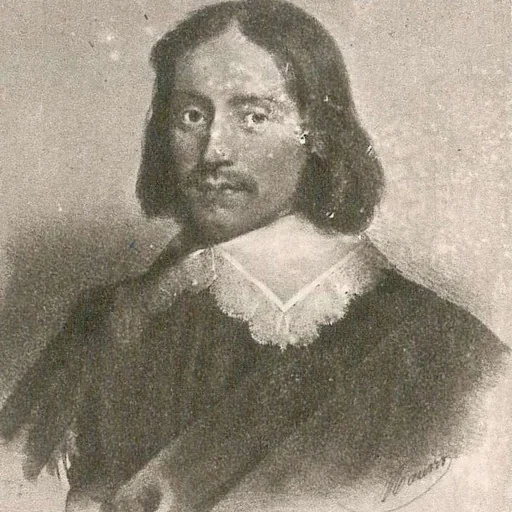
Aelbert Jacobszoon Cuyp or Cuijp (Dutch pronunciation: ; 20 October 1620 – 15 November 1691) was one of the leading Dutch Golden Age painters, producing mainly landscapes.

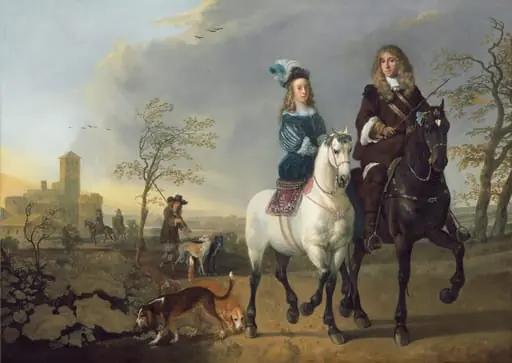 Lady and Gentleman on Horseback
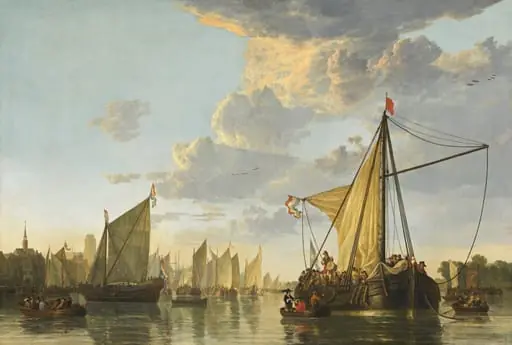 The Maas at Dordrecht
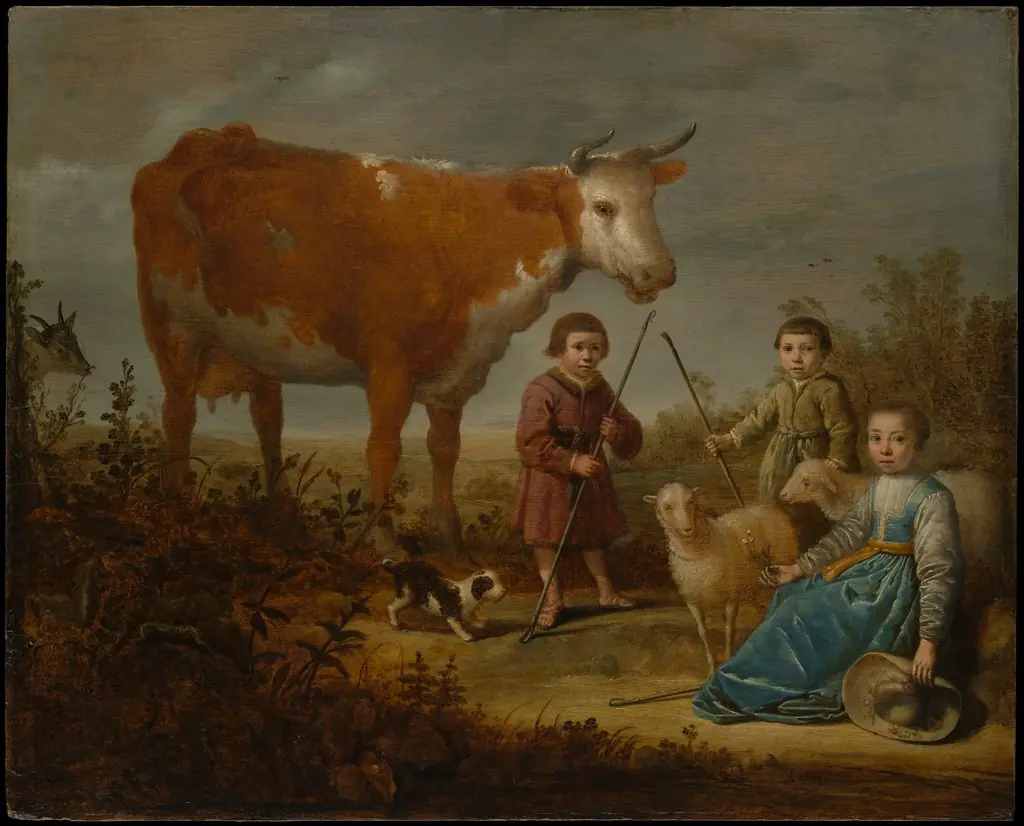 Children and a Cow
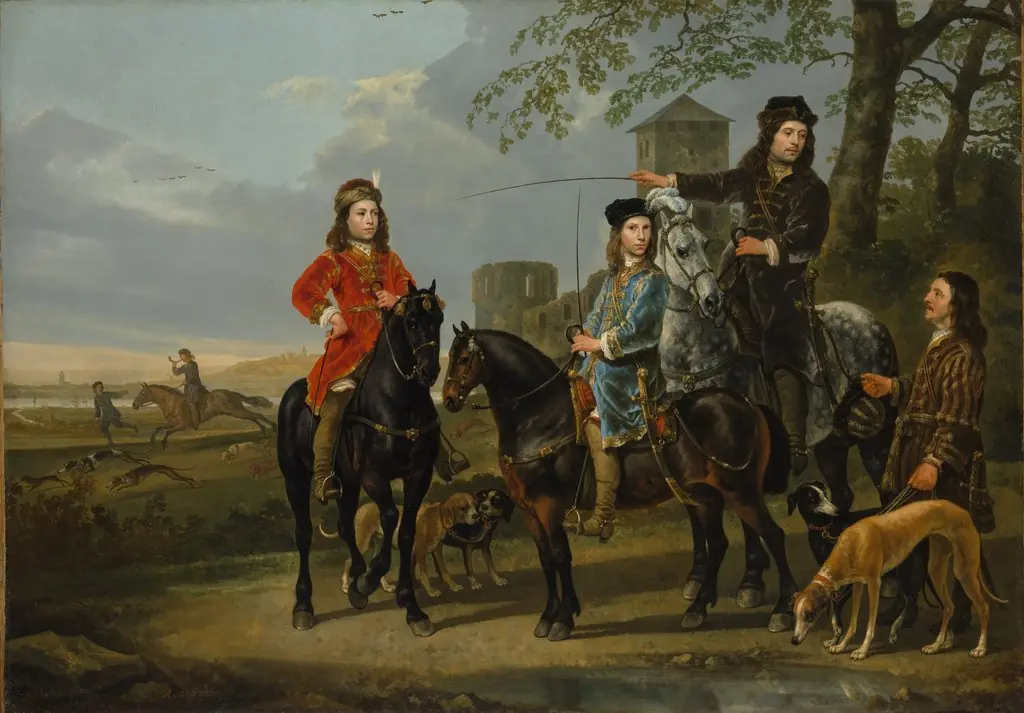 Equestrian Portrait of Cornelis (1639–1680) and Michiel Pompe van Meerdervoort (1638–1653) with Their Tutor and Coachman ("Starting for the Hunt")
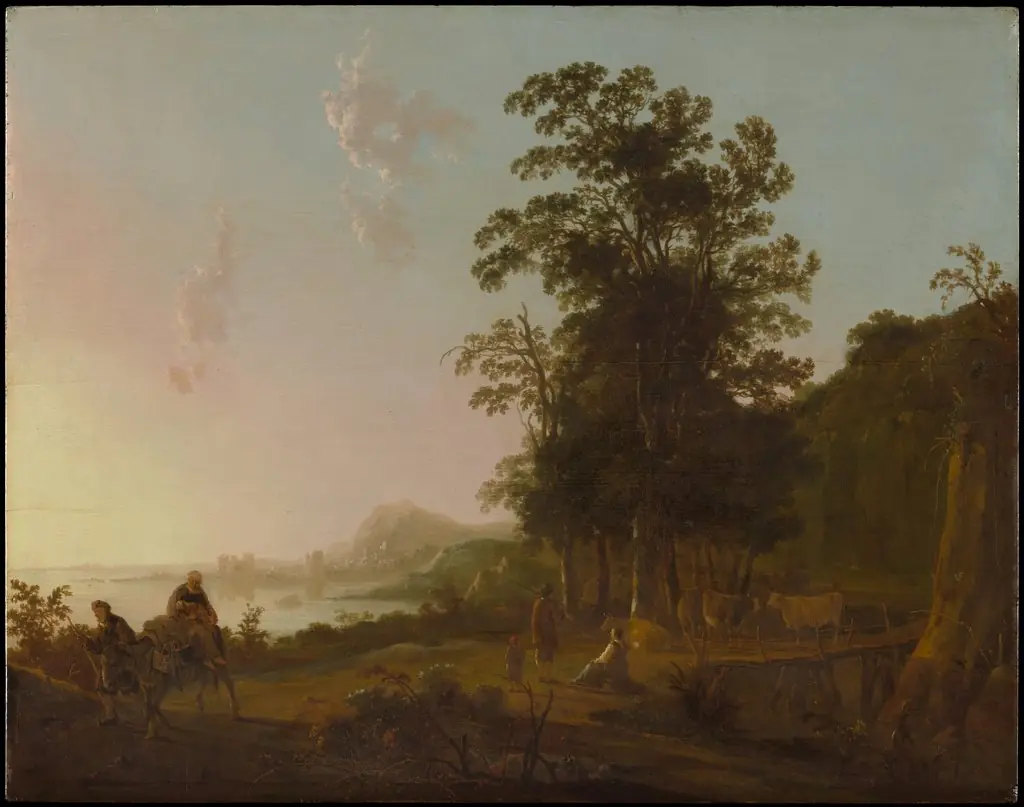 Landscape with the Flight into Egypt
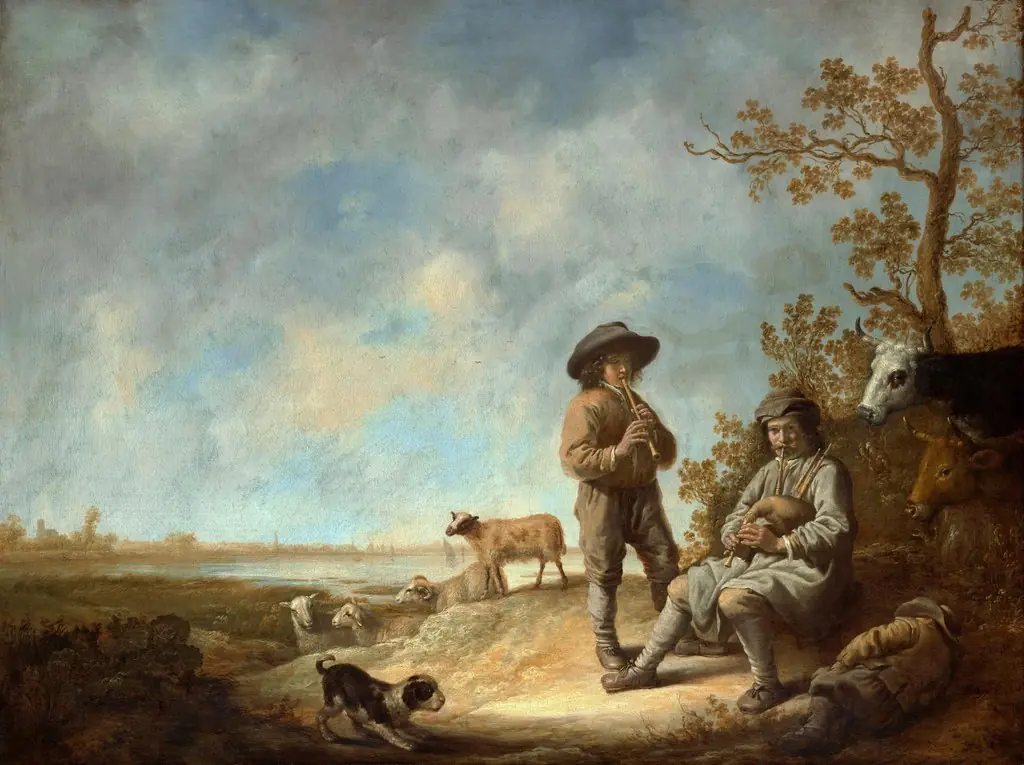 Piping Shepherds
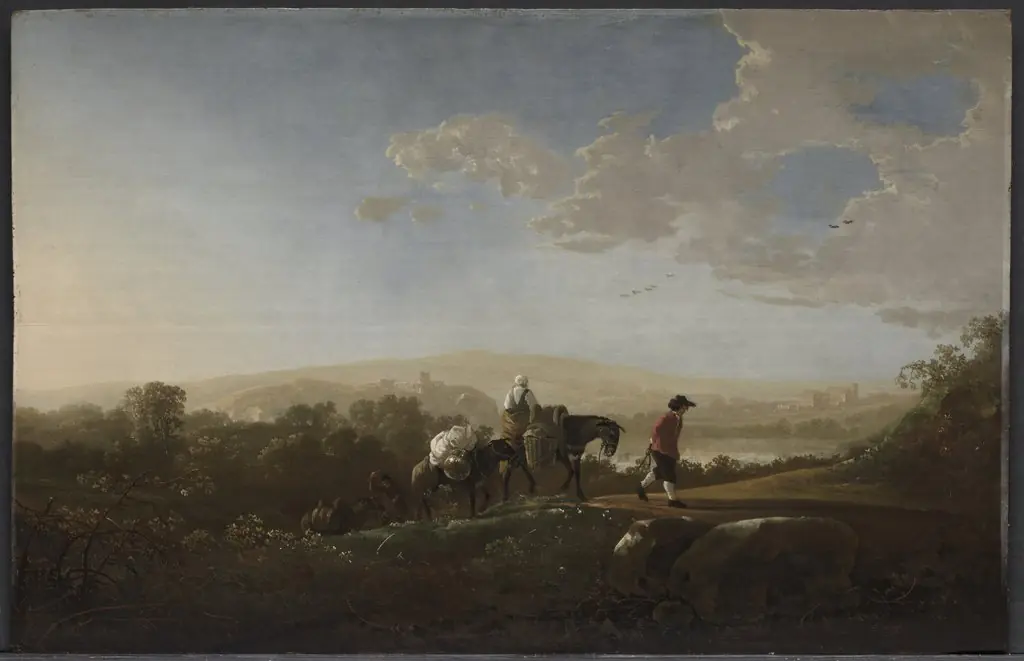 Travellers in Hilly Countryside
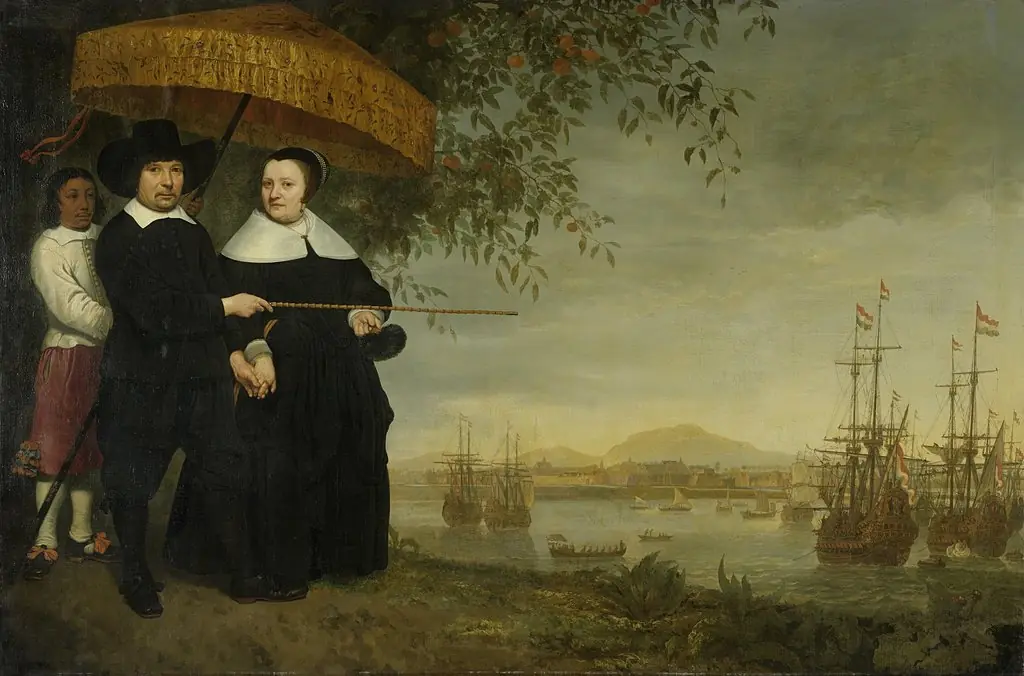 A Chief Merchant of the VOC with his Wife and an Enslaved Servant