Artwork
Landscape with herdsman and cattle
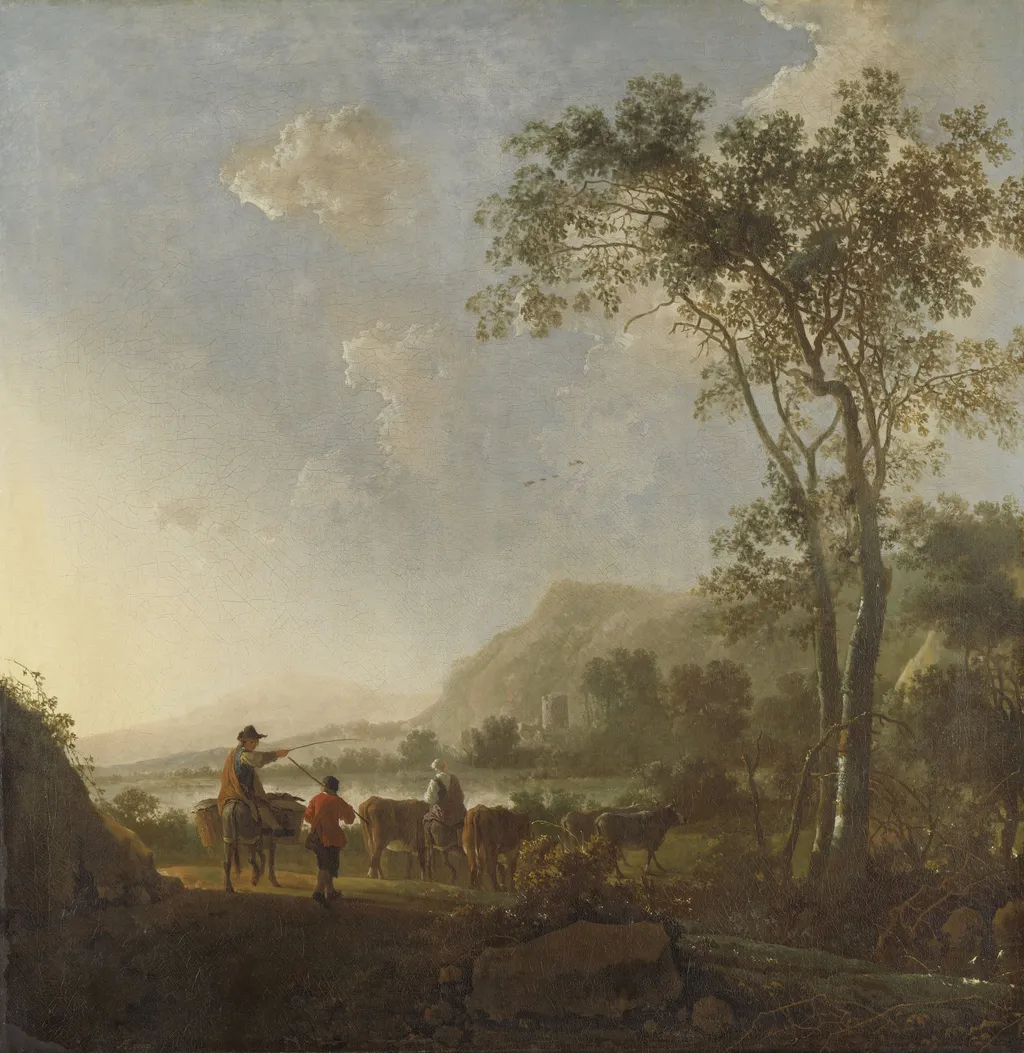
Landscape with herdsman and cattle is an oil painting by Aelbert Cuyp. It dates from 1650 and is held in the collection of the Rijksmuseum.
About this work
Overview
The scene unfolds with quiet movement: a herdsman guides cattle across open land, while distant figures and terrain recede into atmospheric haze.
Painted around 1650 by Aelbert Cuyp, this oil-on-canvas work presents a tranquil Dutch countryside at dusk. It belongs to the landscape tradition of the Dutch Golden Age, emphasizing natural serenity over narrative drama. The scene unfolds with quiet movement: a herdsman guides cattle across open land, while distant figures and terrain recede into atmospheric haze. The painting is part of the Rijksmuseum’s permanent collection, reflecting its enduring significance in Dutch art.
Subject & Meaning
The painting depicts rural labor in harmony with the land—a herdsman on horseback directs three cattle, accompanied by a solitary walker in the distance. There is no overt symbolism; instead, the focus lies in the dignity of everyday pastoral life. The calm, unhurried rhythm of the scene suggests an idealized yet unromanticized view of agricultural existence, rooted in the observed reality of 17th-century Holland.
Technique & Style
Cuyp employed thin, translucent layers of oil paint to render the hazy, golden light of late afternoon. Brushwork is subtle and precise, capturing the soft diffusion of atmosphere across fields and hills. Warm tones in the sky contrast with cooler shadows, creating a gentle chiaroscuro that enhances spatial depth without dramatic contrast. The effect is one of quiet luminosity, achieved through careful modulation of tone rather than bold strokes.
History & Provenance
The painting entered the Rijksmuseum’s collection in the 19th century, having passed through several private Dutch holdings since its creation. Its attribution to Cuyp has remained consistent, supported by stylistic analysis and documentary records. While not widely exhibited in its early years, it gained recognition as a representative example of Cuyp’s mature landscape style during the 20th century.
Context
In mid-17th-century Holland, landscape painting flourished as a reflection of national identity and economic prosperity. Cuyp’s works stood apart for their poetic treatment of light and rural life, distinct from the more urban or maritime themes of his contemporaries. His scenes resonated with a growing middle class that valued quiet, ordered nature as a counterpoint to commercial life.
Legacy
Cuyp’s approach to atmospheric landscape influenced later generations of Dutch and English painters, particularly in their handling of light and mood. While not as widely celebrated as Rembrandt or Vermeer, his quiet, luminous compositions remain key to understanding the diversity of Dutch Golden Age art. This painting continues to be studied for its nuanced depiction of natural light and rural tranquility.
Own this work as a print
Artist & collection
Artist
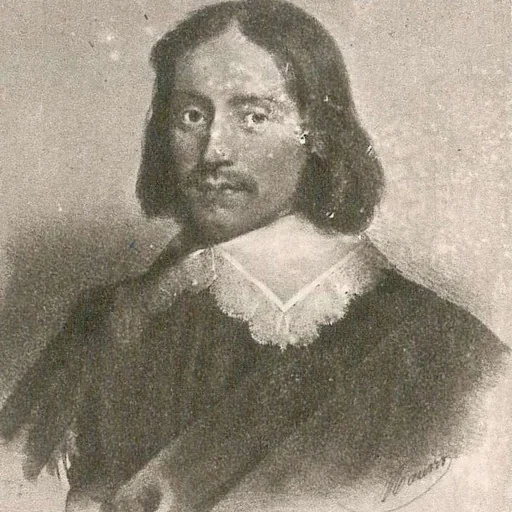
Aelbert Jacobszoon Cuyp or Cuijp (Dutch pronunciation: ; 20 October 1620 – 15 November 1691) was one of the leading Dutch Golden Age painters, producing mainly landscapes.

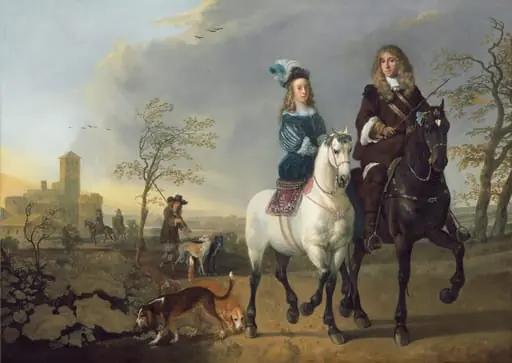 Lady and Gentleman on Horseback
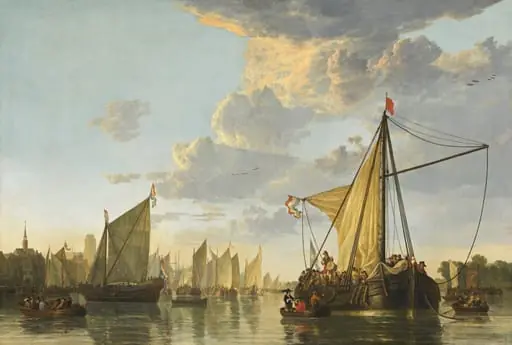 The Maas at Dordrecht
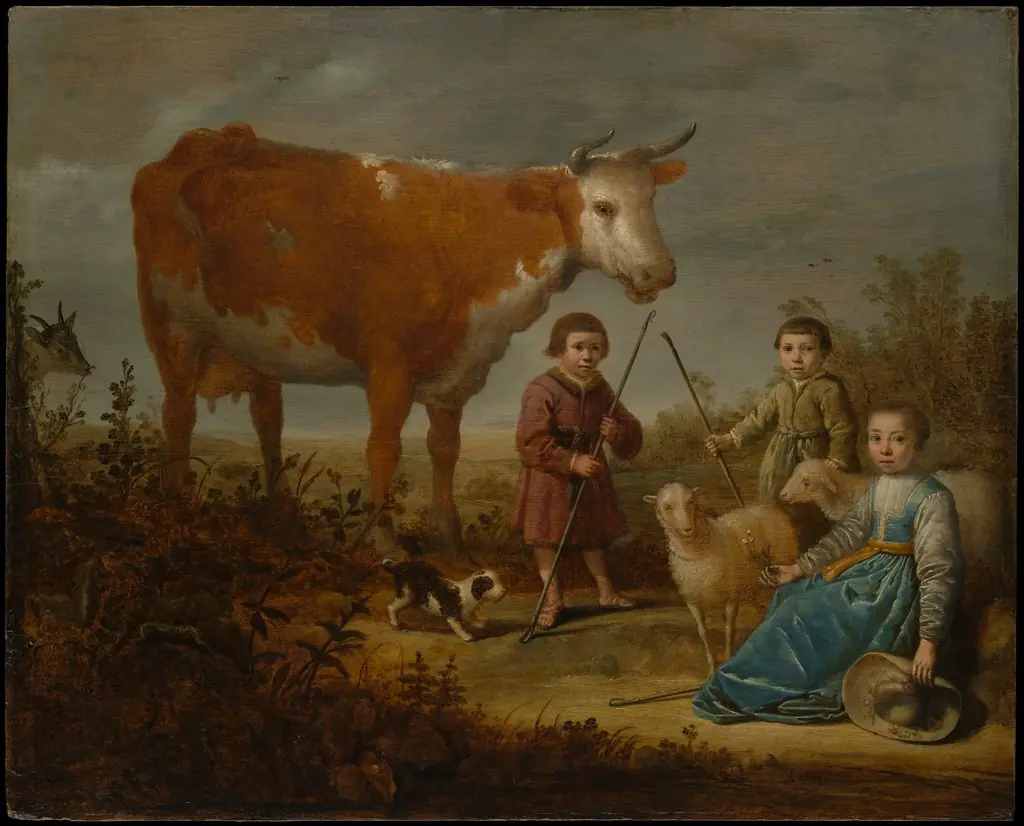 Children and a Cow
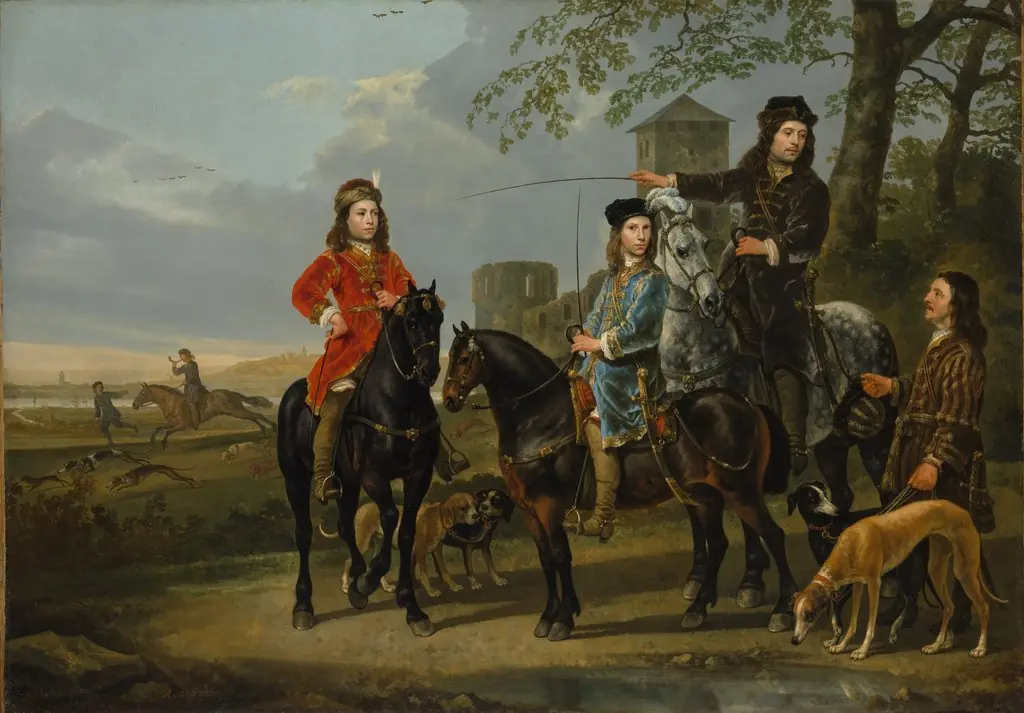 Equestrian Portrait of Cornelis (1639–1680) and Michiel Pompe van Meerdervoort (1638–1653) with Their Tutor and Coachman ("Starting for the Hunt")
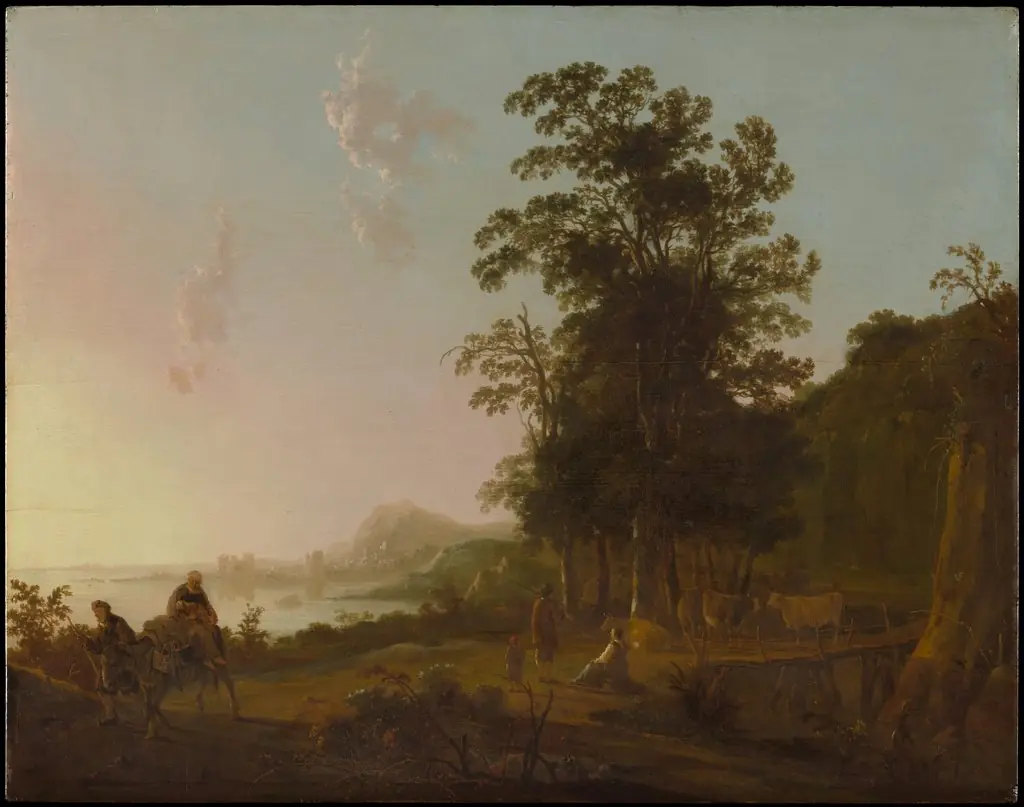 Landscape with the Flight into Egypt
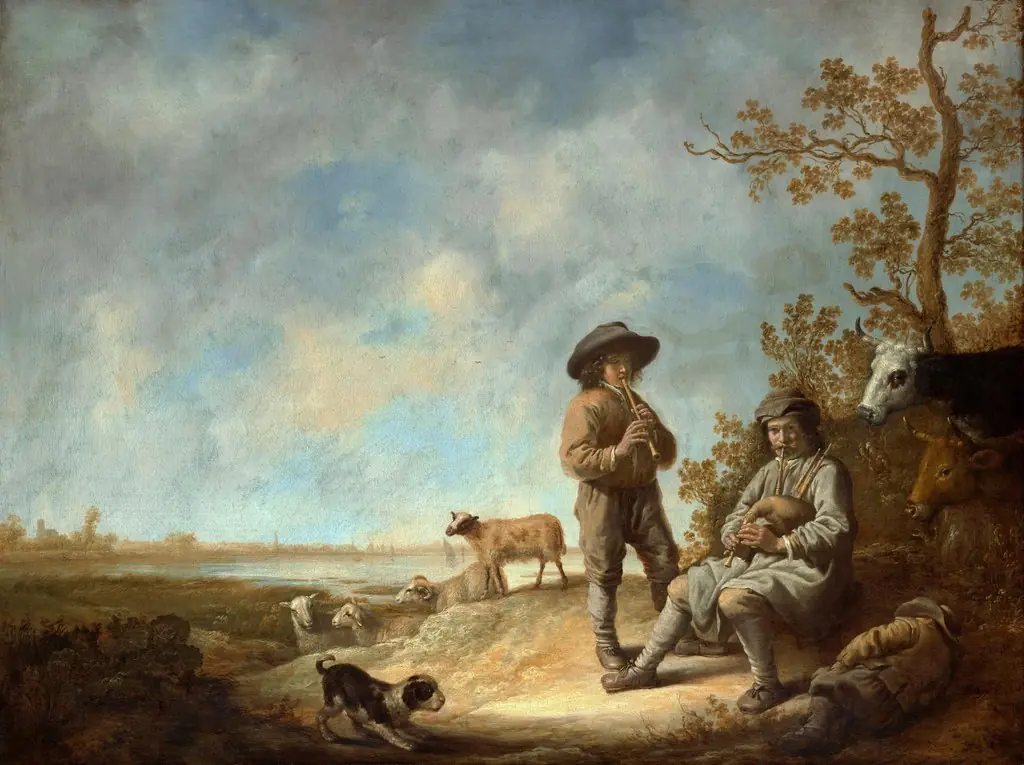 Piping Shepherds
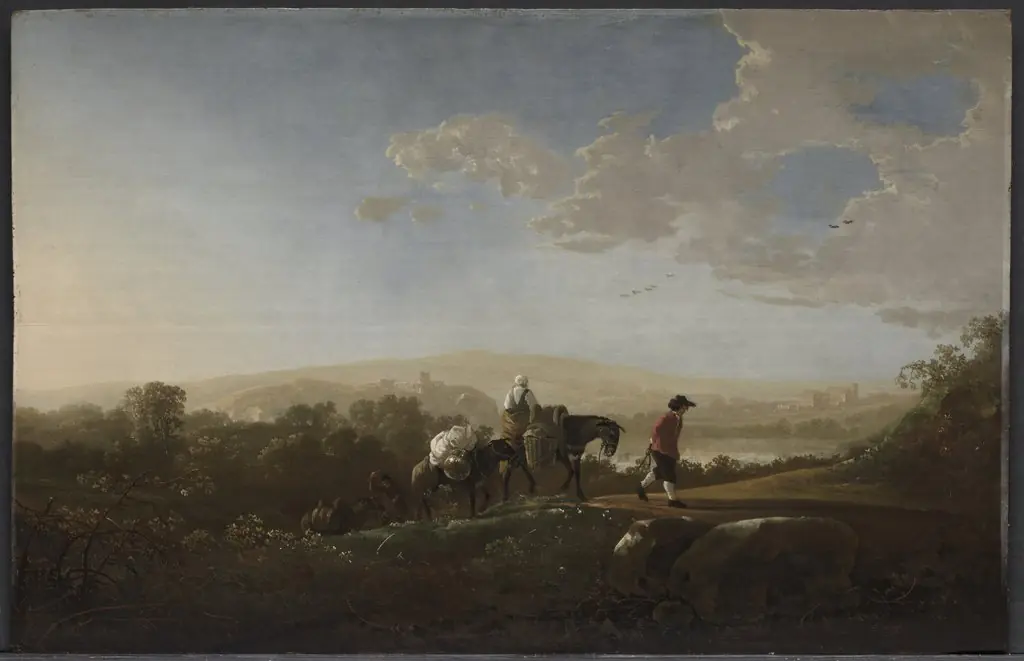 Travellers in Hilly Countryside
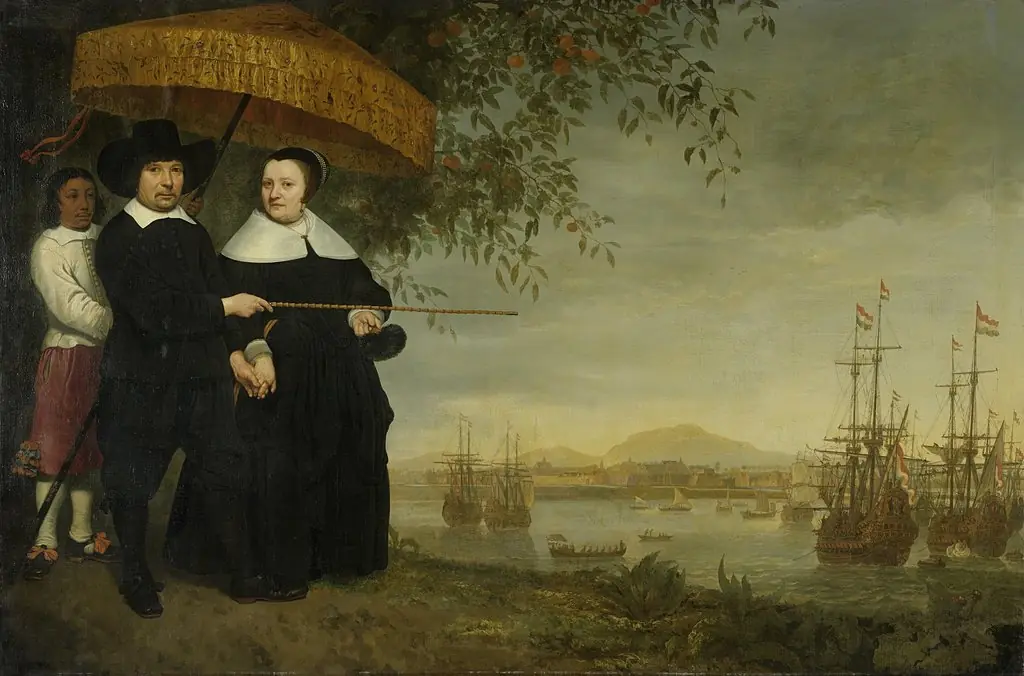 A Chief Merchant of the VOC with his Wife and an Enslaved Servant
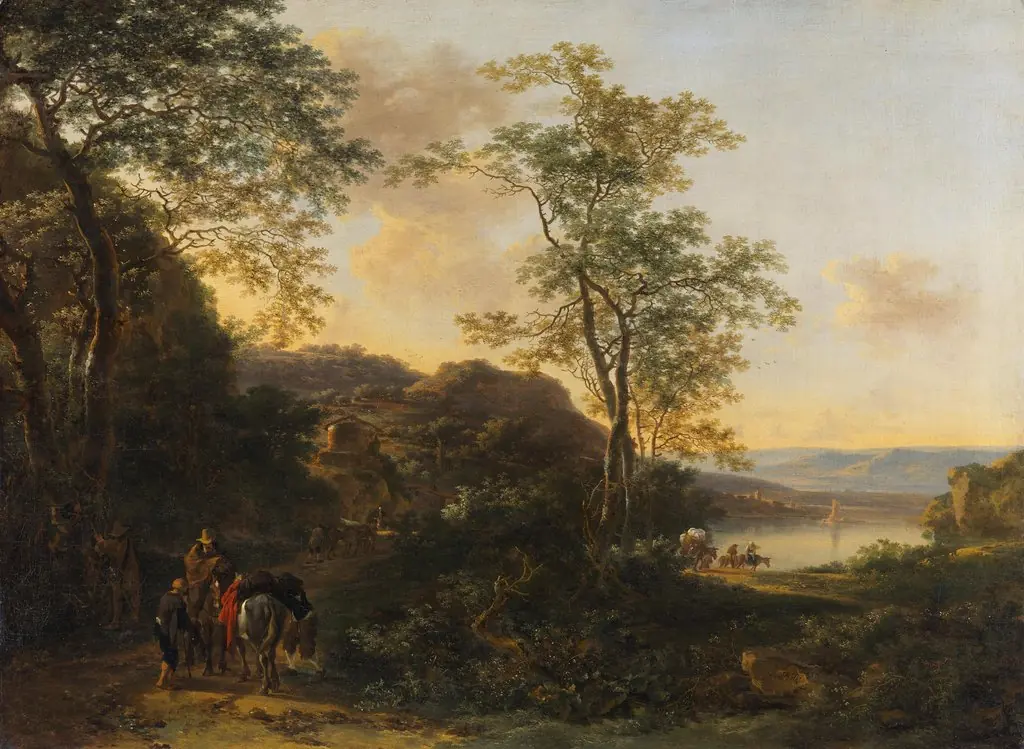 An Italian Landscape
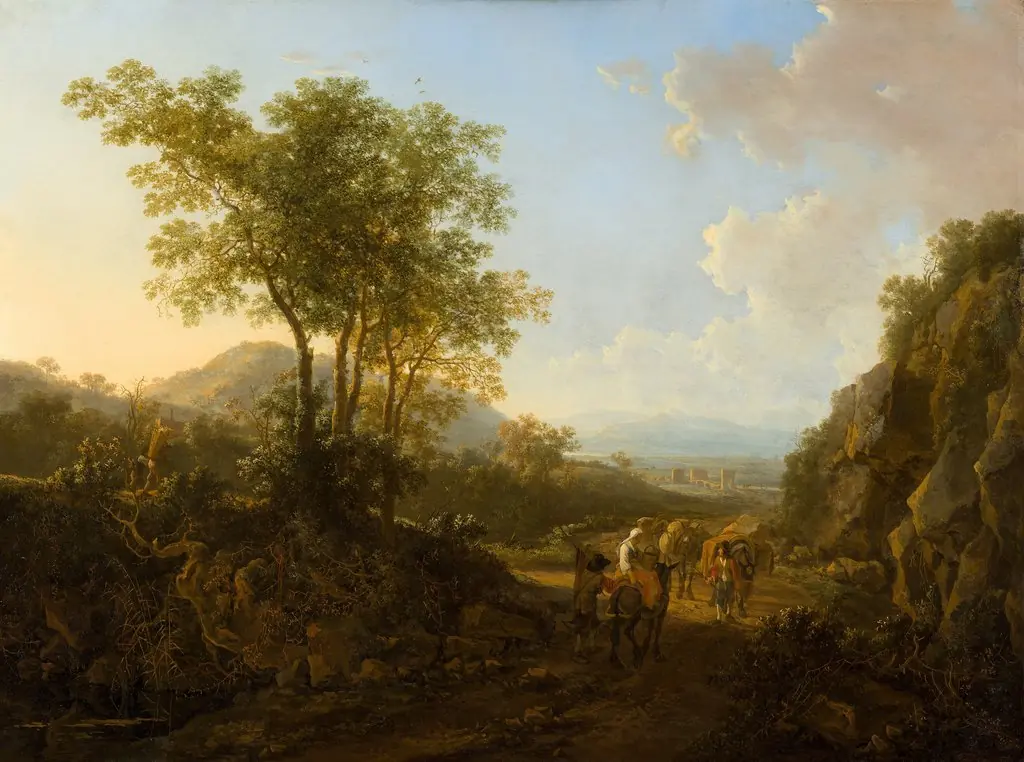 Italian landscape
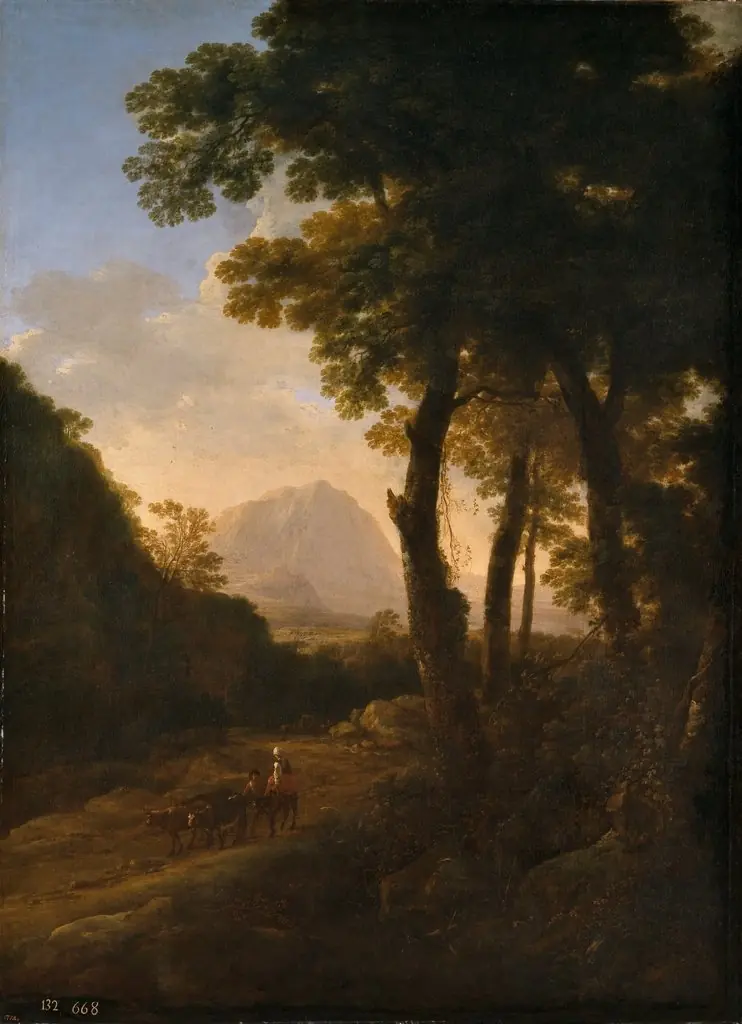 Taking the Cattle out
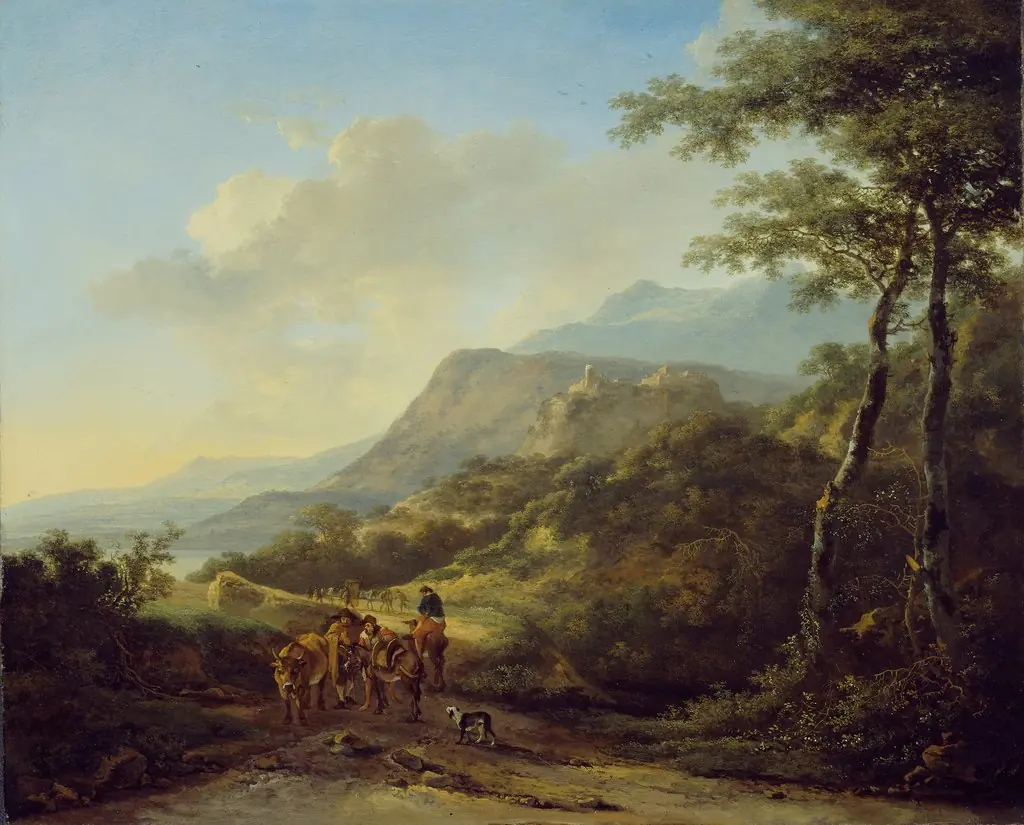 Italian Landscape with Travelers
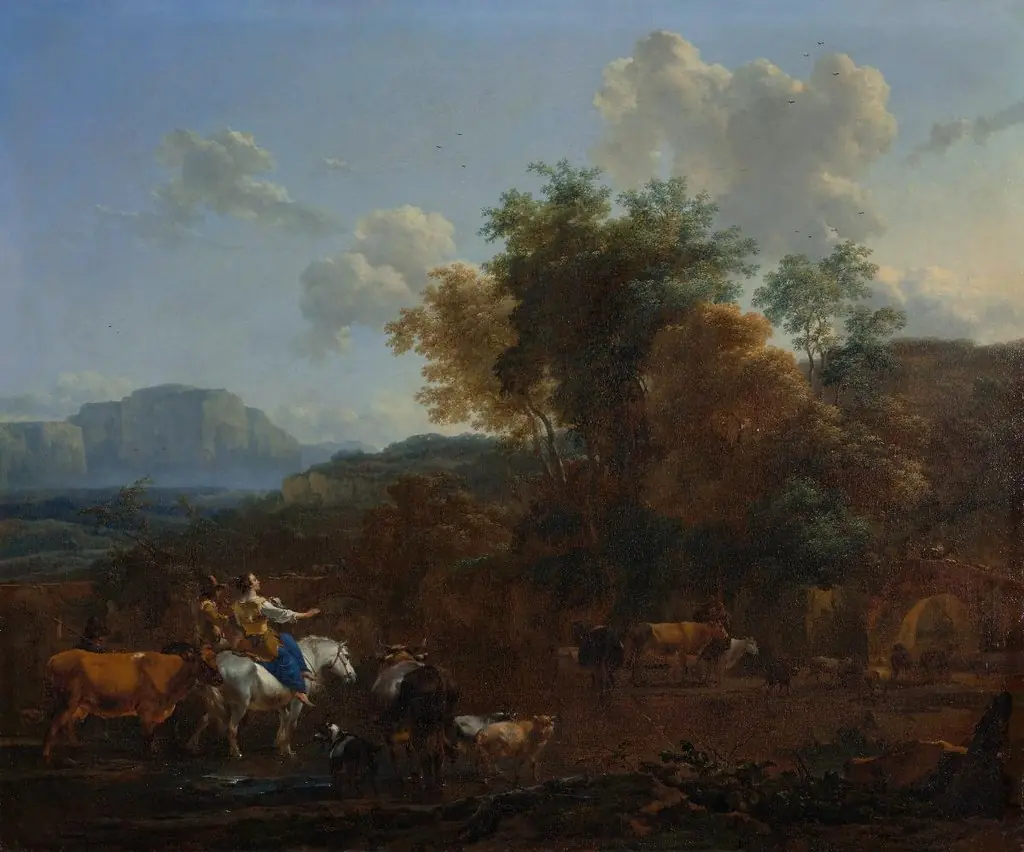 Italienische Landschaft mit musizierenden Hirten und ziehender Herde
 Italian Landscape with Travelers
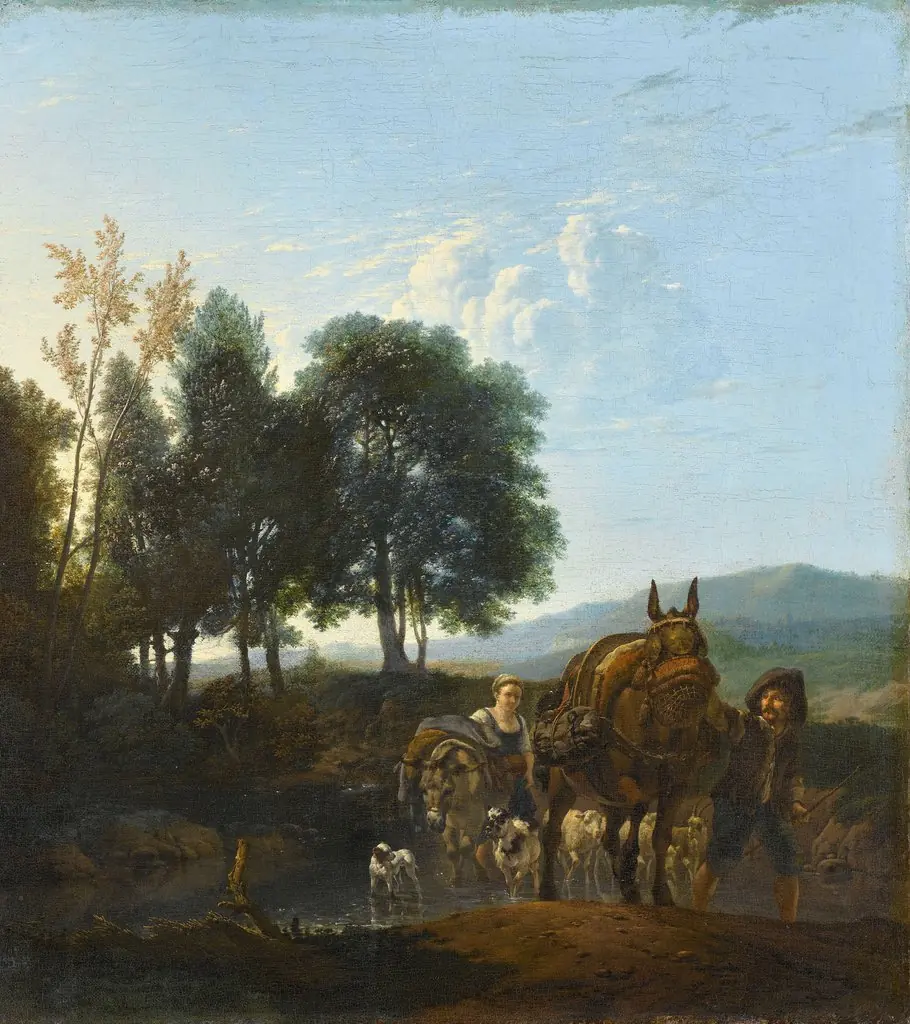 Landscape with mule driver
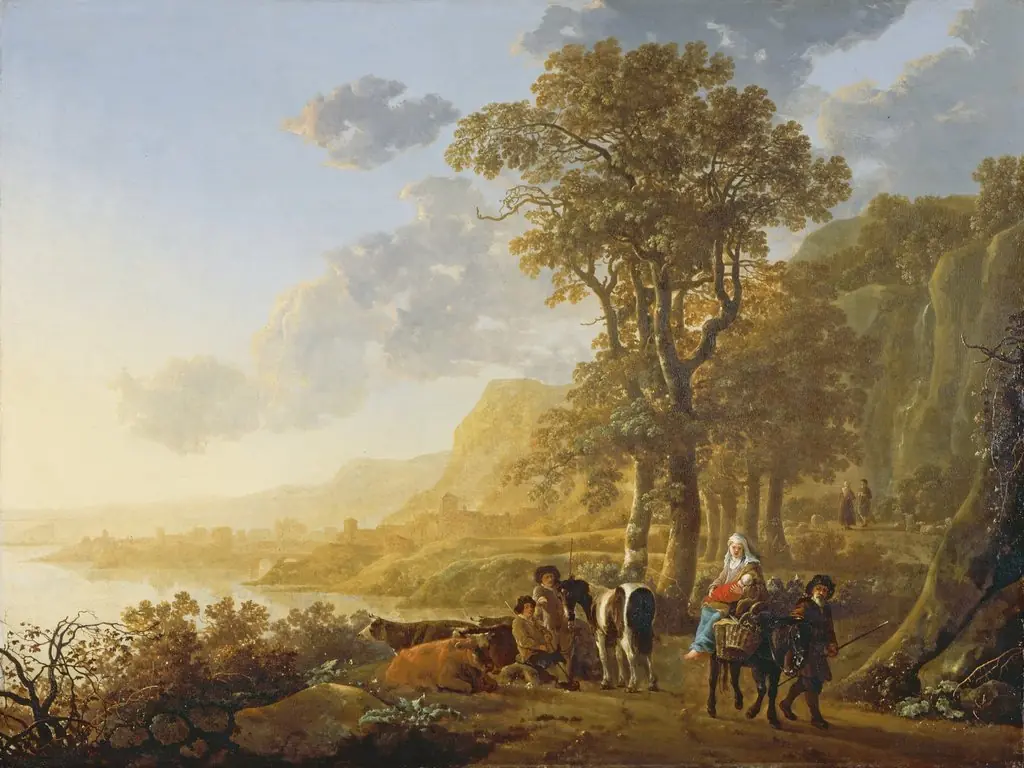 The Flight into Egypt
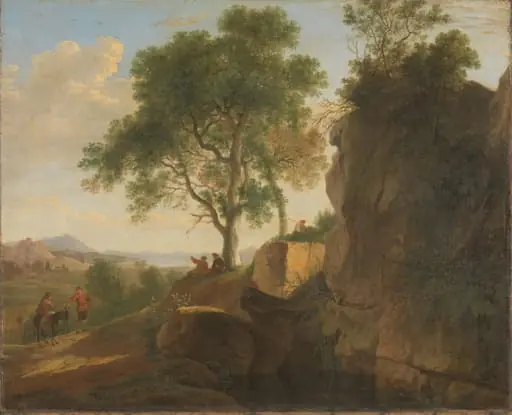 Italian landscape
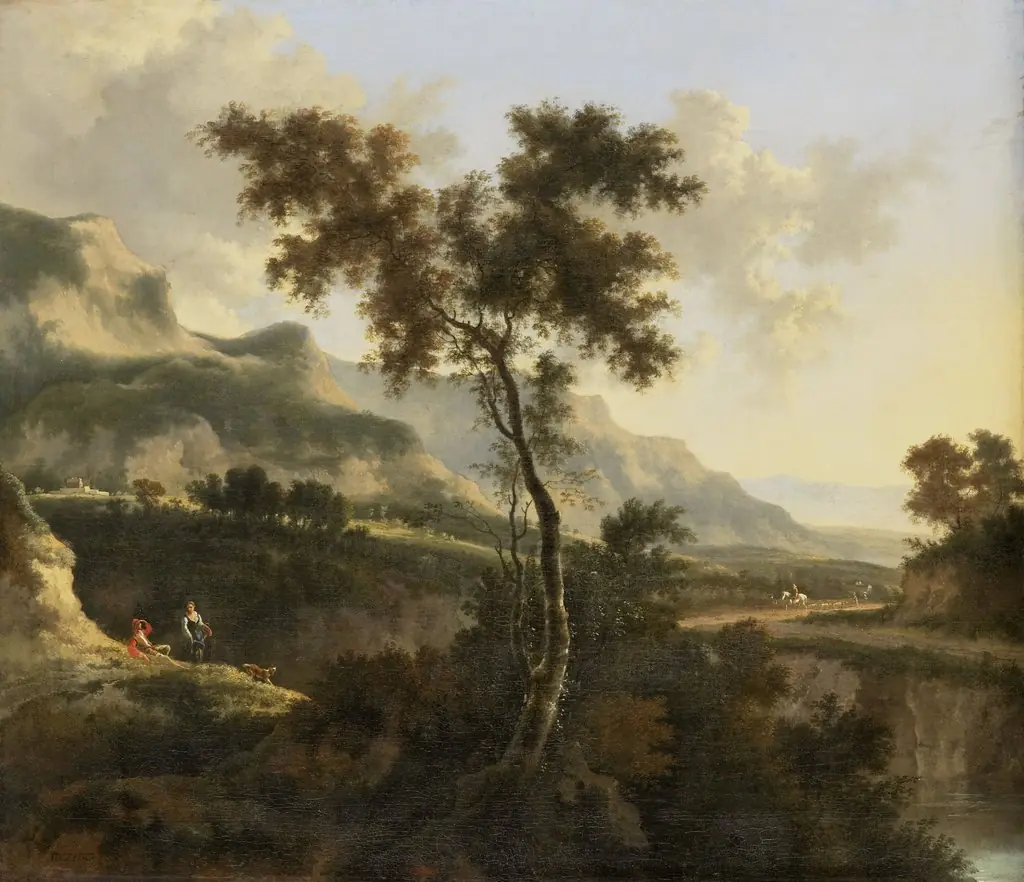 Mountainous landscape
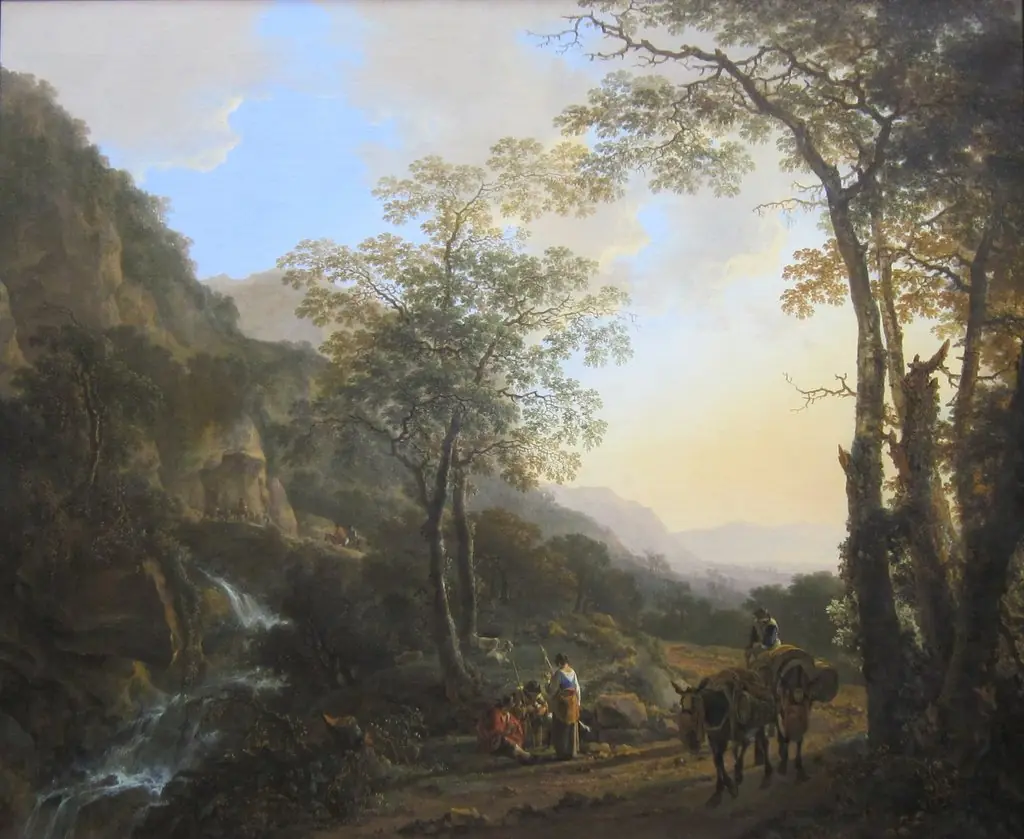 An Italianate Landscape with Travelers on a Path
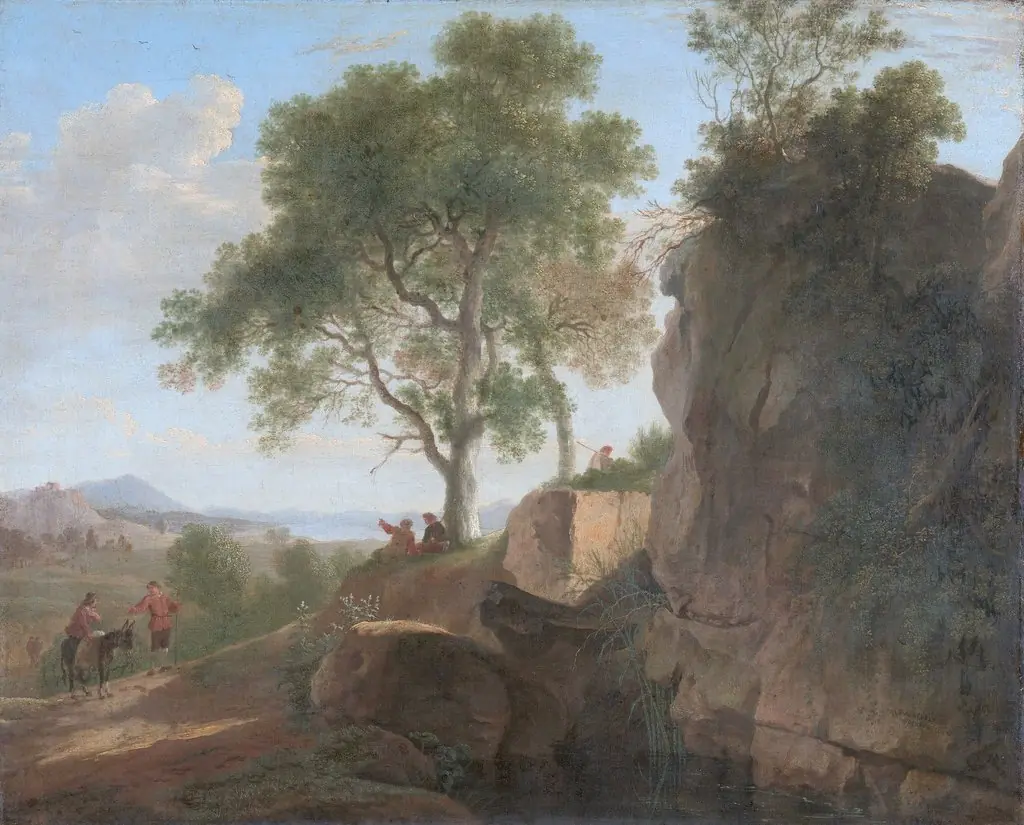 Italian landscape