Artwork
Charles IV, King of Spain
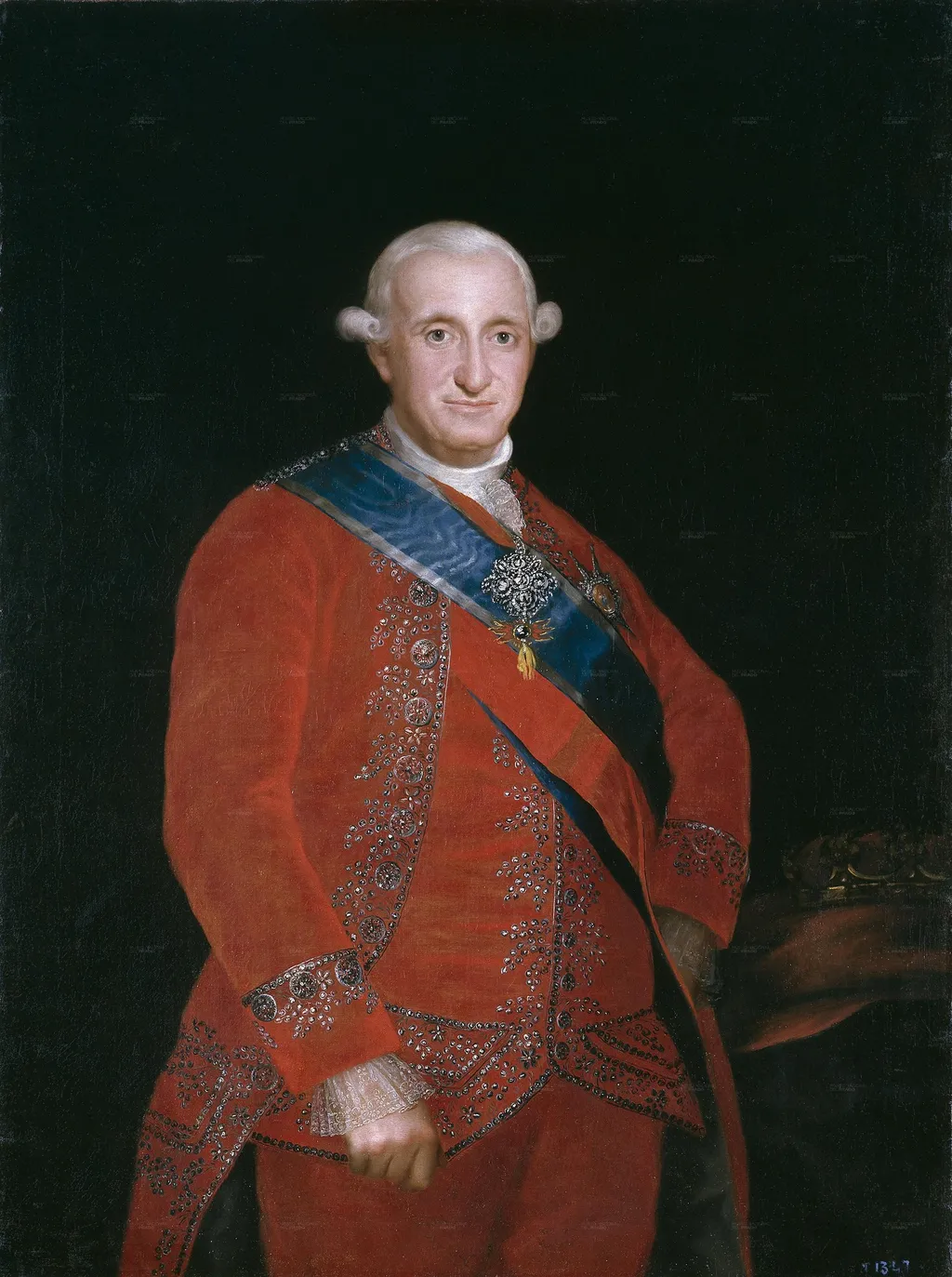
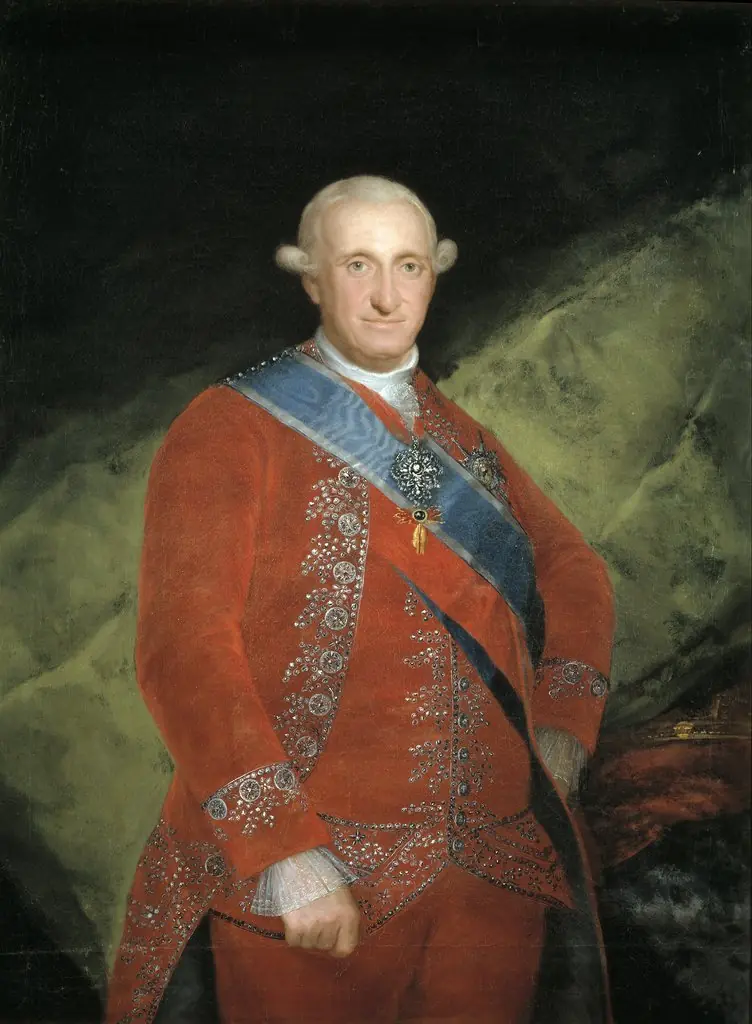
Charles IV, King of Spain is an oil painting by the Rococo painting artist Agustín Esteve. It dates from 1795 and is held in the collection of the Museo del Prado.
About this work
Overview
This oil painting, titled Charles IV, King of Spain, was created by Agustín Esteve in 1795. It presents a formal portrait of the Spanish monarch, depicting him in ceremonial regalia. The artwork is currently housed in the collection of the Museo del Prado, offering insight into royal portraiture of the late 18th century.
Subject & Meaning
The portrait features Charles IV, King of Spain, adorned in official attire that underscores his royal status. He wears an elaborate red robe embellished with silver embroidery, a blue sash, and significant insignia such as the Golden Fleece and the Order of Charles III. These elements collectively convey his authority and the prestige of his office.
Technique & Style
Executed in oil paint, the artwork demonstrates Agustín Esteve's characteristic approach to portraiture. The artist meticulously renders the king's ornate red robe, highlighting its silver embroidery and the blue sash. The subject's short, curly white hair and the dark background further emphasize the figure, creating a dignified and formal presentation typical of Esteve's work.
History & Provenance
Created in 1795, this depiction of Charles IV by Agustín Esteve has since become part of a significant public collection. The painting is presently preserved within the Museo del Prado, where it contributes to the institution's extensive holdings of Spanish art from the period.
Own this work as a print
Artist & collection