Artwork
Călăreți arabi
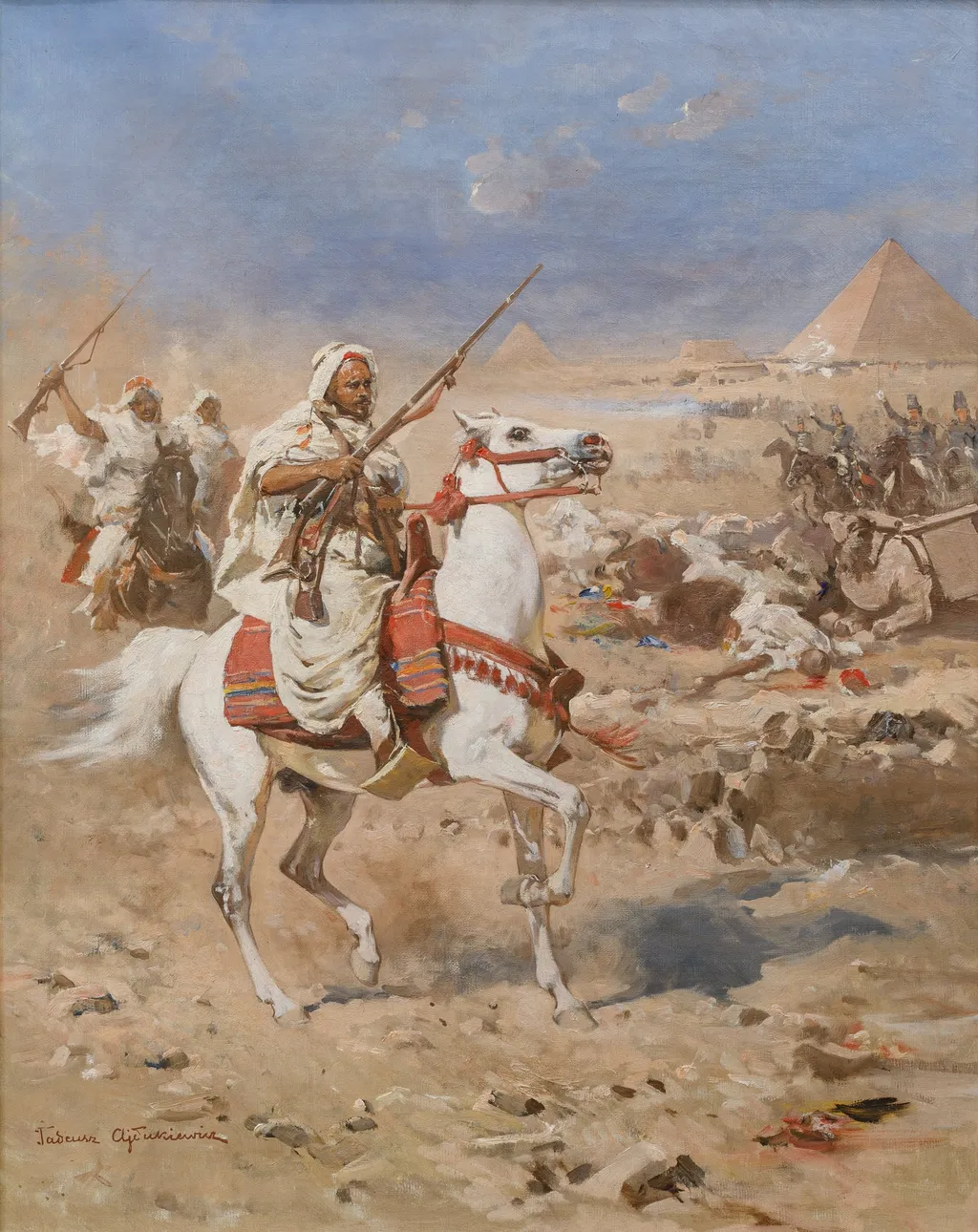
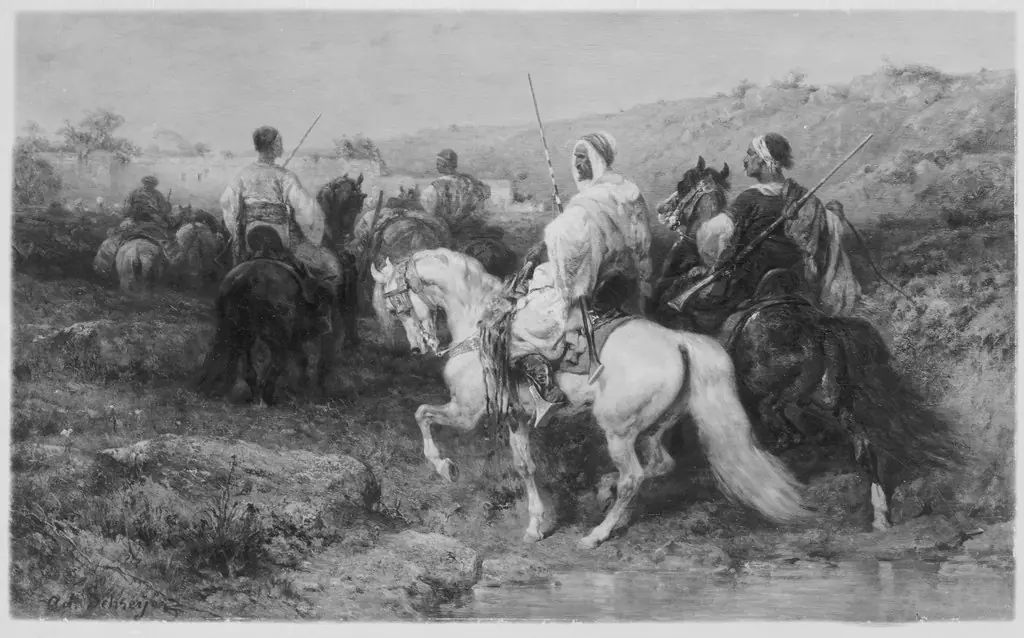
Călăreți arabi is a print by Tadeusz Ajdukiewicz. It dates from 1850 and is held in the collection of the National Museum of Art of Romania.
About this work
Overview
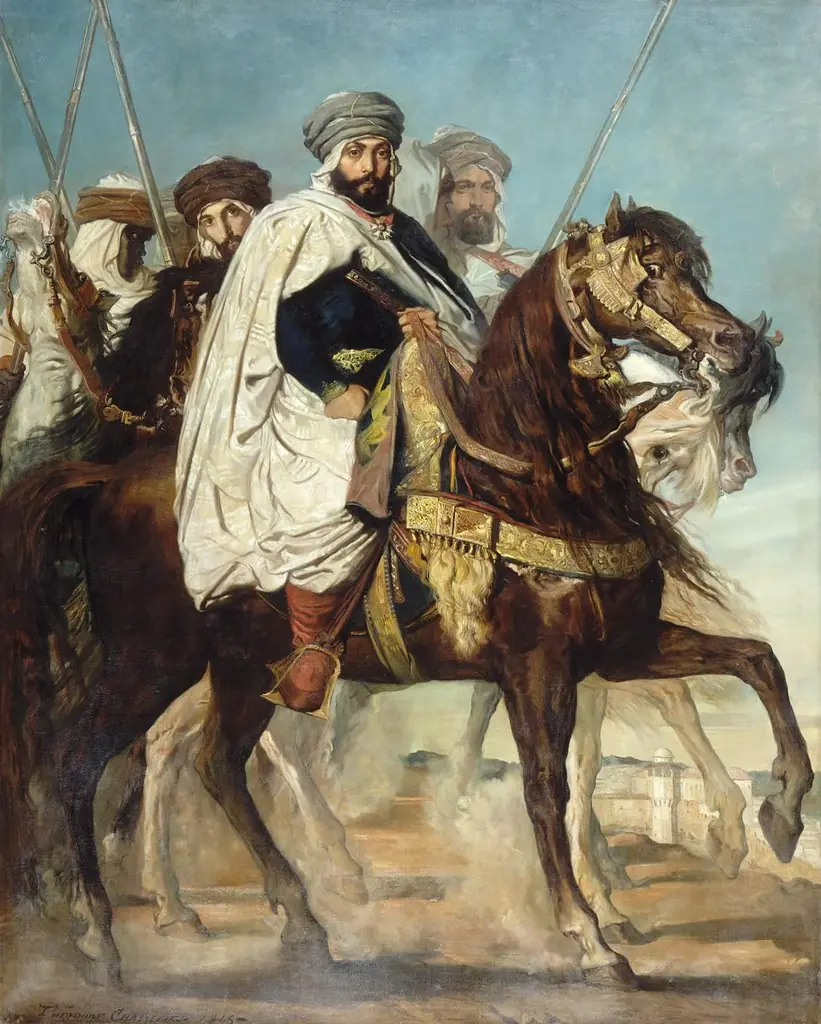
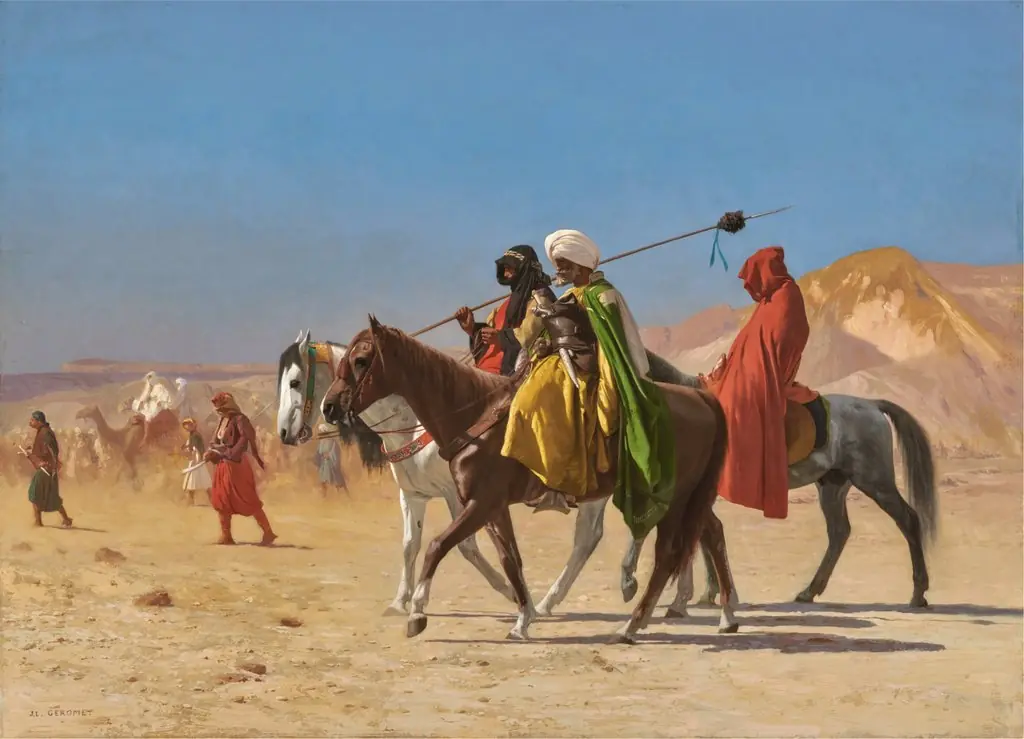
Călăreţi arabi, painted circa 1850 by Polish realist Tadeusz Ajdukiewicz, portrays a procession of mounted figures traversing a desert. The composition leads the eye from the foreground riders toward distant pyramids under a clear, lightly clouded sky, creating a sense of expansive space and forward motion.
Subject & Meaning
The work presents a group of men in white robes and head coverings, each astride a white horse and bearing long spears or staffs. The attire and setting evoke Arab cavalry traditions, suggesting a romanticized view of desert warfare and nomadic culture prevalent in mid‑nineteenth‑century European art.
Technique & Style
Ajdukiewicz employs a realist approach, rendering the figures, horses, and landscape with precise detail. A restrained palette of whites, earth tones, and a bright sky enhances depth; linear perspective guides the viewer’s gaze toward the pyramids, while subtle brushwork conveys the texture of sand and the sheen of horsehair.
History & Provenance
Educated in Kraków during the Austrian partition, Ajdukiewicz built a reputation for battle scenes and equestrian subjects. Călăreţi arabi reflects his interest in martial themes and was likely produced for the European market fascinated by Orientalist subjects. The painting’s later ownership record remains limited, but it continues to be cited in surveys of Ajdukiewicz’s oeuvre.
Own this work as a print
Artist & collection
Artist
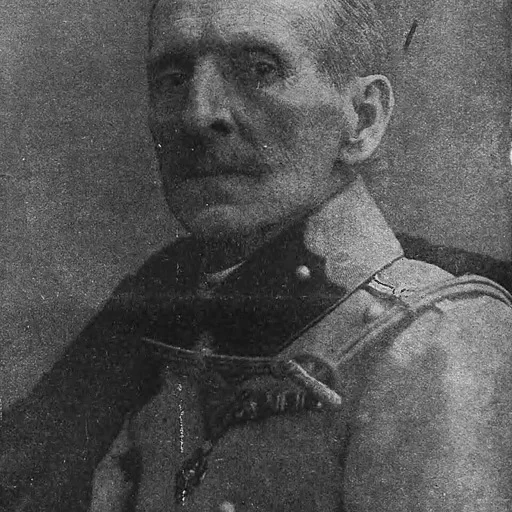
Tadeusz Ajdukiewicz (1852 – 9 January 1916) was a Polish realist painter best known for his battle-scenes, portraits, landscapes and paintings of horses.