Artwork
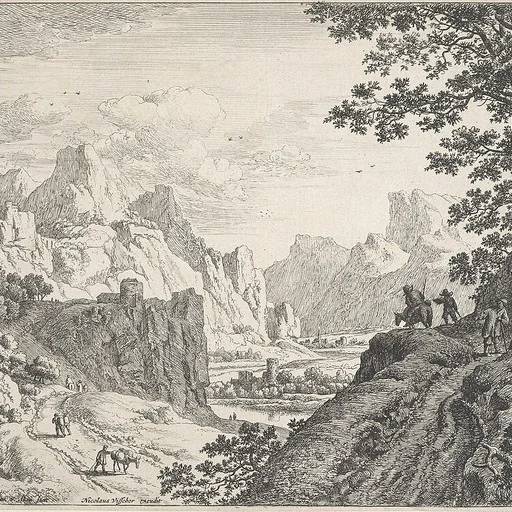
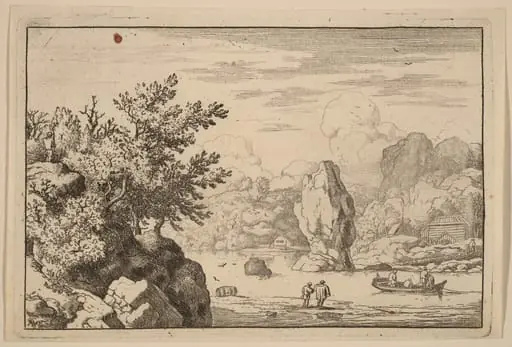
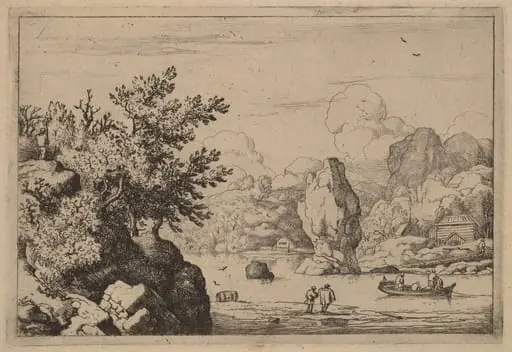
View of the River Rhine
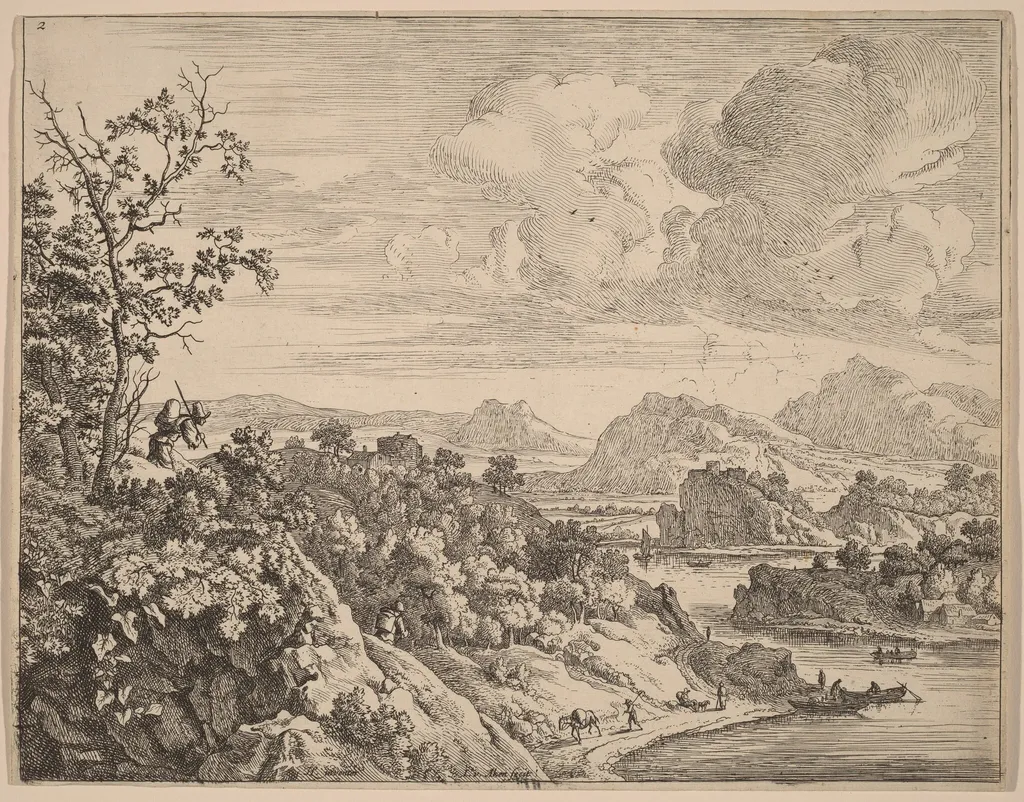
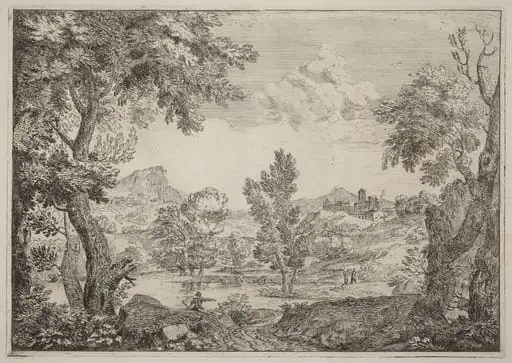
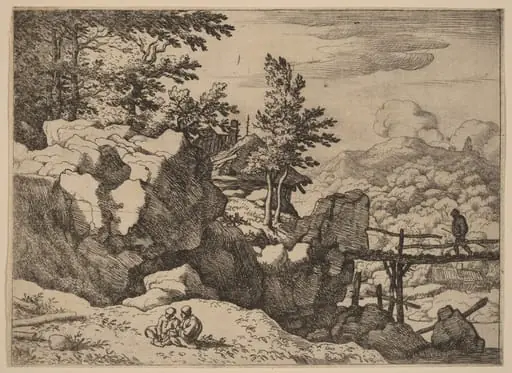
View of the River Rhine is an ink print by the Baroque artist Jan van Aken. It dates from 1638 and is held in the collection of the National Gallery of Art.
About this work
Overview
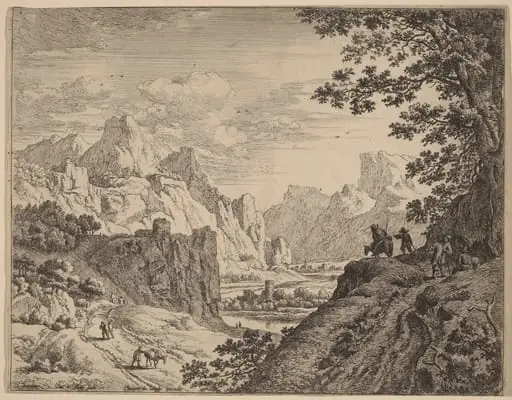
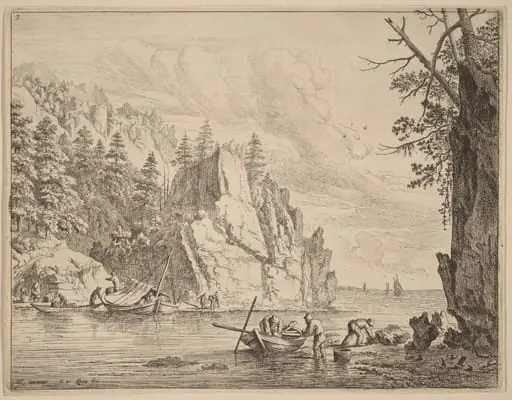
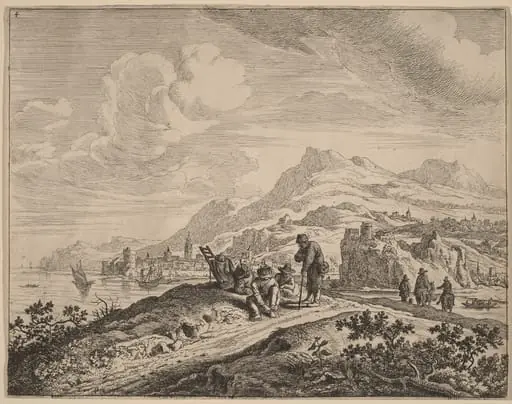
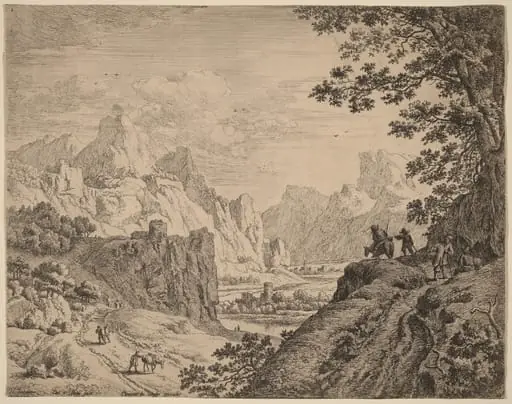
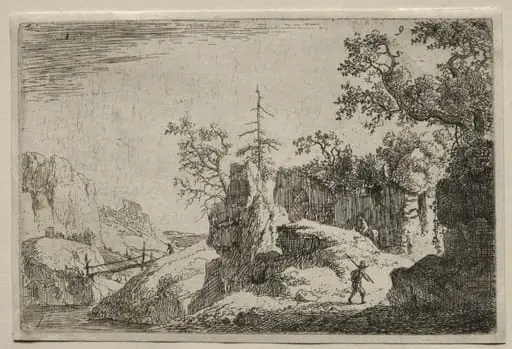
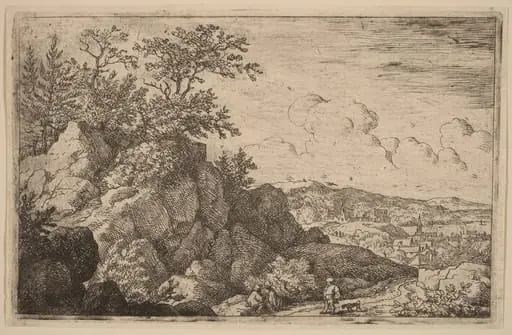
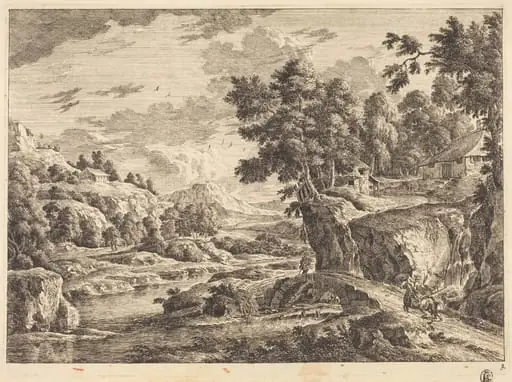
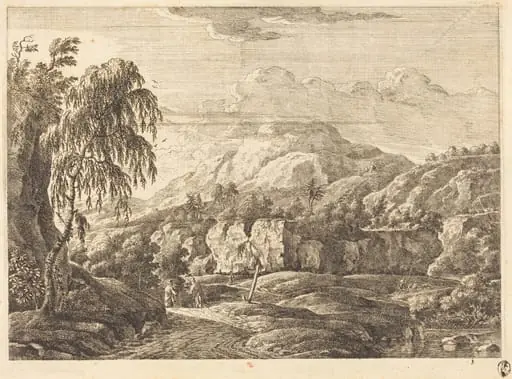
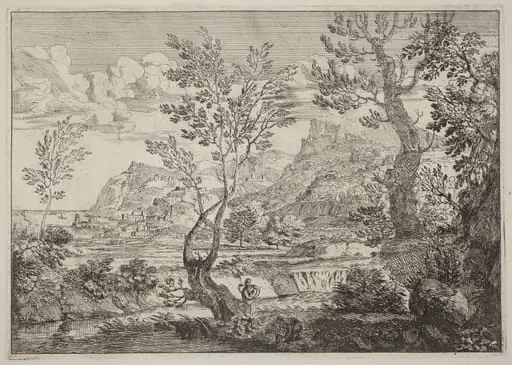
Jan van Aken’s 1638 etching presents a panoramic view of the Rhine River as it winds through a gently rolling landscape.
Jan van Aken’s 1638 etching presents a panoramic view of the Rhine River as it winds through a gently rolling landscape. The composition balances natural and built elements, with a solitary, leaf‑less tree framing the left side, a distant castle perched on a craggy hill, and several small vessels navigating the water. The sky is filled with soft, billowing clouds that lend a sense of atmospheric depth.
Subject & Meaning
The print captures a tranquil yet dynamic scene of river traffic set against a rugged terrain, reflecting the importance of the Rhine as a commercial artery in the early modern period. The isolated tree and the fortified castle serve as visual anchors, suggesting both the solitude of nature and the presence of human authority within the landscape.
Technique & Style
Executed in etching, van Aken employed delicate, intersecting lines to model the contours of hills, clouds, and water, creating a subtle gradation of tone. This method, typical of 17th‑century printmaking, allowed for fine detail and a soft rendering of atmospheric effects, giving the scene a measured, almost lyrical quality.
History & Provenance
Created in 1638, the work belongs to a period when Dutch and German artists frequently documented riverine vistas for both artistic and documentary purposes. While specific ownership records are scarce, the etching has been cited in several catalogues of van Aken’s oeuvre and appears in collections of early modern European prints.
Context
The Rhine was a central subject for artists of the era, symbolising trade, travel, and regional identity. Van Aken’s depiction aligns with contemporary interests in topographical accuracy combined with idealised scenery, a trend that linked cartographic interests with the burgeoning market for collectible prints.
Artist & collection