Artwork
Man on a Small Wooden Bridge
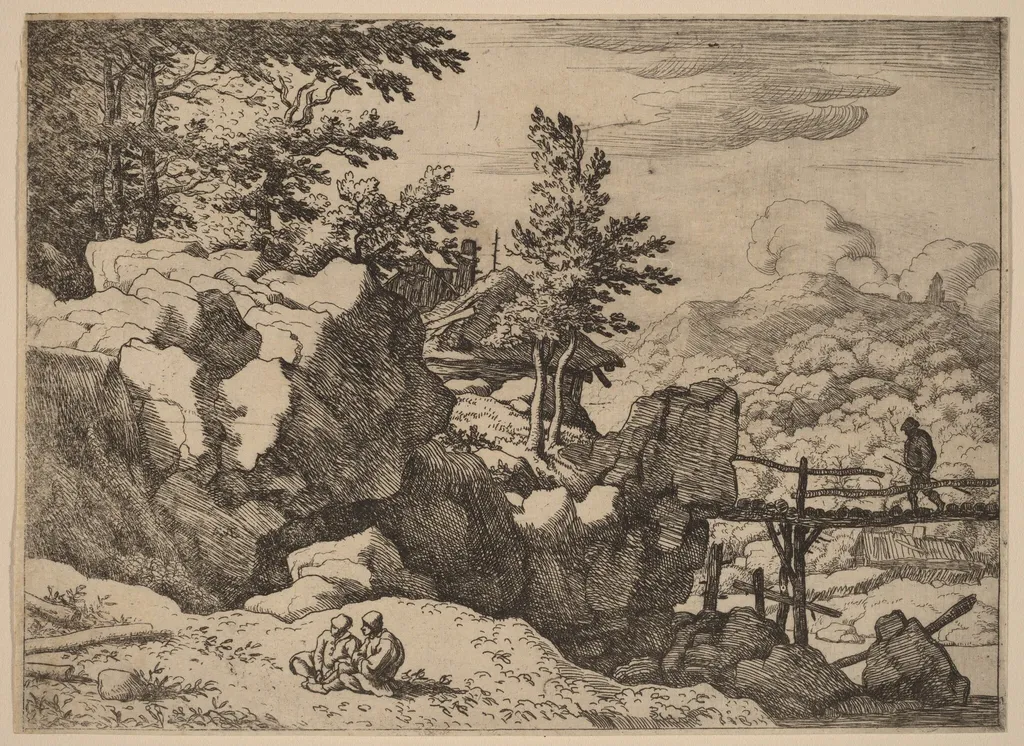
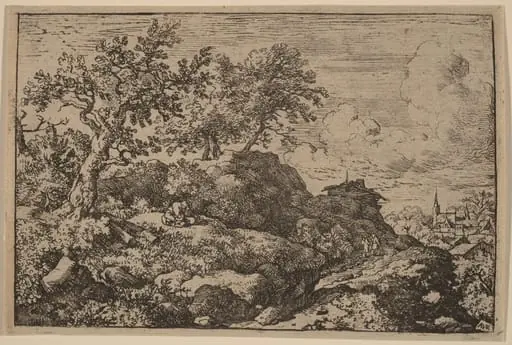
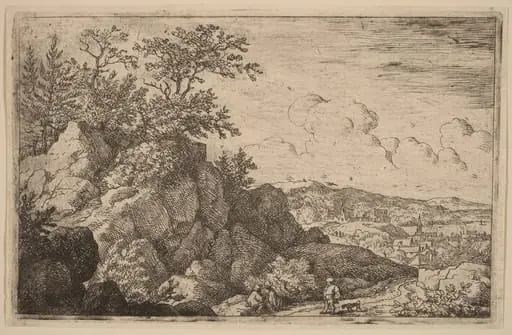
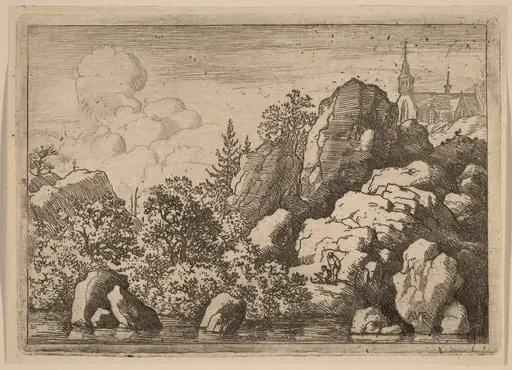
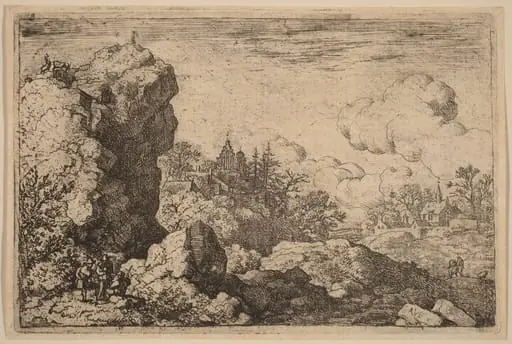
Man on a Small Wooden Bridge is an ink print by the Baroque artist Allart van Everdingen. It dates from 1650 and is held in the collection of the National Gallery of Art.
About this work
Overview
Created around 1650 by the Dutch artist Allart van Everdingen, this etching captures a quiet moment in a wooded landscape.
Created around 1650 by the Dutch artist Allart van Everdingen, this etching captures a quiet moment in a wooded landscape. The work belongs to a body of prints that reflect his interest in natural scenery and solitary human presence. Unlike grand historical scenes common in his time, this piece focuses on understated observation, using the precision of etching to render subtle atmospheric effects and textured surfaces.
Subject & Meaning
A solitary figure stands on a narrow wooden bridge, gazing toward a distant tree, while two others sit quietly near a stream below. The scene conveys stillness and introspection rather than narrative action. The figures are small in scale compared to the dense forest, suggesting human modesty within nature. There is no overt symbolism; the meaning lies in the mood of contemplation and the quiet harmony between person and environment.
Technique & Style
Everdingen employed fine, controlled etching lines to build texture in tree bark, foliage, and uneven ground. The delicate cross-hatching suggests depth and shadow without heavy contrast, creating a soft, atmospheric tone. The bridge is rendered with simple, confident strokes that imply structural solidity. The sky, lightly etched with partial cloud forms, adds a sense of openness above the enclosed woodland.
History & Provenance
The print emerged during Everdingen’s mature period, following his travels through Scandinavia, which influenced his landscape sensibility. While no specific early ownership records are widely documented, the work aligns with the growing Dutch market for intimate, non-religious prints in the mid-seventeenth century. It was likely circulated among collectors and artists who valued detailed naturalism over dramatic storytelling.
Context
In mid-1600s Holland, landscape prints flourished as affordable art for middle-class homes. Everdingen’s work stood apart by emphasizing wild, untamed nature rather than cultivated gardens or idealized vistas. His etchings responded to a broader cultural interest in the natural world, influenced by scientific observation and a shift away from religious iconography toward secular, contemplative imagery.
Legacy
Everdingen’s approach to landscape etching influenced later Dutch and German printmakers who favored atmospheric realism. His focus on quiet, unidealized nature helped expand the expressive range of printmaking beyond narrative or allegorical subjects. Though not widely celebrated in his lifetime, his works are now recognized for their sensitivity to light, texture, and the emotional resonance of solitude in nature.
Own this work as a print
Artist & collection
Artist
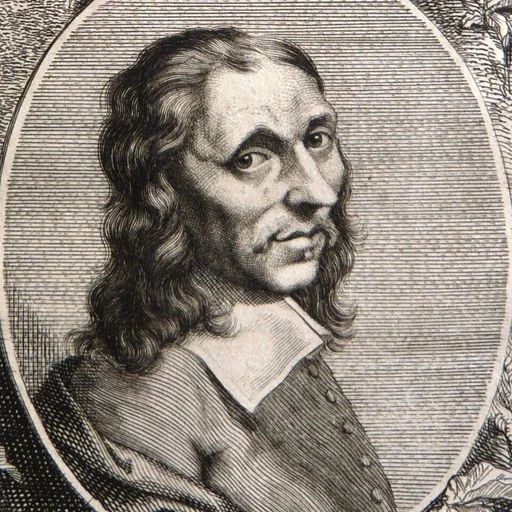
Allaert van Everdingen (Dutch pronunciation: ; bapt. 18 June 1621 – 8 November 1675 (buried)), was a Dutch Golden Age painter and printmaker in etching and mezzotint.