Artwork
The Morteratsch Glacier Upper Engadine Valley Pontresina
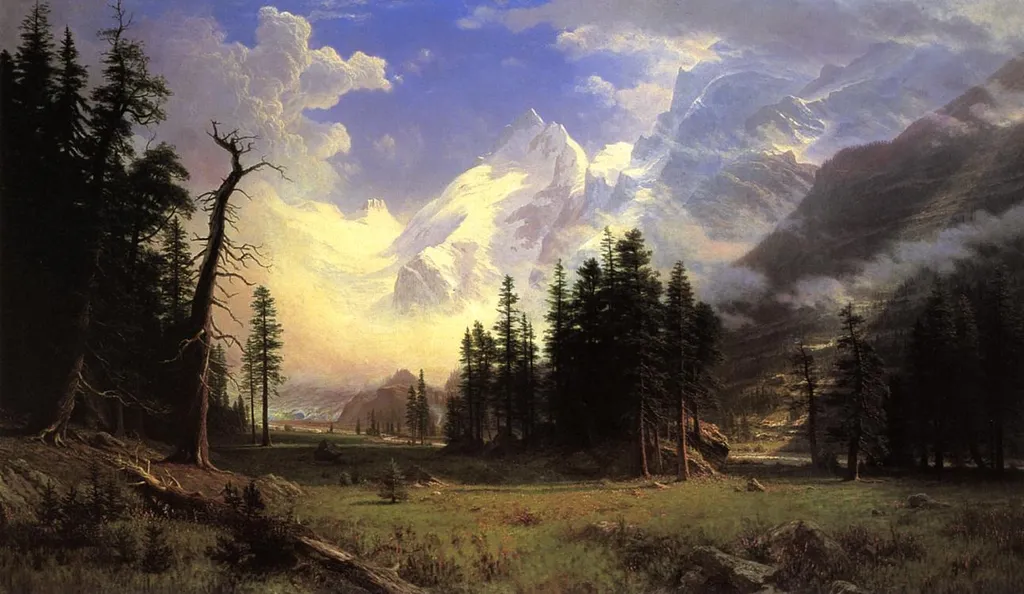
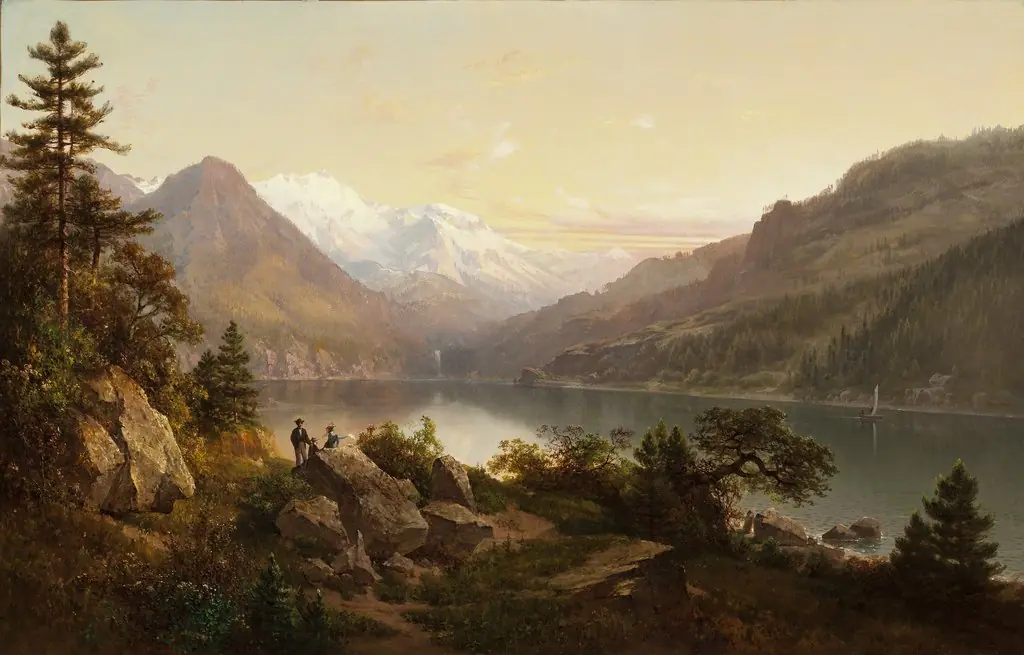
The Morteratsch Glacier Upper Engadine Valley Pontresina is an oil painting by the American Impressionist artist Albert Bierstadt. It dates from 1898 and is held in the collection of the Brooklyn Museum.
About this work
Overview
Though primarily associated with the Hudson River School, Bierstadt turned his attention to European alpine scenes in his later years.
Painted in 1898, *The Morteratsch Glacier Upper Engadine Valley Pontresina* is an oil on canvas landscape by Albert Bierstadt, an artist best known for his depictions of the American West. Though primarily associated with the Hudson River School, Bierstadt turned his attention to European alpine scenes in his later years. This work captures a quiet, sunlit view of the Morteratsch Glacier in Switzerland’s Upper Engadine Valley, reflecting his enduring interest in natural grandeur and atmospheric light.
Subject & Meaning
The painting presents the Morteratsch Glacier as a distant, serene presence, framed by rugged mountains and sparse alpine vegetation. The glacier’s pale surface, marked by subtle shadows and crevices, contrasts with the warm tones of the foreground grasses and scattered rocks. Rather than emphasizing human presence, the scene conveys a sense of quiet endurance, inviting contemplation of nature’s scale and stillness. The composition suggests reverence for untouched wilderness, consistent with Bierstadt’s broader thematic concerns.
Technique & Style
Bierstadt employed fine brushwork to render the glacier’s icy texture and the delicate gradations of light across the mountain slopes. The sky, softly modeled with pale blues and wisps of cloud, enhances the sense of depth and airiness. Foreground elements—grasses, stones, and trees—are rendered with varied strokes to suggest tactile detail, while the distant glacier remains ethereal, blurred slightly by atmospheric perspective. His technique blends precision with a luminous, almost ethereal handling of light, characteristic of his mature style.
History & Provenance
Created during Bierstadt’s later period, the painting reflects his continued engagement with European landscapes after decades focused on North America. It entered the collection of the Brooklyn Museum in the 20th century, where it remains today. While less widely exhibited than his American works, this piece illustrates his sustained fascination with natural forms and his ability to translate alpine grandeur into intimate, contemplative compositions.
Context
In the late 19th century, European glaciers became subjects of scientific and artistic interest as climate patterns began to shift. Bierstadt’s depiction aligns with a broader cultural fascination with alpine environments, shared by travelers, geologists, and painters. His choice to paint the Morteratsch Glacier—rather than more famous peaks—suggests a preference for lesser-known, tranquil vistas, distinguishing his European work from the dramatic scale of his earlier American scenes.
Legacy
Though overshadowed by his monumental Western landscapes, *The Morteratsch Glacier* contributes to an understanding of Bierstadt’s artistic range and his late-career exploration of European terrain. It stands as a quiet testament to his technical skill and enduring sensitivity to light and natural form. The painting remains a valuable example of how American artists engaged with European landscapes, bridging transatlantic traditions of landscape representation.
Artist & collection