Artwork
Pacific beaches
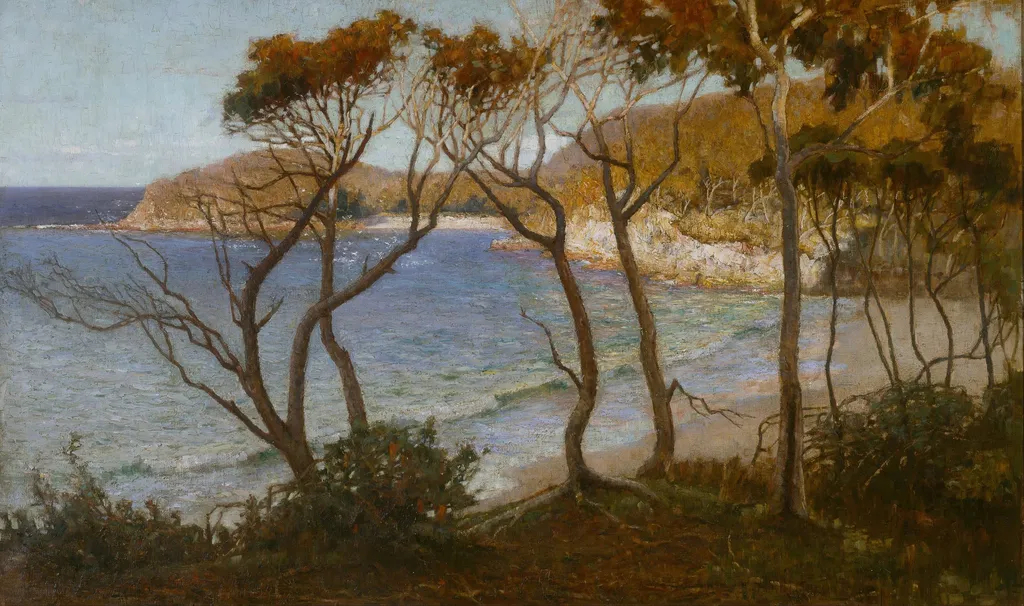
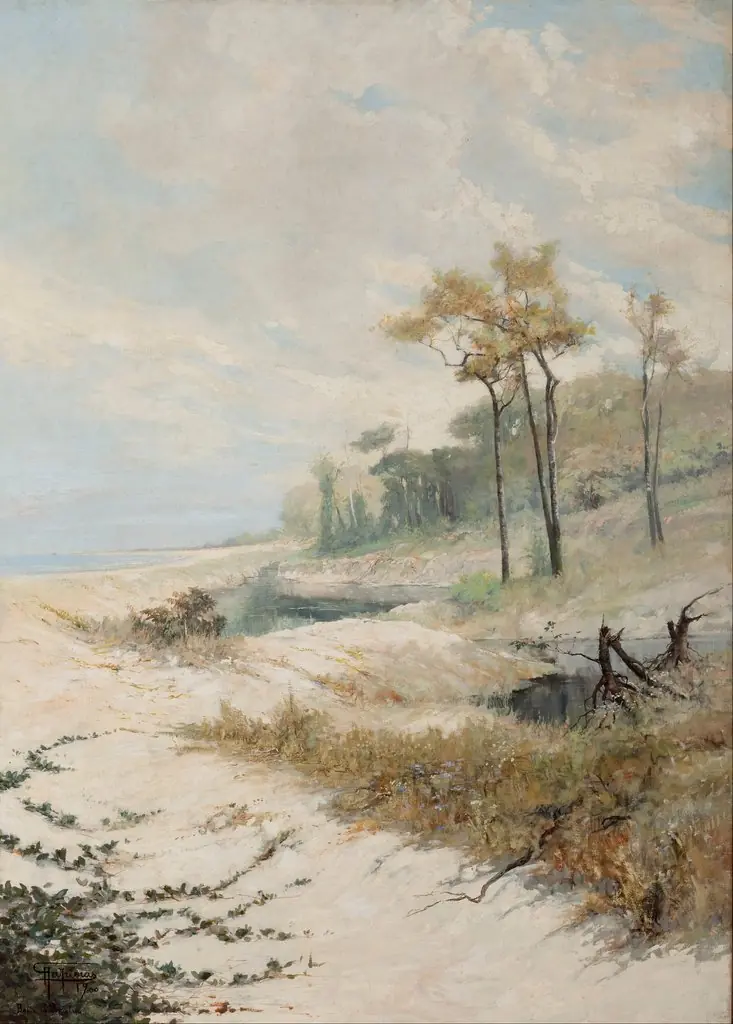
Pacific beaches is an oil painting by the American Impressionist artist Albert J. Hanson. It dates from 1900 and is held in the collection of the Art Gallery of New South Wales.
About this work
Overview
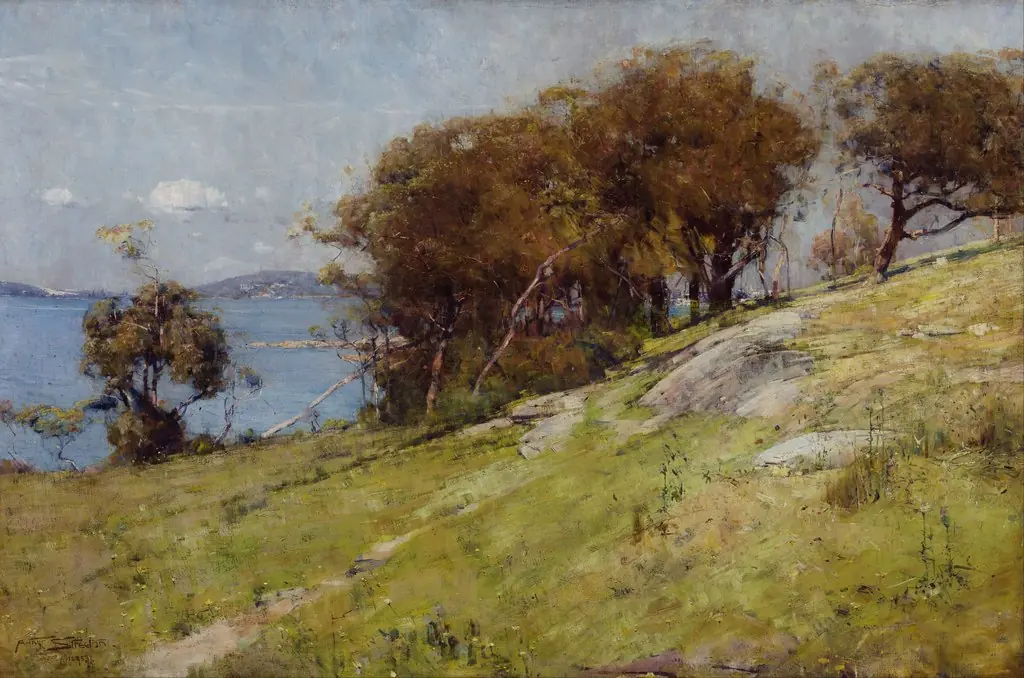
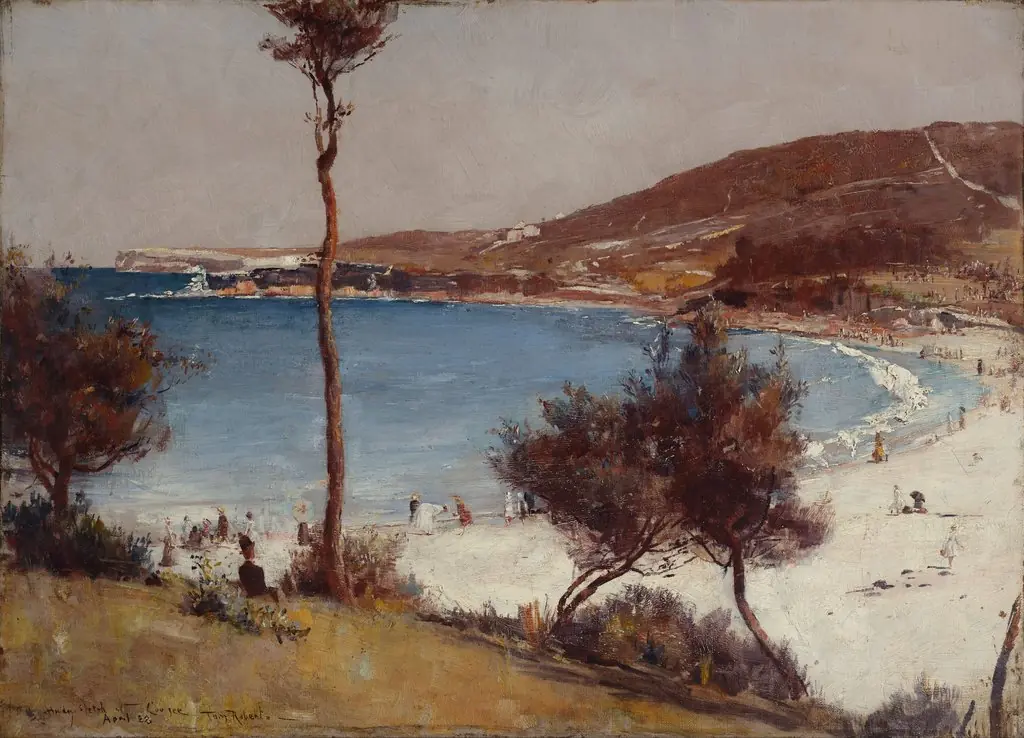
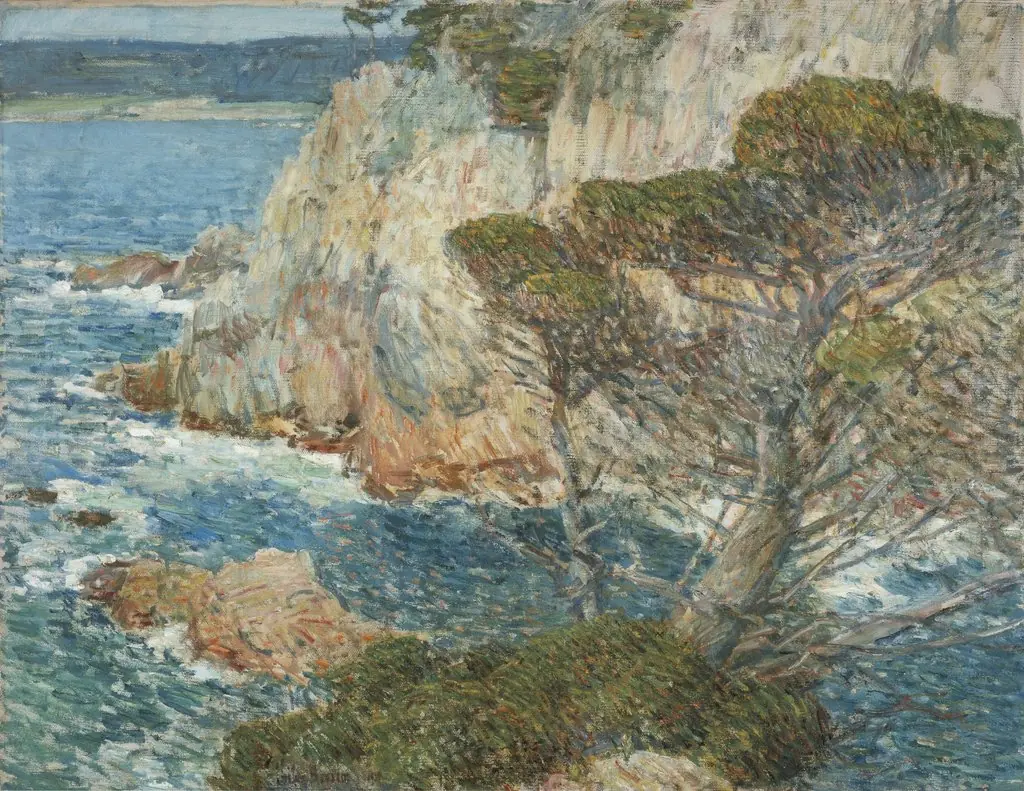
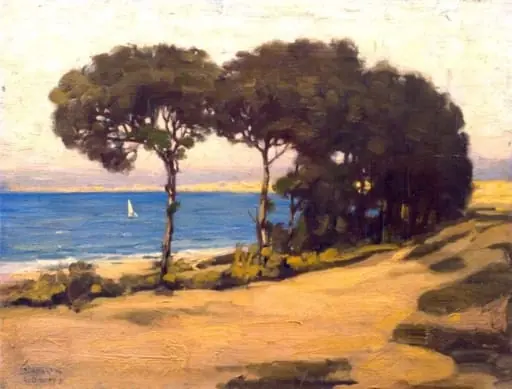
Created in 1900, *Pacific Beaches* is an oil painting by Albert J. Hanson that presents a quiet stretch of coastline on the Pacific Ocean. The composition balances a low horizon with a calm sea, while a modest group of trees frames the shoreline, lending the scene a sense of stillness and openness.
Subject & Meaning
The work portrays a serene beach environment, emphasizing the gentle meeting of land and water. Sparse, twisted trees punctuate the sand, suggesting a natural, unaltered landscape. The muted palette and placid atmosphere invite contemplation of the quiet rhythms of coastal life, rather than dramatic narrative.
Technique & Style
Executed in the American Impressionist idiom, Hanson employs soft, blended brushwork and a restrained colour scheme of blues, greys and earth tones. The handling of light is subtle, with diffuse illumination that unifies sky, sea and foliage, while the brushstrokes remain delicate enough to preserve the scene’s calm mood.
History & Provenance
Albert J. Hanson, an Australian-born painter (1867‑1914), completed the piece shortly before achieving wider recognition with the Wynne Prize in 1905. *Pacific Beaches* entered the collection of the Art Gallery of New South Wales, where it remains part of the institution’s holdings of early twentieth‑century Australian art.
Context
The painting reflects the cross‑currents of Impressionist techniques adopted by artists working in Australia at the turn of the century. While rooted in a local landscape, Hanson’s approach mirrors broader trans‑Pacific artistic exchanges, integrating European brushwork with the distinctive light and atmosphere of the Australian Pacific coast.
Own this work as a print
Artist & collection
Artist
Albert John Hanson (28 September 1867 – 11 July 1914) was an Australian artist, winner of the 1905 Wynne Prize. He died at his home in Haberfield on 11 July 1914.