Artwork
Pomi la malul mării
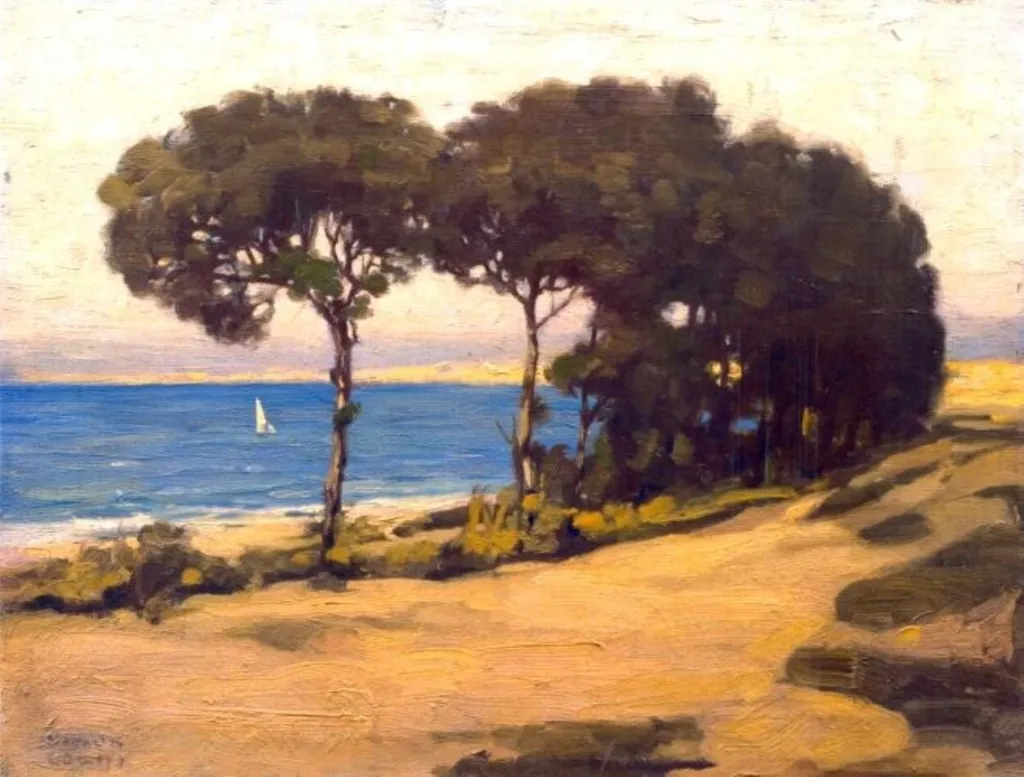
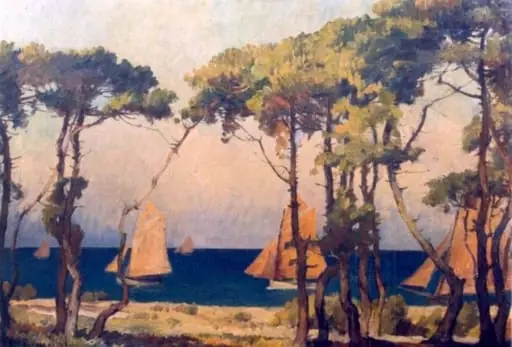
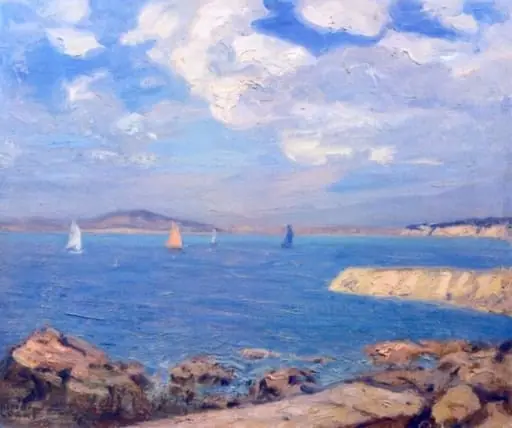
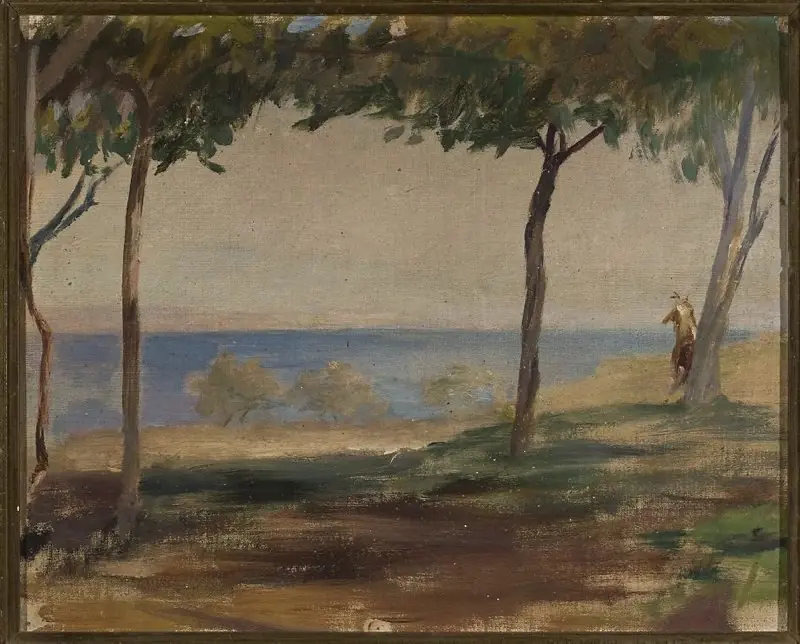
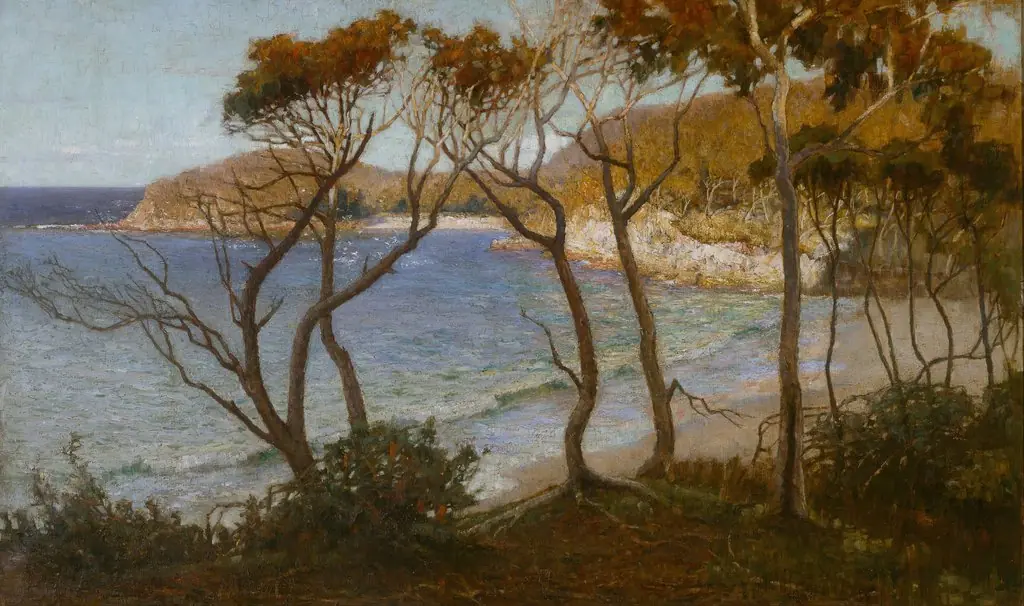
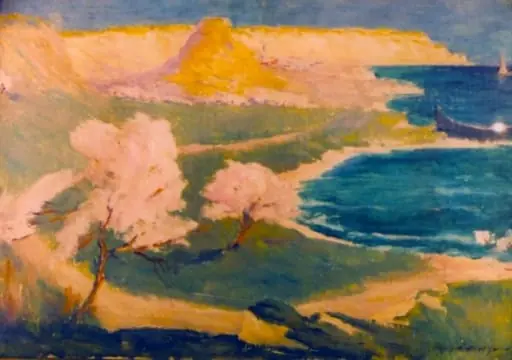
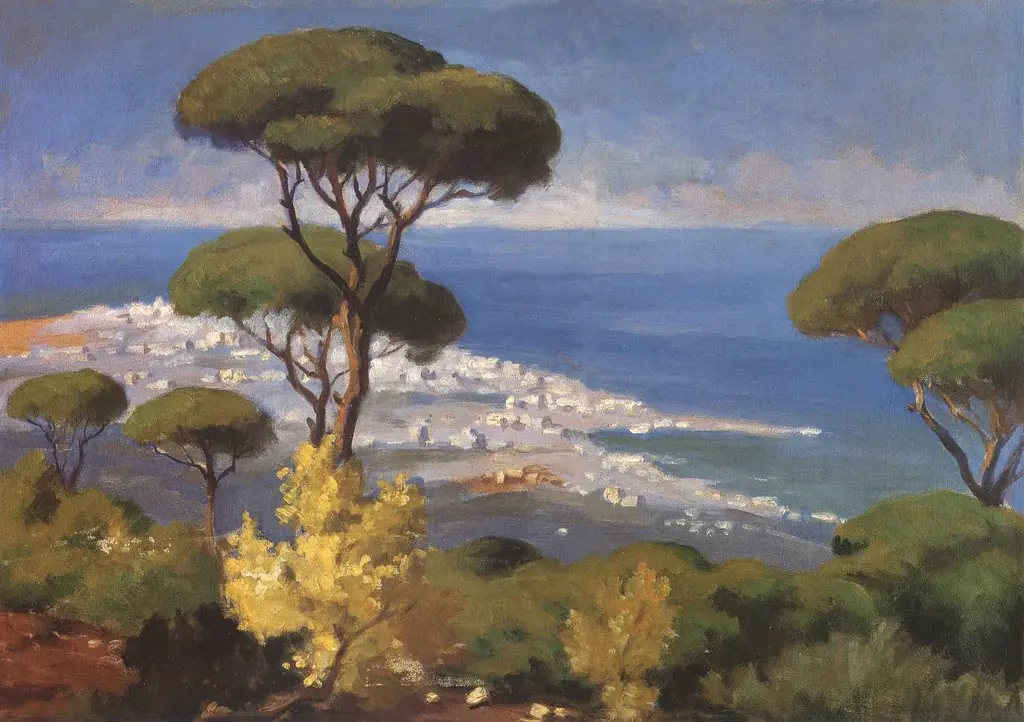
Pomi la malul mării is an unspecified painting by Kimon Loghi. It is held in the collection of the National Museum of Art of Romania. This painting depicts a solitary coastal path winding toward the sea, framed by dense, shadowed trees and a calm, distant ocean.
About this work
Overview
The composition draws the viewer’s gaze toward the horizon, where a solitary sailboat hints at quiet movement beyond the stillness.
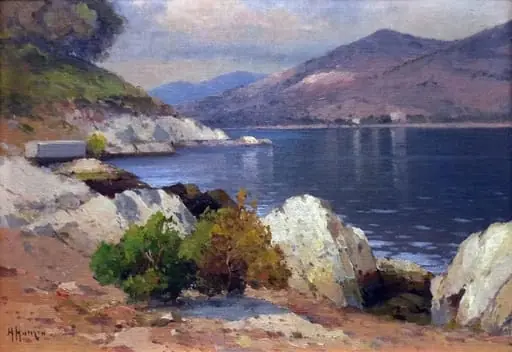
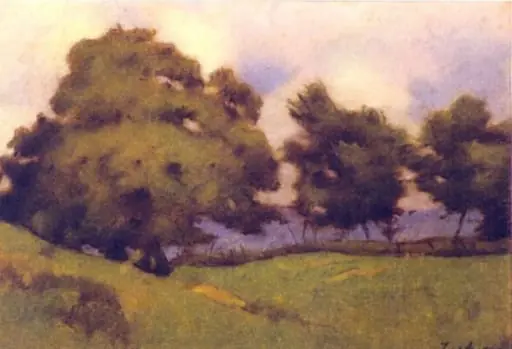
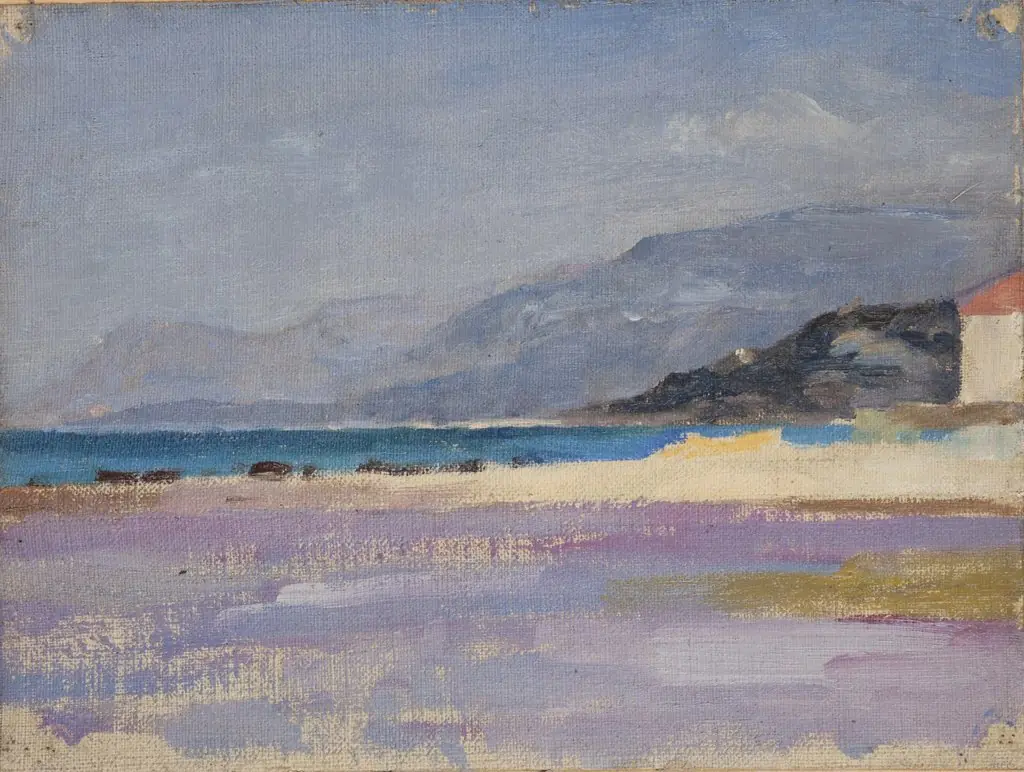
This painting depicts a solitary coastal path winding toward the sea, framed by dense, shadowed trees and a calm, distant ocean. The absence of human figures enhances the quietude of the scene. Brushwork is loose and fluid, suggesting natural forms without sharp definition, creating a gentle, atmospheric mood. The composition draws the viewer’s gaze toward the horizon, where a solitary sailboat hints at quiet movement beyond the stillness.
Subject & Meaning
The scene conveys solitude and contemplation through its empty path and unpopulated shore. The trees act as natural barriers, enclosing the viewer in a secluded space, while the ocean beyond suggests openness and distance. The sailboat, barely visible, introduces a subtle sense of passage without narrative. The work evokes introspection rather than action, emphasizing the quiet rhythm of nature.
Technique & Style
The artist employs loose, rapid brushstrokes to render foliage and water, avoiding detailed rendering in favor of impressionistic suggestion. Light brown sand and blue sea are applied with thin washes, while the dark green canopy uses layered strokes to imply depth and shadow. The technique avoids heavy impasto, favoring a soft, blended surface that enhances the dreamlike tranquility of the scene.
History & Provenance
The painting’s origin and ownership history are not documented in available records. It appears to be a standalone work, not part of a known series or exhibition. No artist attribution or date is provided, and its creation context remains unspecified, leaving its historical trajectory uncertain.
Context
The composition aligns with late 19th- to early 20th-century landscape traditions that favored mood over narrative, particularly in coastal scenes influenced by Impressionism. The emphasis on light, atmosphere, and quiet solitude reflects broader artistic interests in nature’s transient qualities, though the work lacks the bold color or texture seen in more radical Impressionist or Post-Impressionist approaches.
Legacy
While not widely recognized in art historical scholarship, the painting exemplifies a quiet strand of landscape painting focused on stillness and subtle observation. Its approach resonates with lesser-known regional artists who prioritized emotional tone over formal innovation, offering a gentle counterpoint to more dramatic or monumental works of the period.
Artist & collection
Artist
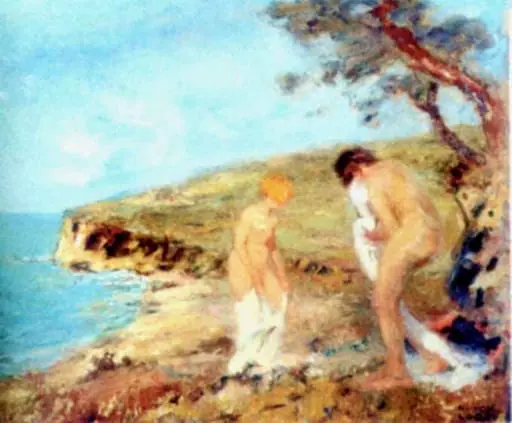
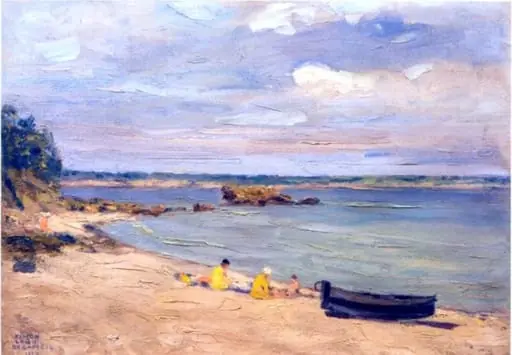
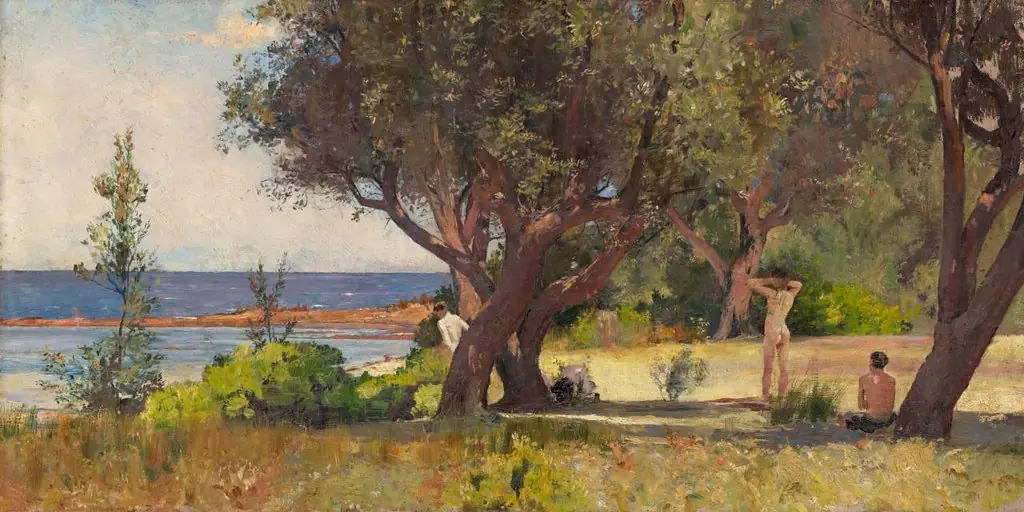
Kimon Loghi painted bright, sunlit scenes of people at leisure by the sea. In 1903 he showed “Balada” and later captured bathers in “Femei la scăldat,” set a beach near Concarneau in “Plajă la Beg - Meil,” and printed…