Artwork
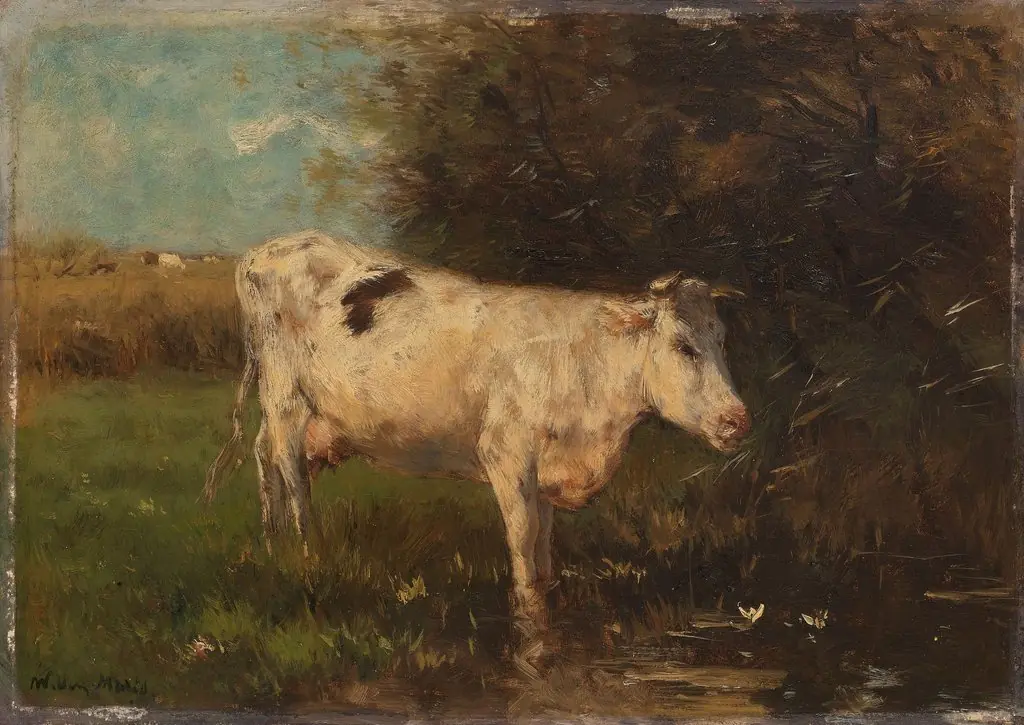
The White Cow
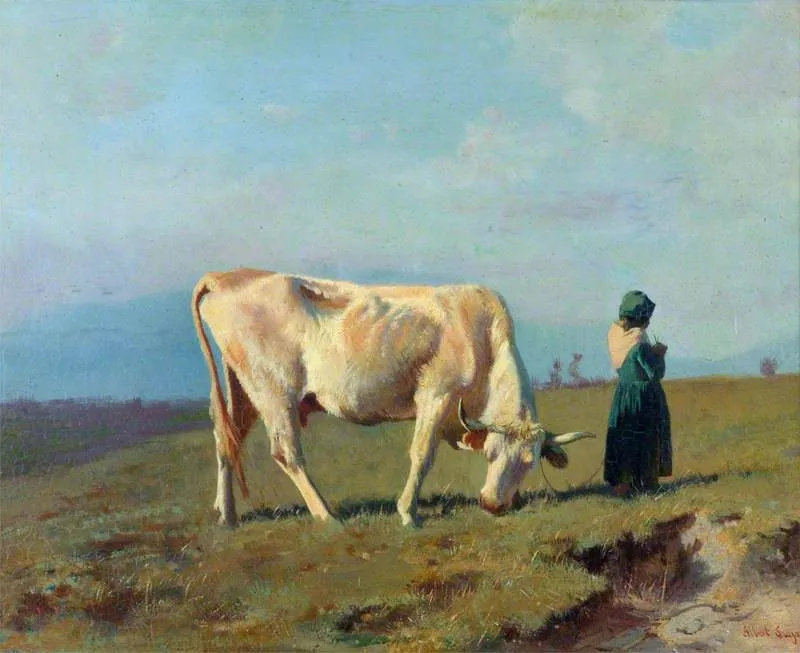
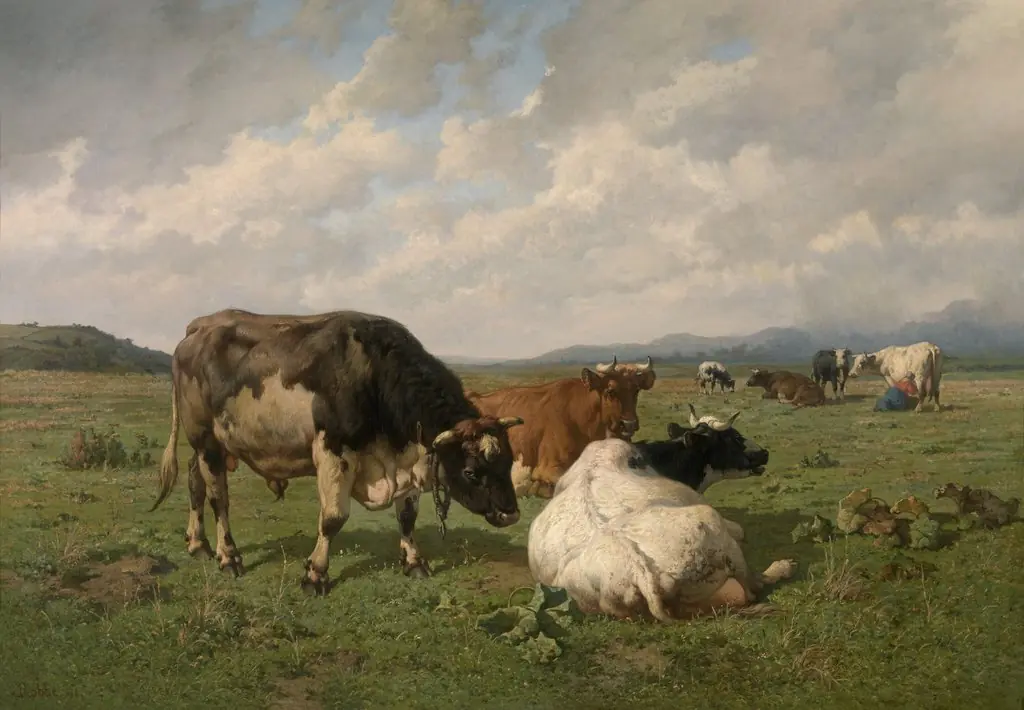
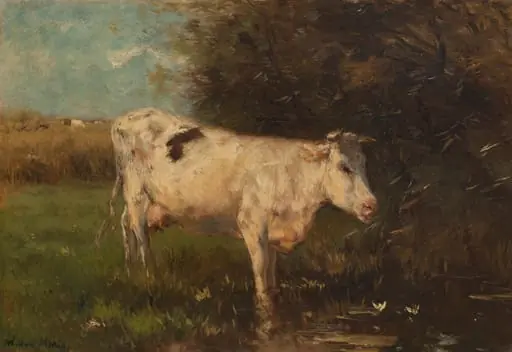
The White Cow is an oil painting by Albert Lugardon. It dates from 1877 and is held in the collection of the Victoria and Albert Museum.
About this work
Overview
The painting reflects Lugardon’s interest in rural life and his attention to the subtle effects of light and texture in outdoor scenes.
Painted around 1877, The White Cow is an oil on canvas work by Swiss artist Albert Lugardon. It depicts a single cow in a pastoral setting and is part of the Victoria and Albert Museum’s collection. The composition centers the animal within a quiet landscape, emphasizing stillness and natural harmony. The painting reflects Lugardon’s interest in rural life and his attention to the subtle effects of light and texture in outdoor scenes.
Subject & Meaning
The subject is a white cow, head lowered as it grazes in a dense, green meadow. There is no human presence or narrative action, focusing attention solely on the animal’s quiet routine. The scene conveys a sense of peaceful coexistence with nature, avoiding idealization or symbolism. The cow’s stillness and the unremarkable setting suggest an appreciation for ordinary, unembellished moments in agricultural life.
Technique & Style
Lugardon employed oil paint to build subtle tonal variations in the cow’s coat, using soft, layered brushwork to suggest the texture of fur and the play of light. The surrounding grass and foliage are rendered with looser, more fluid strokes, creating contrast between the animal’s defined form and the ambient environment. This technique enhances the painting’s atmospheric depth without resorting to dramatic contrast or heightened detail.
History & Provenance
The painting was created in the late 1870s and entered the Victoria and Albert Museum’s collection at some point after its completion. No detailed record of its early ownership or exhibition history is widely documented. Its presence in the museum suggests it was acquired as an example of 19th-century European genre painting, valued for its quiet observation of rural subjects rather than its fame or controversy.
Context
In the late 19th century, European artists increasingly turned to rural life as a counterpoint to industrialization. Lugardon’s work aligns with this trend, though without the social commentary found in some contemporaries. His focus on a solitary animal in a natural setting reflects a broader interest in tranquility and the dignity of everyday existence, common among Swiss and French realist painters of the period.
Legacy
The White Cow remains a modest but representative example of Lugardon’s oeuvre, illustrating his sensitivity to natural form and light. While not widely exhibited or studied, it contributes to the understanding of lesser-known 19th-century artists who documented rural Switzerland with restraint and sincerity. Its preservation in a major museum ensures its continued availability for scholarly and public engagement.
Artist & collection