Artwork
Cow
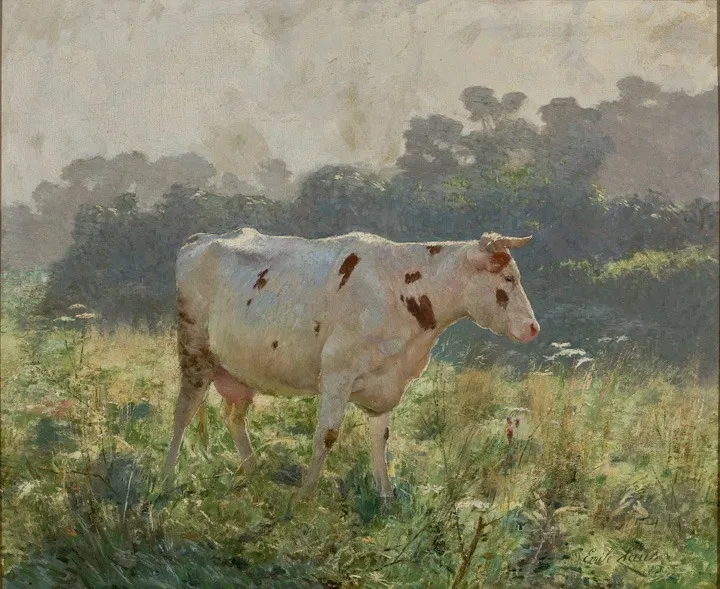
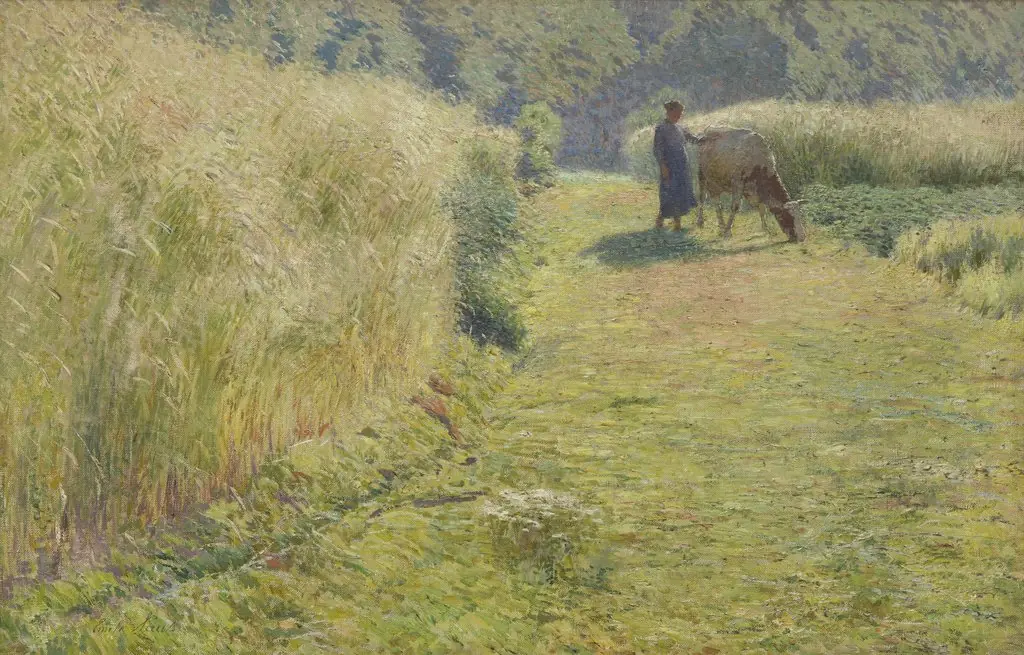
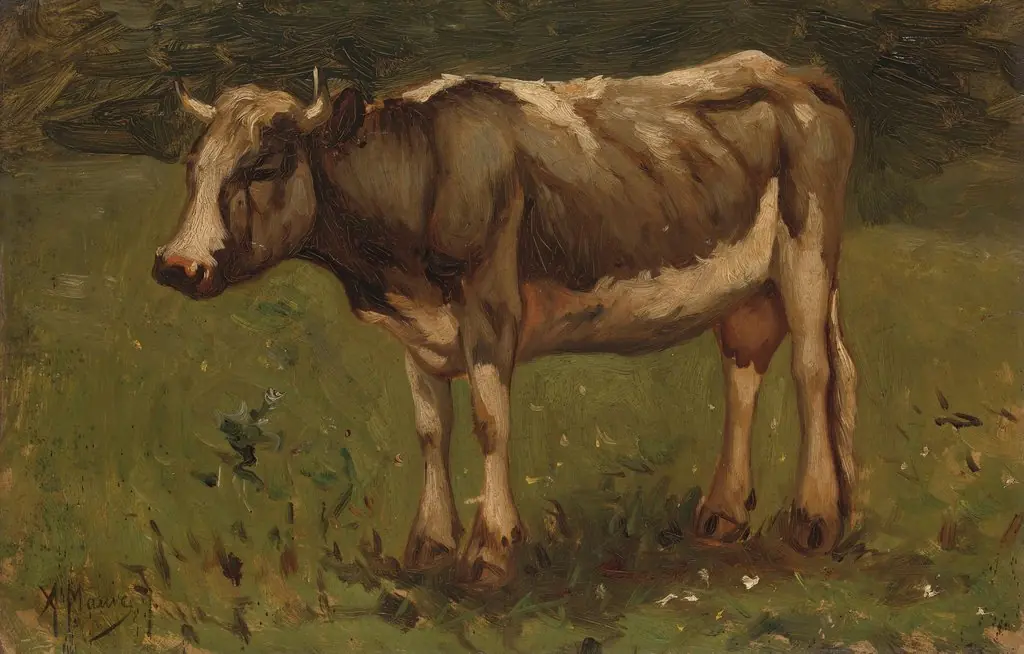
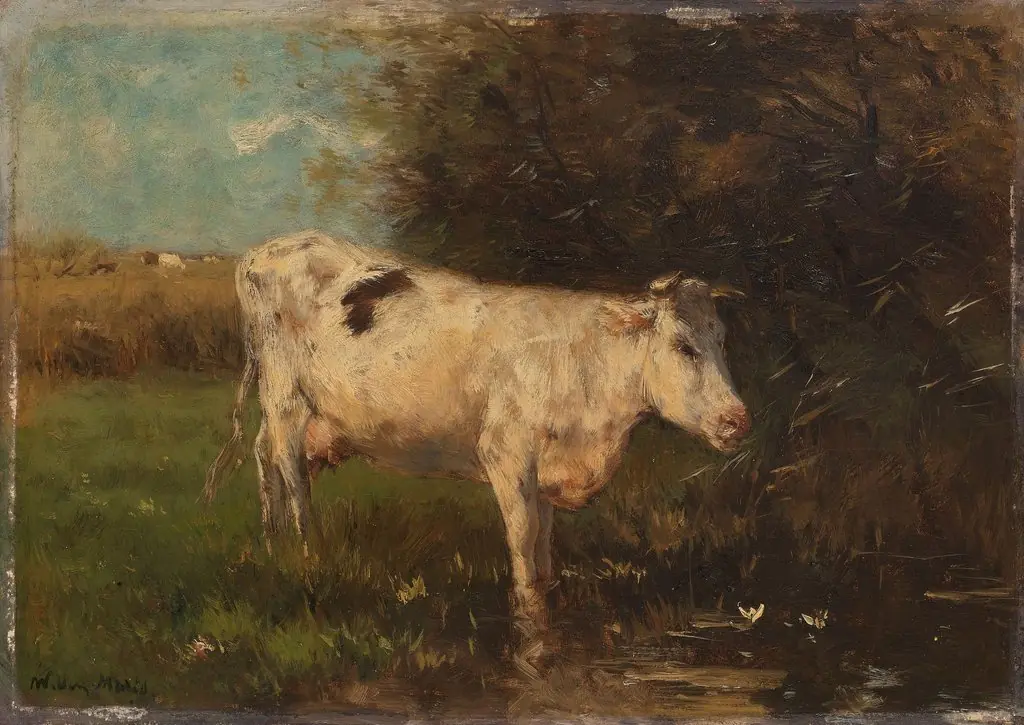
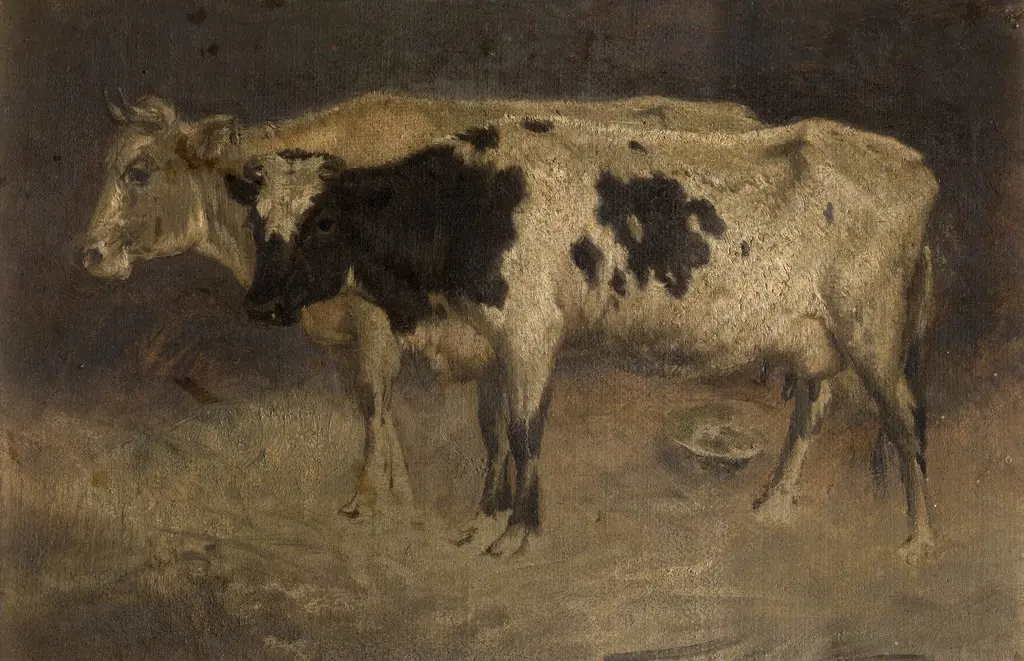
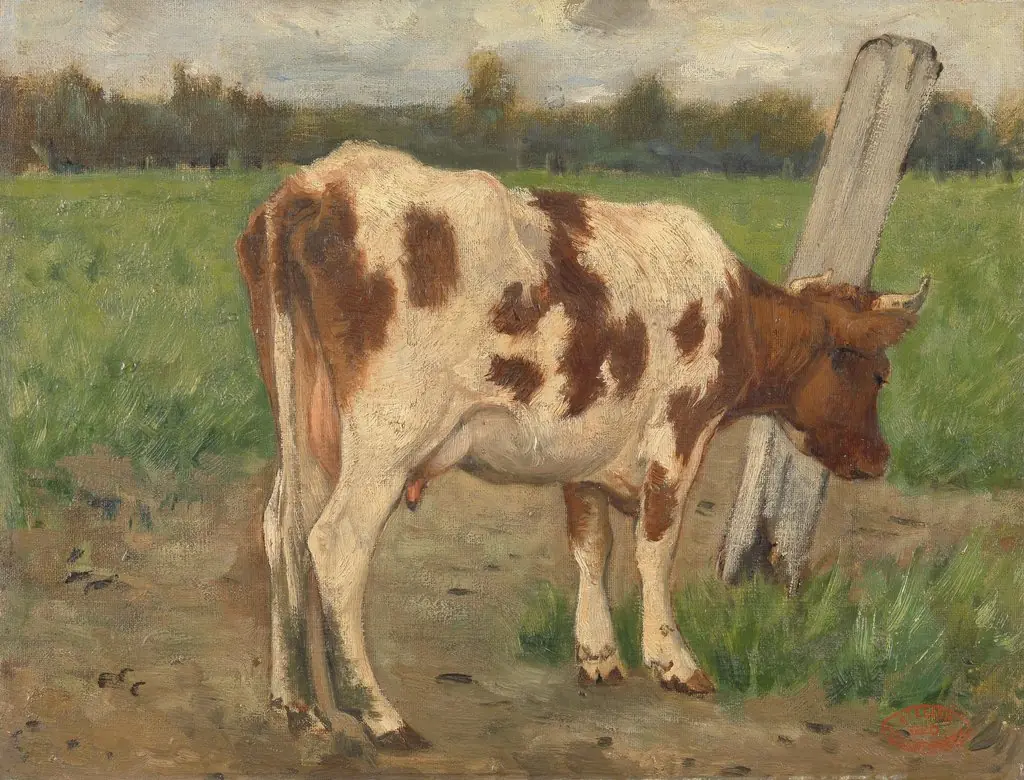
Cow is an oil painting by the Impressionist artist Emile Claus. It dates from 1896 and is held in the collection of the São Paulo Museum of Art.
About this work
Overview
Painted around 1896 by Belgian artist Emile Claus, this oil on canvas depicts a single cow in a rural landscape. The work is part of the collection at the São Paulo Museum of Art. Its quiet composition and attention to natural light reflect Claus’s interest in capturing the subtle effects of atmosphere and environment in everyday rural scenes.
Subject & Meaning
The painting centers on a white cow with brown markings, standing calmly in a field of tall grass and wildflowers. Its head turns gently toward the viewer, creating a quiet sense of connection. The animal’s stillness and the undisturbed landscape suggest an idealized harmony between creature and environment, free from human intervention or narrative drama.
Technique & Style
Claus employs loose, luminous brushwork to render the grass and sky, emphasizing the diffusion of natural light. Subtle shifts in tone and color model the cow’s form without harsh outlines, blending it into the surrounding environment. The hazy horizon and soft atmospheric perspective enhance the painting’s tranquil mood, characteristic of his late 19th-century luminist approach.
History & Provenance
The painting was completed in the mid-1890s during a period when Claus was increasingly focused on rural subjects and light effects. It entered the São Paulo Museum of Art’s collection in the 20th century, likely through acquisitions of European works by the museum’s founding patrons. Its presence in Brazil reflects broader international interest in Belgian Impressionist-inspired painting.
Context
Claus was part of a generation of Belgian artists who moved away from academic realism toward more sensitive depictions of light and rural life. Influenced by French Impressionism and the plein air tradition, he sought to convey the emotional resonance of ordinary moments. This painting aligns with his broader effort to elevate the pastoral into a contemplative visual experience.
Legacy
Though not among Claus’s most widely reproduced works, this painting exemplifies his mature style and commitment to capturing the quiet beauty of the countryside. It contributes to the recognition of Belgian luminism as a distinct regional response to broader European trends in light-based painting during the fin de siècle.
Artist & collection