Artwork
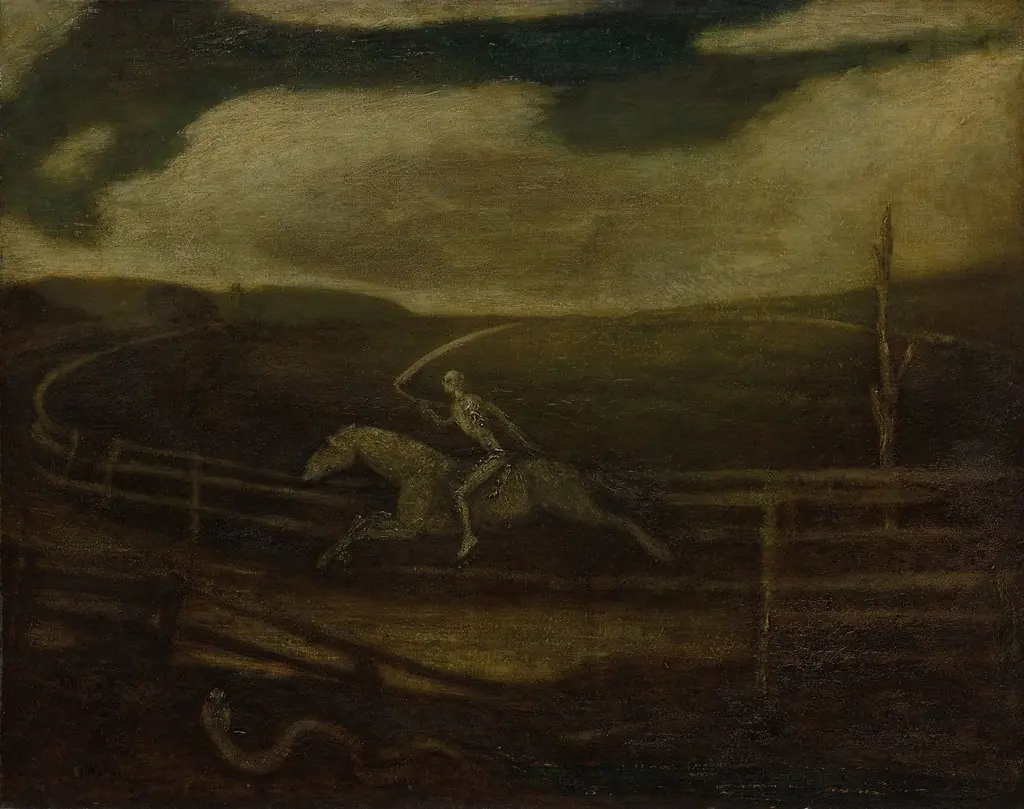
The Race Track (Death on a Pale Horse)
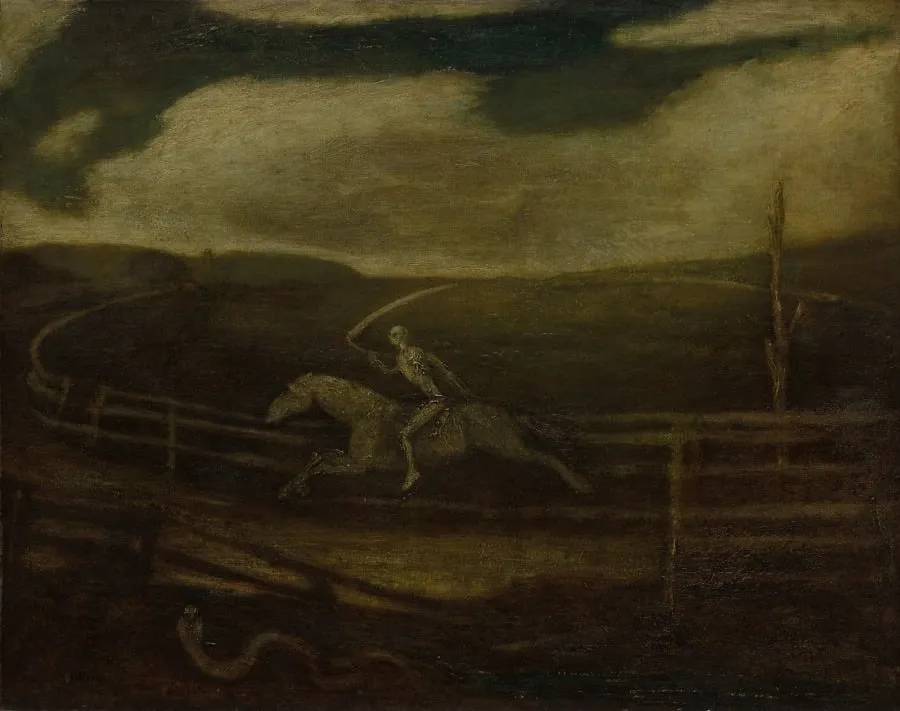
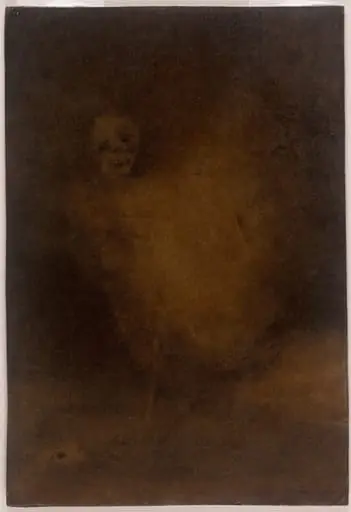
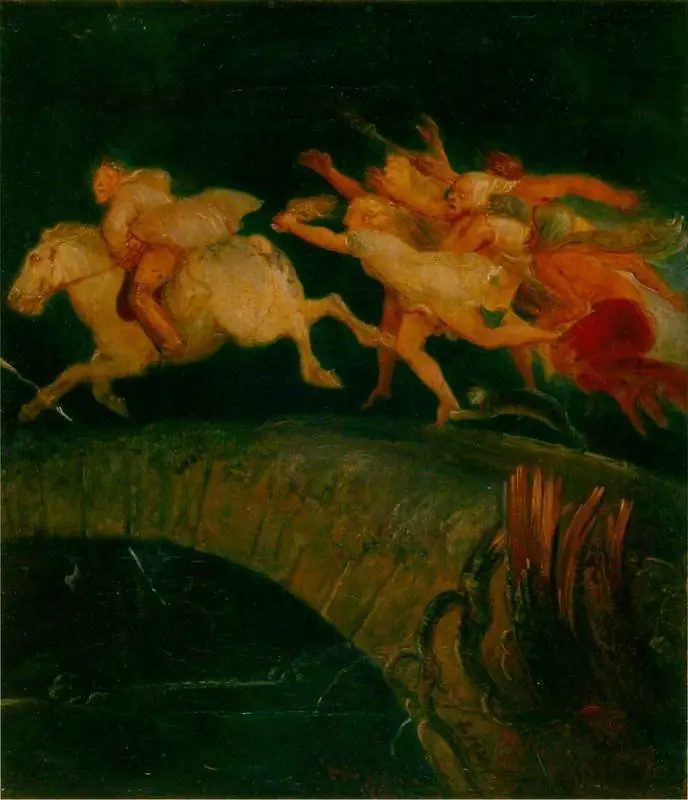
The Race Track (Death on a Pale Horse) is an unspecified painting by the American Impressionist artist Albert Pinkham Ryder. It dates from 1902 and is held in the collection of the Cleveland Museum of Art.
About this work
Overview
The Race Track (Death on a Pale Horse) is a painting inspired by a tragic event involving a horse race in New York in 1888. The work combines a personal, contemporary narrative with medieval symbolic elements.
Subject & Meaning
The painting depicts Death as a skeleton on a pale horse, wielding a scythe and accompanied by a snake, symbolizing temptation and evil. The scene alludes to the story of an artist's friend who lost a significant bet on the race and subsequently took their own life.
Technique & Style
Characterized by muted colors and swirling dust, the painting conveys an urgent and eerie atmosphere. The artist, known for his intensity, worked on the piece for several years, never considering it complete.
History & Provenance
Created over several years, the painting was deeply personal to the artist, who was reluctant to part with it. The exact timeline and changes made during its creation are reflective of the artist's perfectionism.
Context
The work blends a late 19th-century American setting with medieval European symbolism, reflecting the artist's unique approach to narrative painting.
Legacy
The Race Track (Death on a Pale Horse) is noted for its haunting blend of personal tragedy and symbolic imagery, contributing to its enduring interest among viewers of American art.
Artist & collection

Artist
Albert Pinkham Ryder was an American painter best known for his poetic and moody allegorical works and seascapes, as well as his eccentric personality.