Artwork
Fleeing
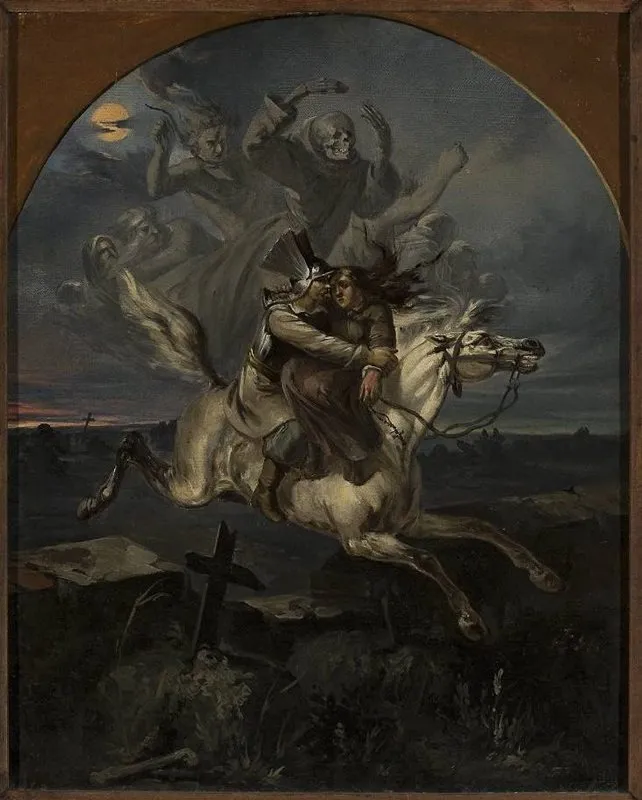
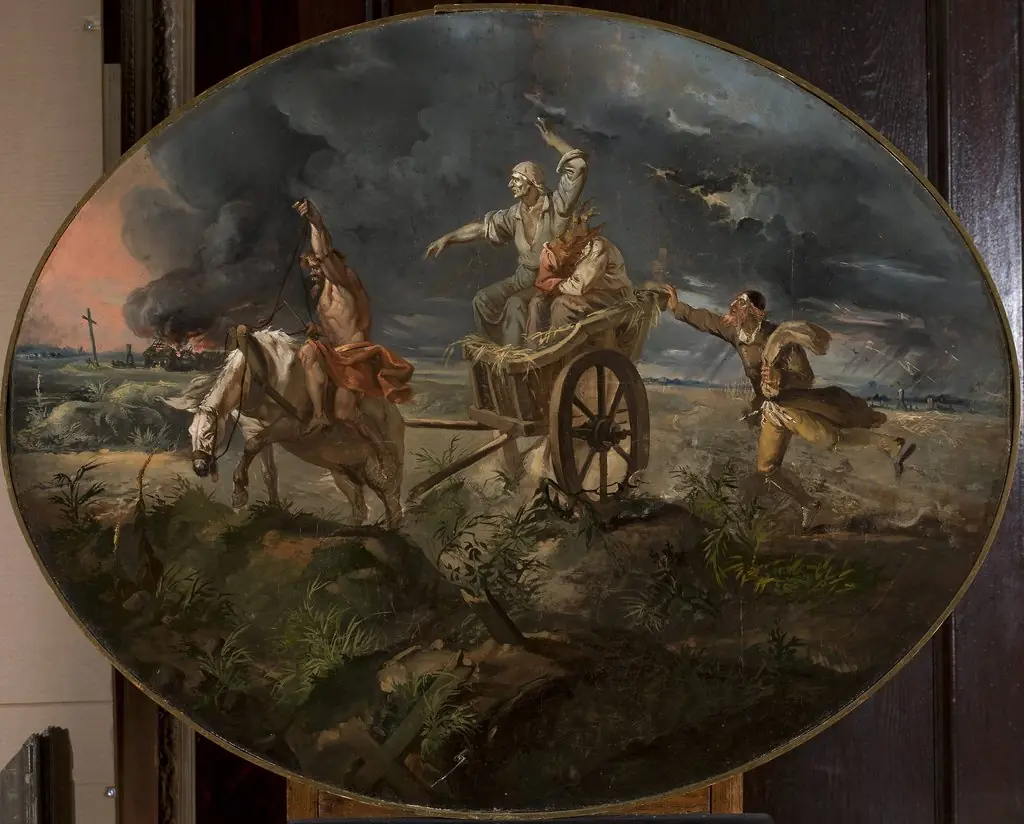
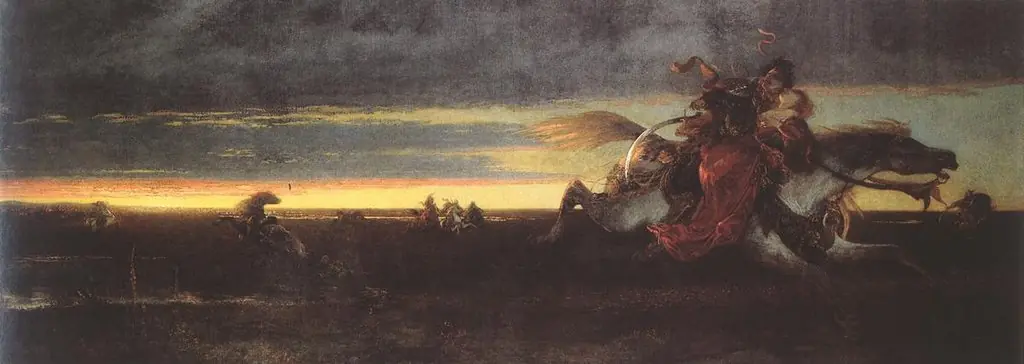
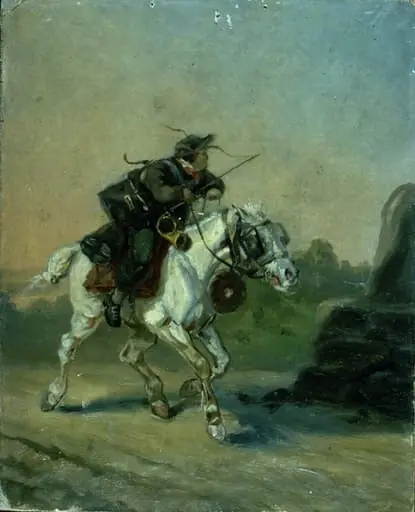
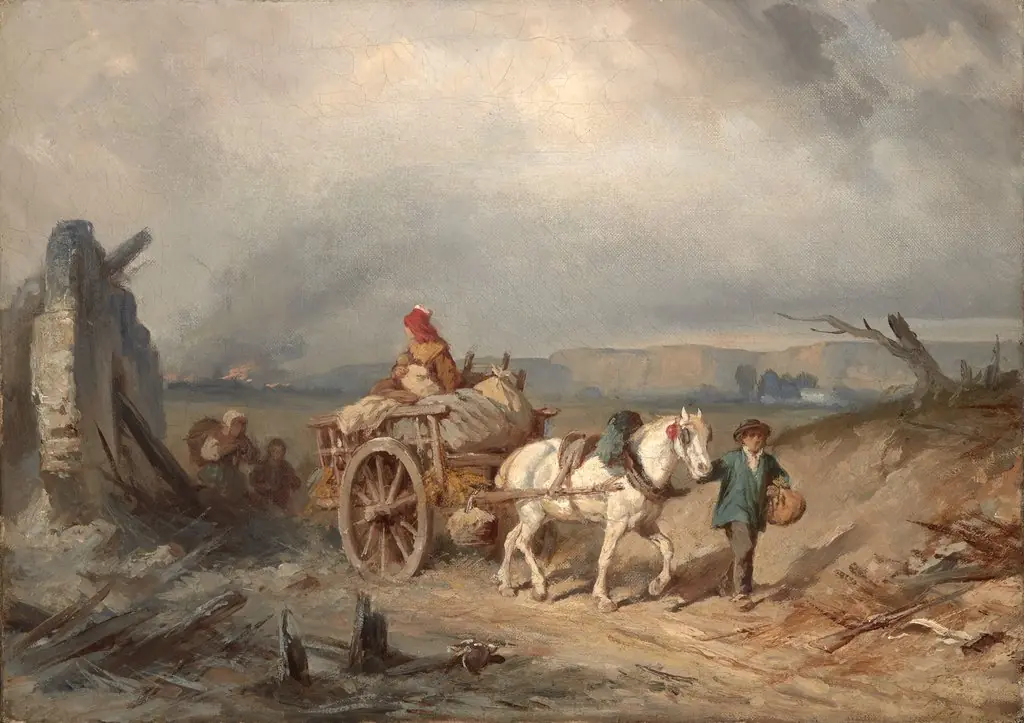
Fleeing is an unspecified painting by the Realist artist Ignacy Gierdziejewski. It dates from 1856 and is held in the collection of the National Museum in Warsaw.
About this work
Overview
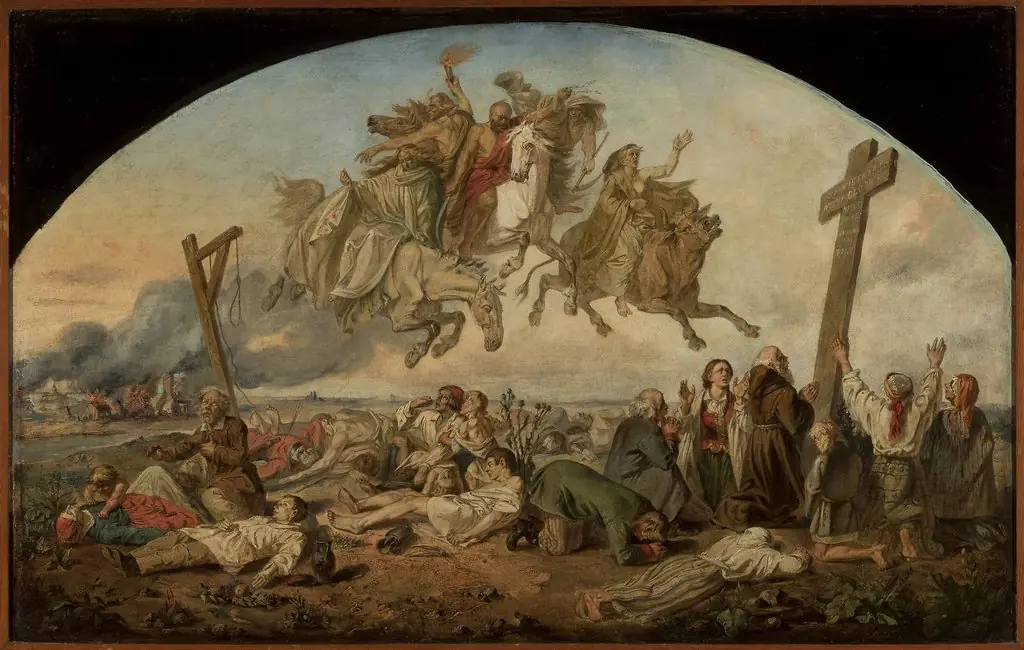
Fleeing is an 1856 oil painting by Polish artist Ignacy Gierdziejewski. It depicts a solitary woman on a white horse in motion, surging forward against a shadowed landscape. The scene conveys a sense of abrupt escape, with spectral forms looming behind her. The work resides in the National Museum in Warsaw, where it is recognized as a rare example of Romantic-era narrative painting in Polish art.
Subject & Meaning
The lack of clear narrative context invites interpretation rooted in folk beliefs or moral allegory common in 19th-century Eastern European art.
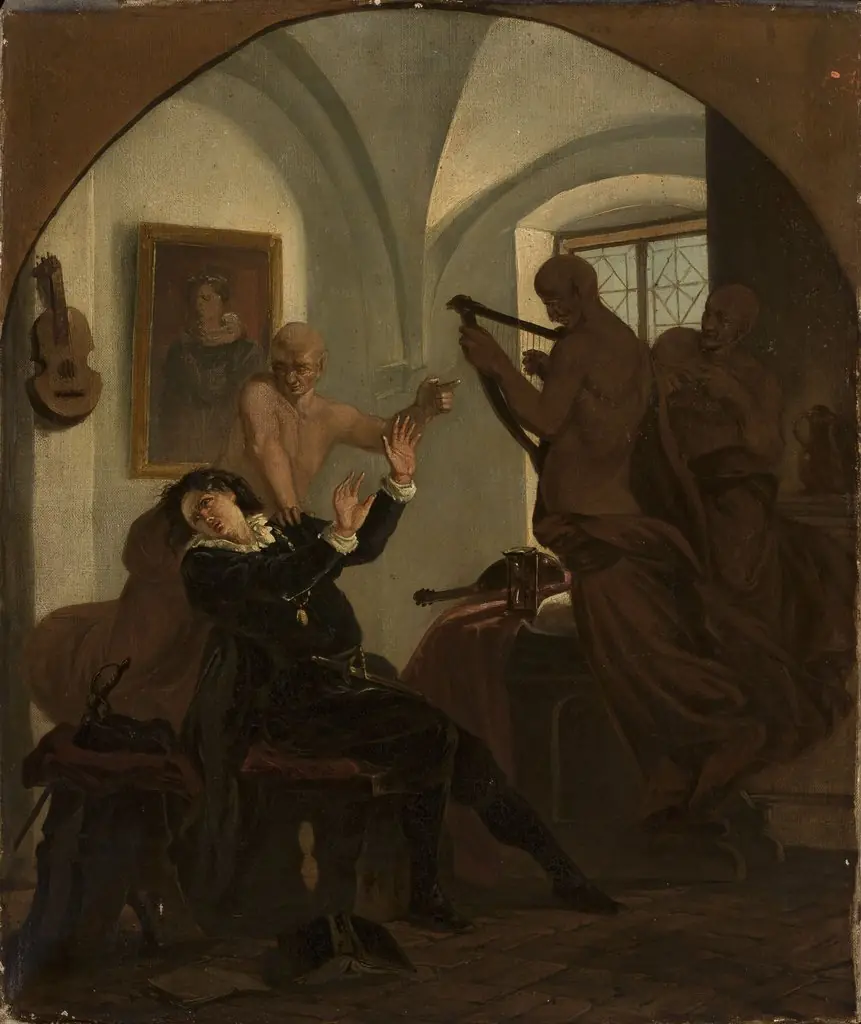
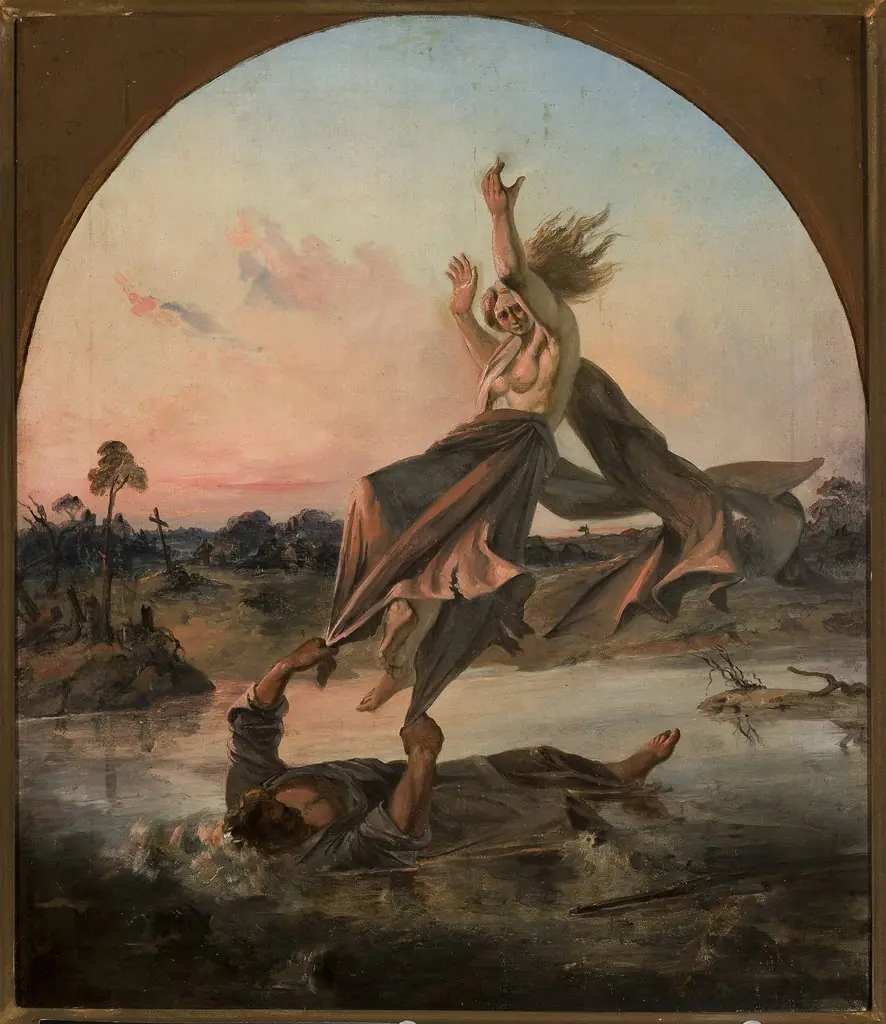
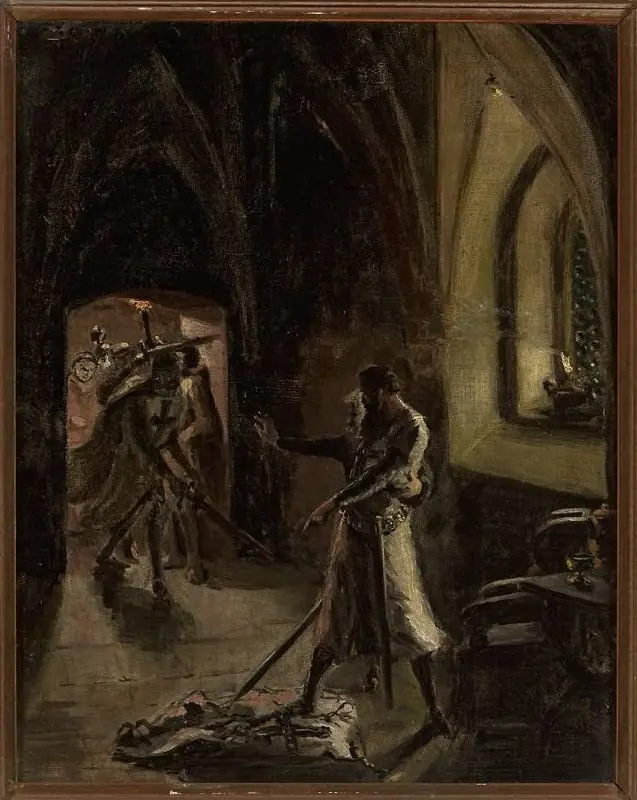
The central figure, a woman in flight, appears pursued by ethereal, skeletal presences. The horse leaps over a dark, stone-like object, possibly a grave marker, suggesting a confrontation with death or the past. The imagery evokes themes of guilt, supernatural retribution, or psychological torment. The lack of clear narrative context invites interpretation rooted in folk beliefs or moral allegory common in 19th-century Eastern European art.
Technique & Style
Gierdziejewski employs a muted palette dominated by grays, browns, and deep greens, enhancing the painting’s somber tone. The woman and horse are rendered with sharper detail, contrasting with the hazy, indistinct background figures. Brushwork is loose in the shadows, creating atmospheric depth, while the central forms retain clarity to direct the viewer’s focus. The composition uses diagonal movement to amplify tension and urgency.
History & Provenance
Created in 1856, the painting entered the collection of the National Museum in Warsaw shortly after its completion. Little documentation exists regarding its early exhibitions or ownership, but it has remained in public hands since the 19th century. Its survival through wartime upheavals and institutional reorganizations underscores its recognized cultural value within Poland’s national art heritage.
Context
Fleeing emerged during a period when Polish artists increasingly turned to historical and supernatural themes as expressions of national identity under foreign partition. Romanticism’s emphasis on emotion, the sublime, and the occult resonated with a population navigating loss and resistance. Gierdziejewski’s work aligns with broader regional trends that used mythic imagery to convey collective anxiety and moral reflection.
Legacy
Though not widely known outside Poland, Fleeing remains a significant example of Romantic narrative painting within the country’s 19th-century canon. It is frequently referenced in scholarly discussions of Polish visual culture and the use of allegory to express psychological and political unease. The painting continues to be studied for its evocative atmosphere and its reflection of contemporary fears beyond literal representation.
Artist & collection