Artwork
În pelerinaj
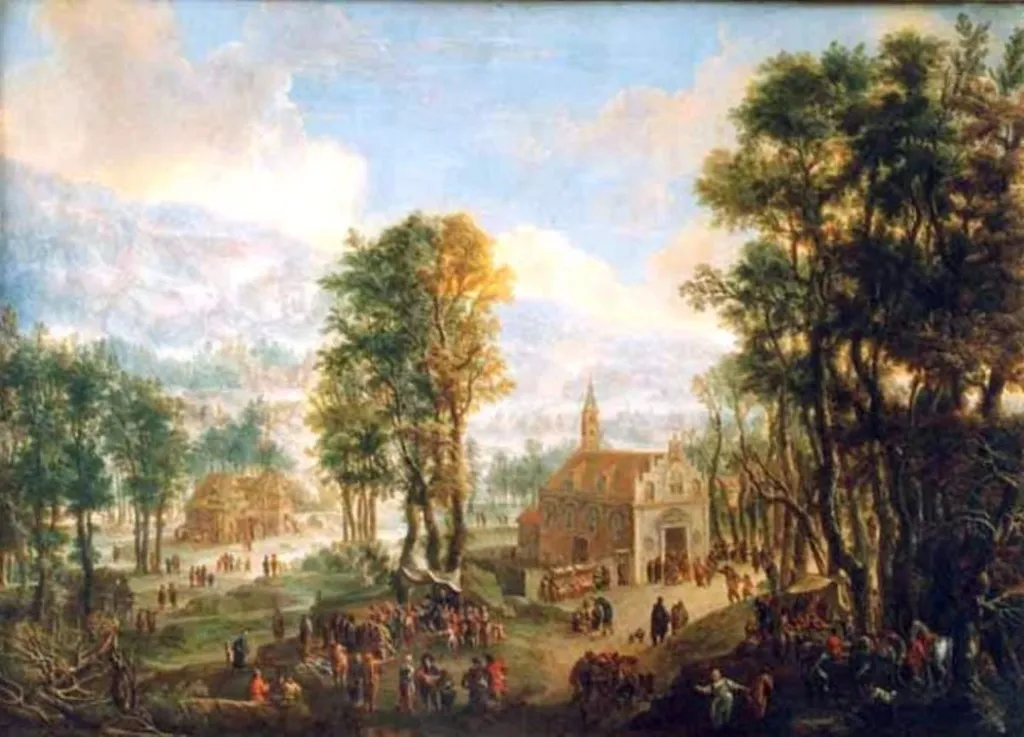
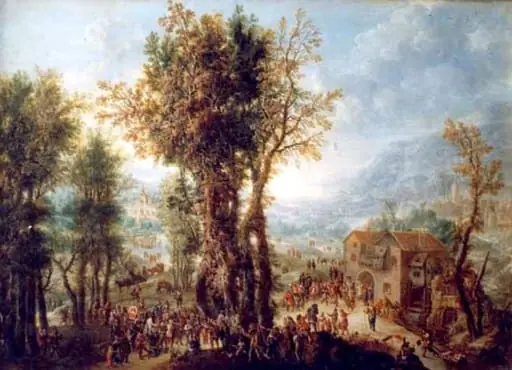
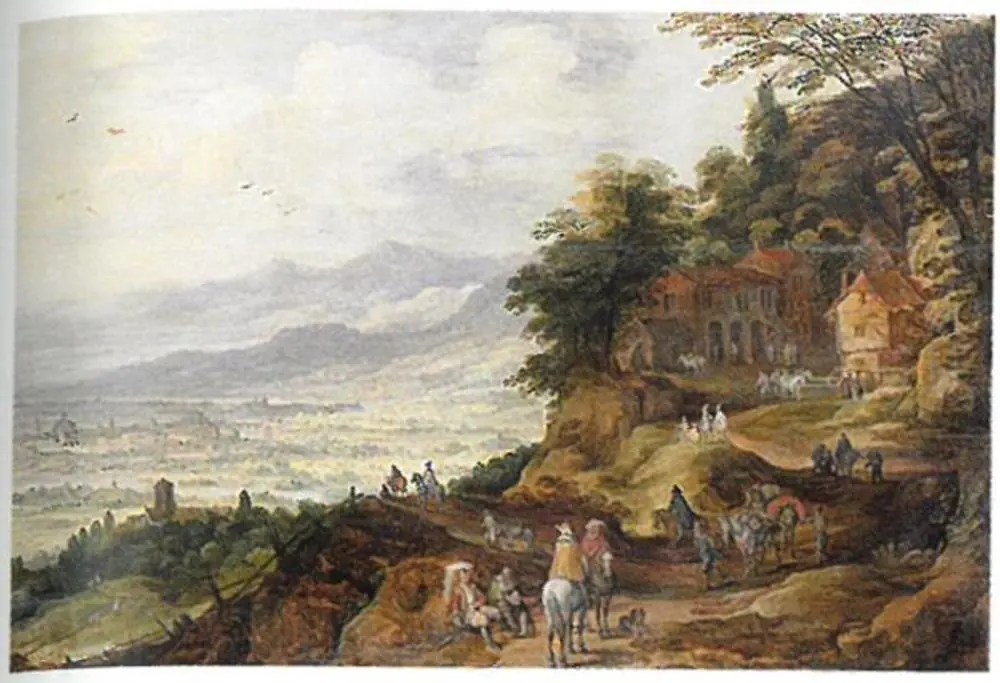
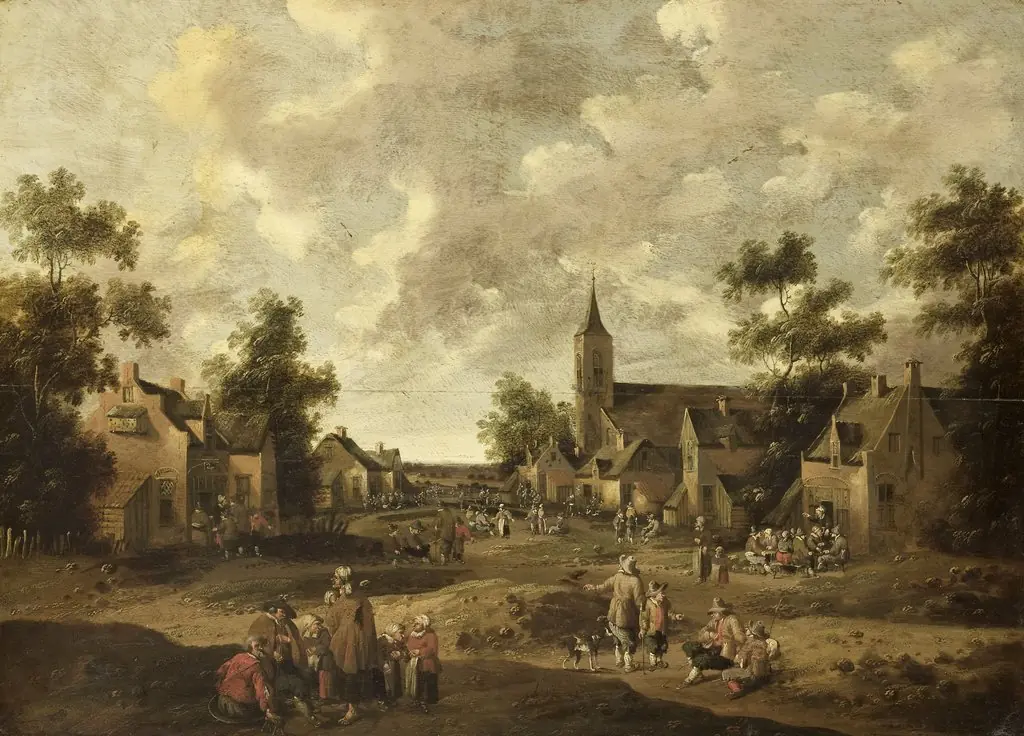
În pelerinaj is an unspecified painting by Paolo Alboni. It is held in the collection of the Brukenthal National Museum. This painting depicts a quiet rural pilgrimage, with a procession of figures moving along a tree-lined path toward a modest church.
About this work
Overview
This painting depicts a quiet rural pilgrimage, with a procession of figures moving along a tree-lined path toward a modest church.
This painting depicts a quiet rural pilgrimage, with a procession of figures moving along a tree-lined path toward a modest church. The composition emphasizes movement and gathering, capturing everyday life in a pastoral setting. Light filters through the canopy, casting soft shadows that define form and space, suggesting a midday hour. The scene avoids theatricality, focusing instead on the rhythm of ordinary travel.
Subject & Meaning
The subject is a religious pilgrimage, a common practice in rural communities where faith and daily life intertwine. The church, elevated and distinct, serves as both destination and symbol. Figures move in small clusters, suggesting shared purpose without ceremony. The presence of a covered wagon implies family participation, reinforcing the communal nature of spiritual journeying.
Technique & Style
The artist employs chiaroscuro to model forms through subtle gradations of light and shadow, particularly on tree trunks and building surfaces. Brushwork is restrained, favoring naturalistic rendering over detail. The sky, softly rendered with pale clouds, balances the earth tones of field and path. Color is muted, with red roof and green fields providing quiet contrast without distraction.
History & Provenance
The painting’s origin is tied to a regional artistic tradition that documented rural life in the late 19th or early 20th century. It was likely created for local patrons or as part of a series on folk customs. No documented exhibition history or prominent collector is recorded, suggesting it remained within regional circles rather than entering major institutional collections.
Context
The scene reflects a time when pilgrimage remained a vital part of rural religious practice, before widespread motorization and urbanization. Similar imagery appears in regional art across Europe, where churches anchored community identity. The absence of modern elements—no vehicles, no signage—anchors the work in a pre-industrial moment, preserving a vanishing way of life.
Legacy
The painting contributes to a broader visual record of rural devotion, offering insight into how faith was lived in everyday landscapes. It lacks the fame of major religious artworks but holds value as a quiet witness to ordinary spiritual habits. Its preservation helps sustain understanding of regional cultural practices that faded with modernization.
Artist & collection
Artist
Paolo Alboni painted lively Italian scenes in the late 1600s and early 1700s. Two of his works here show crowds in motion: *În pelerinaj* tracks travelers on the road, while *Petrecere populară lângă moară* (1713) sets…