Artwork
Chermesa
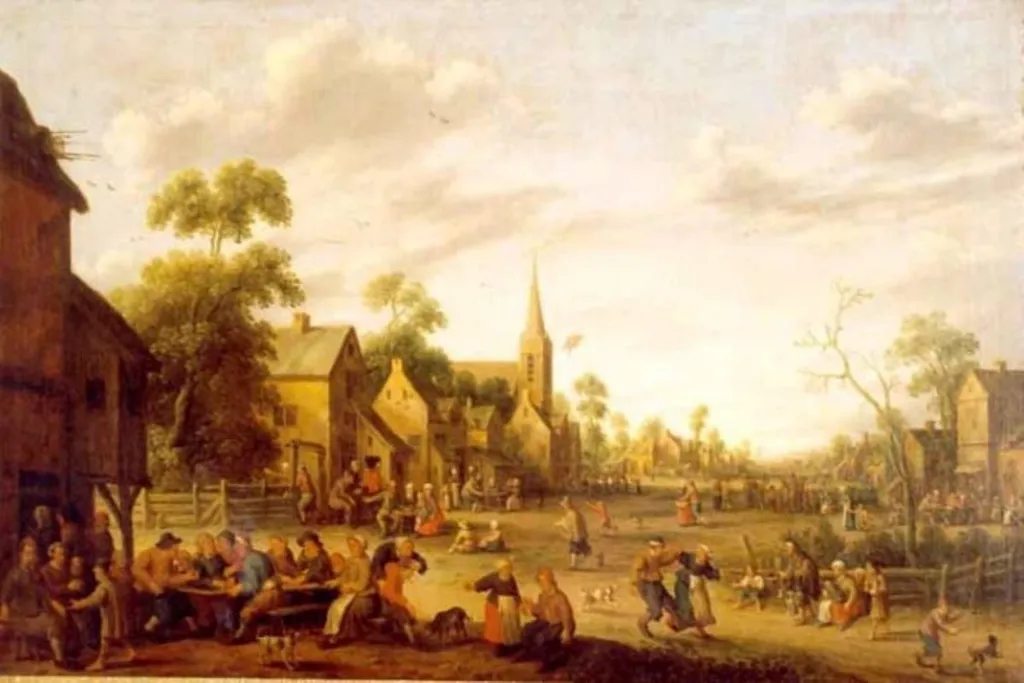
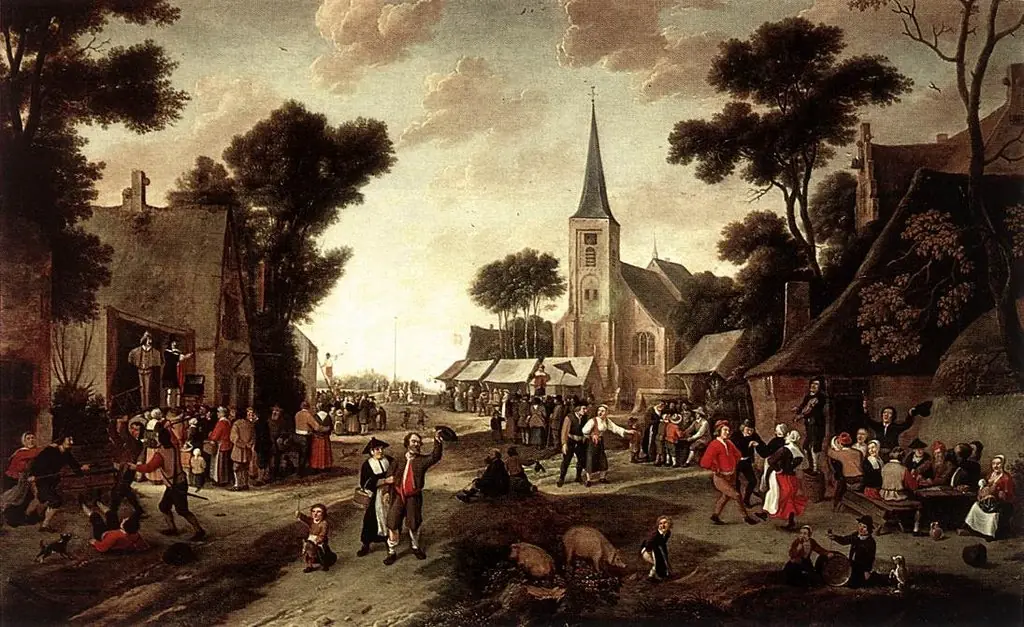
Chermesa is an unspecified painting by the Baroque artist Cornelisz Joost Droochsloot. It dates from 1646 and is held in the collection of the Brukenthal National Museum.
About this work
Overview
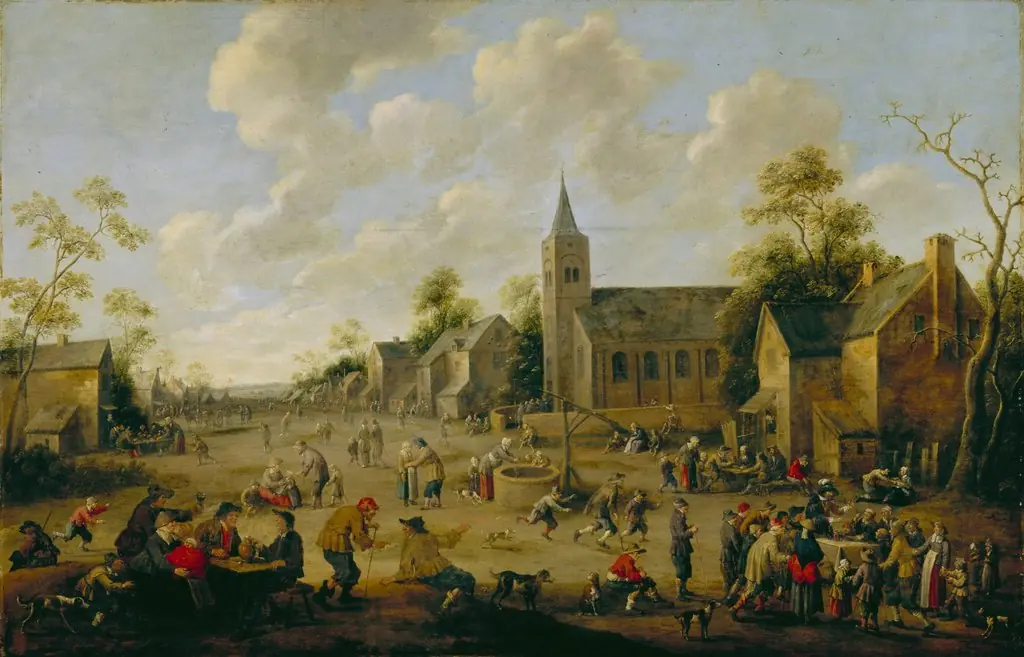
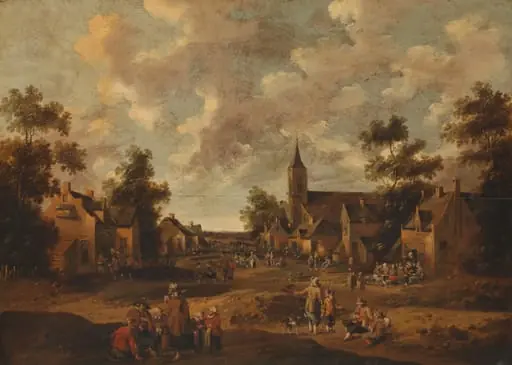
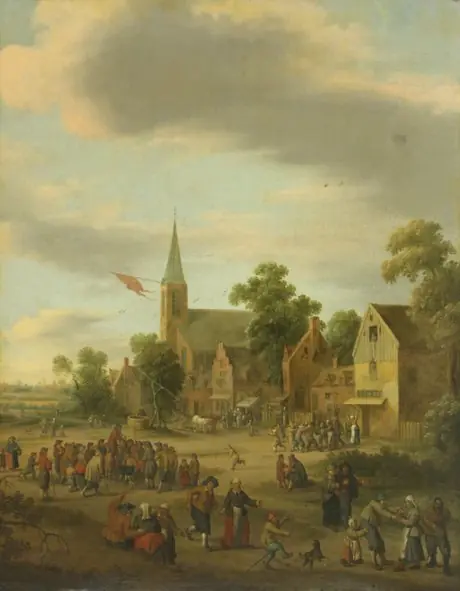
Children play in the dirt while livestock wander among modest thatched houses, creating a lively snapshot of everyday life in the mid‑seventeenth century.
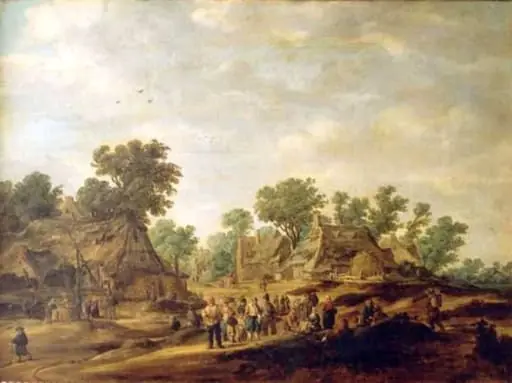
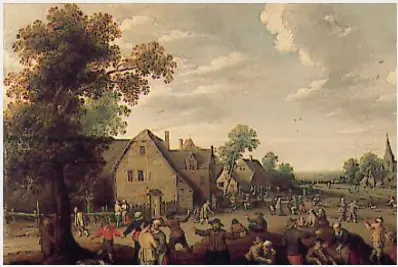
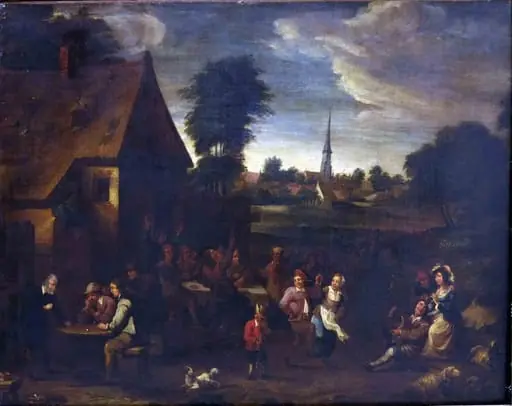
Cornelis Joost Droochsloot’s 1646 canvas, titled “Chermesa,” captures a twilight scene of a bustling village street. The composition is anchored by a church with a prominent steeple, around which villagers gather on benches, stroll, and interact. Children play in the dirt while livestock wander among modest thatched houses, creating a lively snapshot of everyday life in the mid‑seventeenth century.
Subject & Meaning
The painting presents a communal space where social interaction unfolds: groups converse in small clusters, a central assembly appears to share food or drink, and others remain apart. This juxtaposition may hint at themes of fellowship versus isolation within a close‑knit rural community, emphasizing both shared rituals and individual pursuits against a tranquil evening backdrop.
Technique & Style
Droochsloot employs a warm palette of yellows, browns, and earthy tones that imbue the scene with a cozy atmosphere. Light fades softly across the sky, suggesting sunset, while the artist renders textures—thatch, wood, and fur—with careful brushwork. The composition balances detailed figures with broader architectural forms, reflecting the Baroque interest in dynamic, lively narratives rendered with naturalistic detail.
Context
Created during the Dutch Baroque period, “Chermesa” aligns with contemporary genre paintings that documented ordinary life. The emphasis on everyday activities, modest architecture, and communal gatherings mirrors the era’s growing interest in the social fabric of Dutch towns. Droochsloot’s work thus contributes to a broader visual record of 17th‑century rural society.
Artist & collection
Artist
Dutch painter Joost Droochsloot turned village life into lively scenes full of people, carts, and farm buildings.