Artwork
Goblet with Lillies of the Valley
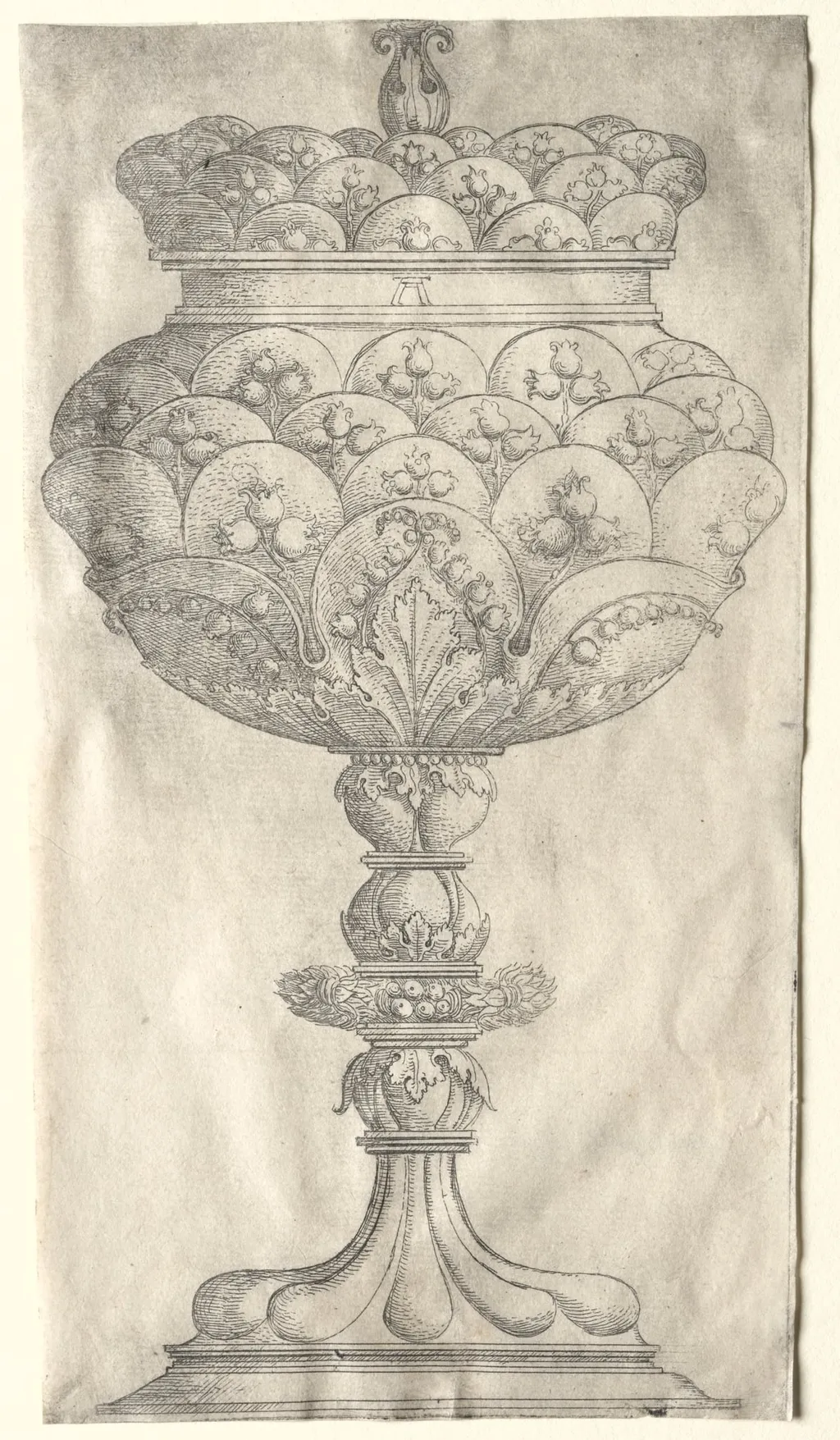
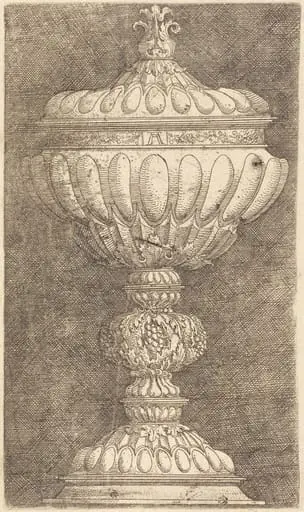
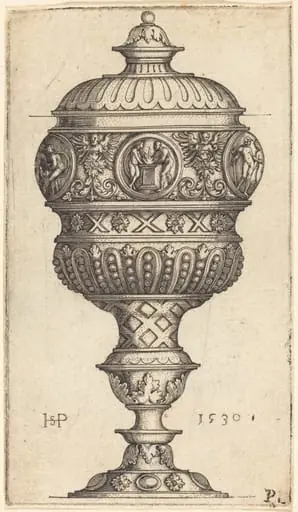
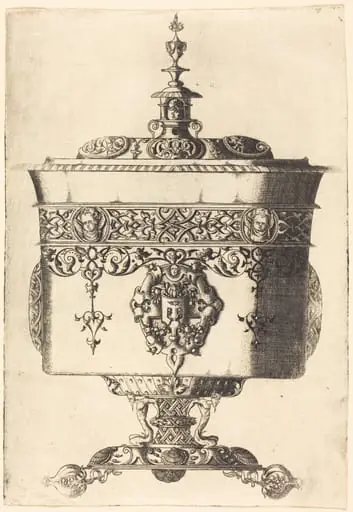
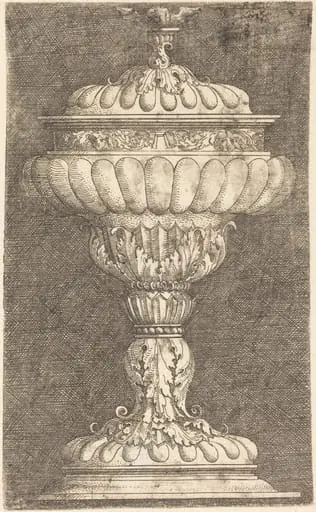
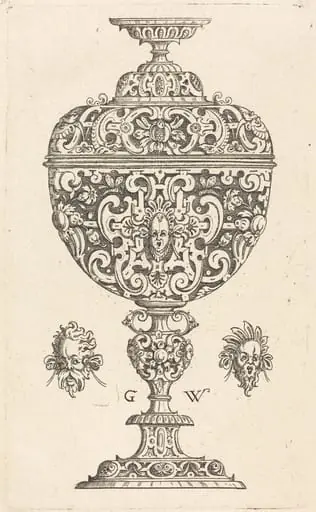
Goblet with Lillies of the Valley is a print by the Renaissance artist Albrecht Altdorfer. It dates from 1522 and is held in the collection of the Cleveland Museum of Art.
About this work
Overview
Created in 1522 by Albrecht Altdorfer, this detailed drawing depicts a decorative goblet adorned with lilies of the valley and other floral motifs.
Created in 1522 by Albrecht Altdorfer, this detailed drawing depicts a decorative goblet adorned with lilies of the valley and other floral motifs. Executed in ink and wash, the work belongs to a group of precision-drawn objects that reflect Altdorfer’s interest in still-life-like forms. Though not a functional vessel, the piece functions as a study in texture, form, and natural detail, showcasing the artist’s skill in rendering three-dimensionality through line and shading.
Subject & Meaning
The goblet is decorated with lilies of the valley, a flower associated in Christian symbolism with purity and the Virgin Mary. Its inclusion, alongside other delicate blooms, suggests a devotional or contemplative intent. The presence of a lid and ornamental finial elevates the object beyond utility, framing it as a ceremonial or symbolic artifact. The focus on flora may reflect Renaissance humanist interests in nature’s order and divine harmony.
Technique & Style
Altdorfer employed fine ink lines and subtle tonal washes to model the goblet’s surface, creating a convincing sense of volume and material weight. The intricate patterning of petals and leaves demonstrates his mastery of linear precision, while the shading suggests light falling across curved forms. This technique, rooted in Northern Renaissance draftsmanship, prioritizes tactile realism over decorative flourish, aligning with his broader interest in natural observation.
History & Provenance
The drawing entered the collection of The Cleveland Museum of Art in the 20th century, though its earlier ownership history remains undocumented. It is one of several surviving works by Altdorfer that focus on objects rather than narrative scenes, indicating a shift in his practice during the 1520s. Its preservation suggests it was valued as a study or specimen, possibly used in workshop settings or as a personal exercise in observation.
Context
In early 16th-century Germany, artists increasingly turned to secular and natural subjects as part of broader intellectual currents. Altdorfer, associated with the Danube School, was among those who explored landscape and still-life elements independently of religious narratives. This drawing reflects a growing trend toward detailed observation of the material world, paralleling developments in natural philosophy and the rise of scientific illustration.
Legacy
Though not widely exhibited, this work exemplifies Altdorfer’s contribution to the evolution of observational drawing in Northern Europe. Its focus on a single object rendered with scientific care anticipates later traditions of botanical and decorative art. The piece stands as a quiet testament to the Renaissance shift from symbolic representation toward empirical study, influencing artists who sought to capture the physical world with precision.
Artist & collection
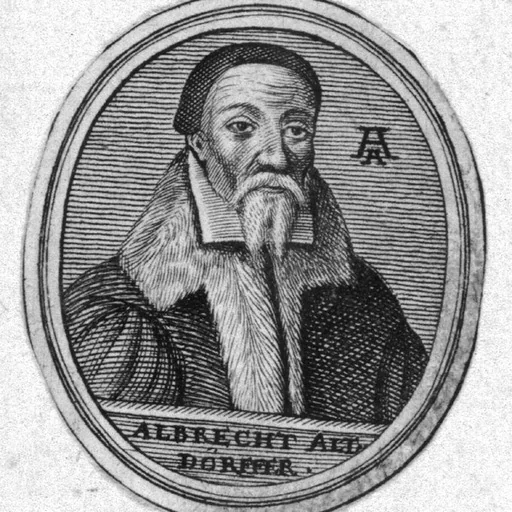
Artist
Albrecht Altdorfer (c. 1480 – 12 February 1538) was a German painter, engraver and architect of the Renaissance working in Regensburg. Along with Lucas Cranach the Elder and Wolf Huber he is regarded to be the main…