Artwork
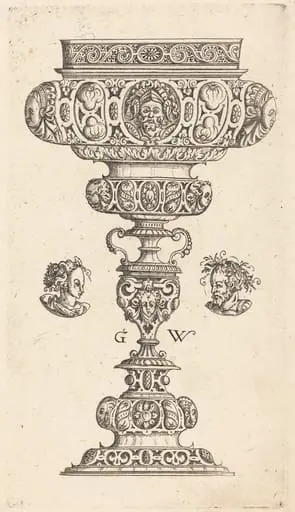
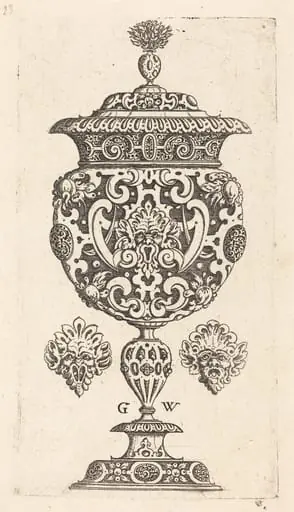
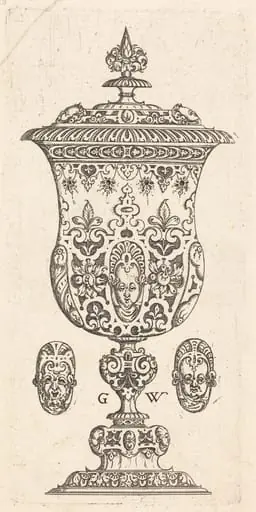
Goblet decorated with a masque with open mouth
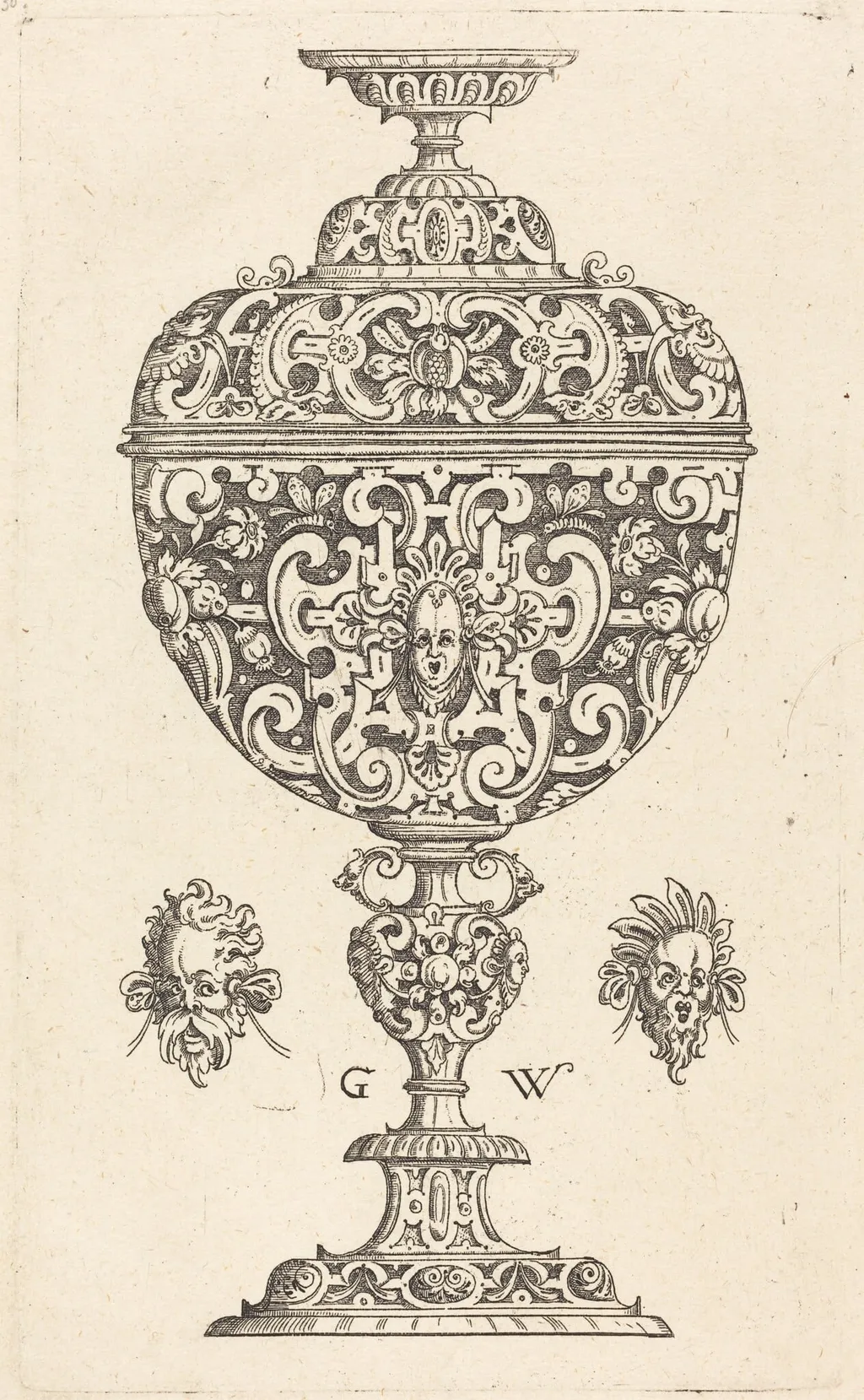
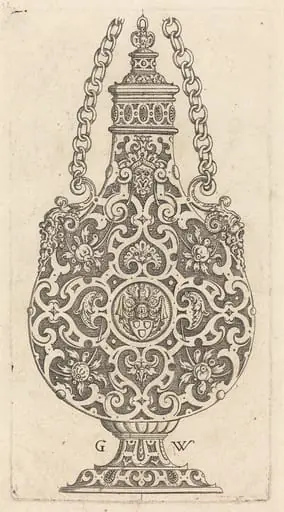
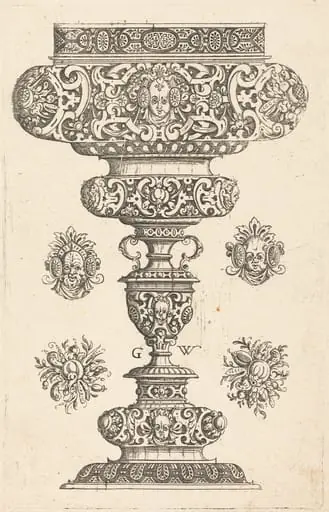
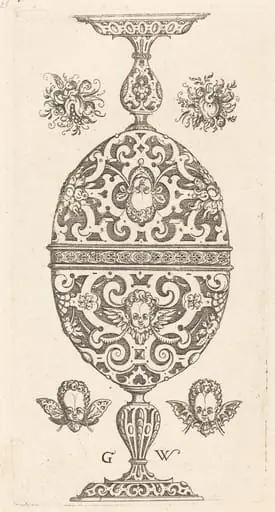
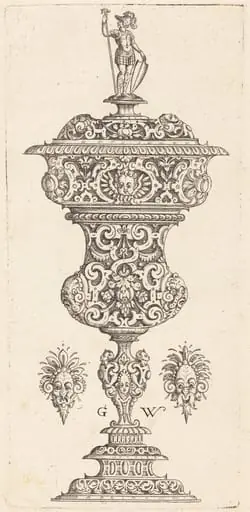
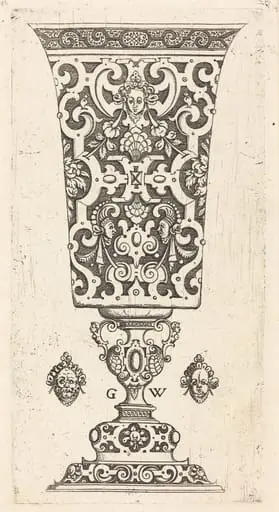
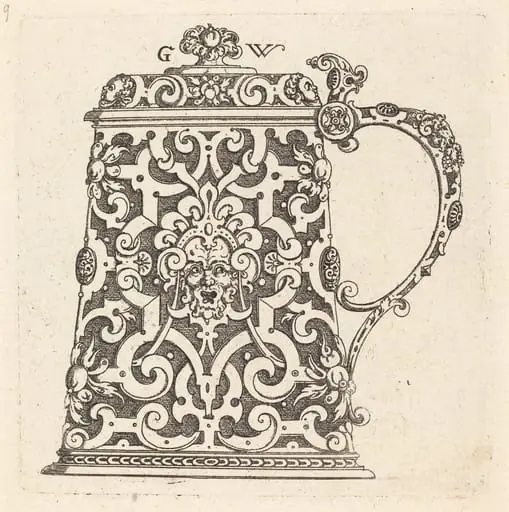
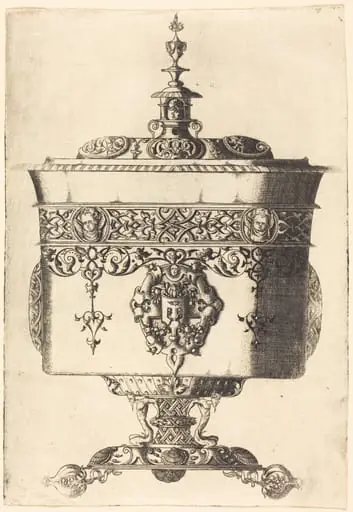
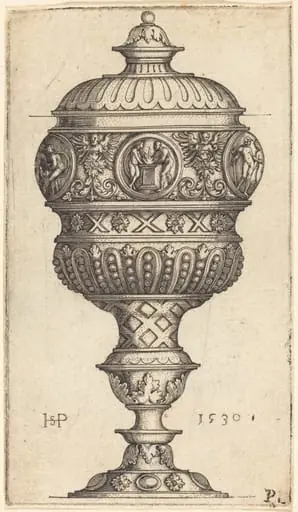
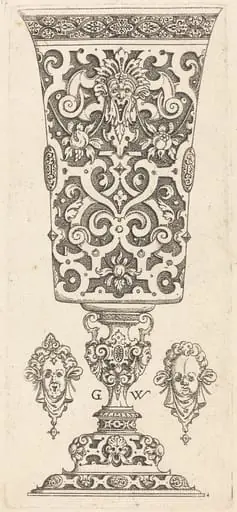
Goblet decorated with a masque with open mouth is an ink print by the Renaissance artist Georg Wechter I. It dates from 1579 and is held in the collection of the National Gallery of Art.
About this work
Overview
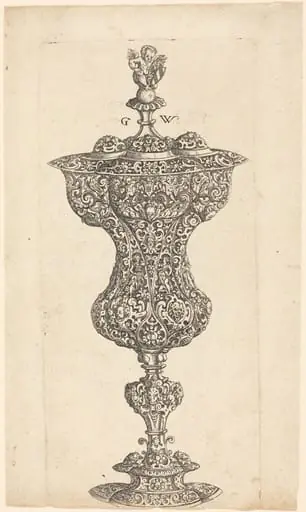
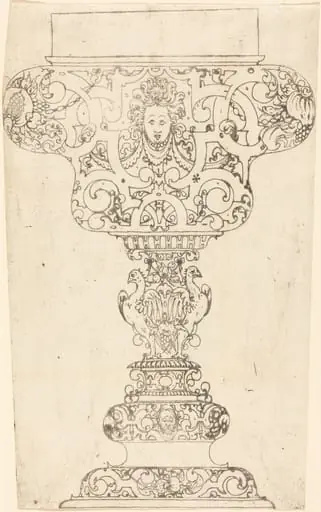
Georg Wechter I’s 1579 engraving presents a decorative goblet whose side bears a carved mask with an exaggerated open mouth. The image is rendered entirely in fine linear detail, giving the impression of a sketch that continues across the entire surface of the vessel.
Subject & Meaning
The central motif—a surprised facial mask—occupies the goblet’s body, suggesting a playful or theatrical theme common in late‑Renaissance ornamentation. The exaggerated expression may allude to the masquerade culture of the period, where masks served both as concealment and as a means of comic exaggeration.
Technique & Style
Wechter employed traditional copper engraving, incising the design with a burin before inking the plate and pressing it onto paper. The work relies on dense cross‑hatching, a method of intersecting lines that builds tonal depth and makes the mask’s features appear three‑dimensional despite the medium’s flatness.
History & Provenance
Created in 1579, the print is attributed to Georg Wechter I, a German goldsmith and engraver known for pattern books that circulated decorative designs across Europe. The piece survives in several museum collections, reflecting its role as a study model for ornamental metalwork rather than a finished functional object.
Artist & collection