Artwork
The Fall and Redemption of Man: The Resurrection
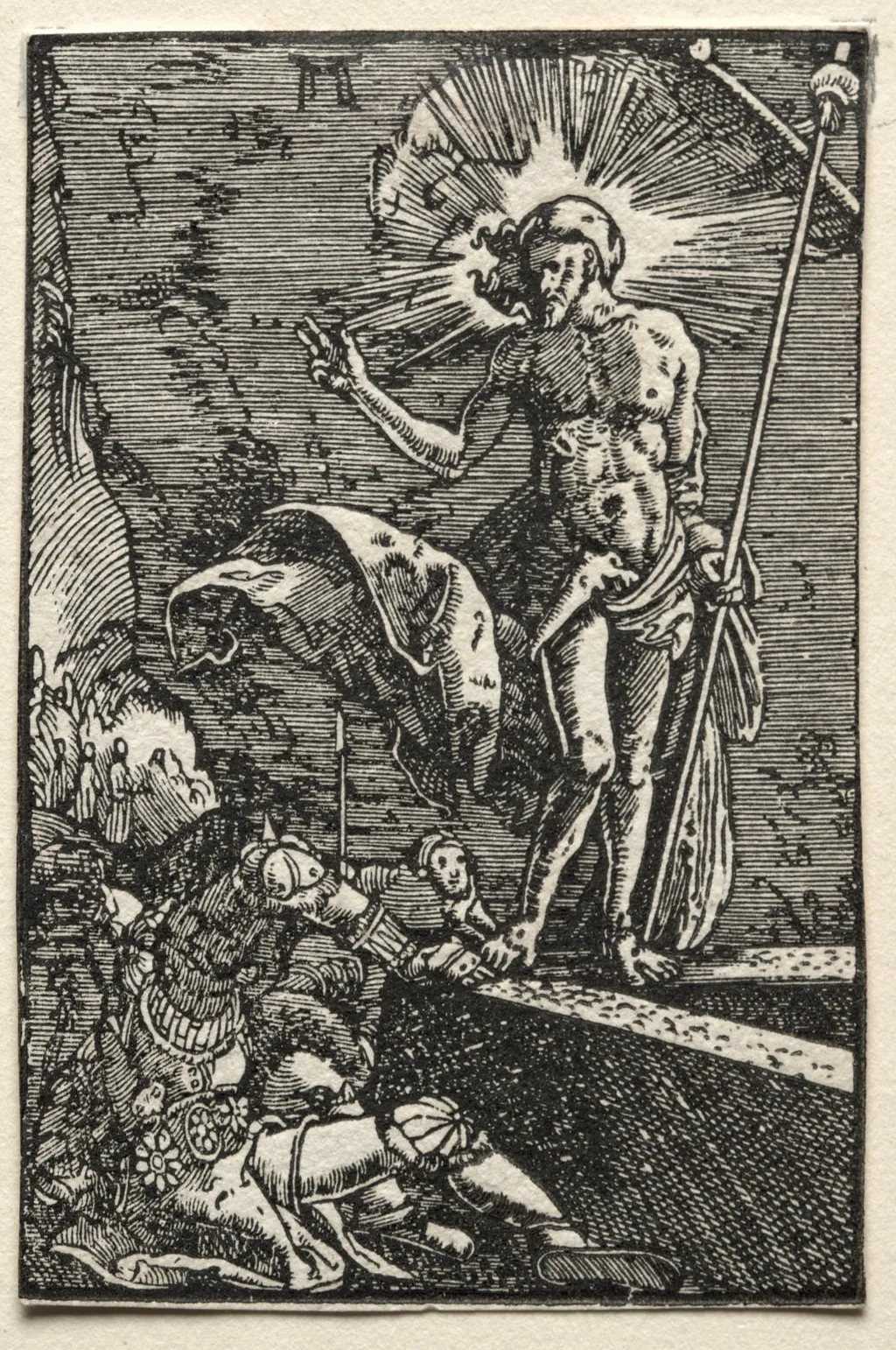
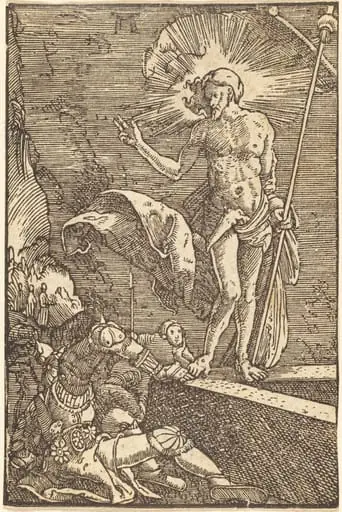
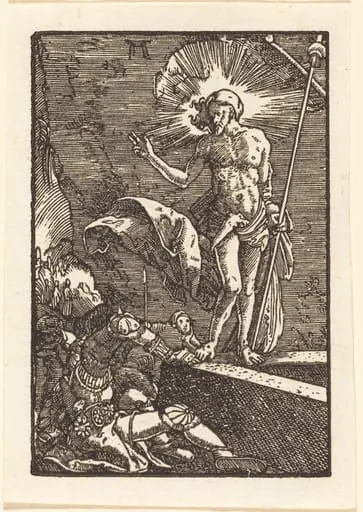
The Fall and Redemption of Man: The Resurrection is a print by the Renaissance artist Albrecht Altdorfer. It dates from 1515 and is held in the collection of the Cleveland Museum of Art.
About this work
Overview
The work reflects his interest in emotional intensity and atmospheric depth, rendered here in monochrome through precise engraving techniques.
Created around 1515 by Albrecht Altdorfer, this print is part of a series exploring biblical themes of sin and salvation. As a key member of the Danube School, Altdorfer merged religious narrative with immersive natural settings. The work reflects his interest in emotional intensity and atmospheric depth, rendered here in monochrome through precise engraving techniques. It resides today in the Cleveland Museum of Art’s print collection.
Subject & Meaning
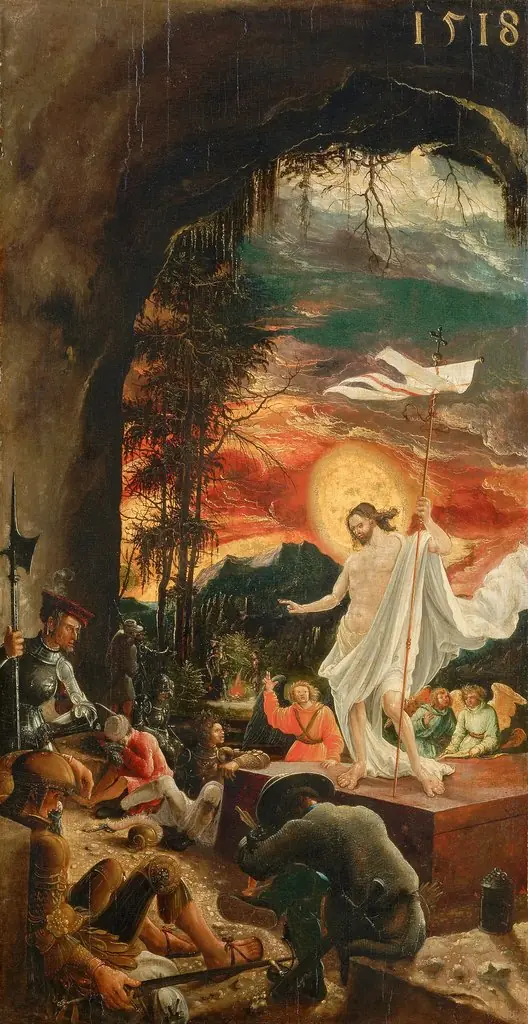
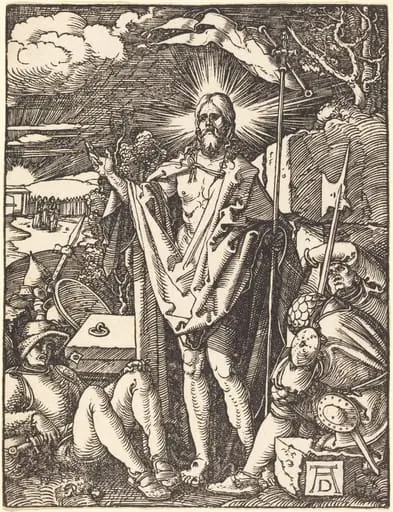
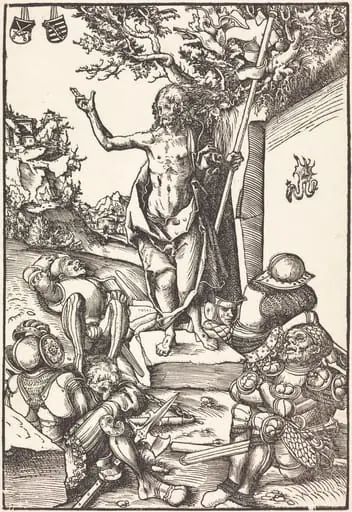
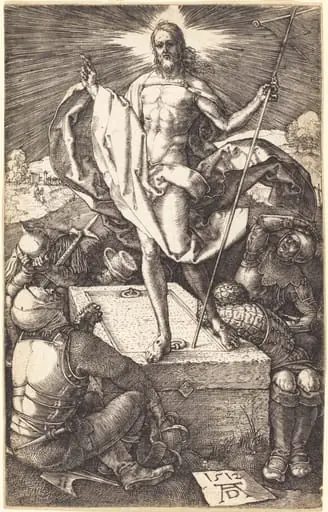
The image depicts Christ’s resurrection as a redemptive act, symbolized by a radiant, haloed figure standing over a fallen man and a lifeless animal. The fallen figure, clutching his chest, represents humanity’s burden of sin, while the resurrected Christ, spear in hand and gaze directed heavenward, signifies divine triumph. The animal’s death may allude to the fallen natural order restored through grace, reinforcing the theological message of renewal.
Technique & Style
Altdorfer employed sharp chiaroscuro to heighten the scene’s spiritual drama, contrasting the luminous figure of Christ against a dark, rocky backdrop. Fine, controlled lines define the landscape’s contours and the figures’ musculature, demonstrating mastery in engraving. The composition avoids idealized forms, favoring expressive, almost primal gestures, characteristic of the Danube School’s emotional realism over classical restraint.
History & Provenance
Produced during Altdorfer’s mature period in Regensburg, the print emerged alongside other Northern Renaissance works that expanded religious iconography through landscape and psychological depth. It entered the Cleveland Museum of Art’s collection as part of a broader acquisition of early German prints, reflecting the museum’s commitment to preserving significant works from the period.
Context
In early 16th-century Germany, artists like Altdorfer and Cranach reimagined sacred subjects with heightened naturalism and emotional weight. While Italian Renaissance art emphasized harmony and proportion, Northern artists focused on texture, atmosphere, and inner turmoil. Altdorfer’s integration of landscape as more than backdrop signaled a shift toward nature as a carrier of spiritual meaning.
Legacy
Altdorfer’s use of landscape and dramatic lighting influenced later generations of Northern printmakers and painters. His approach to combining theological narrative with environmental detail helped pave the way for the independent landscape tradition in European art. This print remains a key example of how religious themes were rendered with psychological and naturalistic complexity during the Northern Renaissance.
Artist & collection
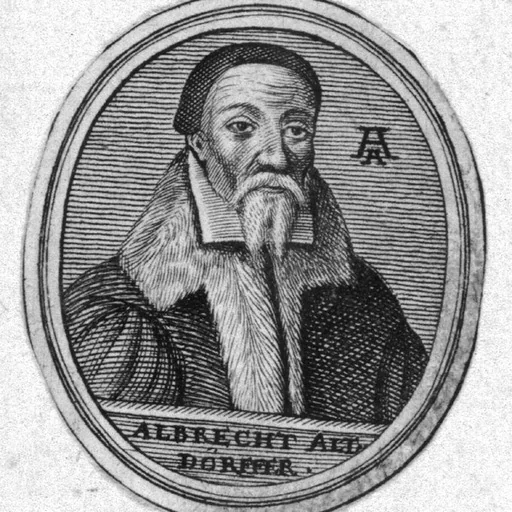
Artist
Albrecht Altdorfer (c. 1480 – 12 February 1538) was a German painter, engraver and architect of the Renaissance working in Regensburg. Along with Lucas Cranach the Elder and Wolf Huber he is regarded to be the main…