Artwork
The Resurrection
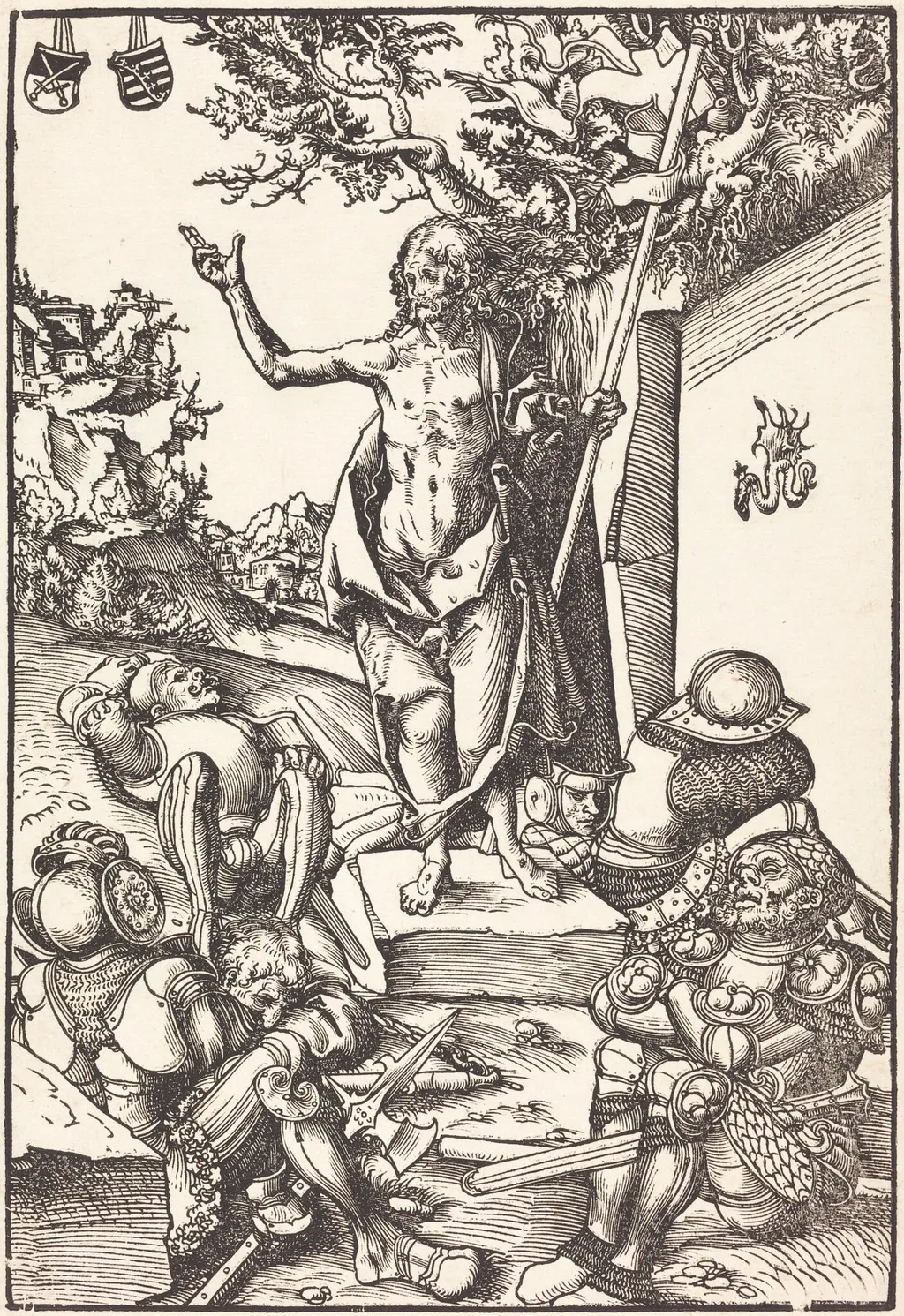
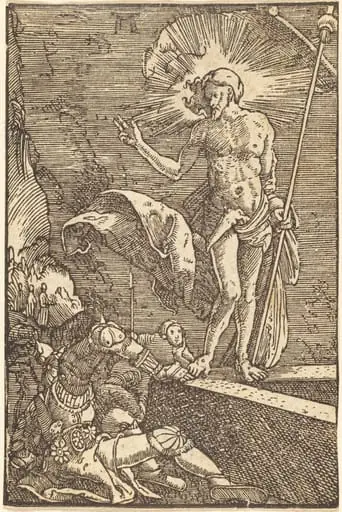
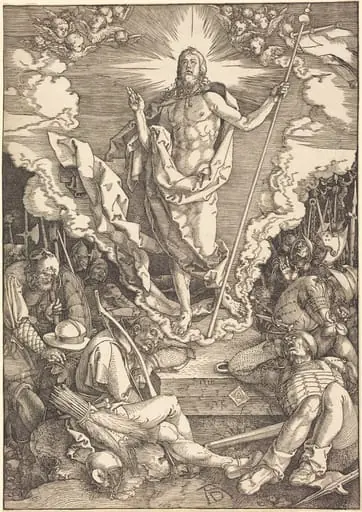
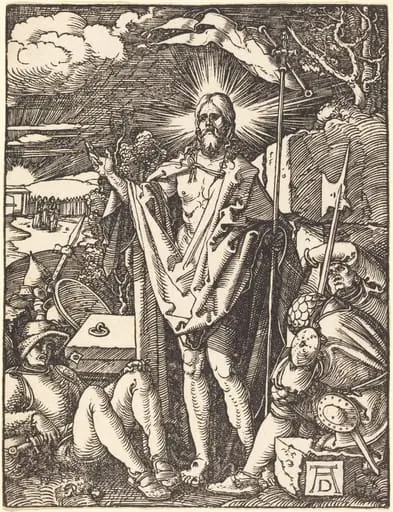
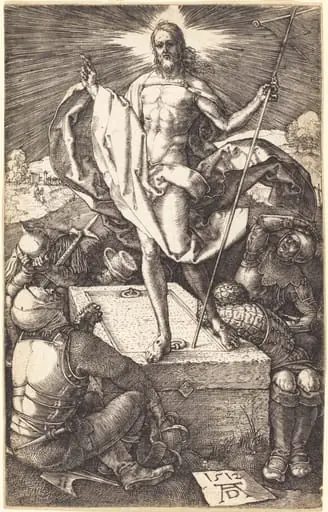
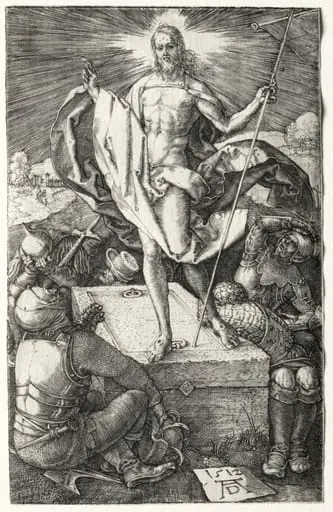
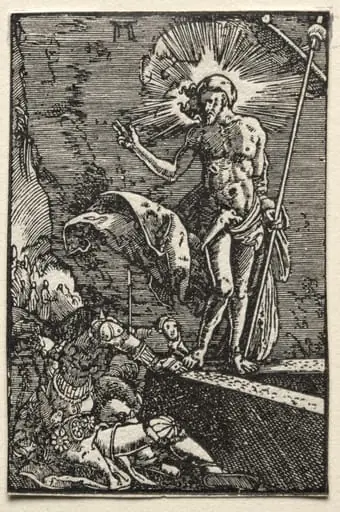
The Resurrection is an ink print by the Renaissance artist Lucas Cranach the Elder. It dates from 1509 and is held in the collection of the National Gallery of Art.
About this work
Overview
Lucas Cranach the Elder produced this woodcut in 1509, early in his career as a printmaker and court artist to the Electors of Saxony.
Lucas Cranach the Elder produced this woodcut in 1509, early in his career as a printmaker and court artist to the Electors of Saxony. Executed in black ink on paper, the work captures a pivotal biblical moment with intense graphic clarity. Though Cranach would later align closely with Protestant reformers, this piece reflects his engagement with traditional religious imagery before his stylistic and theological evolution.
Subject & Meaning
The scene illustrates Christ’s resurrection, depicted as a powerful, nearly nude figure emerging from an open tomb. His raised arms suggest divine force breaking through death. Surrounding him, Roman soldiers react with varied expressions—some asleep, others recoiling in fear—emphasizing the supernatural disruption of the moment. The composition underscores Christ’s triumph without overt symbolism, focusing instead on visceral human response.
Technique & Style
Cranach employed the woodcut method, carving lines into a wooden block to create sharp, incised forms. The print’s dense composition is rendered through precise, angular strokes that define muscle, armor, and drapery with minimal detail. Contrast between solid black areas and fine lines enhances drama, while the compact space is filled with motion through tightly arranged figures and dynamic poses.
History & Provenance
Created during Cranach’s tenure at the Saxon court, the print circulated widely in early 16th-century Germany. As a reproductive medium, woodcuts allowed religious imagery to reach broader audiences beyond painted altarpieces. Though no specific early ownership records survive, its survival in multiple institutional collections suggests it was reproduced and preserved as part of devotional or artistic dissemination.
Context
In 1509, Germany remained under Catholic ecclesiastical authority, and religious imagery still dominated print culture. Cranach’s work here aligns with late medieval traditions, yet his emphasis on physicality and emotional intensity foreshadows the expressive direction of Reformation-era art. The print predates his explicit Protestant commissions but reveals an artist attuned to the spiritual tensions of his time.
Legacy
This woodcut exemplifies Cranach’s early mastery of narrative compression in printmaking. Its influence can be seen in later Reformation-era prints that favored clarity and emotional immediacy over ornate decoration. Though not revolutionary in iconography, its energetic execution contributed to the evolving visual language of German religious print culture in the decades before the Reformation fully took hold.
Artist & collection
Artist
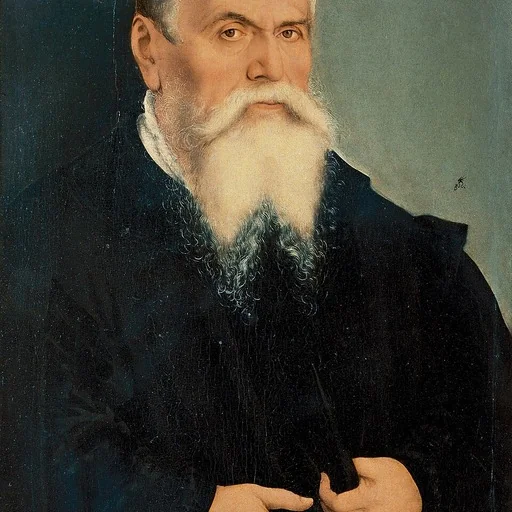
Lucas Cranach the Elder was a German Renaissance painter and printmaker in woodcut and engraving.