Artwork
The Fall and Redemption of Man: The Embrace of Joachim and Anne at the Golden Gate
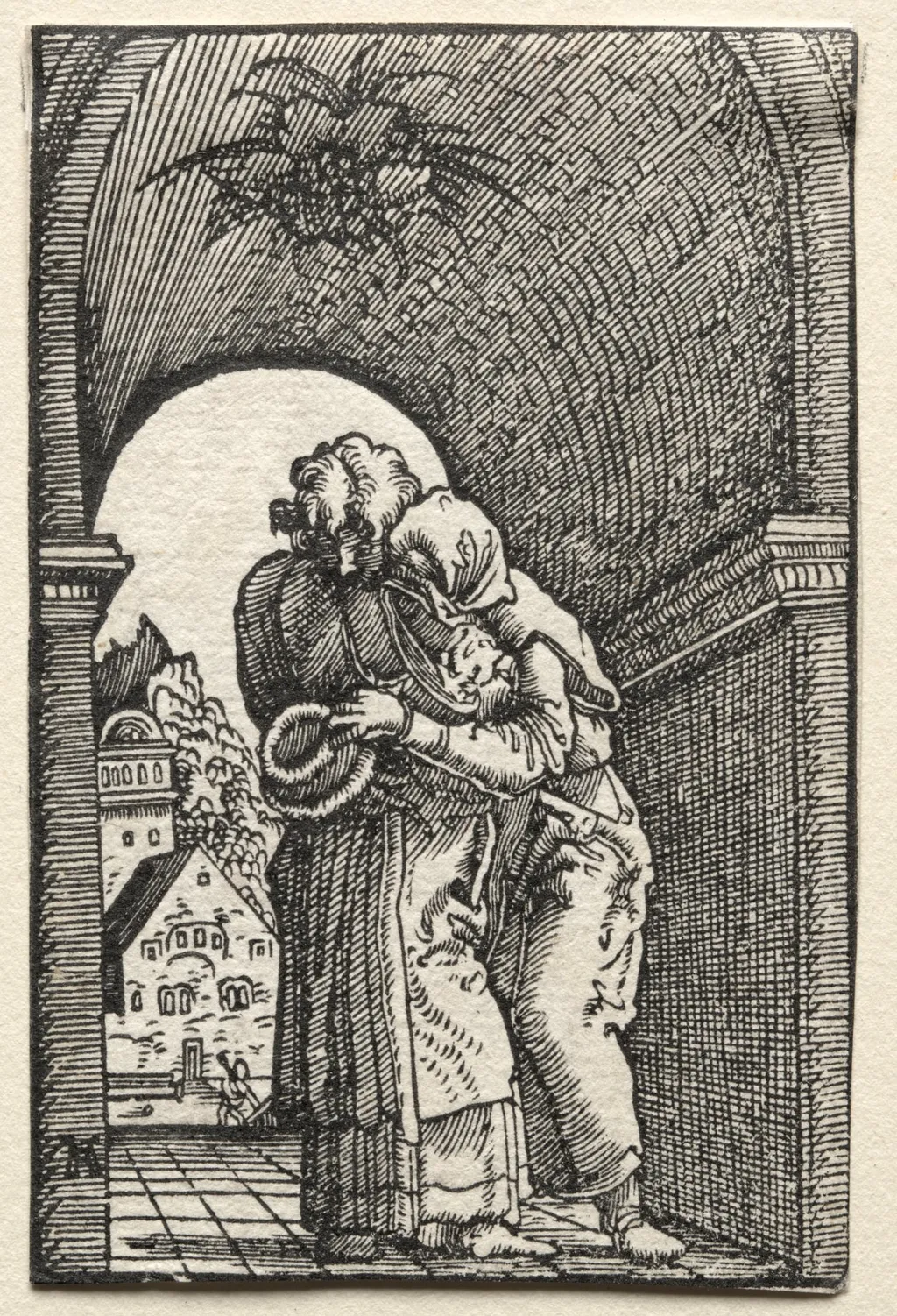
The Fall and Redemption of Man: The Embrace of Joachim and Anne at the Golden Gate is a print by the Renaissance artist Albrecht Altdorfer. It dates from 1515 and is held in the collection of the Cleveland Museum of Art.
About this work
Overview
As a key figure in the Danube School, Altdorfer used printmaking to explore spiritual narratives embedded within expansive natural settings.
Created in 1515 by Albrecht Altdorfer, this black-and-white print illustrates a moment from apocryphal Christian tradition: the reunion of Joachim and Anne at the Golden Gate. As a key figure in the Danube School, Altdorfer used printmaking to explore spiritual narratives embedded within expansive natural settings. The scene is rendered with meticulous detail, emphasizing emotional stillness over dramatic action, and reflects his broader interest in integrating sacred events into immersive landscapes.
Subject & Meaning
The print captures the long-awaited meeting of Joachim and Anne, parents of the Virgin Mary, after years of barrenness and social exile. Their embrace, tender and restrained, symbolizes divine favor restored. The Golden Gate, a threshold between earthly and sacred realms, frames their reunion as both personal and theological. The quiet intimacy of the moment contrasts with the monumental sky above, suggesting divine presence in human vulnerability.
Technique & Style
Altdorfer employed fine, controlled lines to render fabric folds, architectural details, and the luminous moon. The high contrast of the monochrome medium heightens the emotional weight of the scene. The figures are rendered with textured, volumetric clothing, grounding them in physical reality, while the landscape—especially the oversized moon—functions as a symbolic presence rather than mere backdrop. The composition balances human scale with cosmic scale, a hallmark of his style.
History & Provenance
This print was produced during Altdorfer’s active years in Regensburg, where he served as a civic artist and maintained a workshop specializing in prints and drawings. It likely circulated among religious patrons and educated elites familiar with apocryphal lore. Though the exact early ownership is undocumented, its survival in collections today reflects its resonance within early 16th-century German devotional culture.
Context
In early 16th-century Germany, devotional imagery often drew from non-biblical traditions to deepen spiritual reflection. The meeting of Joachim and Anne, though not in Scripture, was widely depicted in liturgical art and sermons. Altdorfer’s focus on landscape as a carrier of meaning aligned with broader Northern Renaissance trends, where nature became a mirror for divine order and human emotion.
Legacy
Altdorfer’s integration of landscape as an expressive, almost autonomous element influenced later generations of Northern artists. This print exemplifies his role in shifting devotional imagery toward psychological depth and environmental immersion. While not widely reproduced in his lifetime, its quiet intensity has secured its place as a significant example of early printmaking’s capacity for spiritual nuance.
Artist & collection
Artist
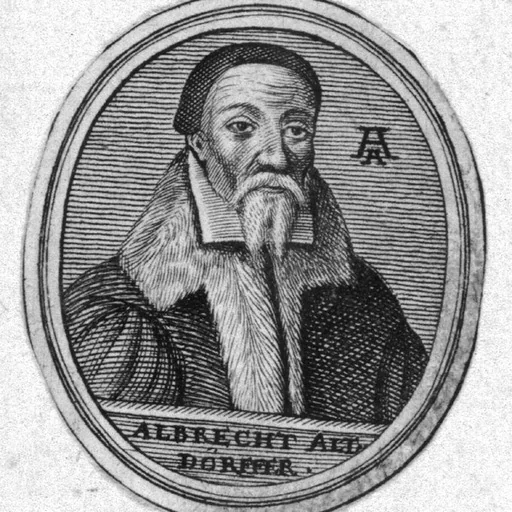
Albrecht Altdorfer (c. 1480 – 12 February 1538) was a German painter, engraver and architect of the Renaissance working in Regensburg. Along with Lucas Cranach the Elder and Wolf Huber he is regarded to be the main…

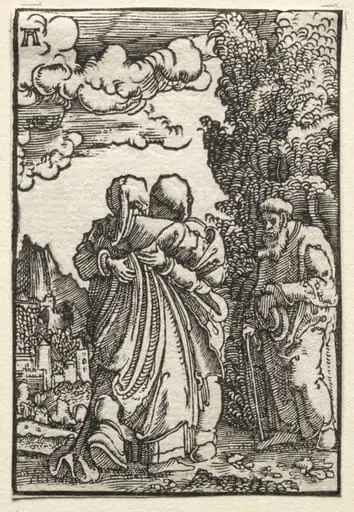 The Fall and Redemption of Man: The Visitation
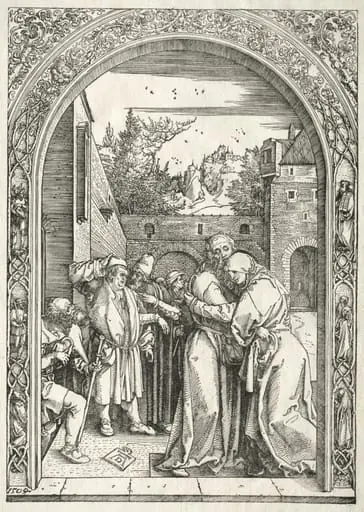 Life of the Virgin: Joachim and Anna Embracing under the Golden Gate
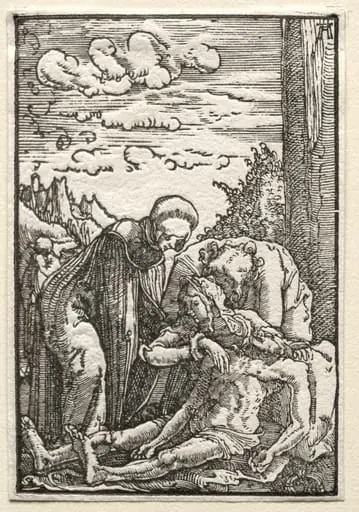 The Fall and Redemption of Man: The Lamentation beneath the Cross
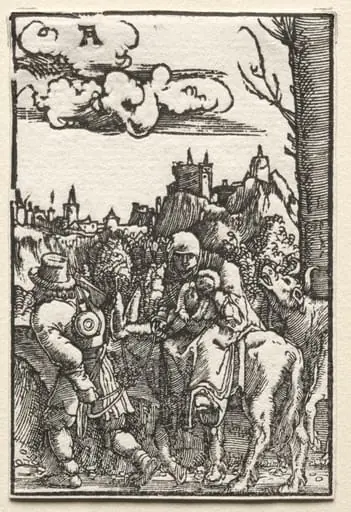 The Fall and Redemption of Man: The Flight into Egypt
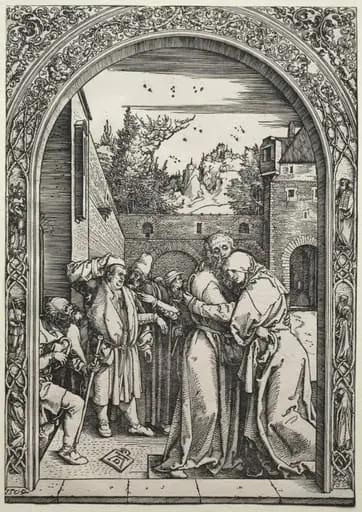 The Meeting of Joachim and Anna at the Golden Gate
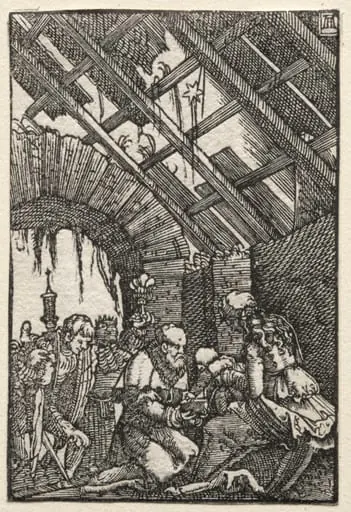 The Fall and Redemption of Man: The Adoration of the Magi
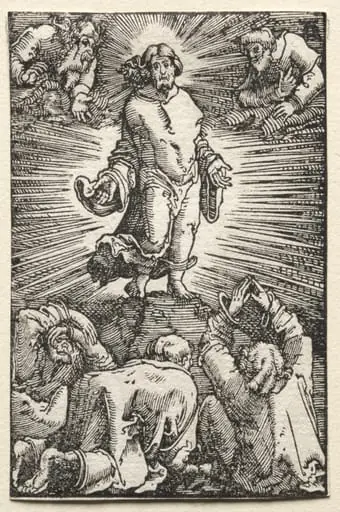 The Fall and Redemption of Man: The Transfiguration