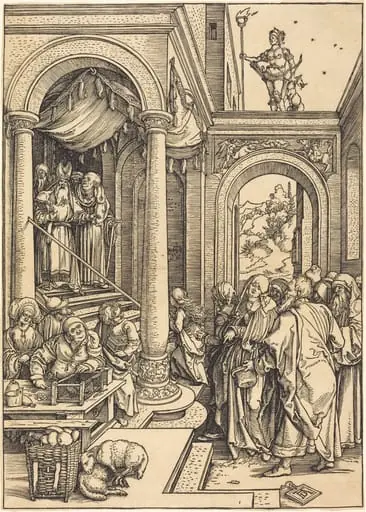
Artwork
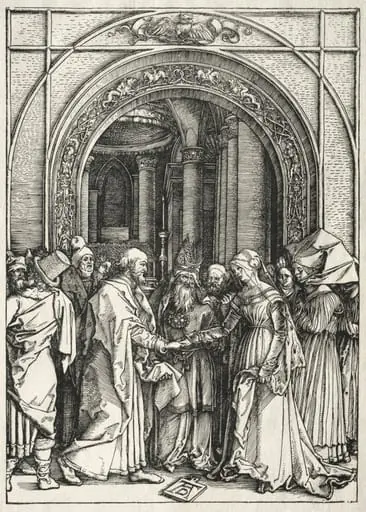
Life of the Virgin: Joachim and Anna Embracing under the Golden Gate
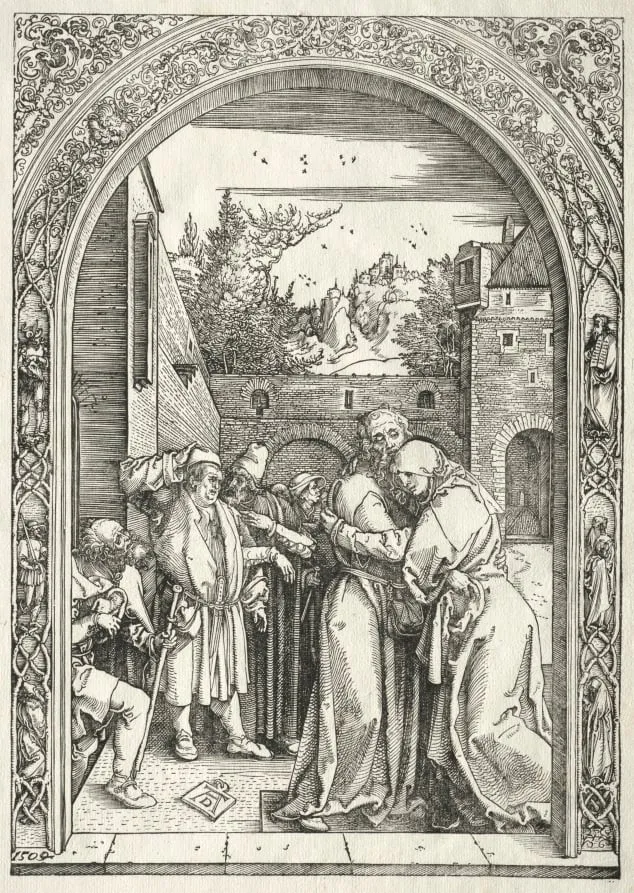
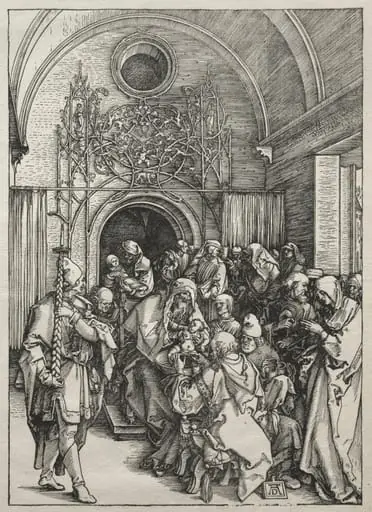
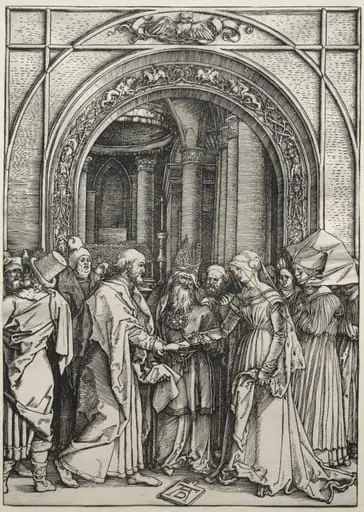
Life of the Virgin: Joachim and Anna Embracing under the Golden Gate is a print by the Renaissance artist Albrecht Dürer. It dates from 1504 and is held in the collection of the Cleveland Museum of Art.
About this work
Overview
Created in 1504, this print by Albrecht Dürer is one panel from a larger series depicting scenes from the life of the Virgin Mary.
Created in 1504, this print by Albrecht Dürer is one panel from a larger series depicting scenes from the life of the Virgin Mary. Executed in black-and-white, it demonstrates Dürer’s advanced command of engraving, translating the emotional weight of a sacred moment into precise linear detail. Though often associated with painting, Dürer’s reputation in printmaking brought his imagery across Europe, making religious narratives accessible beyond ecclesiastical walls.
Subject & Meaning
The scene illustrates the traditional legend of Joachim and Anna’s reunion at the Golden Gate of Jerusalem, following their long infertility and divine promise of a child. Their embrace signifies the conception of Mary, the future mother of Christ, anchoring the narrative in both human emotion and theological significance. The moment is rendered not as a spectacle but as a quiet, intimate encounter, emphasizing the sanctity of ordinary human bonds within sacred history.
Technique & Style
Dürer employed fine, controlled lines to model form and depth, using hatching and cross-hatching to achieve chiaroscuro effects without color. The figures emerge from the stone arch and surrounding landscape through gradations of tone, giving them volume and presence. Architectural details are rendered with precision, while the figures’ drapery flows naturally, reflecting both Northern European attention to texture and Italian influences in spatial composition.
History & Provenance
The print was produced during Dürer’s second journey to Italy, a period when he absorbed Renaissance ideals while maintaining his Northern tradition. It was likely part of a commissioned series for private devotion or scholarly circulation. Early impressions were widely distributed, contributing to Dürer’s international acclaim. The work’s survival in multiple institutional collections attests to its early and enduring recognition among collectors and religious patrons.
Context
In early 16th-century Europe, devotional imagery was increasingly produced for private use, not just public altarpieces. Dürer’s series on the Virgin’s life responded to this demand, blending theological tradition with humanist sensibility. The inclusion of bystanders observing the embrace reflects contemporary interest in narrative detail and emotional realism, aligning with broader shifts in how sacred stories were visualized for contemplative audiences.
Legacy
This engraving helped establish the visual language of Marian narratives in Northern art, influencing generations of printmakers. Its technical rigor set a standard for narrative clarity and emotional restraint in religious prints. Though later styles favored color and drama, Dürer’s disciplined line and psychological subtlety remained a touchstone for artists seeking depth without theatricality.
Artist & collection
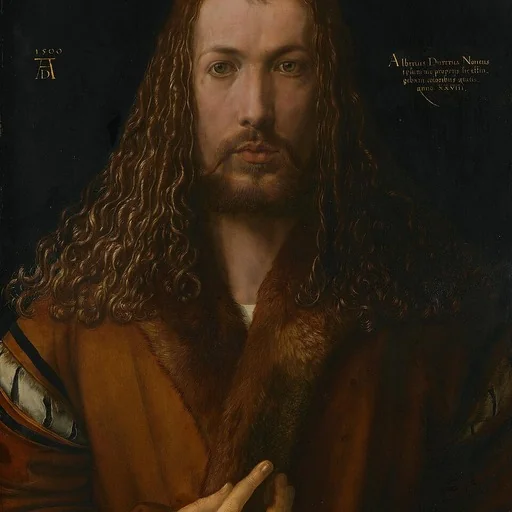
Artist
Albrecht Dürer spent his life in Nuremberg, a busy German city where artists traded prints like currency.

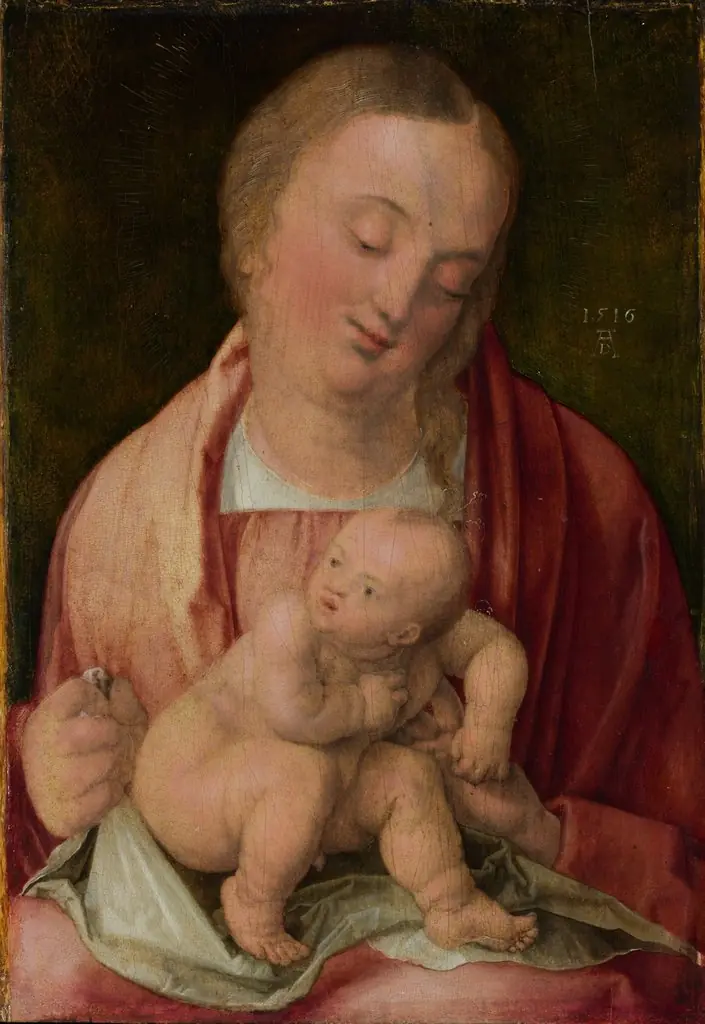
![Madonna and Child [obverse], by Albrecht Dürer](https://artifactworldgallery.com/img/albrecht-durer--madonna-and-child-obverse--d7b8ebf05d22ebe5-w320.webp)
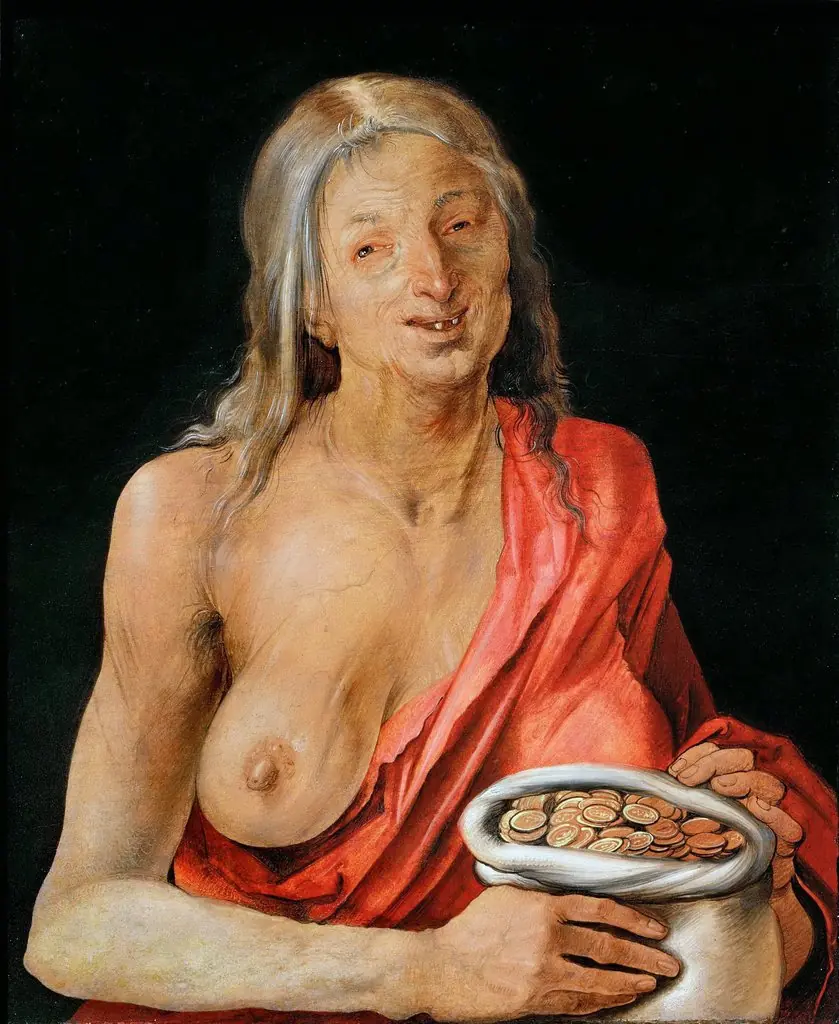
![Lot and His Daughters [reverse], by Albrecht Dürer](https://artifactworldgallery.com/img/albrecht-durer--lot-and-his-daughters-reverse--b4ebf9b282faa17a-w320.webp)