Artwork
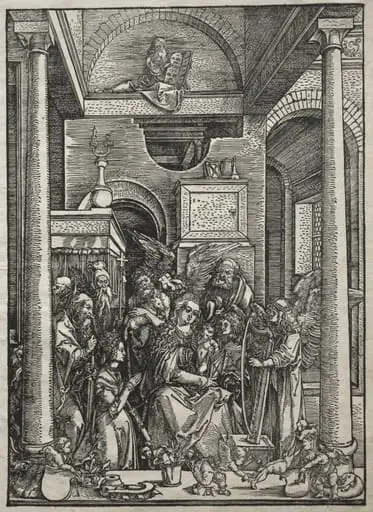
Life of the Virgin: Presentation of the Young Virgin in the Temple
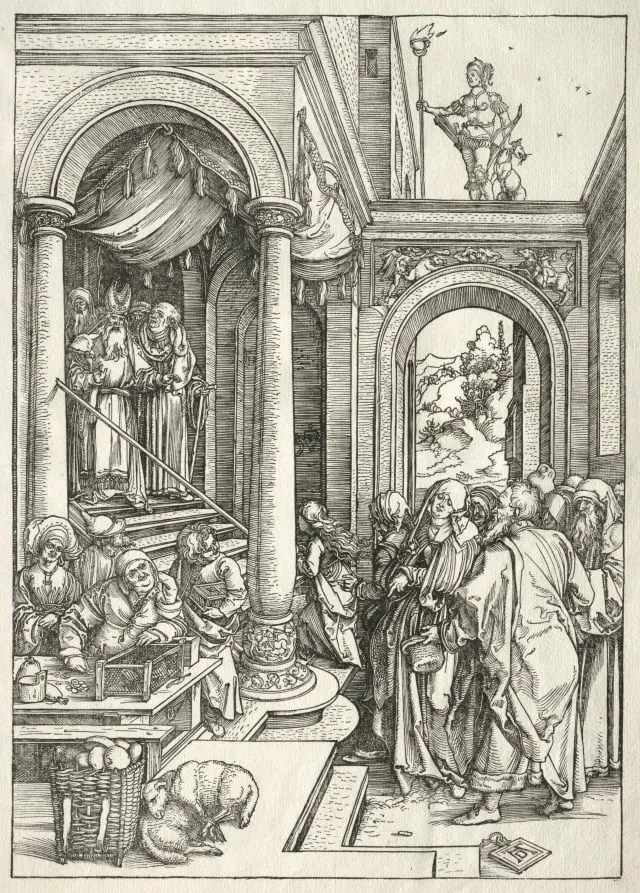
Life of the Virgin: Presentation of the Young Virgin in the Temple is a print by the Renaissance artist Albrecht Dürer. It dates from 1504 and is held in the collection of the Cleveland Museum of Art.
About this work
Overview
Created in 1504, this work is a woodcut by Albrecht Dürer, part of a larger series depicting events from the life of the Virgin Mary.
Created in 1504, this work is a woodcut by Albrecht Dürer, part of a larger series depicting events from the life of the Virgin Mary. Though often mistaken for a painting, it is a printed image produced through meticulous carving and ink transfer. Dürer’s reputation as a printmaker was already established across Europe by this time, and this piece exemplifies his precision and narrative clarity in the medium.
Subject & Meaning
The scene illustrates the apocryphal tradition of the young Mary being presented at the Temple in Jerusalem, a rite symbolizing her dedication to divine service. The central figure, a girl in blue, kneels before the high priest, while attendants and onlookers frame the moment with solemnity. The inclusion of a statue of a woman with a torch may allude to wisdom or divine light, reinforcing the spiritual significance of the event.
Technique & Style
Dürer employed fine, controlled lines to render intricate textures—drapery, stone carvings, and architectural details—with remarkable depth. The composition uses overlapping figures and receding arches to create spatial logic, a hallmark of Northern Renaissance naturalism. Even in black-and-white, the print conveys volume and weight through gradations of line density, showcasing his technical command of woodcut.
History & Provenance
The print was produced during Dürer’s first major period of printmaking, shortly after his return from Italy, where he absorbed Italian compositional principles. It was widely distributed through print networks, contributing to his international fame. Surviving impressions are held in major European and American collections, including the British Museum and the Metropolitan Museum of Art.
Context
In early 16th-century Germany, devotional imagery was in high demand, and the Virgin’s life was a favored subject. Dürer’s series responded to both popular piety and the growing market for affordable religious art. His integration of Italian spatial harmony with Northern attention to detail reflected a broader cultural exchange shaping Renaissance art beyond Italy.
Legacy
This print helped define the potential of woodcut as a vehicle for complex religious storytelling. Dürer’s influence extended to later generations of Northern artists, who adopted his compositional rigor and technical discipline. The work remains a benchmark for the expressive possibilities of printmaking in the Renaissance.
Artist & collection
Artist
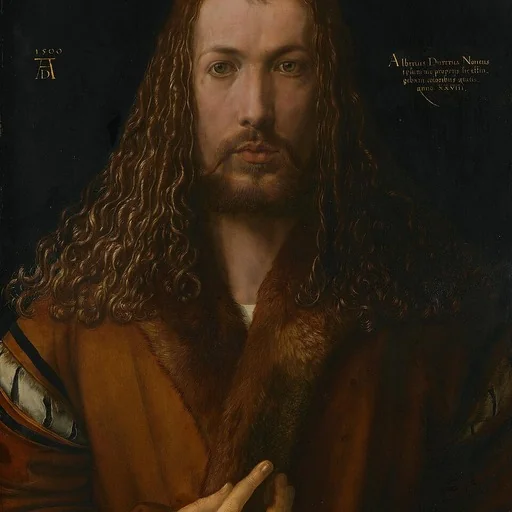
Albrecht Dürer spent his life in Nuremberg, a busy German city where artists traded prints like currency.

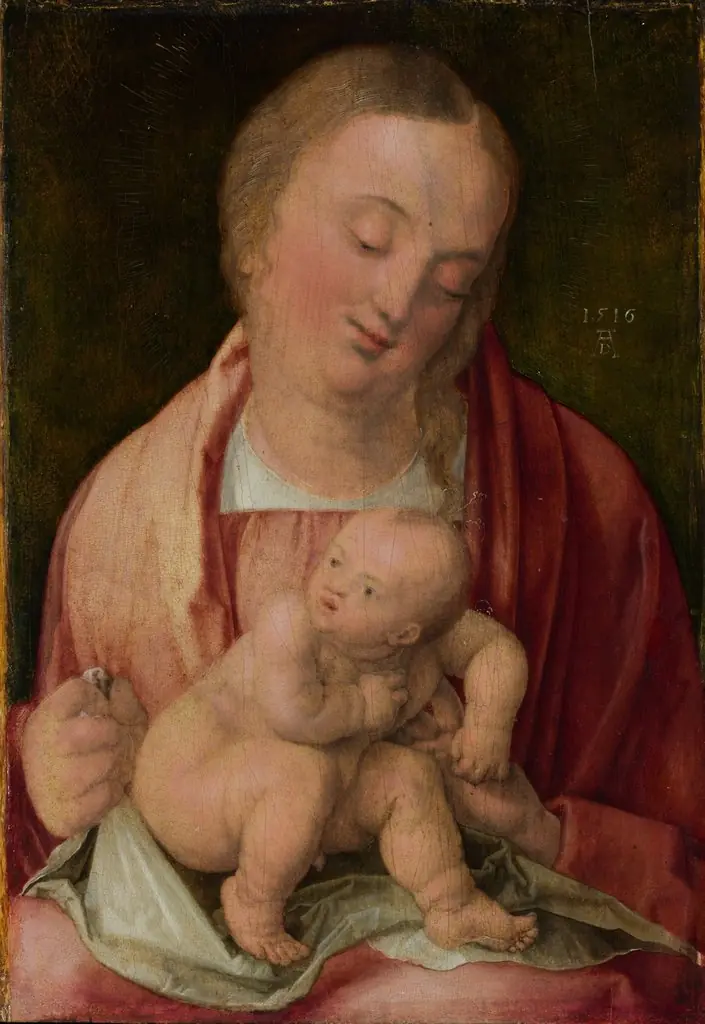
![Madonna and Child [obverse], by Albrecht Dürer](https://artifactworldgallery.com/img/albrecht-durer--madonna-and-child-obverse--d7b8ebf05d22ebe5-w320.webp)
![Lot and His Daughters [reverse], by Albrecht Dürer](https://artifactworldgallery.com/img/albrecht-durer--lot-and-his-daughters-reverse--b4ebf9b282faa17a-w320.webp)
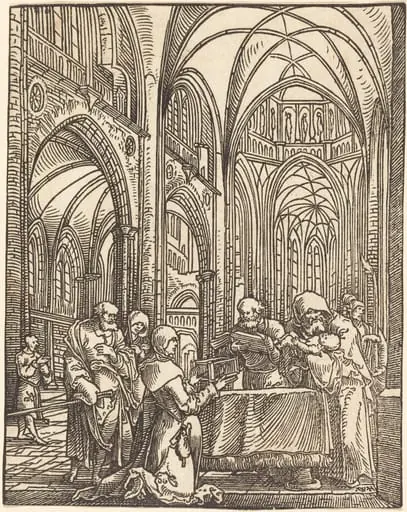 The Presentation in the Temple
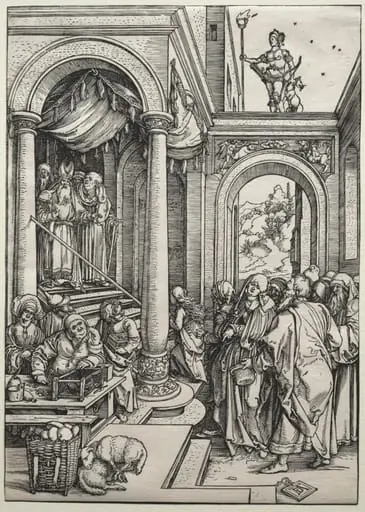 The Presentation of the Virgin in the Temple
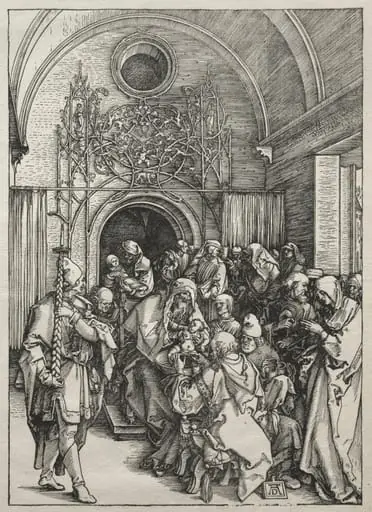 Life of the Virgin: The Circumcision
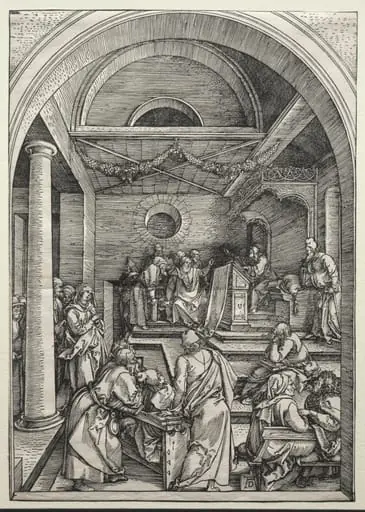 Christ Disputing with Doctors
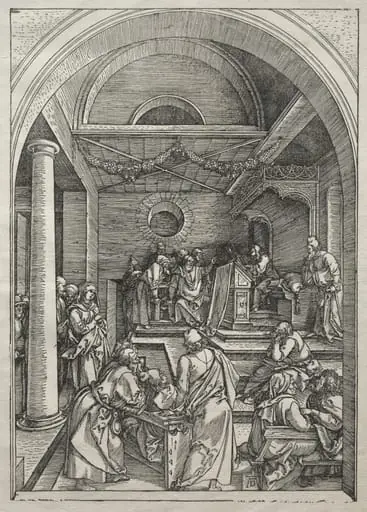 Life of the Virgin: Christ Among the Doctors
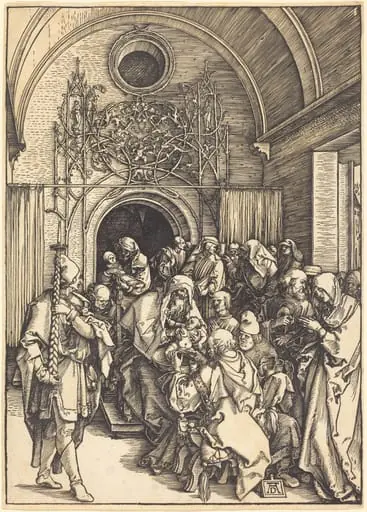 The Circumcision
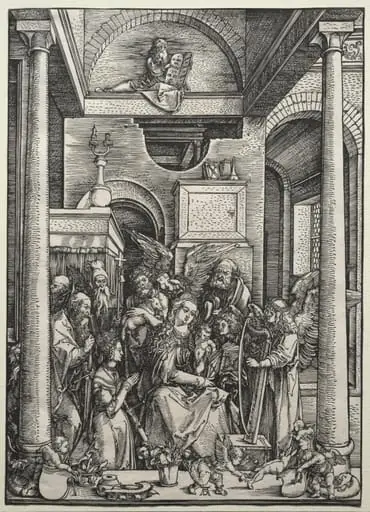 The Virgin and Child Surrounded by Saints and Angels
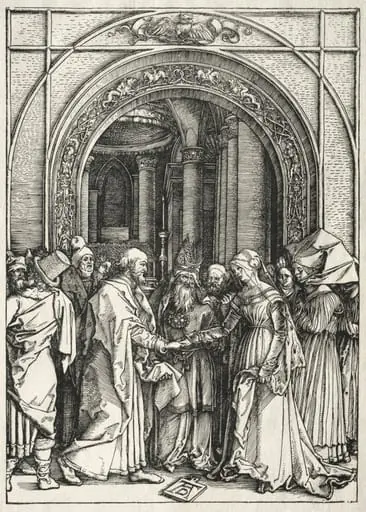 Life of the Virgin: Marriage of the Virgin and St. Joseph
 Life of the Virgin: Adoration of the Virgin and Child by Saints and Angels