Artwork
Life of the Virgin: The Circumcision
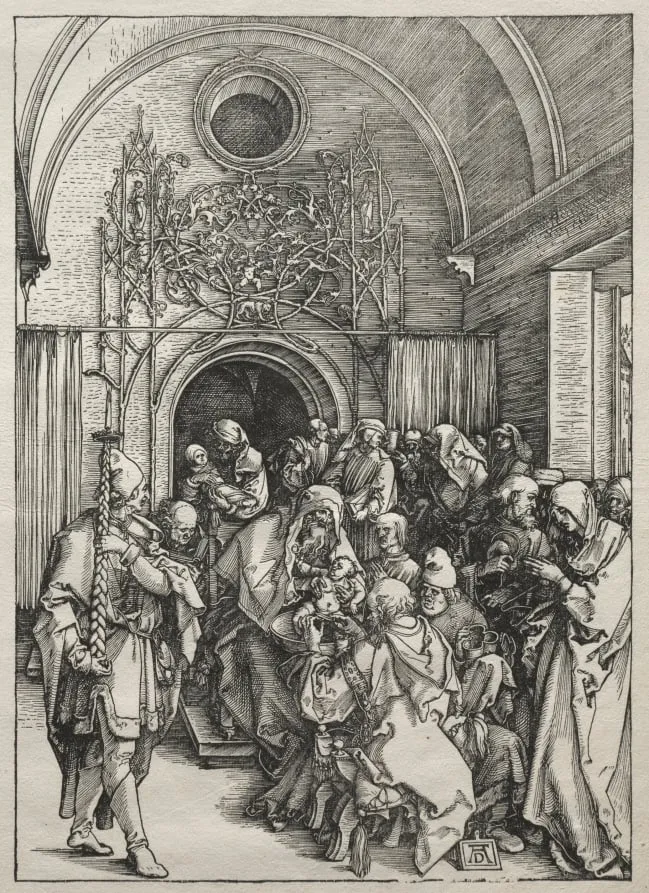
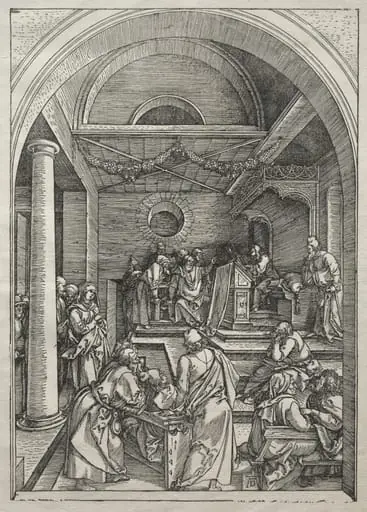
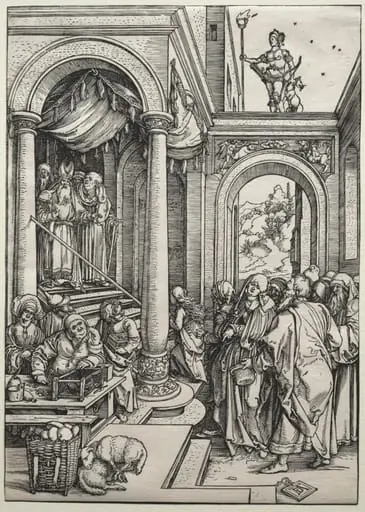
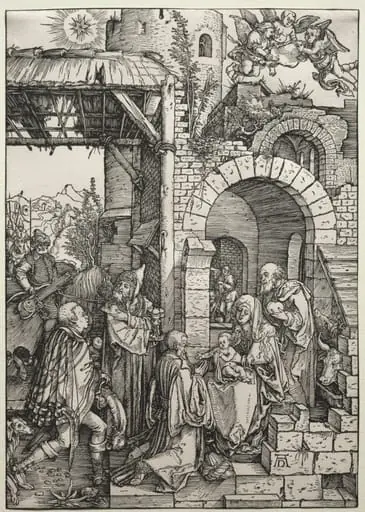
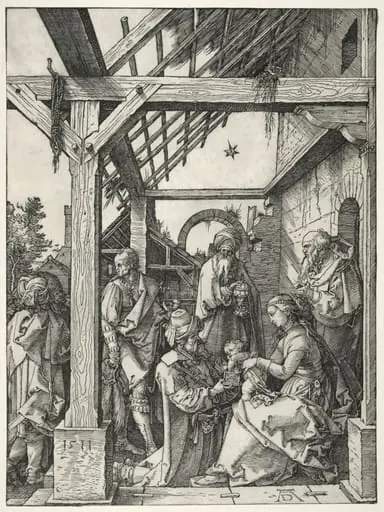
Life of the Virgin: The Circumcision is a print by the Renaissance artist Albrecht Dürer. It dates from 1504 and is held in the collection of the Cleveland Museum of Art.
About this work
Overview
Executed in fine line and tonal contrast, it reflects Dürer’s mastery of the engraving technique during his mature period.
Created in 1504, this engraving by Albrecht Dürer is one of a series depicting episodes from the life of the Virgin Mary. Executed in fine line and tonal contrast, it reflects Dürer’s mastery of the engraving technique during his mature period. The work belongs to the collection of the Cleveland Museum of Art and exemplifies his transition from woodcut to more detailed intaglio prints, which allowed for greater nuance and widespread distribution across Europe.
Subject & Meaning
The scene illustrates the circumcision of the infant Jesus, a ritual described in the Gospel of Luke that signifies his inclusion in the Abrahamic covenant. Dürer portrays the moment with solemnity, centering the child on the lap of the Virgin while figures in contemporary and historical dress observe. The inclusion of armor and varied garments suggests a blending of sacred time with the artist’s present, reinforcing the theological idea of Christ’s earthly fulfillment of Jewish law.
Technique & Style
Dürer employed fine, precise engraving lines to model form and create spatial depth within a confined interior. Sharp contrasts between light and shadow, particularly from the circular window, enhance the volume of figures and architecture. The dense composition, with overlapping bodies and animals, is carefully ordered despite its apparent chaos. The texture of stone walls and fabric is rendered with meticulous attention, showcasing his technical control and interest in naturalistic detail.
History & Provenance
The engraving was produced during Dürer’s peak years in Nuremberg, when his prints circulated widely among collectors and artists across Europe. It entered the Cleveland Museum of Art’s collection in the 20th century as part of a broader acquisition of Northern Renaissance works. Its preservation reflects its significance in the history of printmaking, where Dürer’s innovations elevated the medium to the status of fine art.
Context
In early 16th-century Germany, religious imagery remained central to artistic production, even as humanist thought influenced its interpretation. Dürer’s series on the Virgin’s life responded to devotional practices while incorporating classical ideals of proportion and observation. The inclusion of contemporary attire and domestic details reflects a growing trend to ground sacred narratives in recognizable, lived environments.
Legacy
This engraving contributed to the elevation of printmaking as a serious artistic medium in the Renaissance. Dürer’s ability to convey complex narratives with clarity and emotional weight influenced generations of Northern European artists. His technical precision and compositional discipline set standards for engraving that persisted well into the 17th century, cementing his role as a bridge between medieval tradition and early modern art.
Artist & collection
Artist
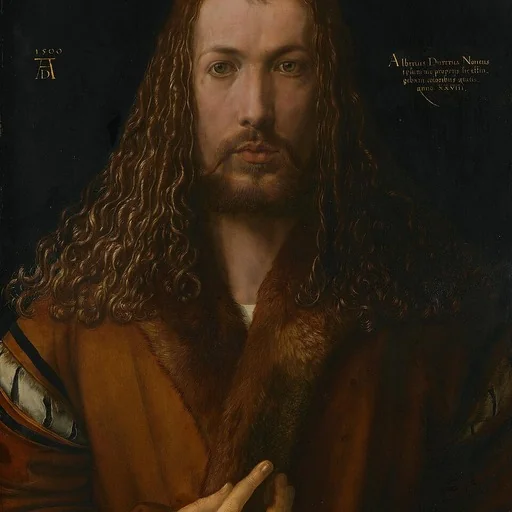
Albrecht Dürer spent his life in Nuremberg, a busy German city where artists traded prints like currency.

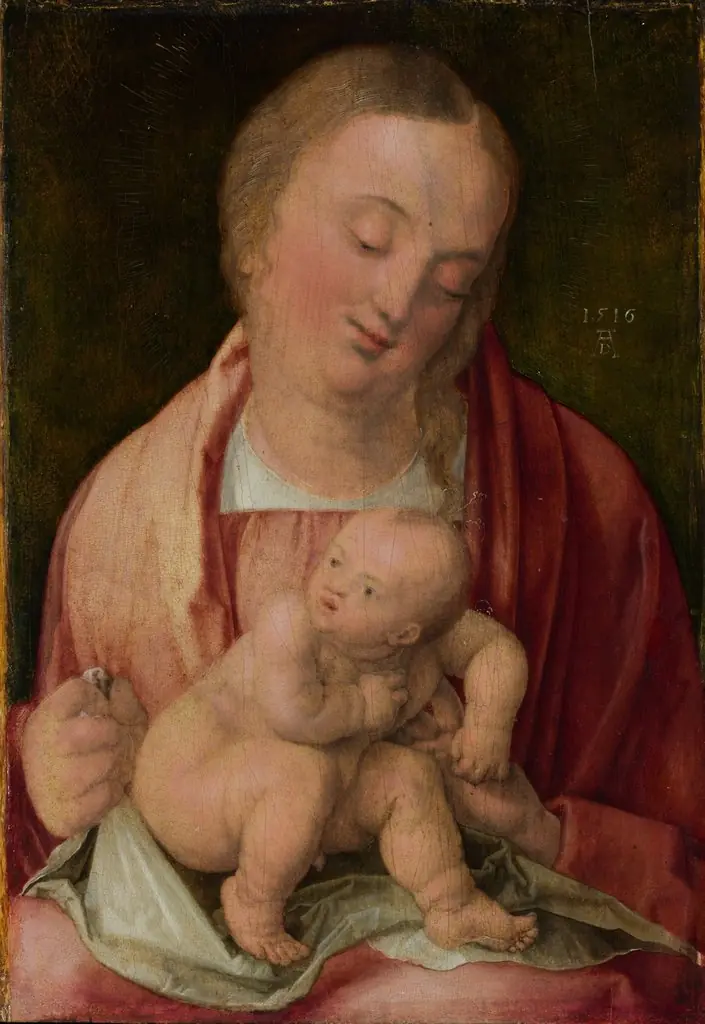
![Madonna and Child [obverse], by Albrecht Dürer](https://artifactworldgallery.com/img/albrecht-durer--madonna-and-child-obverse--d7b8ebf05d22ebe5-w320.webp)
![Lot and His Daughters [reverse], by Albrecht Dürer](https://artifactworldgallery.com/img/albrecht-durer--lot-and-his-daughters-reverse--b4ebf9b282faa17a-w320.webp)