Artwork
The Holy Family with Joachim and Anna
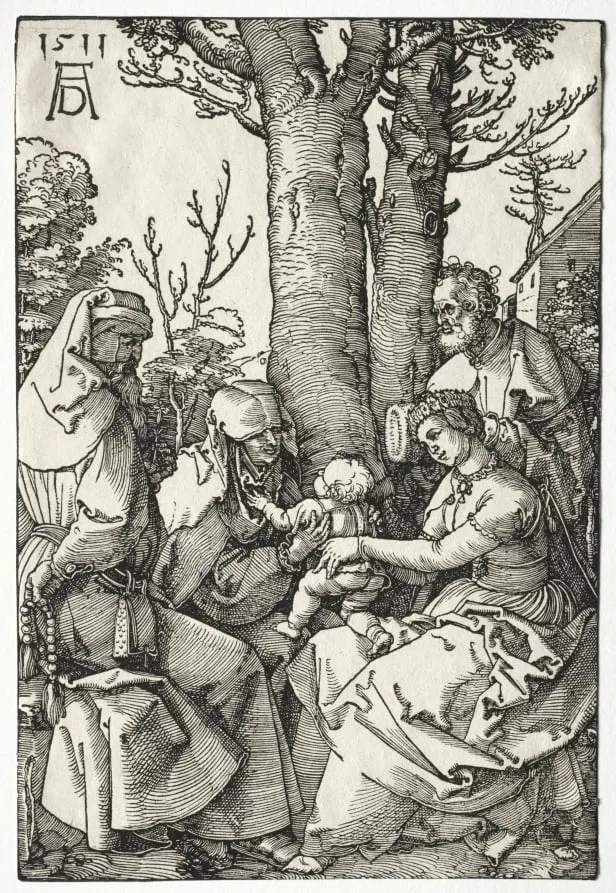
The Holy Family with Joachim and Anna is a print by the Renaissance artist Albrecht Dürer. It dates from 1511 and is held in the collection of the Cleveland Museum of Art.
About this work
Overview
Created in 1511, this work by Albrecht Dürer is a painted panel depicting the Holy Family accompanied by the Virgin’s parents, Joachim and Anna.
Created in 1511, this work by Albrecht Dürer is a painted panel depicting the Holy Family accompanied by the Virgin’s parents, Joachim and Anna. Though Dürer is best known for his prints, this piece reflects his growing engagement with panel painting during his mature period. It belongs to the collection of the Cleveland Museum of Art and exemplifies his transition from graphic to pictorial media, blending Northern European precision with Italian compositional ideals.
Subject & Meaning
The scene portrays a quiet domestic moment centered on the infant Christ, held by the Virgin Mary, with Joseph, Joachim, and Anna gathered around. The inclusion of Mary’s parents references the apocryphal tradition of their pious lives and the divine origin of the Virgin. Their presence underscores themes of lineage, sanctity, and familial devotion, framing the Holy Family within a broader narrative of sacred ancestry and spiritual continuity.
Technique & Style
Dürer employs fine, controlled brushwork to render textures in fabric, skin, and foliage, demonstrating his printmaking precision in paint. Subtle gradations of light and shadow model the figures with quiet realism, while the background trees and distant structure suggest depth without theatrical perspective. The composition is tightly grouped, enhancing intimacy, and the muted palette, punctuated by soft reds and golds, reinforces a tone of reverent calm.
History & Provenance
The painting was likely commissioned for private devotion, possibly by a German patron with ties to humanist or religious circles. It remained in private collections in Germany before entering the Cleveland Museum of Art in the early 20th century. Its survival in good condition is notable, as many contemporary panel paintings were lost to war, iconoclasm, or deterioration. Documentation from the 16th century is sparse, but stylistic analysis confirms its attribution to Dürer’s 1511 output.
Context
Painted during Dürer’s second trip to Italy, this work reflects his absorption of Italian Renaissance ideals—harmonious composition, anatomical grace—while retaining Northern attention to detail and emotional restraint. The subject of Joachim and Anna was popular in devotional art of the period, especially in regions influenced by the cult of the Virgin. Dürer’s treatment avoids grandeur, favoring quiet dignity over spectacle, aligning with emerging Protestant sensibilities even before the Reformation.
Legacy
Though less known than his prints, this painting illustrates Dürer’s versatility and his role in bridging Northern and Southern European traditions. It influenced later German religious painters who sought to combine emotional sincerity with technical refinement. Its presence in a major American museum has helped secure its place in discussions of early 16th-century devotional art beyond the Italian canon.
Artist & collection
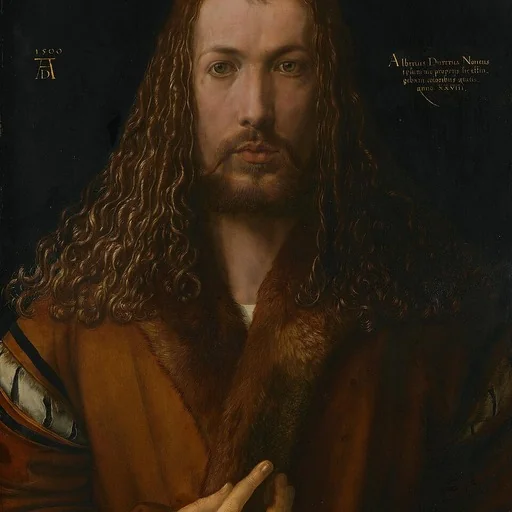
Artist
Albrecht Dürer spent his life in Nuremberg, a busy German city where artists traded prints like currency.

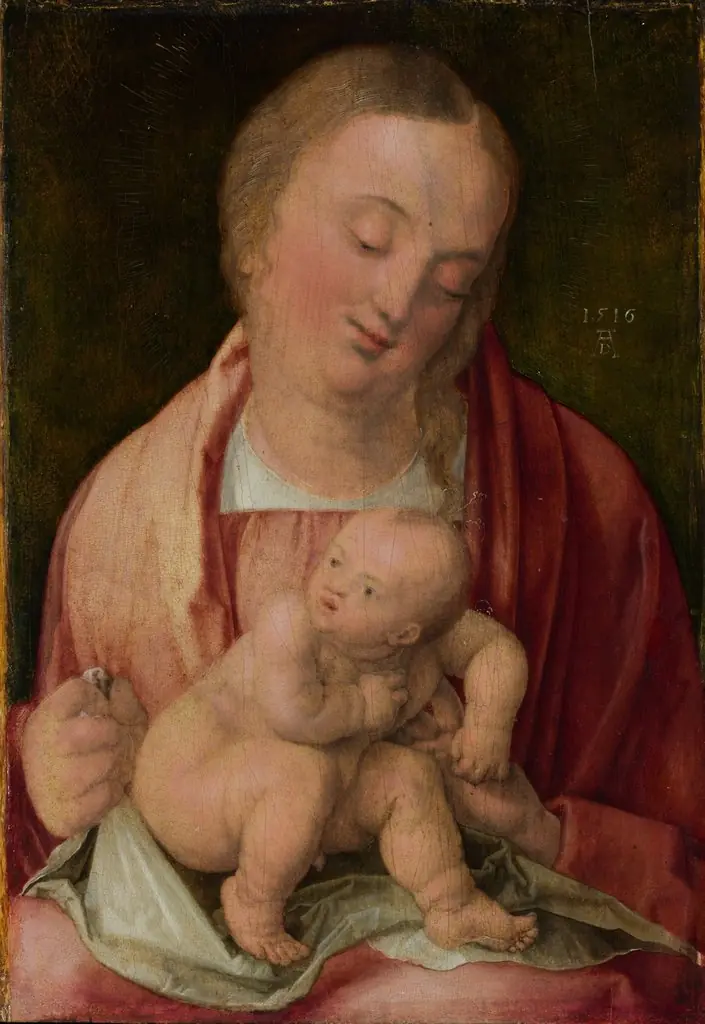
![Madonna and Child [obverse], by Albrecht Dürer](https://artifactworldgallery.com/img/albrecht-durer--madonna-and-child-obverse--d7b8ebf05d22ebe5-w320.webp)
![Lot and His Daughters [reverse], by Albrecht Dürer](https://artifactworldgallery.com/img/albrecht-durer--lot-and-his-daughters-reverse--b4ebf9b282faa17a-w320.webp)
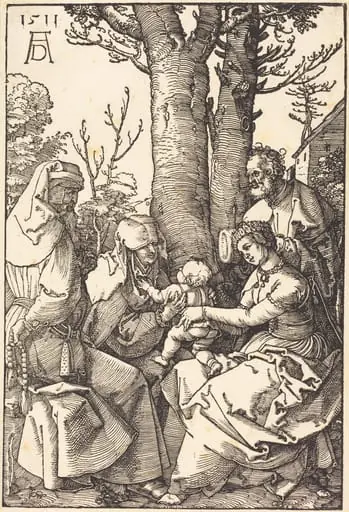 The Holy Family with Joachim and Anne under a Tree
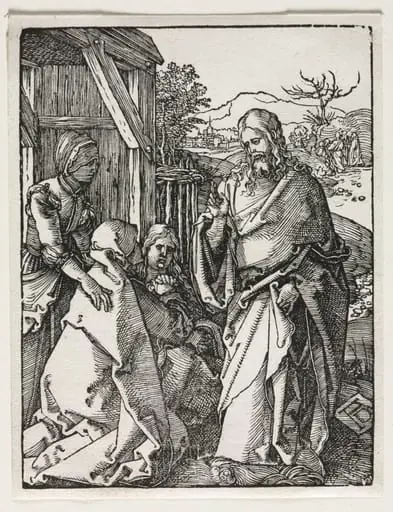 The Small Passion: Christ Taking Leave of the Virgin
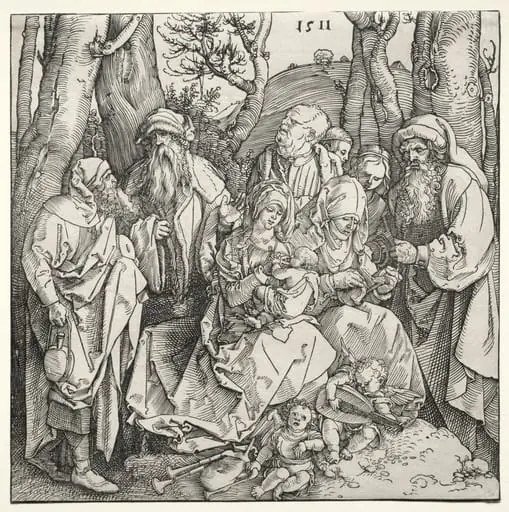 The Holy Family with Two Musician Angels
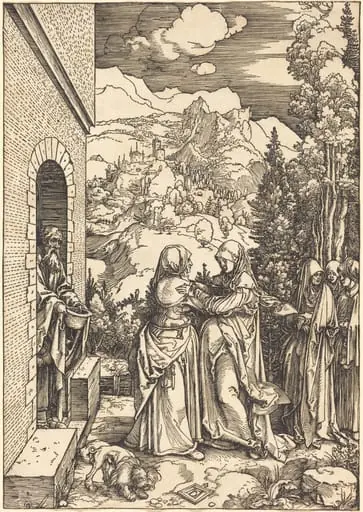 The Visitation
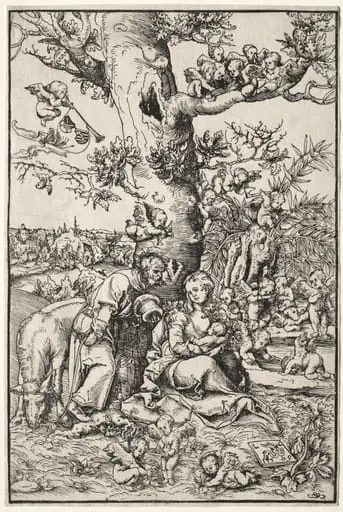 Rest on the Flight into Egypt
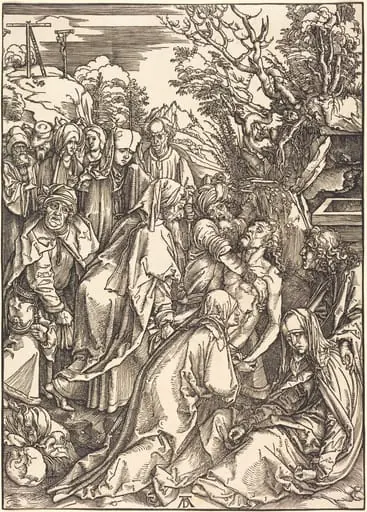 The Deposition
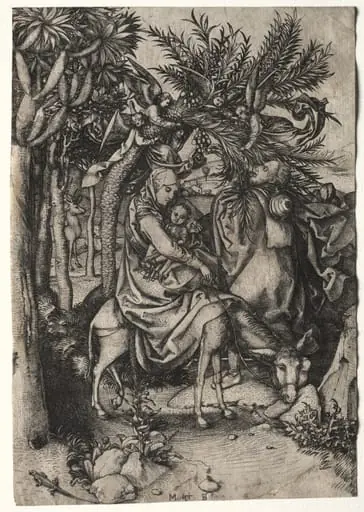 Life of the Virgin: The Flight into Egypt
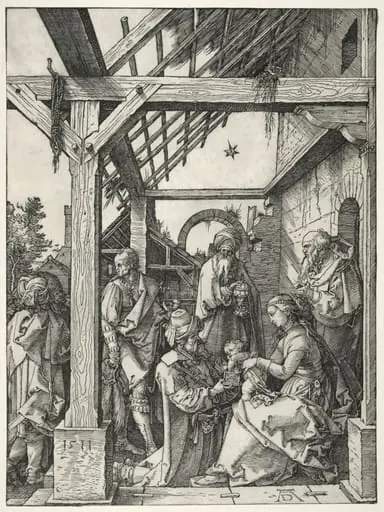 The Adoration of the Magi
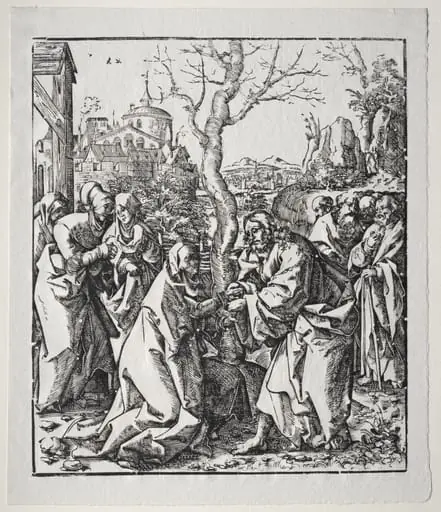 Christ Taking Leave of his Mother
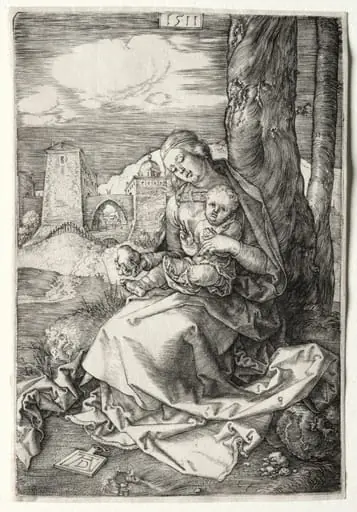 The Virgin and Child with the Pear