Artwork
The Adoration of the Magi
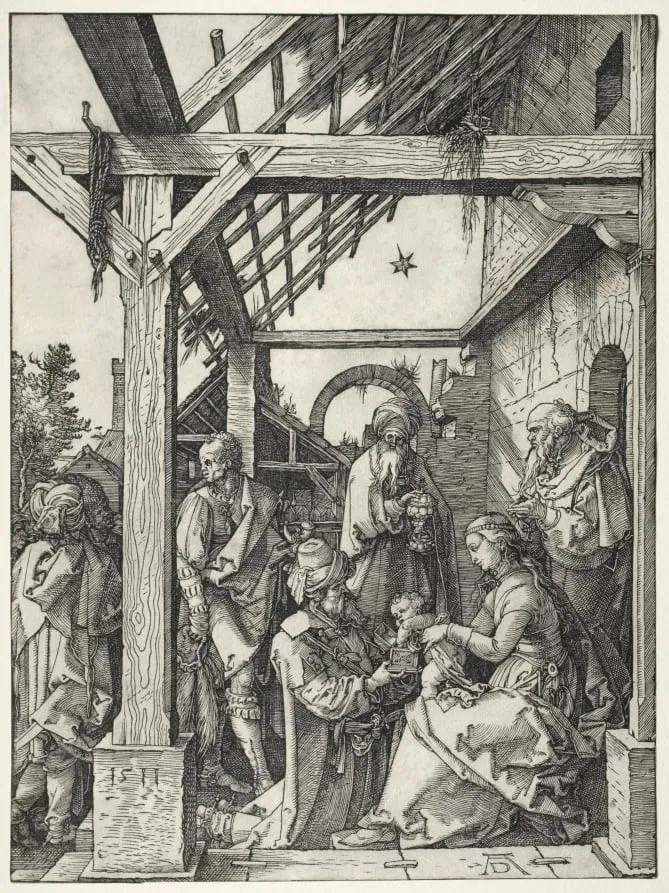
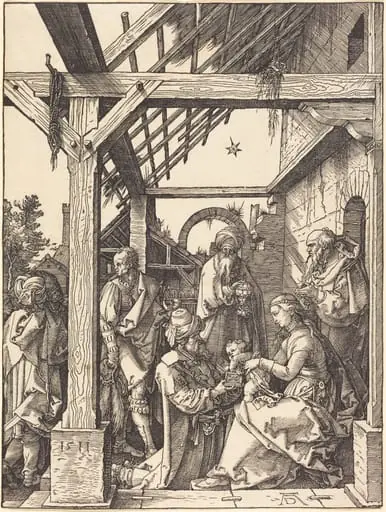
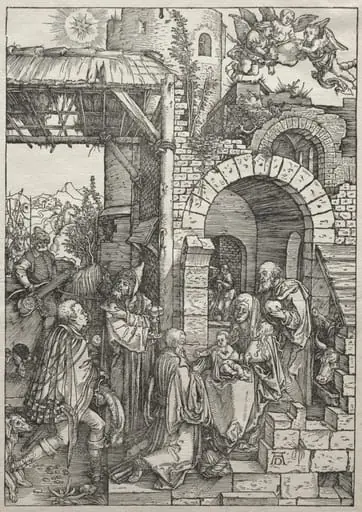
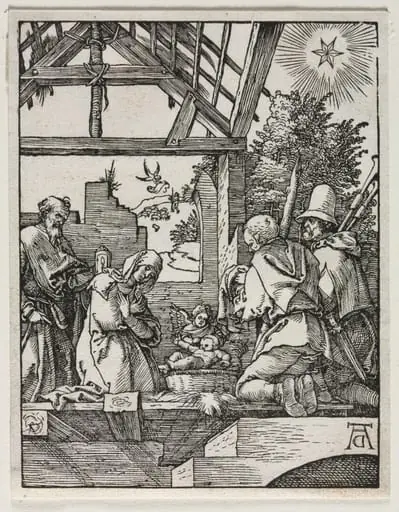
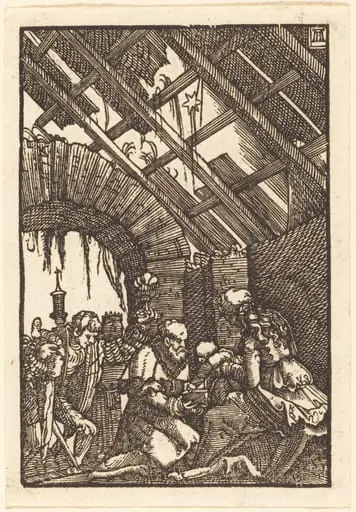
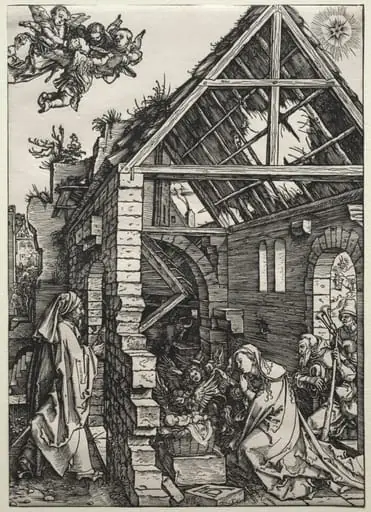
The Adoration of the Magi is a print by the Renaissance artist Albrecht Dürer. It dates from 1511 and is held in the collection of the Cleveland Museum of Art.
About this work
Overview
Albrecht Dürer’s 1511 print of the Adoration of the Magi presents the biblical episode in a compact, interior setting. The composition gathers the infant Jesus, his mother, and the three visitors within a modestly lit chamber, its wooden beams and doorway framing the scene. Light falls on the central figures, while surrounding shadows define the space and emphasize the solemnity of the moment.
Subject & Meaning
The work illustrates the traditional narrative of the Magi offering gifts to the newborn Christ, a theme that underscores themes of revelation and homage. Dürer’s figures display a mixture of awe and reverence, their gestures—one kneeling with the child, another pointing upward—suggesting both devotion and the acknowledgment of divine guidance, symbolized by the star visible above the doorway.
Technique & Style
Executed as a print, the image relies on strong chiaroscuro, the contrast of deep shadows and illuminated areas, to model forms and create a three‑dimensional effect. Dürer’s precise line work and careful handling of tonal values highlight facial expressions and textures, demonstrating the advanced printmaking techniques that distinguished his practice within the German Renaissance.
History & Provenance
Created during Dürer’s mature period, the print reflects his established reputation across Europe for both woodcuts and engravings. While specific ownership records for this particular impression are limited, it belongs to the broader corpus of Dürer’s religious prints that circulated widely among collectors and patrons in the early sixteenth century.
Context
The Adoration of the Magi aligns with the German Renaissance’s interest in merging Northern detail with Italianate compositional principles. Dürer’s exposure to Italian art during his travels informed his use of light and perspective, allowing him to render a sacred narrative with a heightened sense of realism and spatial depth.
Legacy
Dürer’s treatment of light and shadow in this print contributed to the development of chiaroscuro in Northern European printmaking. The work continues to be studied for its technical mastery and its role in shaping the visual language of religious subjects in the decades that followed.
Artist & collection
Artist
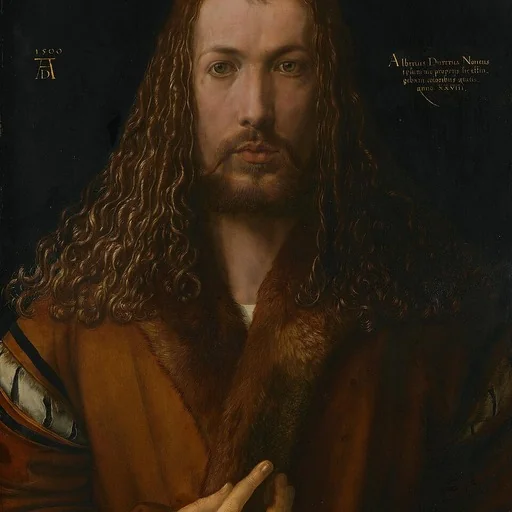
Albrecht Dürer spent his life in Nuremberg, a busy German city where artists traded prints like currency.

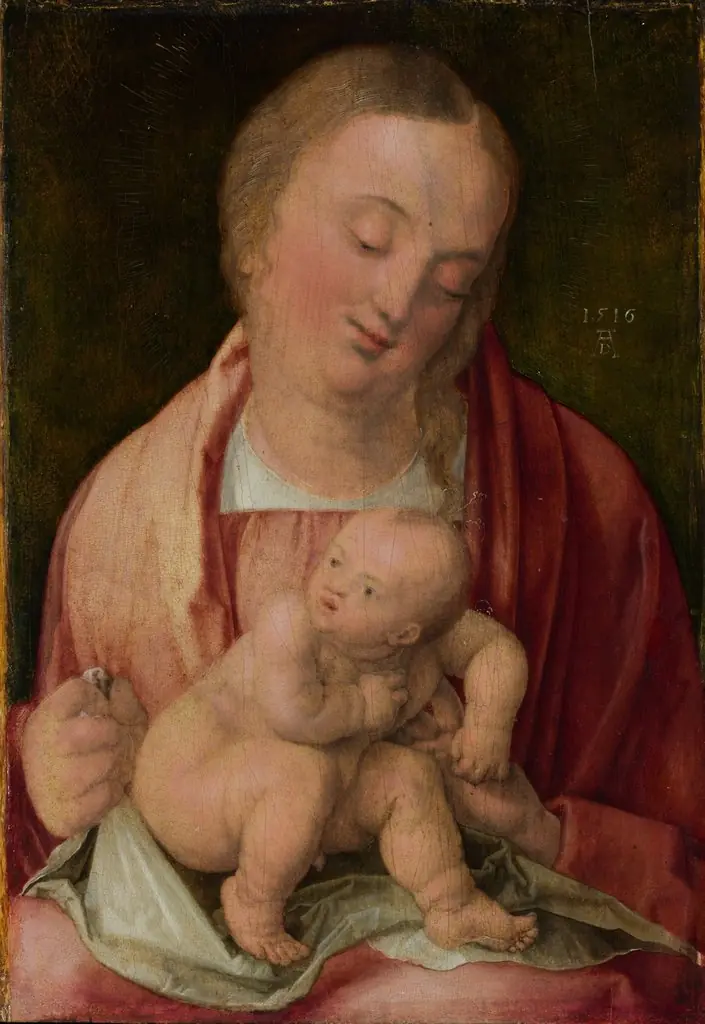
![Madonna and Child [obverse], by Albrecht Dürer](https://artifactworldgallery.com/img/albrecht-durer--madonna-and-child-obverse--d7b8ebf05d22ebe5-w320.webp)
![Lot and His Daughters [reverse], by Albrecht Dürer](https://artifactworldgallery.com/img/albrecht-durer--lot-and-his-daughters-reverse--b4ebf9b282faa17a-w320.webp)