Artwork
Pieter de Coninck
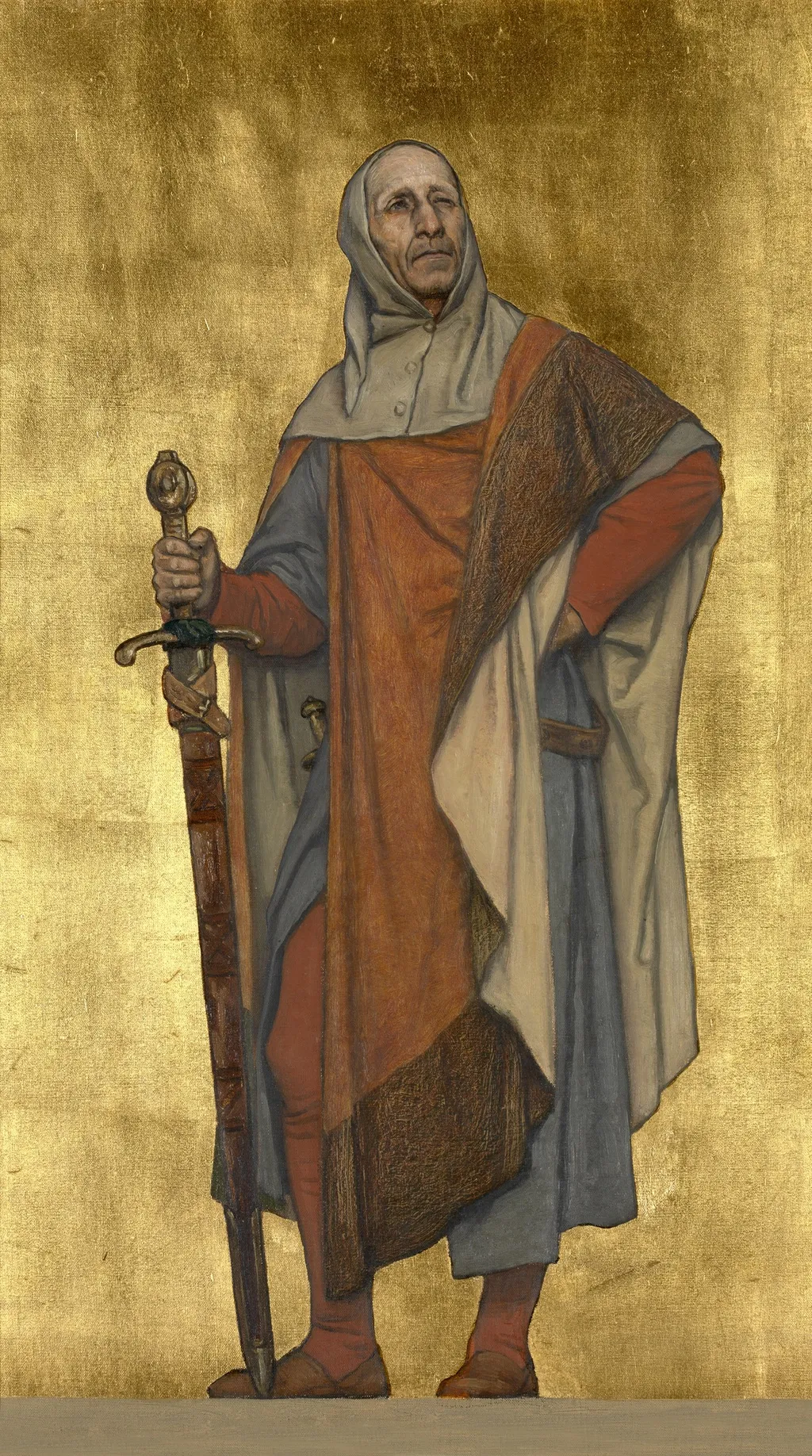
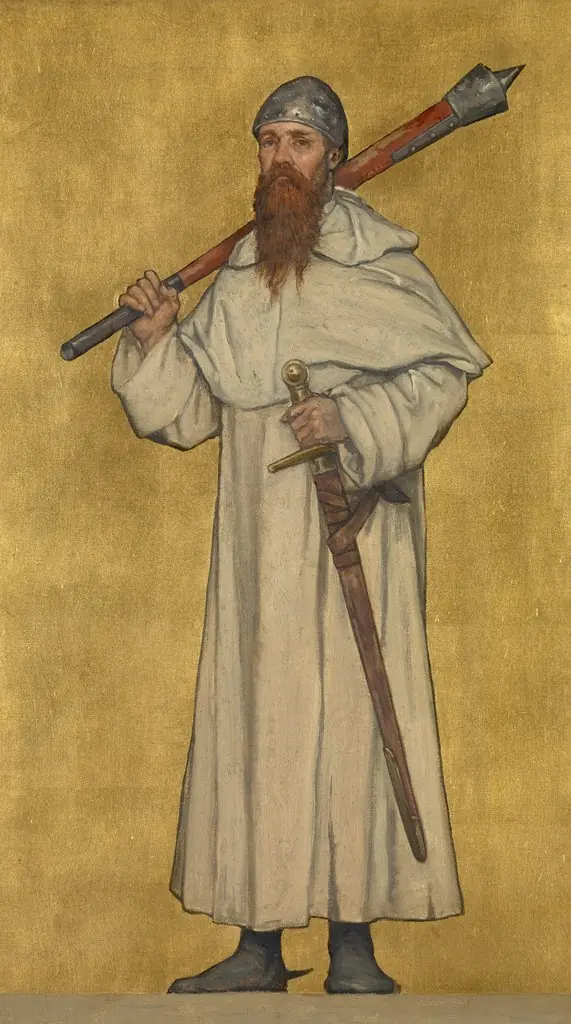
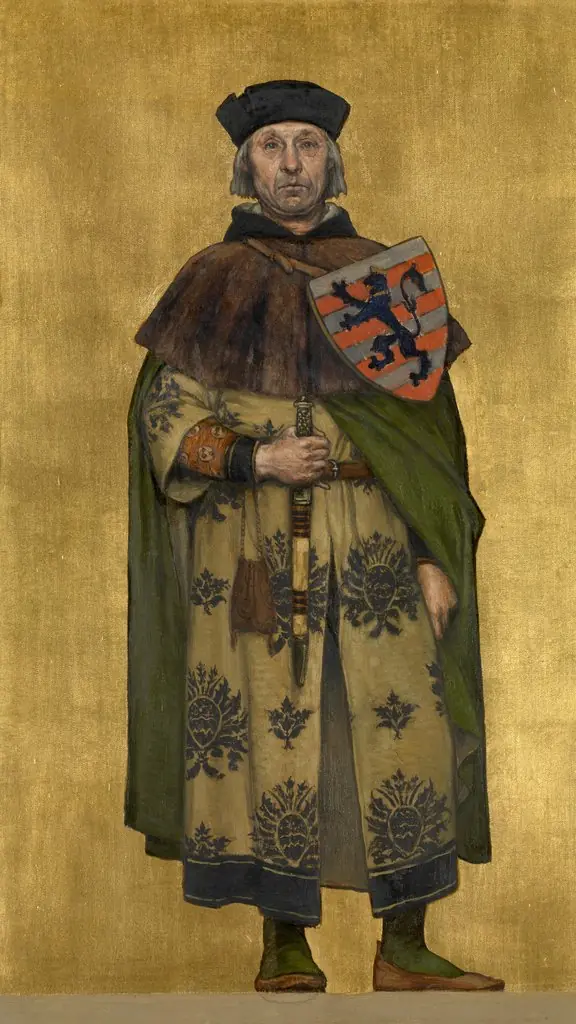
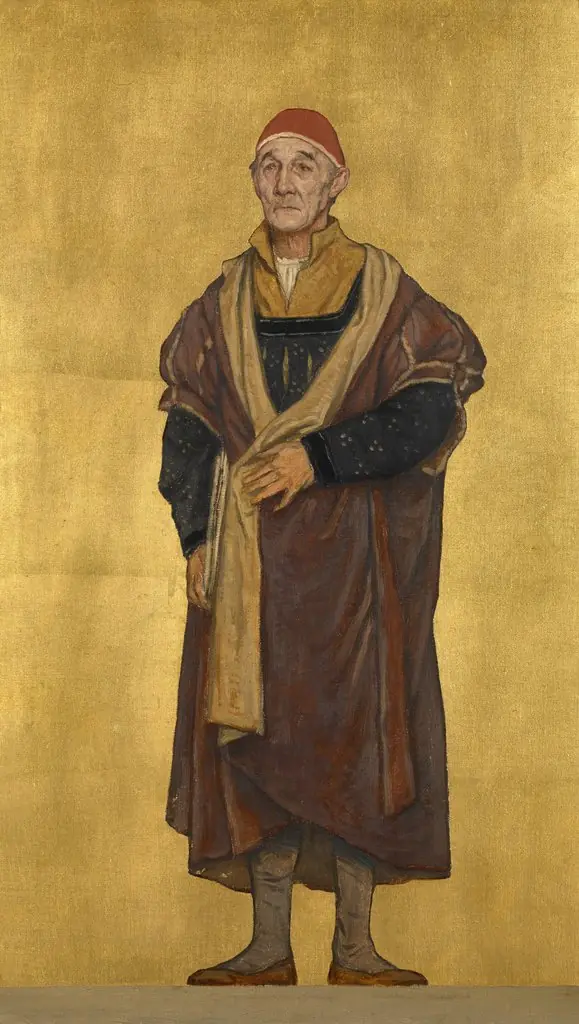
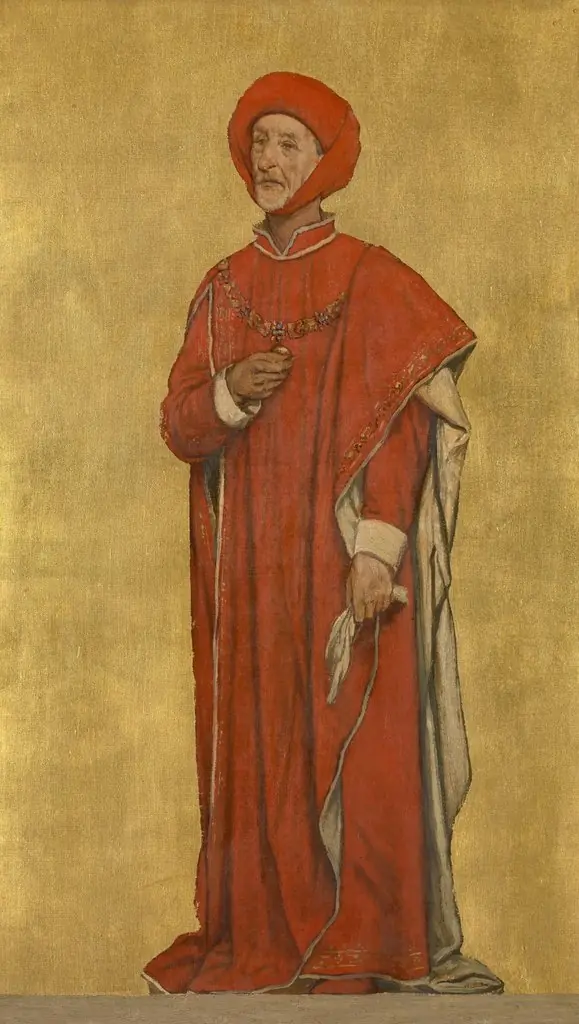
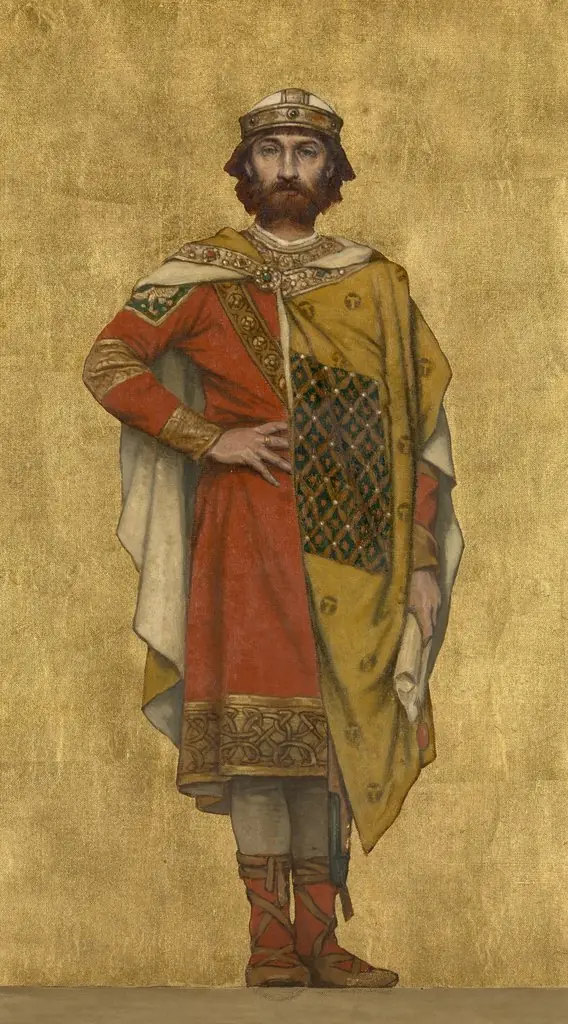
Pieter de Coninck is an oil painting by the Post-Impressionist artist Albrecht De Vriendt. It dates from 1895 and is held in the collection of the Royal Museum of Fine Arts Antwerp.
About this work
Overview
Executed in the late 19th century, the work aligns with Belgium’s monumentalist tendencies, blending historical narrative with theatrical composition.
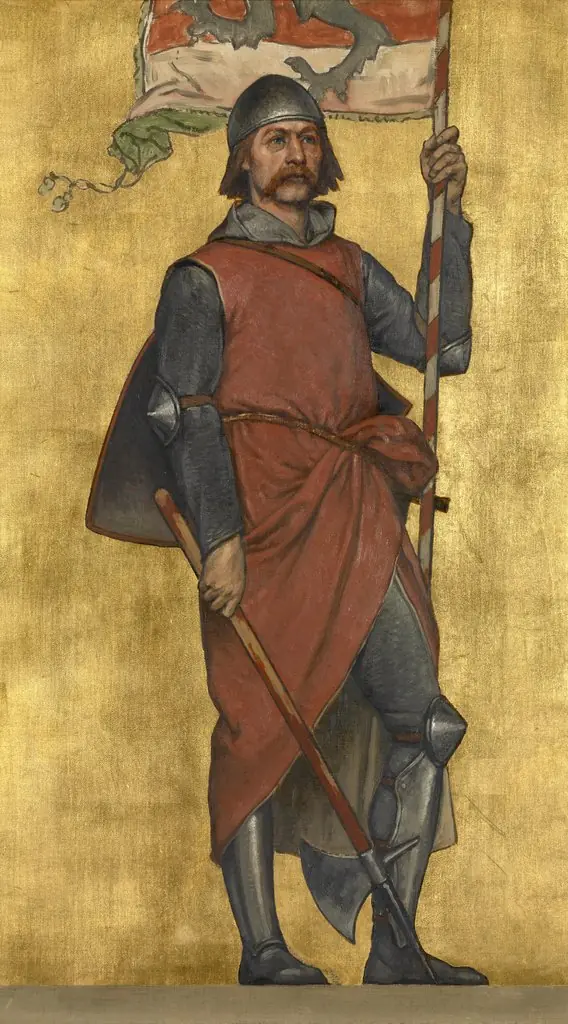
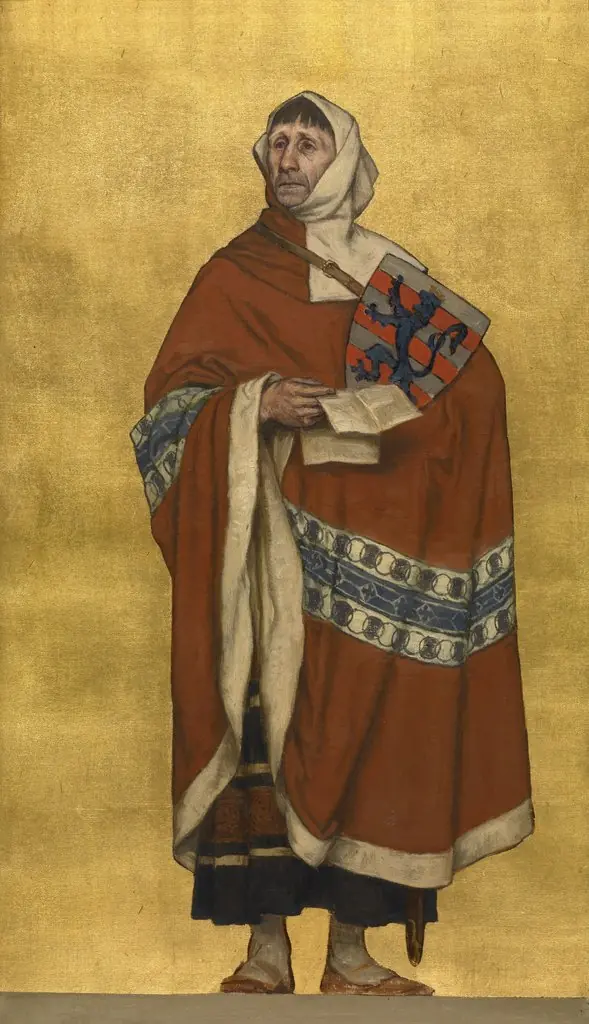
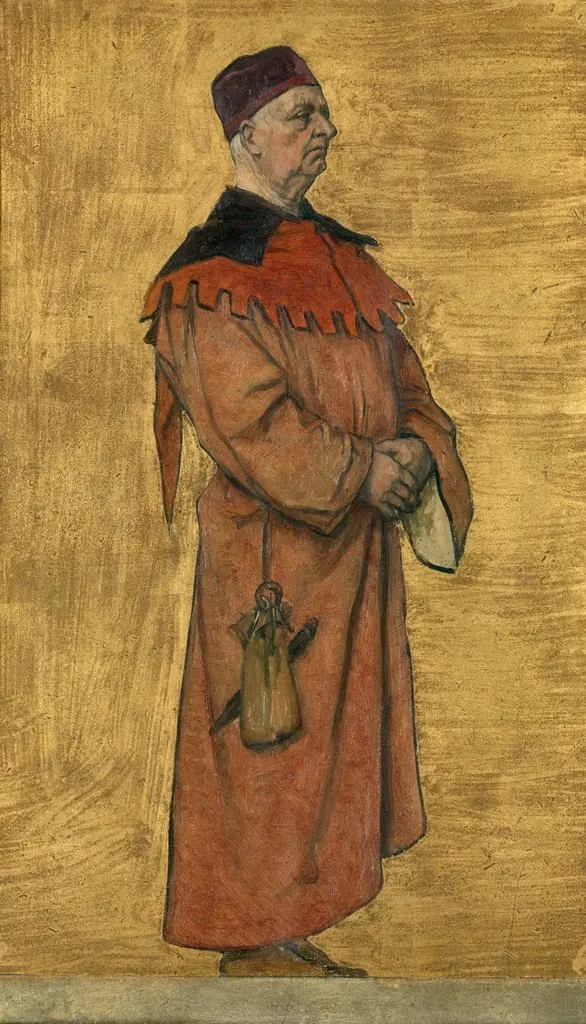
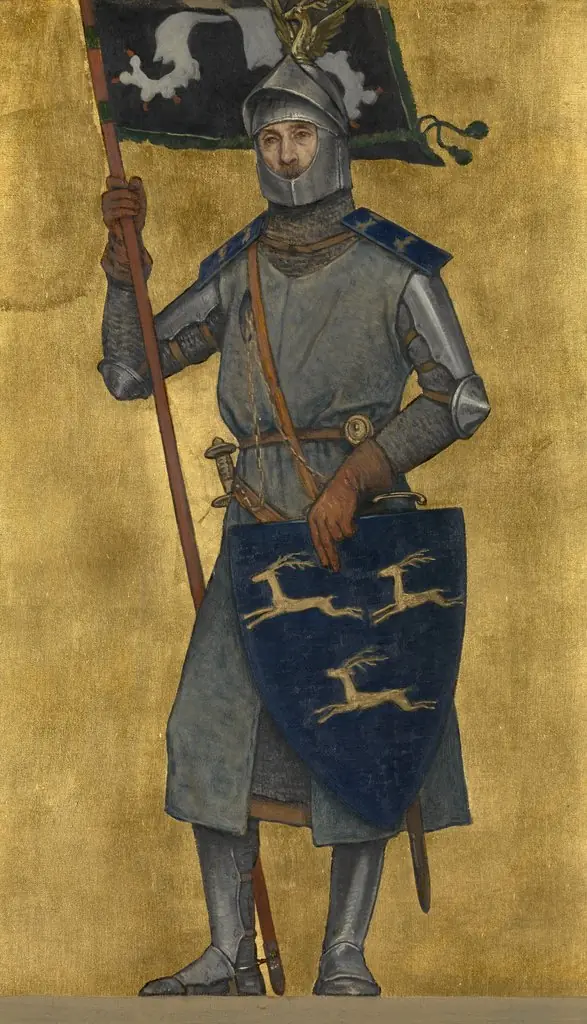
Albrecht De Vriendt’s 1895 oil painting portrays Pieter de Coninck, a historical Flemish figure associated with the 1302 uprising in Bruges. Executed in the late 19th century, the work aligns with Belgium’s monumentalist tendencies, blending historical narrative with theatrical composition. It resides in the Royal Museum of Fine Arts Antwerp, where it contributes to a broader collection of national historical imagery.
Subject & Meaning
The figure represents Pieter de Coninck, a leader in the Flemish rebellion against French rule. Depicted in a hooded robe and holding a sword, he embodies civic resolve and moral authority. The gold background elevates the scene beyond mere portraiture, suggesting symbolic rather than literal space. His stern expression and upright stance convey leadership during a pivotal moment in regional history.
Technique & Style
De Vriendt employs rich, earthy tones for the figure’s garments, contrasting with the luminous gold backdrop to create visual emphasis. The sword’s detailed engravings and the fabric’s subtle folds demonstrate careful observation and controlled brushwork. While rooted in academic tradition, the painting avoids overt realism, favoring a stylized, almost ceremonial presence characteristic of late Romantic historical painting.
History & Provenance
Commissioned during a period of renewed interest in Flemish identity, the painting entered the Royal Museum of Fine Arts Antwerp’s collection shortly after its completion. De Vriendt, known for his historical subjects and literary interests, produced this work as part of a broader cultural project to commemorate regional heroes. Its preservation reflects institutional efforts to anchor national memory in visual art.
Context
Created amid 19th-century European movements that revived medieval narratives for modern political purposes, the painting responds to Belgium’s post-independence identity formation. De Vriendt’s engagement with Ghent’s cultural circles and his involvement in historical societies informed his approach. The work echoes earlier Romantic traditions but adapts them to contemporary civic ideals.
Legacy
Though not widely reproduced outside institutional settings, the painting remains a reference point in Belgian art history for its synthesis of historical subject and formal solemnity. It exemplifies how 19th-century artists used classical techniques to reinforce collective memory, influencing later generations interested in national iconography without overt propaganda.
Artist & collection
Artist
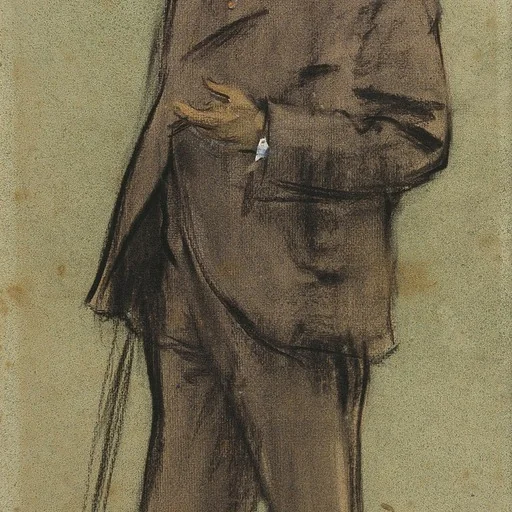
Albrecht Frans Lieven De Vriendt or Albrecht De Vriendt (In French-language publications referred to as Albert De Vriendt or Albert François Lieven De Vriendt) (Ghent, 8 December 1843 – Antwerp, 14 October 1900) was a…