Artwork
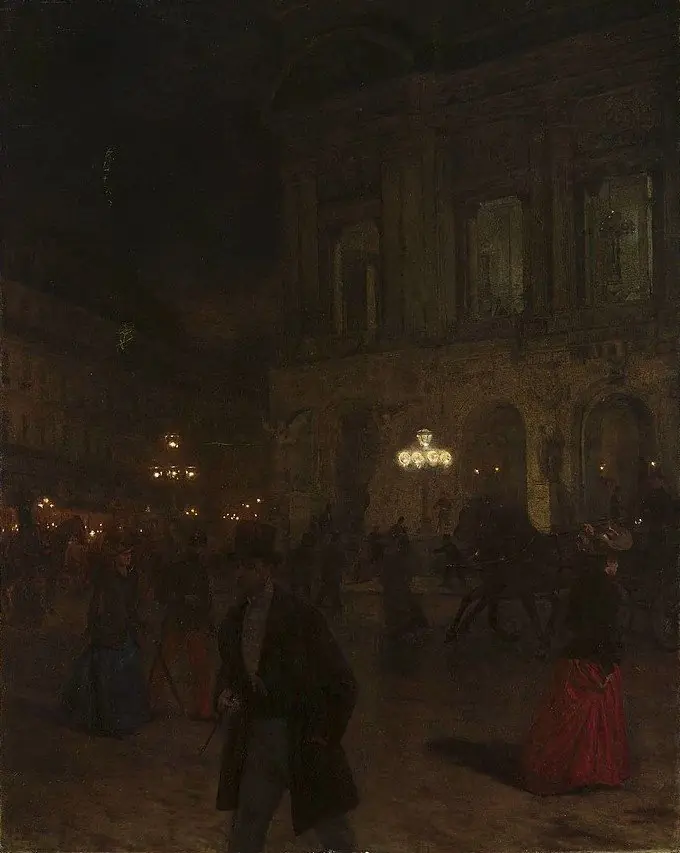
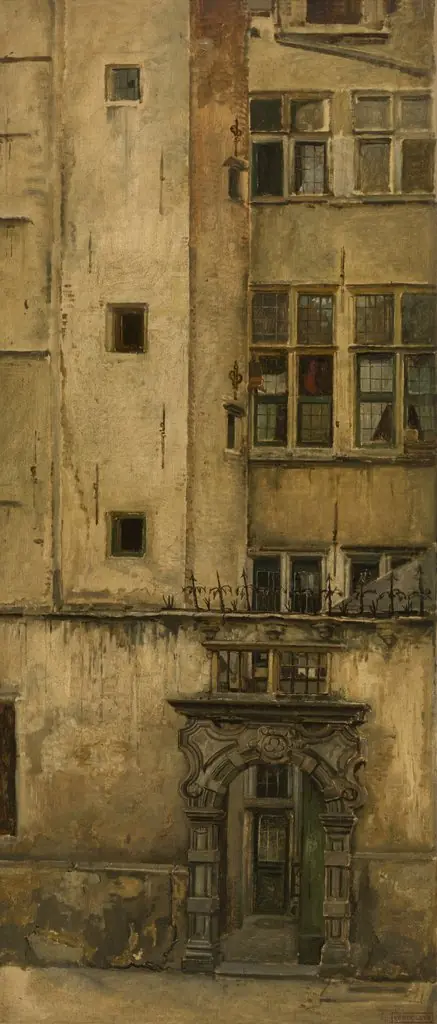
Motif from the Wittelsbachs' Square in Munich
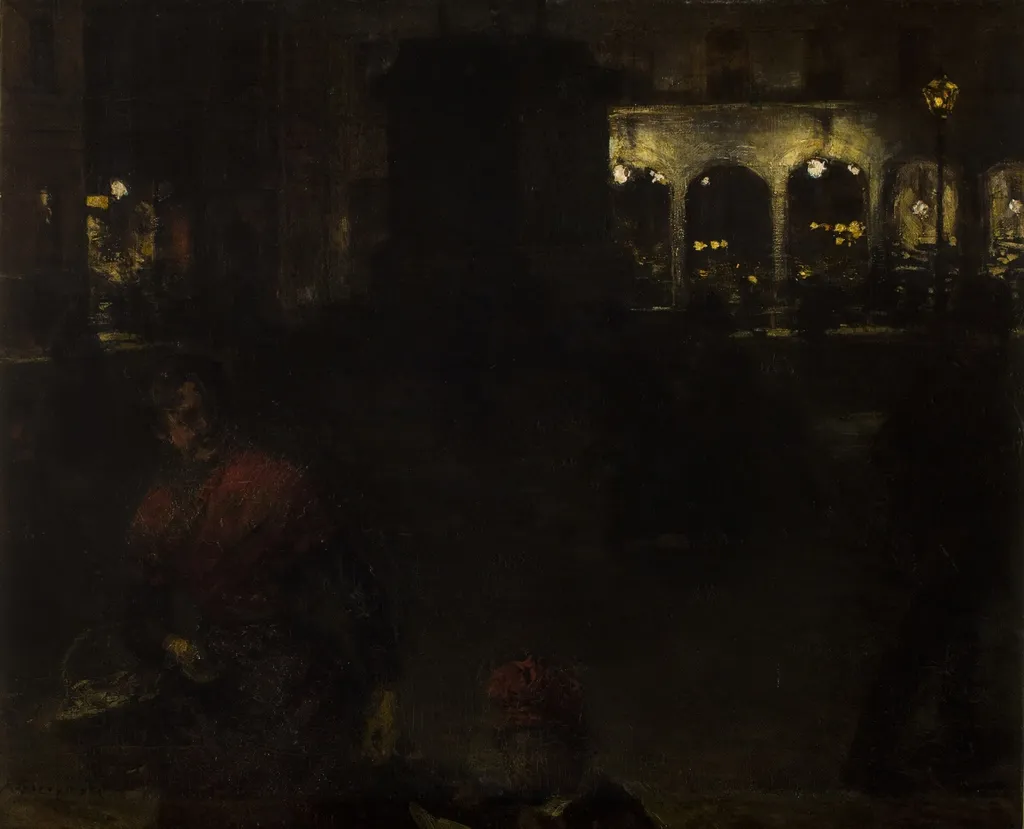
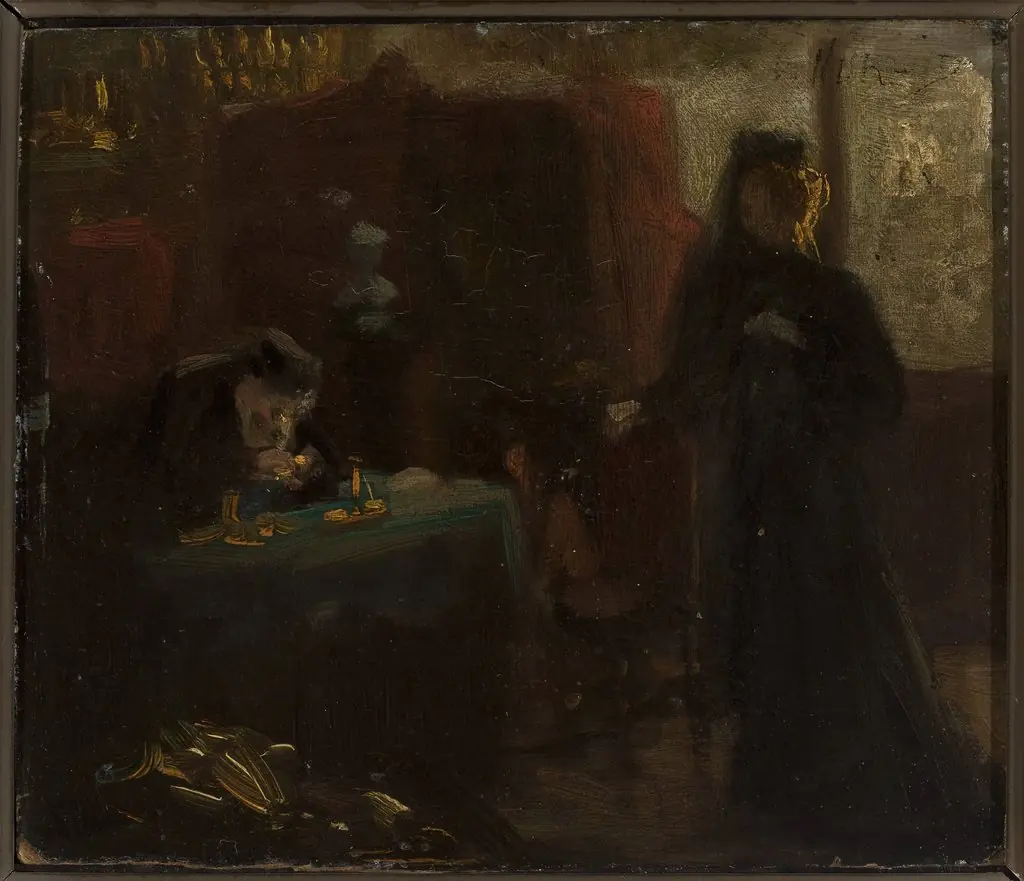
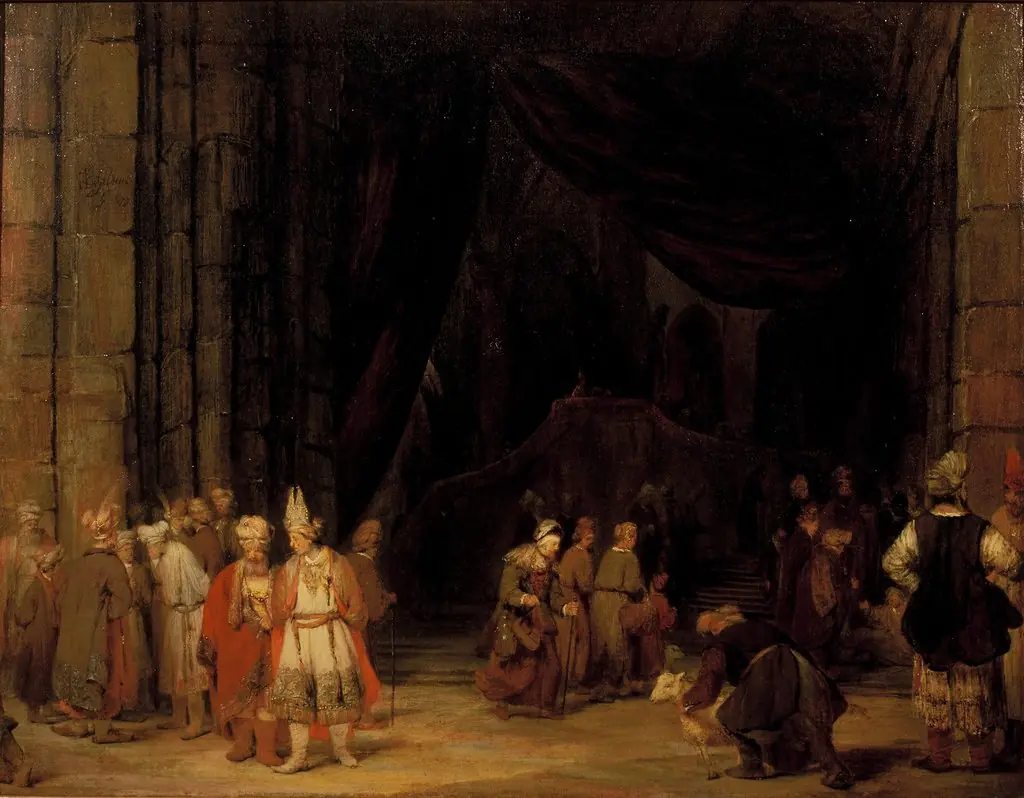
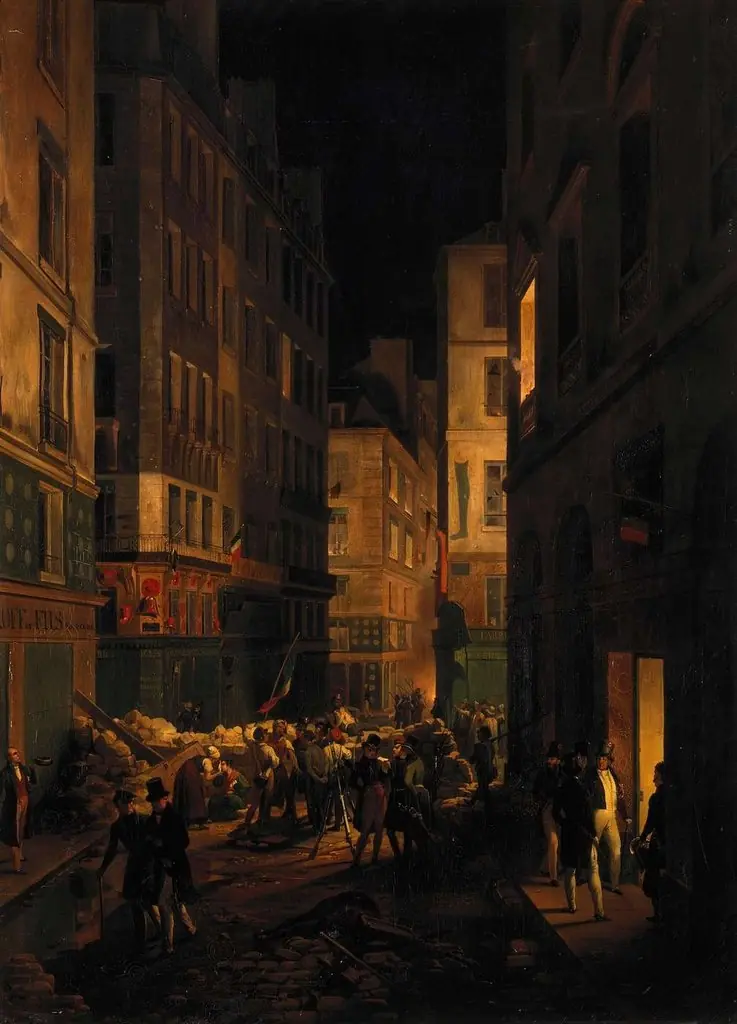
Motif from the Wittelsbachs' Square in Munich is an oil painting by Aleksander Gierymski. It dates from 1895 and is held in the collection of the National Museum in Kraków.
About this work
Overview
The painting belongs to the National Museum in Kraków’s collection and reflects his interest in capturing quiet, everyday moments under artificial light.
Painted in 1895 by Polish artist Aleksander Gierymski, this oil-on-canvas work captures a nocturnal view of Wittelsbacherplatz in Munich. Gierymski, active during the late 19th century, was known for his restrained realism and sensitivity to urban atmosphere. The painting belongs to the National Museum in Kraków’s collection and reflects his interest in capturing quiet, everyday moments under artificial light.
Subject & Meaning
The scene portrays an empty public square at night, devoid of activity, with only a solitary, indistinct figure near the foreground. The absence of crowds and the dim illumination suggest solitude and introspection. Rather than documenting a landmark, Gierymski emphasizes mood—transforming the square into a contemplative space where urban isolation becomes the central theme.
Technique & Style
Gierymski employed visible, deliberate brushwork to build texture and depth, avoiding smooth finishes typical of academic painting. He used muted tones and strong contrasts between warm lamplight and cool shadows to model form and space. The handling of light recalls chiaroscuro traditions, but applied with a modern sensitivity to atmospheric effect rather than dramatic narrative.
History & Provenance
Created during Gierymski’s time in Munich, the painting emerged from his broader practice of sketching urban environments abroad. It entered the National Museum in Kraków’s collection in the early 20th century, likely through acquisition or donation following his death in 1901. Its preservation reflects its significance as a rare example of Polish Realism engaged with Central European cityscapes.
Context
In the 1890s, Polish artists often traveled to German and French cities for training and inspiration. Gierymski’s focus on Munich’s nocturnal streets aligned with broader European trends in capturing modern life, yet his subdued palette and quiet compositions set him apart from the brighter hues of Impressionism. His work bridged Realism and emerging modern sensibilities without fully embracing either.
Legacy
Gierymski’s approach influenced later Polish painters seeking to depict urban solitude with psychological nuance. While not widely celebrated in his lifetime, his emphasis on light, texture, and mood contributed to the evolution of Polish modernism. This painting remains a quiet testament to his ability to convey emotional resonance through understated observation.
Own this work as a print
Artist & collection
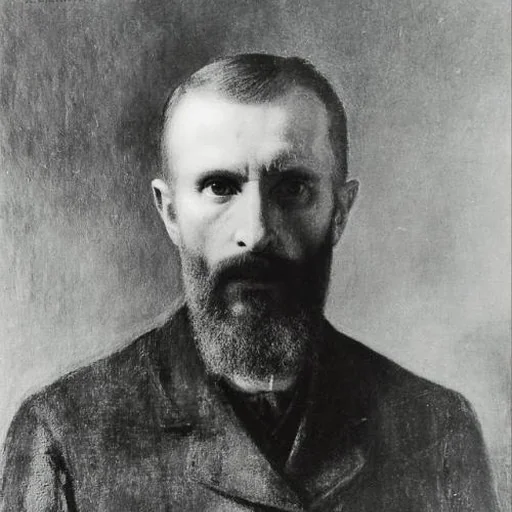
Artist
Ignacy Aleksander Gierymski (30 January 1850, Warsaw – d. 6–8 March 1901, Rome) was a Polish painter of the late 19th century, the younger brother of Maksymilian Gierymski. He was a representative of Realism as well as…