Artwork
Piazza del Popolo in Rome, sketch
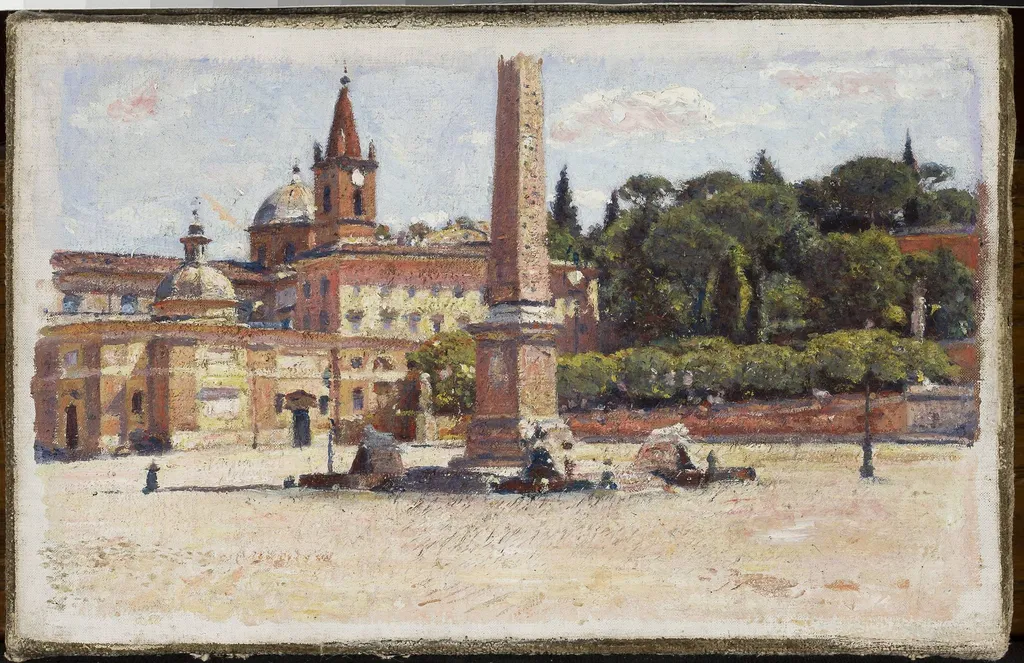
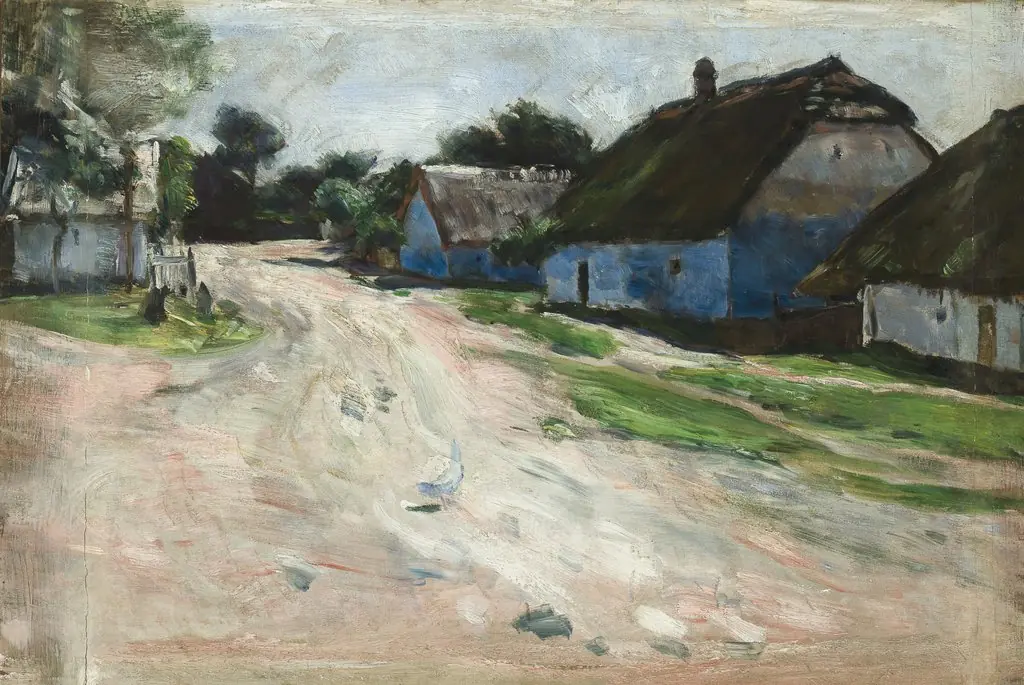
Piazza del Popolo in Rome, sketch is an unspecified painting by the Post-Impressionist artist Aleksander Gierymski. It dates from 1900 and is held in the collection of the National Museum in Warsaw.
About this work
Overview
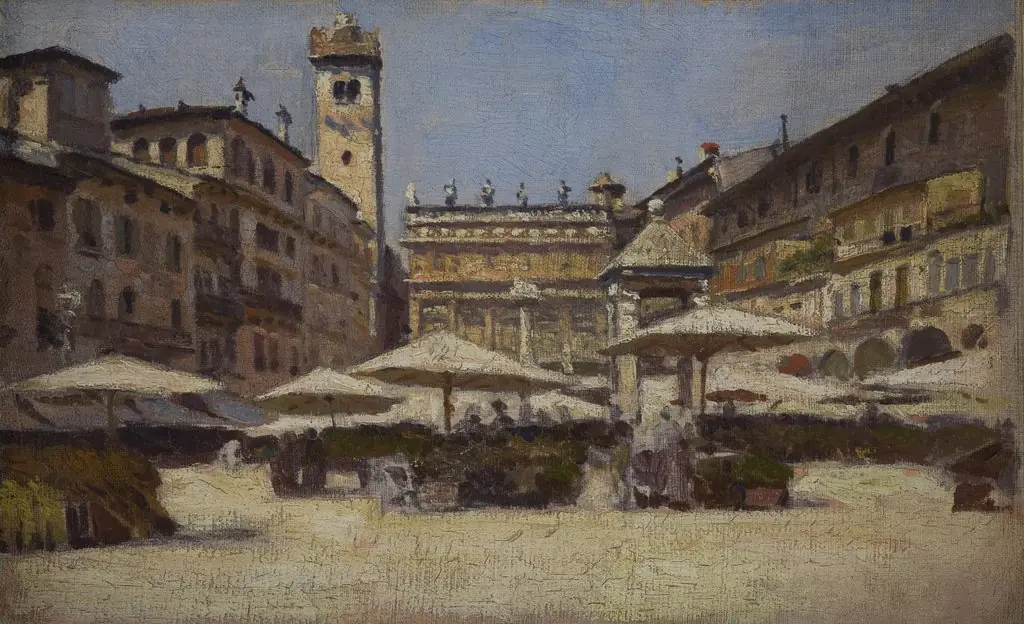
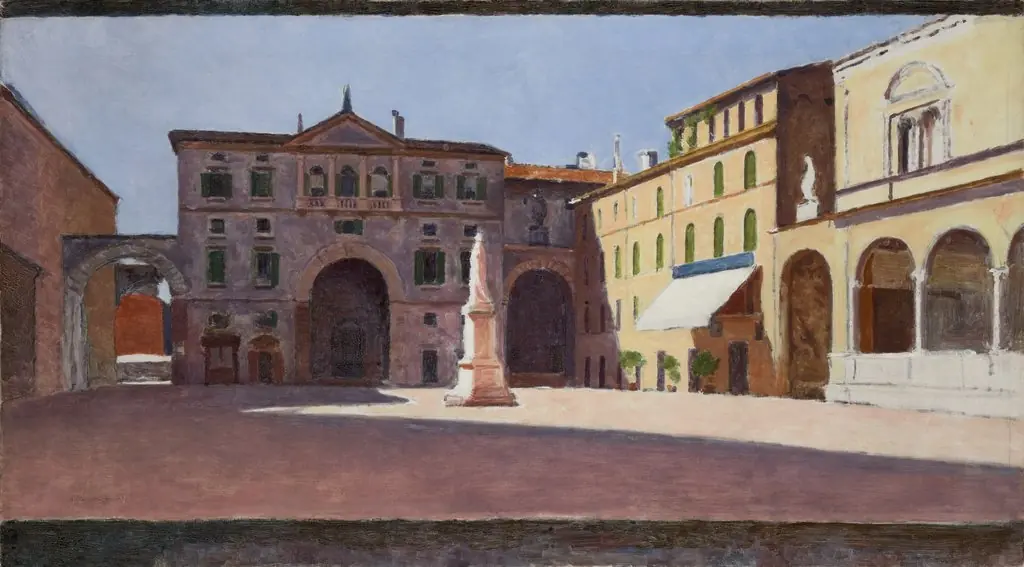
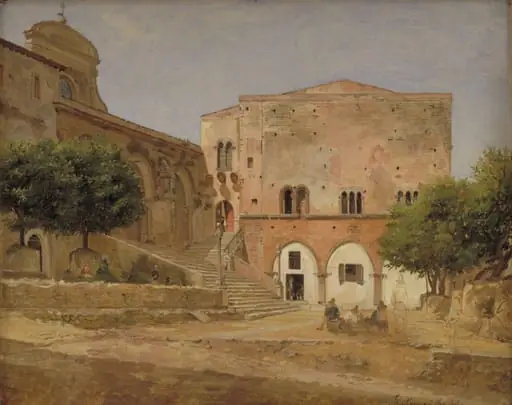
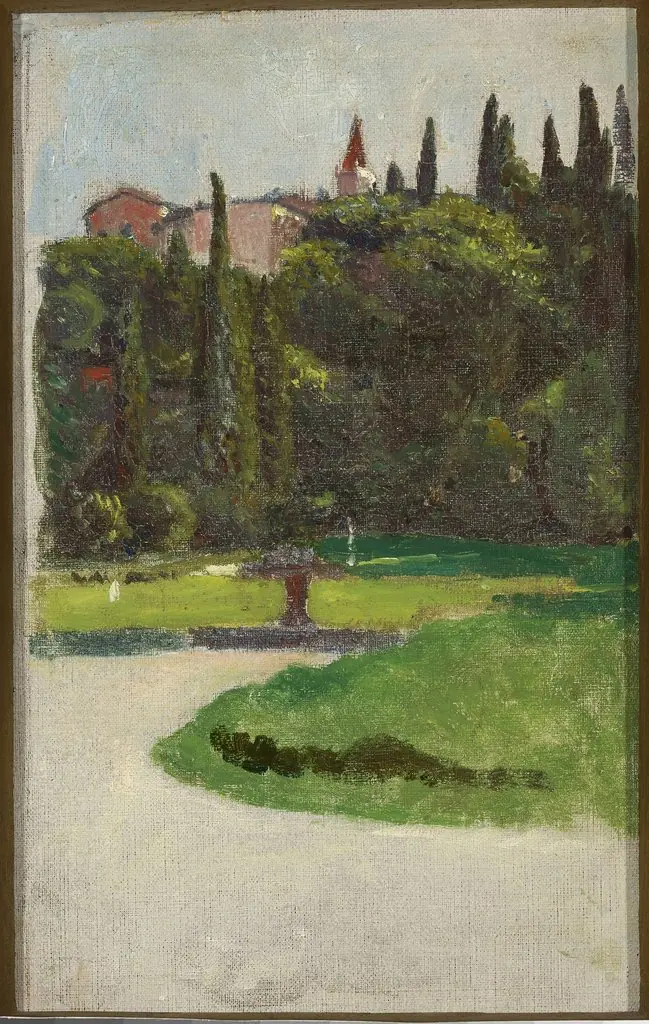
Aleksander Gierymski’s 1900 sketch of Rome’s Piazza del Popolo captures the broad expanse of the historic square, its central obelisk, and the surrounding architecture in a light‑filled composition. Executed during the artist’s stay in the Italian capital, the work now belongs to the National Museum in Warsaw.
Subject & Meaning
The drawing presents the open piazza framed by low‑rise buildings of brown and tan tones, with figures dispersed across the stone surface—some seated, others standing. A modest amount of foliage appears on the right, while the sky above is a pale blue mottled with a few clouds, suggesting a tranquil midday atmosphere.
Technique & Style
Gierymski employs a loose, post‑Impressionist brushwork that emphasizes color modulation over precise detail. Visible strokes convey the texture of the paving stones and the subtle shifts of light, while the palette remains restrained, dominated by earth tones and soft blues.
History & Provenance
Created while Gierymski was residing in Rome, the sketch entered the collection of Warsaw’s National Museum after his death in 1901, the year following its completion. The work reflects the artist’s late‑career interest in urban scenes beyond his native Poland.
Context
Gierymski, a Polish realist who later influenced early Polish Impressionism, produced the Piazza del Popolo sketch amid a broader European shift toward capturing fleeting impressions of light and atmosphere. The piece aligns with his known focus on cityscapes and landscapes, extending his visual inquiry to a celebrated Roman landmark.
Artist & collection
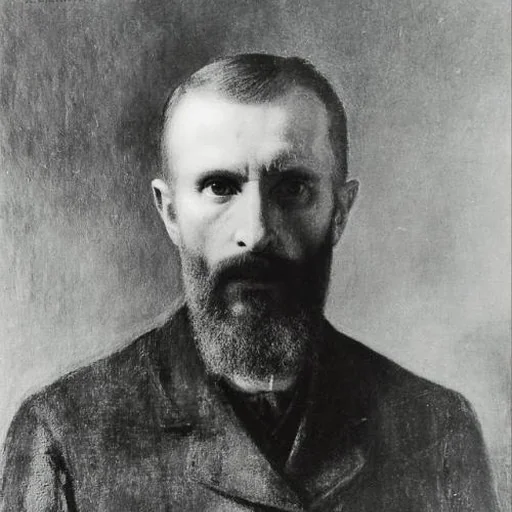
Artist
Ignacy Aleksander Gierymski (30 January 1850, Warsaw – d. 6–8 March 1901, Rome) was a Polish painter of the late 19th century, the younger brother of Maksymilian Gierymski. He was a representative of Realism as well as…