Artwork
Piazza di Dante in Verona
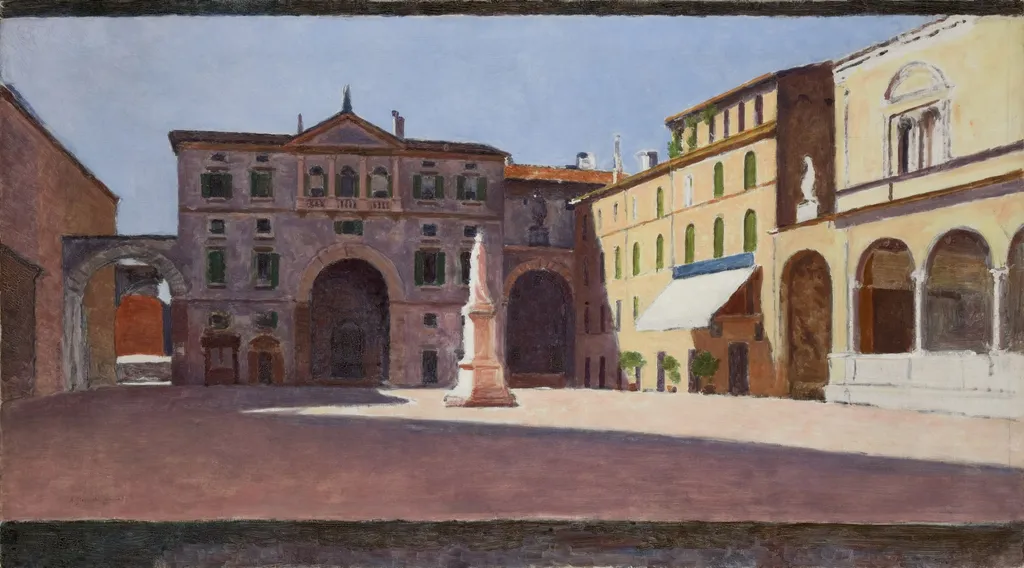
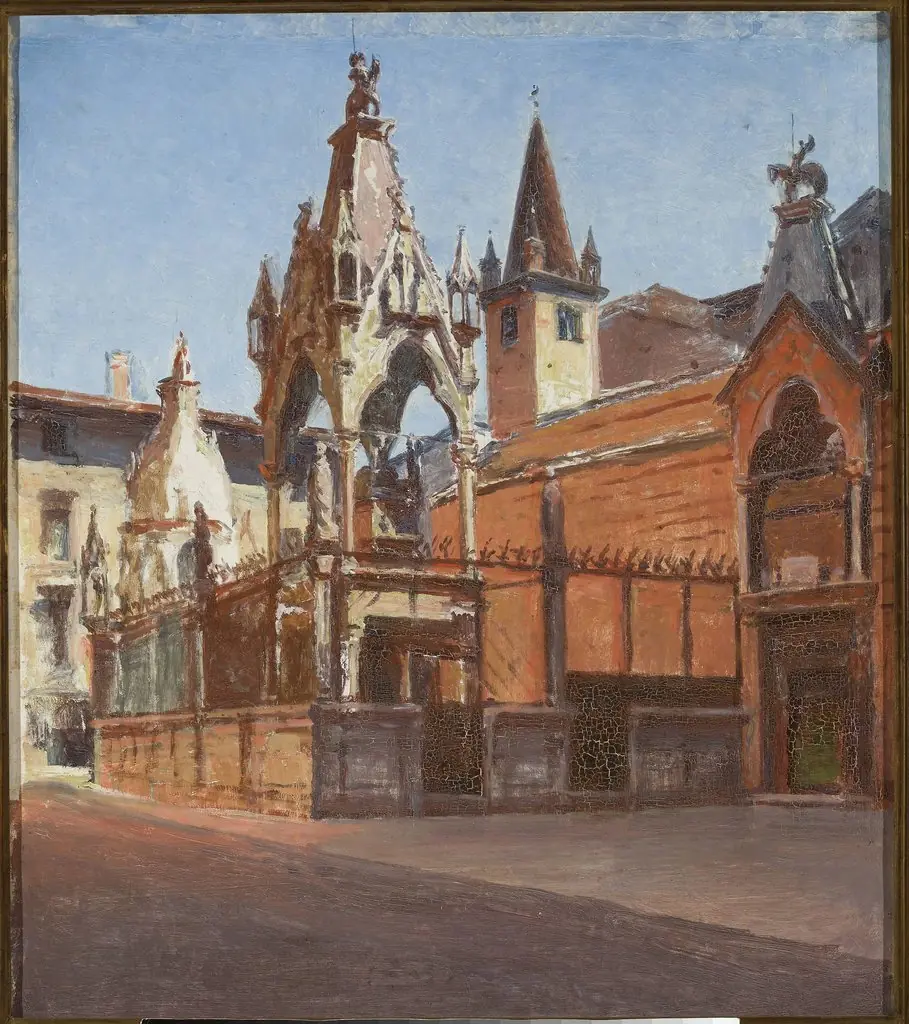
Piazza di Dante in Verona is an oil painting by Aleksander Gierymski. It dates from 1900 and is held in the collection of the National Museum in Kraków.
About this work
Overview
Painted in 1900, *Piazza di Dante in Verona* is an oil on canvas work by Polish artist Aleksander Gierymski.
Painted in 1900, *Piazza di Dante in Verona* is an oil on canvas work by Polish artist Aleksander Gierymski. It captures an empty public square in Verona, Italy, characterized by quiet stillness and muted tones. The painting belongs to the collection of the National Museum in Kraków and reflects Gierymski’s late-period focus on urban landscapes, blending observational precision with atmospheric nuance.
Subject & Meaning
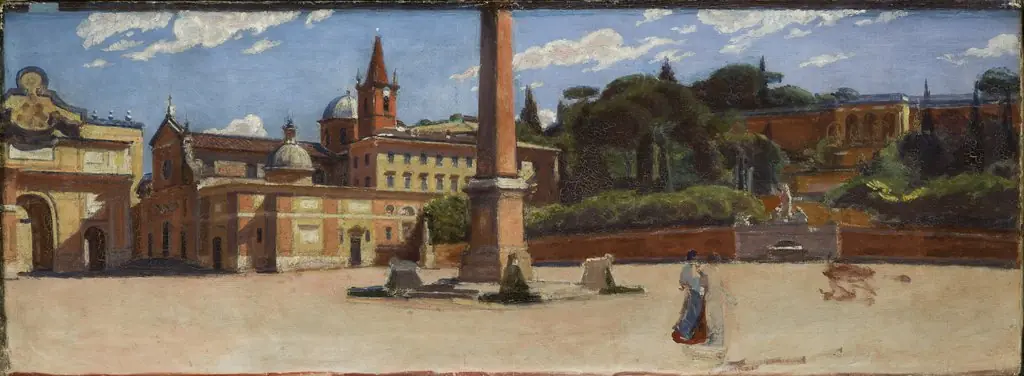
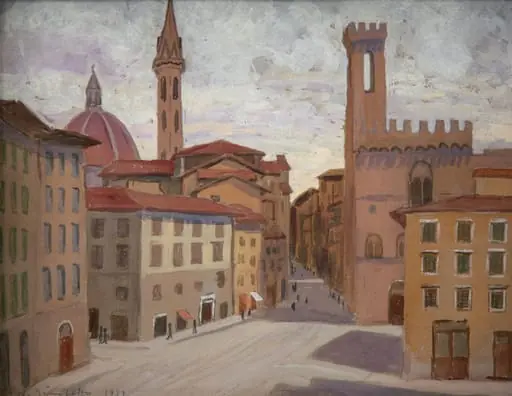
The scene portrays the Piazza dei Signori, centered on a solitary statue and framed by historic arcaded buildings. Absent of human figures, the composition evokes solitude and temporal pause. Gierymski’s choice to depict the square in emptiness suggests a contemplative mood, perhaps reflecting on the weight of history or the quiet rhythm of urban life beyond public spectacle.
Technique & Style
Gierymski employed oil paint to render subtle gradations of light across weathered stone facades. Warm browns and pale yellows dominate the architecture, while the pale blue sky provides a restrained contrast. His handling of shadow and tone creates spatial depth without overt brushwork, favoring a quiet realism that anticipates Impressionist concerns with atmosphere over narrative detail.
History & Provenance
Created during Gierymski’s final years, the painting was acquired by the National Museum in Kraków shortly after his death in 1901. It remained within Polish institutional collections, with no documented public exhibitions until the mid-20th century. Its provenance is unbroken, reflecting its status as a significant, if understudied, work from the artist’s late oeuvre.
Context
Gierymski, a key figure in Polish Realism, traveled extensively in southern Europe during the 1890s, producing sketches and paintings of Italian cities. *Piazza di Dante* emerged from this period of observation, aligning with broader European trends in topographical painting. His work diverged from romanticized views, instead emphasizing unembellished urban environments and natural light.
Legacy
Though less known than his brother Maksymilian, Aleksander Gierymski’s quiet urban scenes influenced later Polish landscape painters. *Piazza di Dante in Verona* exemplifies his restrained aesthetic—neither dramatic nor sentimental—offering a model of observational integrity that resonates within the history of Central European realism.
Artist & collection
Artist
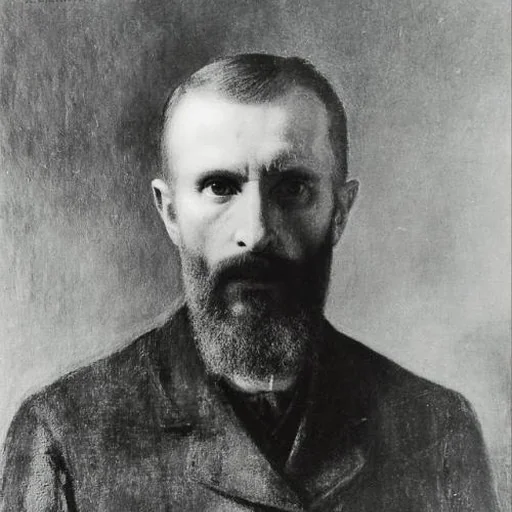
Ignacy Aleksander Gierymski (30 January 1850, Warsaw – d. 6–8 March 1901, Rome) was a Polish painter of the late 19th century, the younger brother of Maksymilian Gierymski. He was a representative of Realism as well as…