Artwork
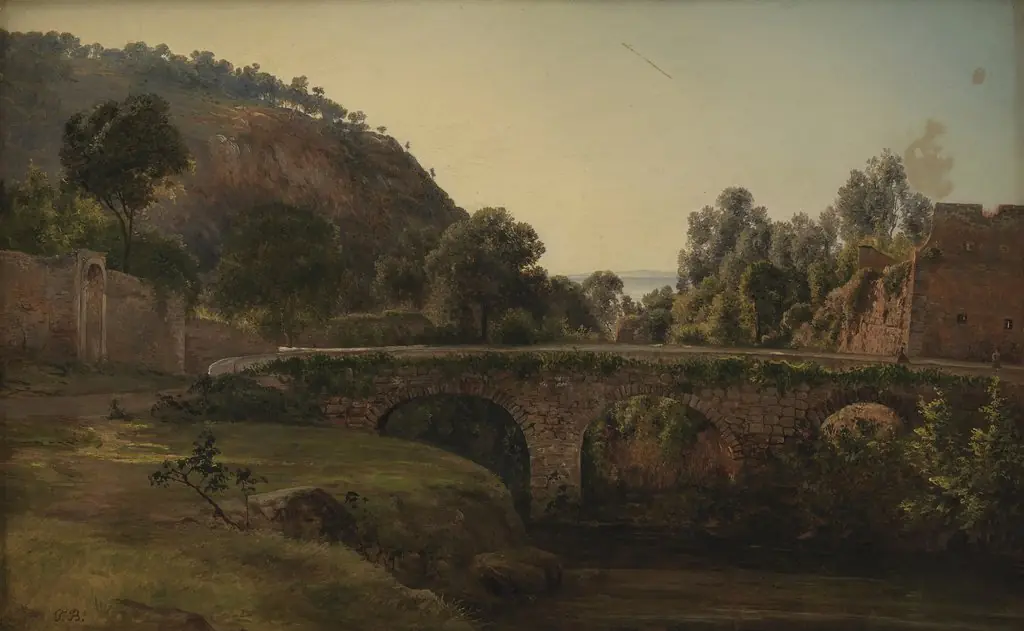
Bridge in Czerna
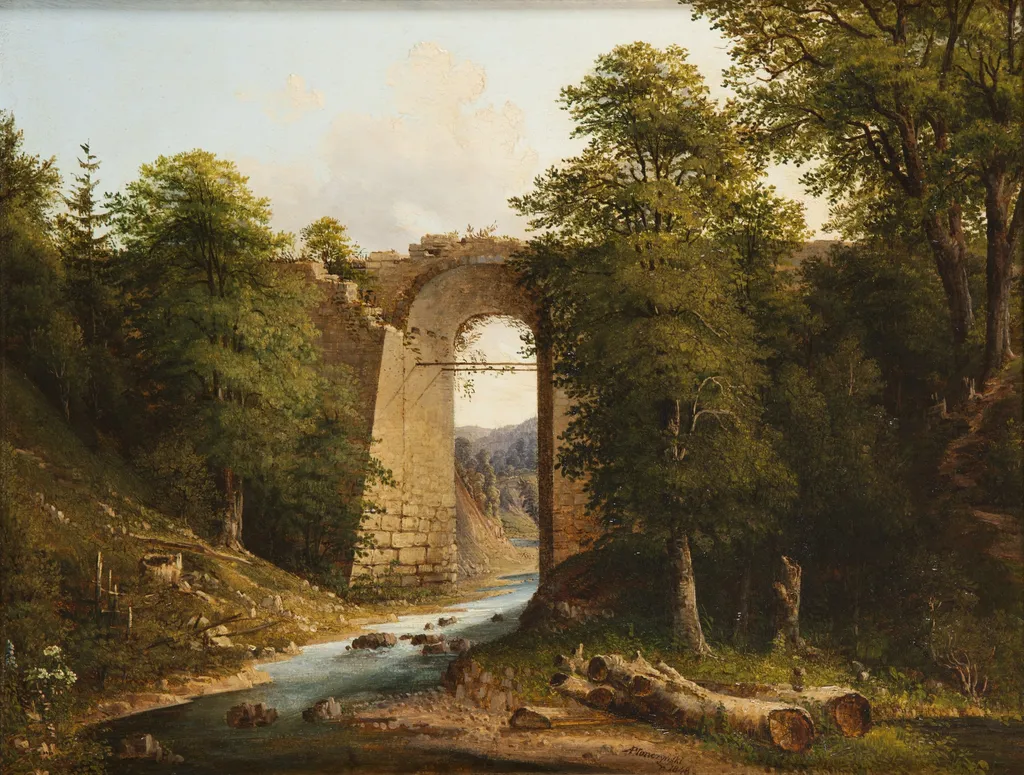
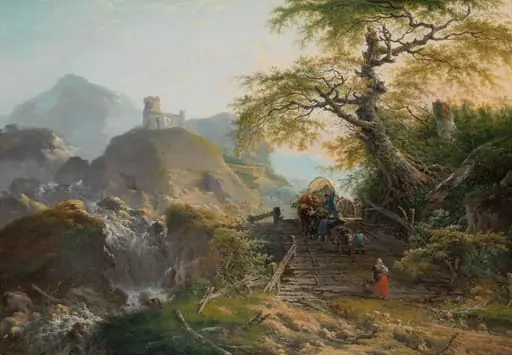
Bridge in Czerna is an unspecified painting by the Realist artist Aleksander Płonczyński. It dates from 1848 and is held in the collection of the National Museum in Kraków.
About this work
Overview
Created in 1848, this oil painting by Aleksander Płonczyński depicts a tranquil rural scene centered on an arched stone bridge spanning a modest stream. The composition is framed by trees and scattered logs, while gentle hills rise in the distance beneath a lightly clouded sky. Soft, muted tones dominate, lending the work a calm, contemplative mood.
Subject & Meaning
The bridge serves as the focal point, symbolising a passage through a peaceful landscape. Surrounding foliage and the quiet water suggest a harmonious relationship between human construction and nature. The placement of fallen logs and the unhurried flow of the stream reinforce a sense of timeless rural life, inviting viewers to pause and reflect on the serenity of the countryside.
Technique & Style
Płonczyński employs a restrained palette of greens, browns, and blues, layering thin glazes to achieve atmospheric depth. Subtle gradations of light across the sky and foliage create a gentle chiaroscuro effect, modeling forms without harsh contrast. The brushwork is delicate, especially in the rendering of foliage and water, contributing to the overall sense of stillness.
History & Provenance
The work entered the collection of the National Museum in Kraków, where it remains on display. Its acquisition reflects the museum's commitment to preserving 19th‑century Polish landscape painting, and it stands as a representative example of Płonczyński's output during the mid‑1800s.
Own this work as a print
Artist & collection
Artist
Polish painter of the mid-1800s, Płonczyński captured scenes of everyday life and historic sites in oil.