Artwork
Berglandschap bij Düsseldorf
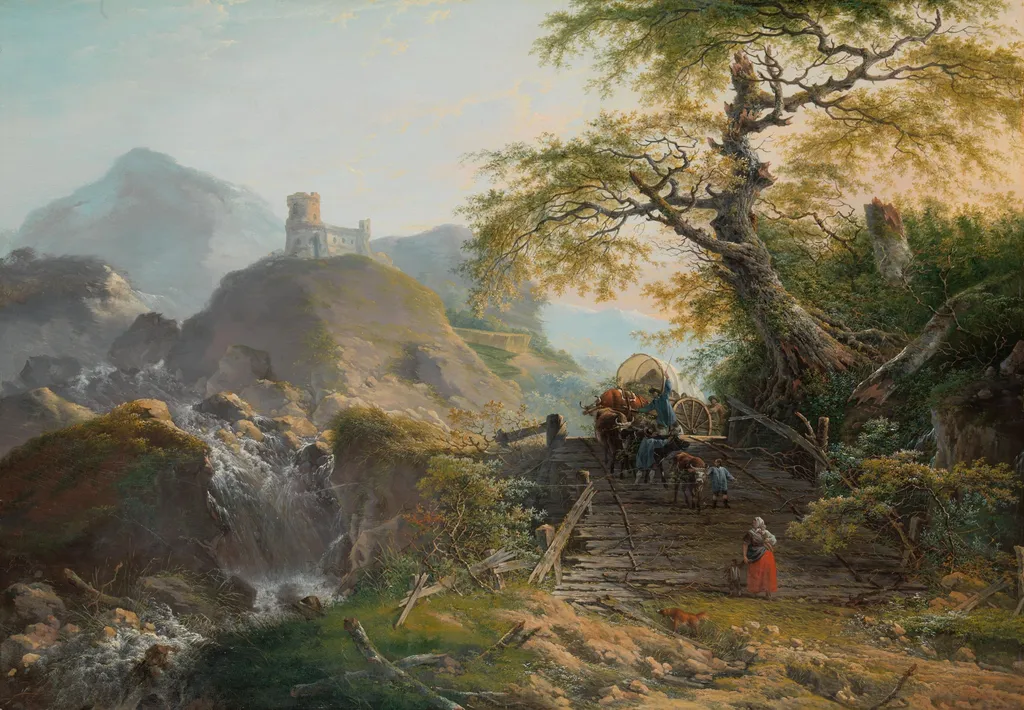
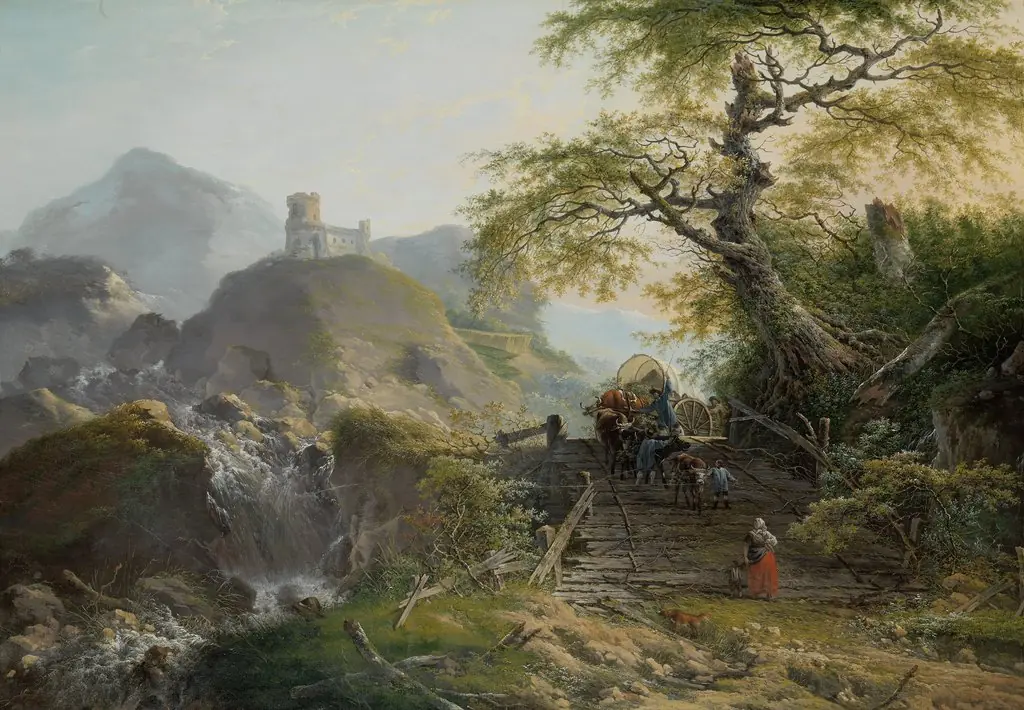
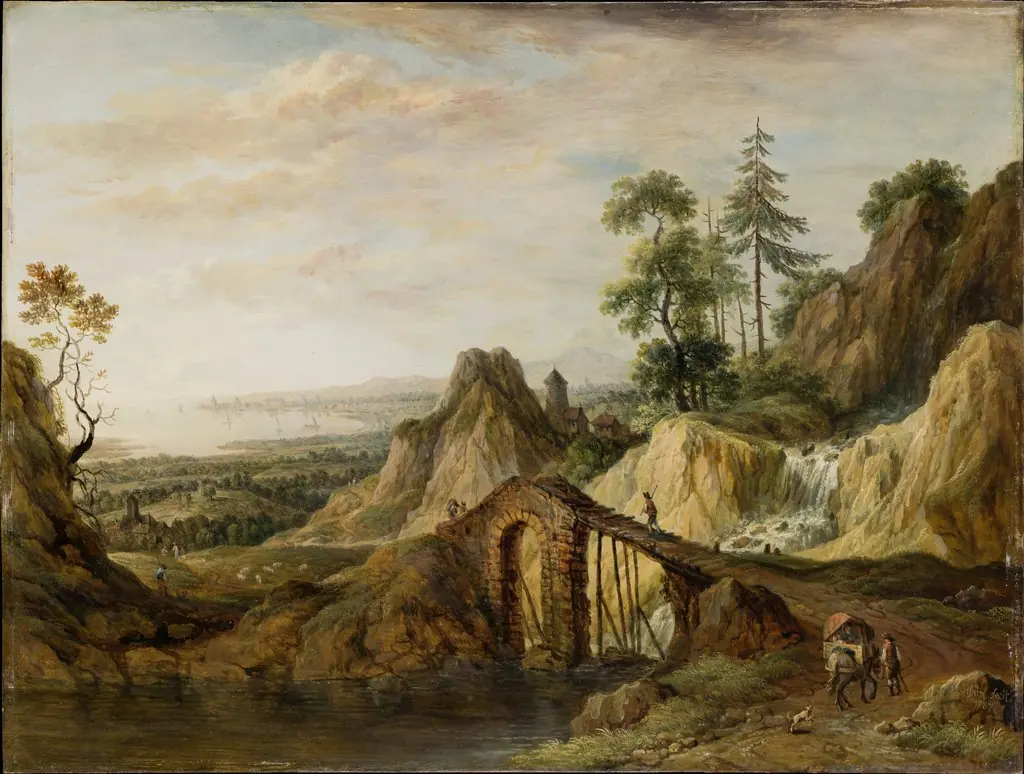
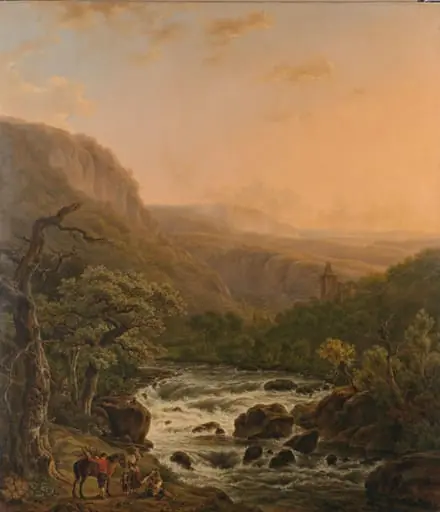
Berglandschap bij Düsseldorf is an unspecified painting by the Biedermeier artist Gerard van Nijmegen. It dates from 1790 and is held in the collection of the Rijksmuseum. Berglandschap bij Düsseldorf is a painting depicting a rugged landscape scene.
About this work
This painting was made before the Romantic era really took off, but it already feels like a mood piece—nature big, humans small.
You see a wild river valley: jagged rocks, a crumbling tower, and a wooden bridge where two men push an ox-cart.
This painting was made before the Romantic era really took off, but it already feels like a mood piece—nature big, humans small. The artist wrote in his journal about seeing this exact spot while traveling the Rhine in 1788.
To see how earlier artists painted similar scenes, look up the Rijksmuseum.
Overview
Berglandschap bij Düsseldorf is a painting depicting a rugged landscape scene.
Subject & Meaning
The painting features a wild river valley with a crumbling tower, jagged rocks, and a wooden bridge where two men are pushing an ox-cart, conveying a sense of nature's grandeur and human insignificance.
Technique & Style
The work anticipates elements of Romanticism, while also drawing inspiration from 17th-century Dutch landscape painters, such as Jacob van Ruisdael.
History & Provenance
The artist, Van Nijmegen, recorded the scene that inspired this painting in his journal during a 1788 journey along the Rhine.
Own this work as a print
Artist & collection