Artwork
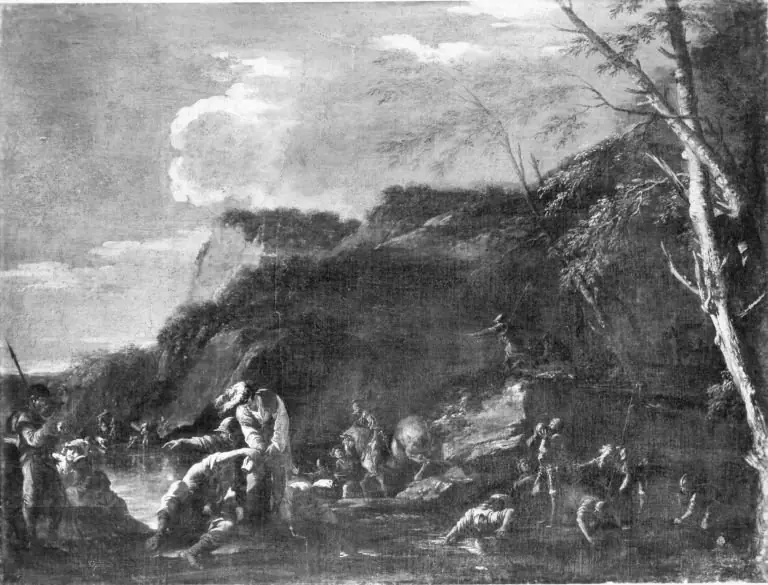
Arcadian Landscape with Figures
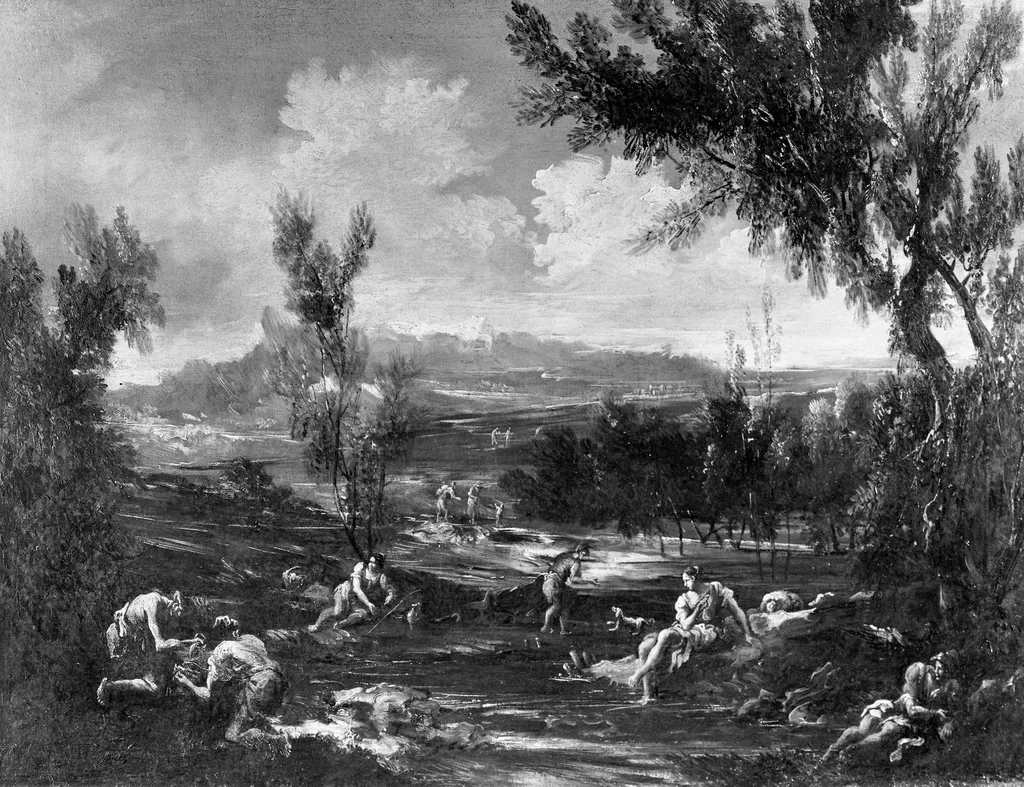
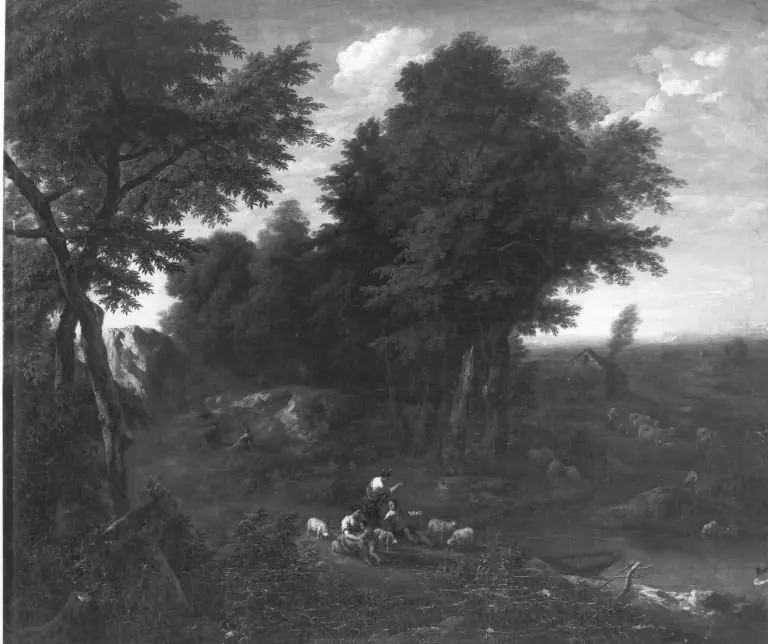
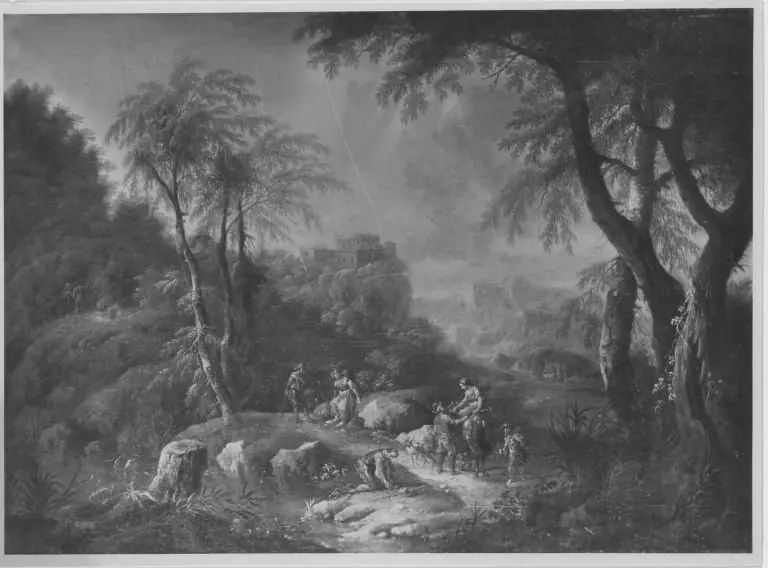
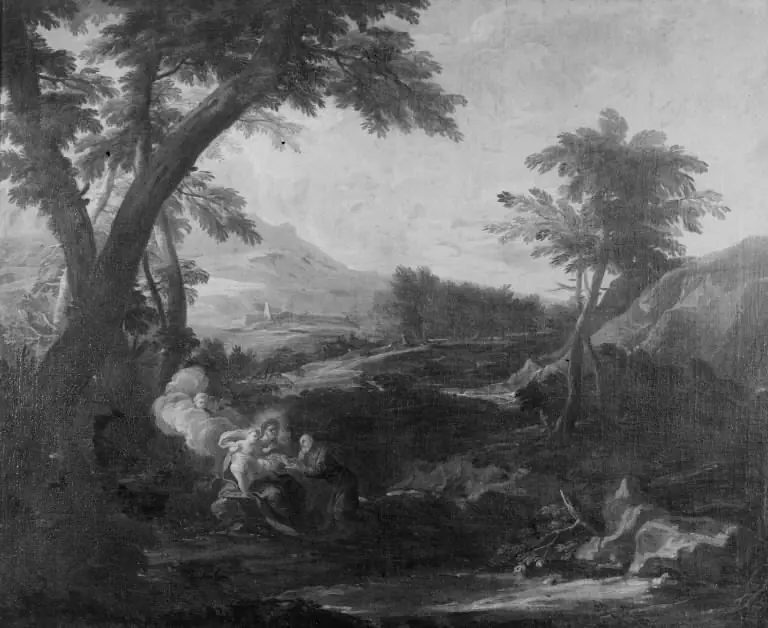
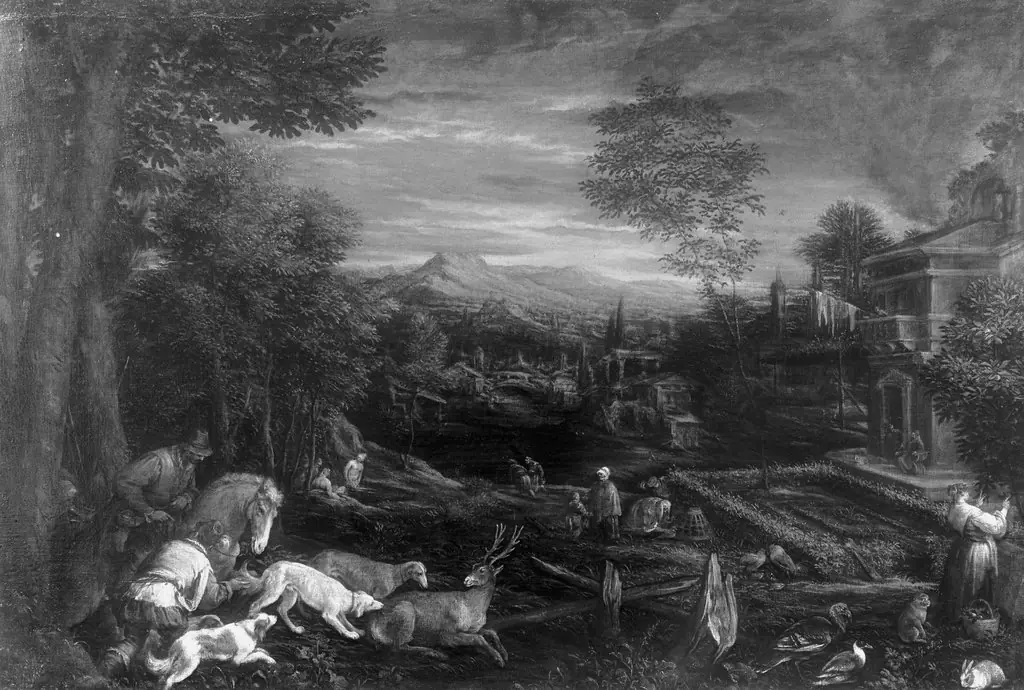
Arcadian Landscape with Figures is an oil painting by the Early Baroque Italian artist Alessandro Magnasco. It dates from 1700 and is held in the collection of the Art Institute of Chicago.
About this work
Overview
Painted in 1700 by Alessandro Magnasco, this oil on canvas work presents a dreamlike pastoral scene that diverges from classical ideals of harmony.
Painted in 1700 by Alessandro Magnasco, this oil on canvas work presents a dreamlike pastoral scene that diverges from classical ideals of harmony. Magnasco, active in Milan and Genoa, employed a distinctive late-Baroque style marked by rapid, textured brushwork and an emphasis on atmospheric mood over narrative clarity. The composition resists orderly structure, instead evoking a sense of quiet, enigmatic stillness.
Subject & Meaning
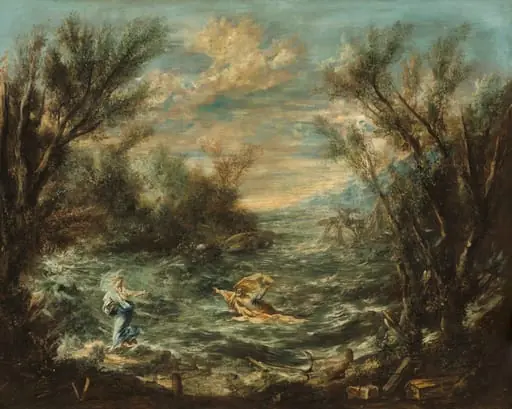
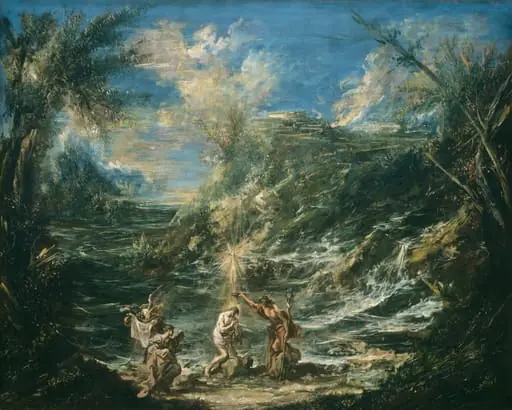
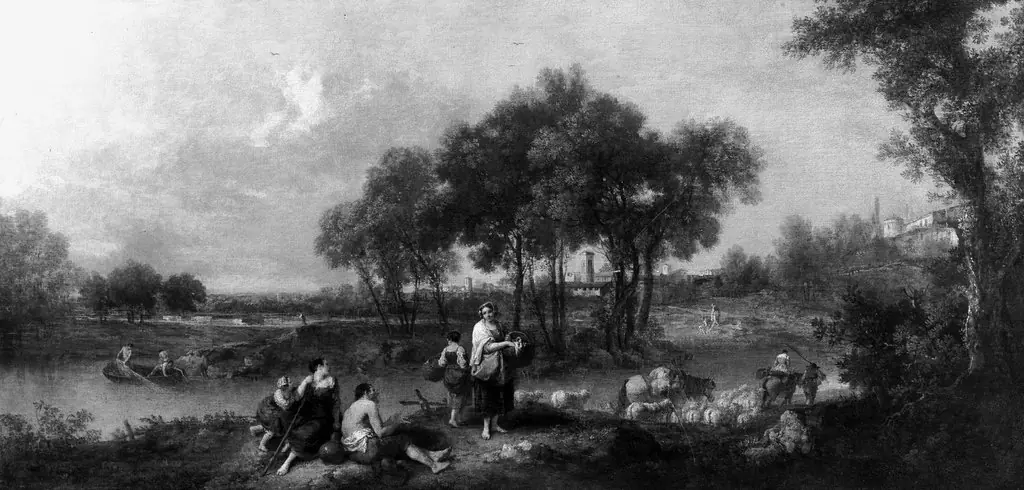
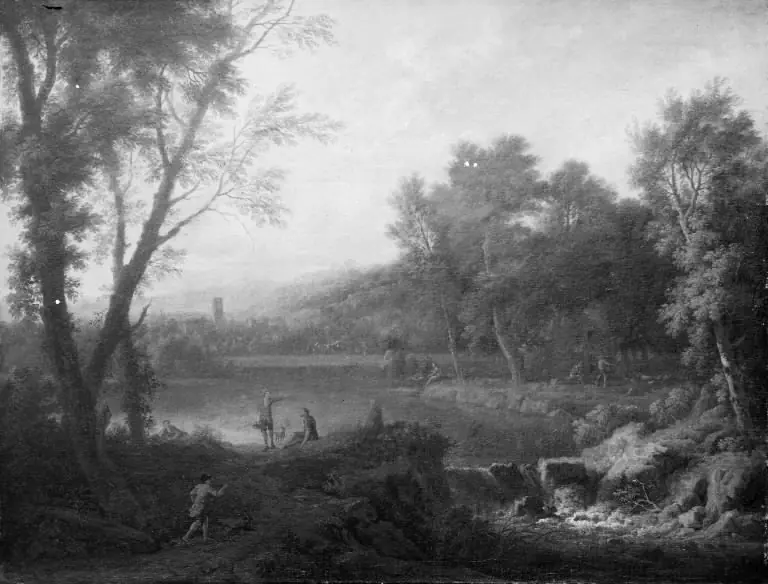
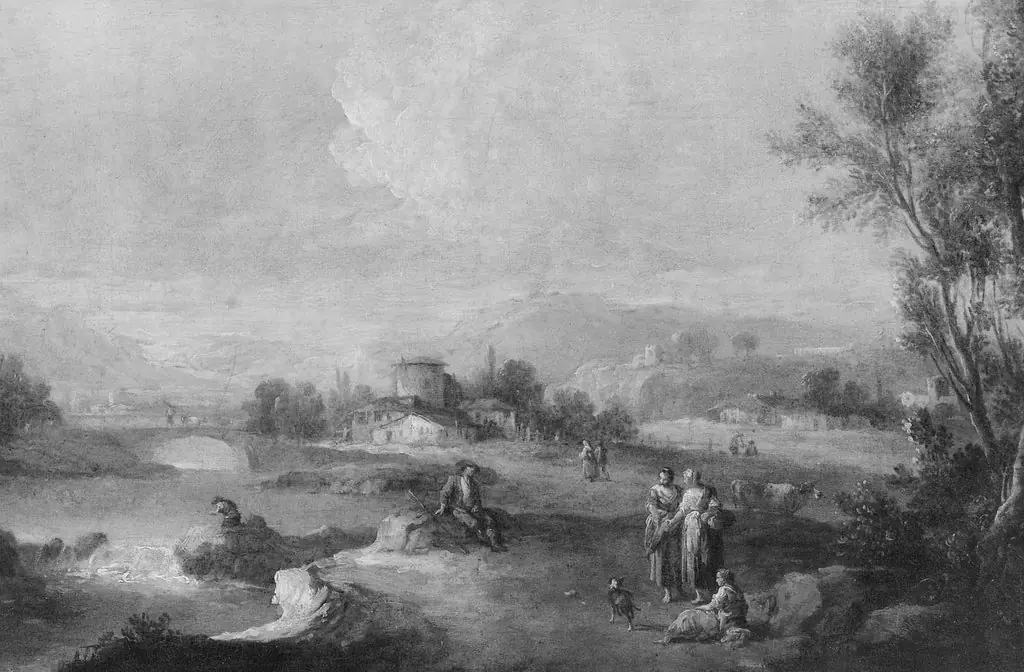
Figures in the painting gather near a winding river, their postures suggesting solitude or introspection rather than pastoral joy. Some sit hunched, others recline or move indistinctly along the bank, their actions ambiguous. The scene evokes an idealized countryside, yet its tone is somber and detached, hinting at isolation or the fragility of human presence within nature’s vastness.
Technique & Style
Magnasco used thick, energetic brushstrokes to build form through contrast rather than detail. Dark, shadowed areas dominate, pierced by sharp highlights that define figures and foliage with minimal precision. This use of chiaroscuro creates dramatic tension, while the rough texture and blurred edges dissolve boundaries between land, water, and sky, enhancing the painting’s elusive, almost hallucinatory quality.
History & Provenance
The painting emerged during Magnasco’s mature period, when he was refining his signature approach to landscape and figure composition. Though its early ownership is undocumented, it reflects the artist’s consistent interest in unconventional scenes, distinct from the grand narratives favored by contemporaries. It remained within private collections in northern Italy before entering public hands.
Context
In early 18th-century Italy, religious and mythological themes dominated painting. Magnasco’s focus on ambiguous, solitary figures in untamed landscapes set him apart. His work resonated with a growing interest in emotional atmosphere over doctrinal clarity, aligning with broader shifts in sensibility that would later influence Romanticism, though his style remained uniquely personal and idiosyncratic.
Legacy
Magnasco’s unconventional technique and moody compositions were largely overlooked in his lifetime but gained renewed attention in the 19th and 20th centuries. His emphasis on texture, light, and psychological ambiguity prefigured later movements that valued expressive gesture over idealized form. Today, his work is studied as a bridge between Baroque tradition and emerging modern sensibilities.
Own this work as a print
Artist & collection
Artist
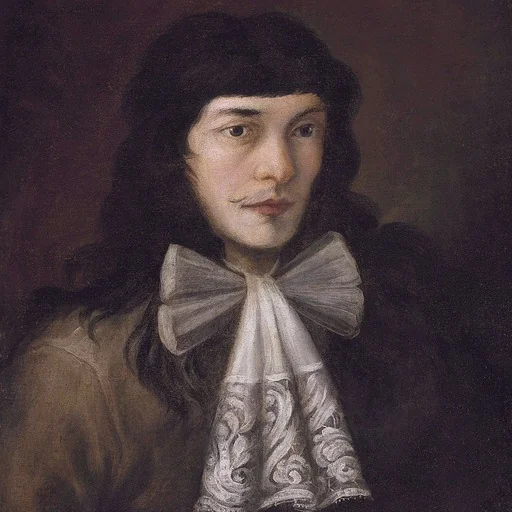
Alessandro Magnasco (February 4, 1667 – March 12, 1749), also known as il Lissandrino, was an Italian late-Baroque painter active mostly in Milan and Genoa.