Artwork
Odysseus entdeckt den verkleideten Achill
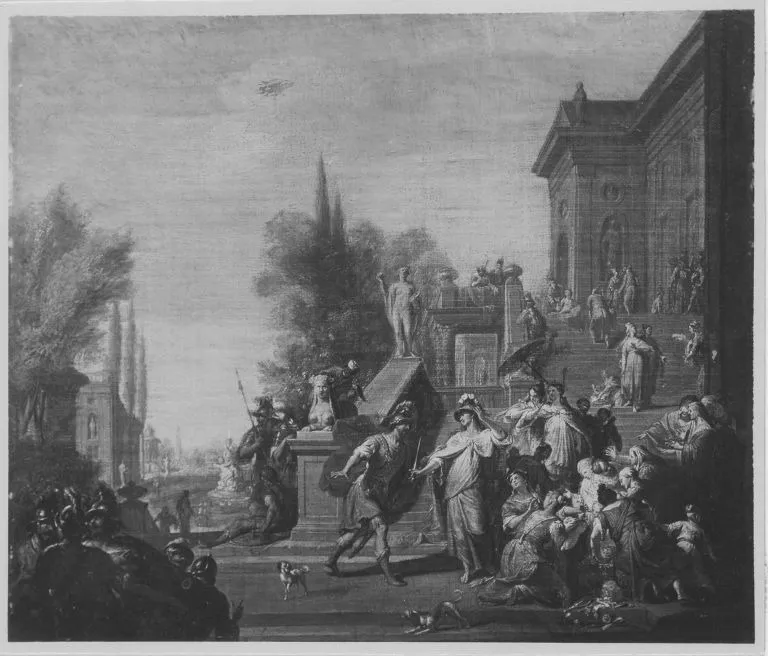
Odysseus entdeckt den verkleideten Achill is an unspecified painting by Alessandro Salucci. It dates from 1700 and is held in the collection of the Bavarian State Painting Collections.
About this work
Overview
This canvas by Alessandro Salucci, painted around 1700, illustrates the mythological episode in which Odysseus discovers Achilles concealed in women's clothing. Salucci, an Italian artist active in the early to mid-seventeenth century, built his reputation primarily on cityscapes and architectural capricci. The work is now held in the collection of the Alte Pinakothek.
Subject & Meaning
The scene derives from Greek mythology: to shield her son from the Trojan War, Thetis disguised Achilles among the daughters of King Lycomedes on Skyros.
The scene derives from Greek mythology: to shield her son from the Trojan War, Thetis disguised Achilles among the daughters of King Lycomedes on Skyros. Odysseus, knowing the young man was essential to the Greek campaign, devised a ruse to expose him. Salucci's treatment places this moment of revelation at the center of a larger gathering, with figures arranged around an architectural setting that frames the narrative tension between concealment and discovery.
Technique & Style
The composition presents a sizable assembly of figures distributed around a building, some standing, others seated or reclining. The artist employs atmospheric perspective: foreground figures receive careful modeling and detail, while background figures diminish in scale and definition. A varied palette generates depth and contrast across the pictorial space. Trees and a clouded sky form the backdrop, integrating the mythological event within a natural setting that recalls the conventions of architectural fantasy prevalent in Salucci's broader practice.
History & Provenance
The painting entered the holdings of the Alte Pinakothek, where it remains today. Documentation of its earlier provenance appears limited in the available record.
Artist & collection
Artist
Alessandro Salucci (1590 – c. 1655–60) was an Italian painter who played an important role in the development of the genre of cityscapes (vedute) of Rome. He created capricci, i.e. imaginary architectural perspectives…

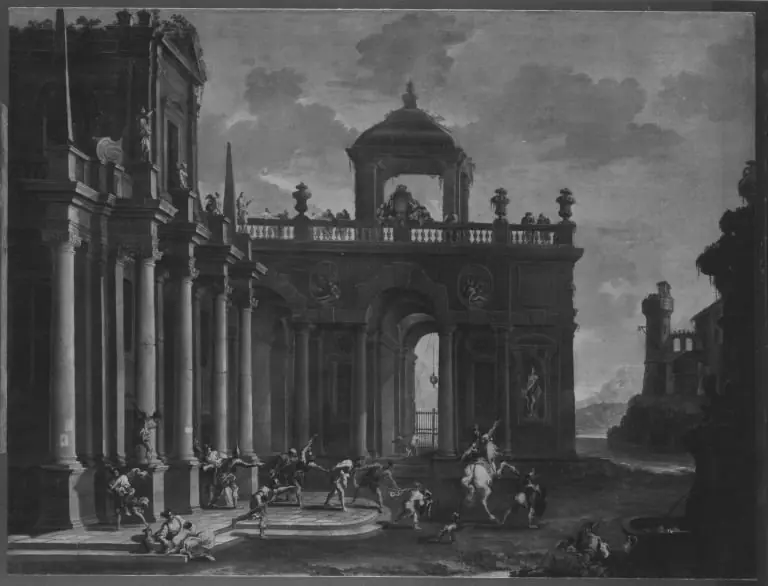 Architekturbild mit der Gefangennahme Simsons
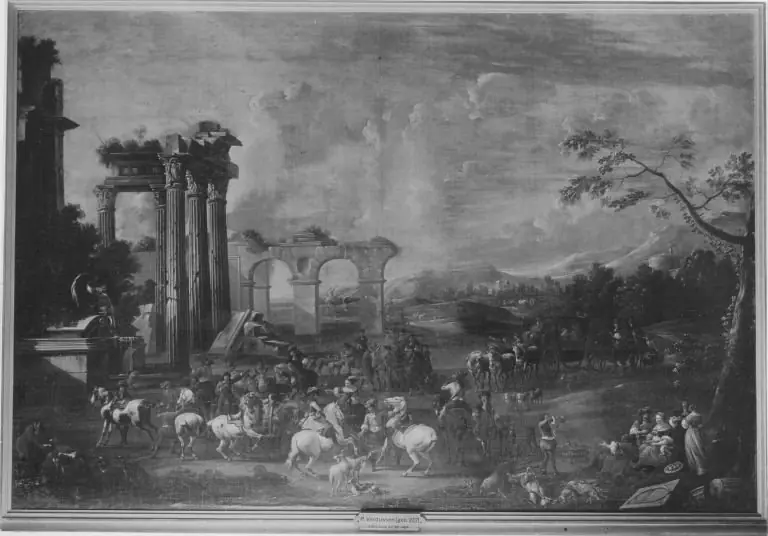 Erfrischung auf der Jagd
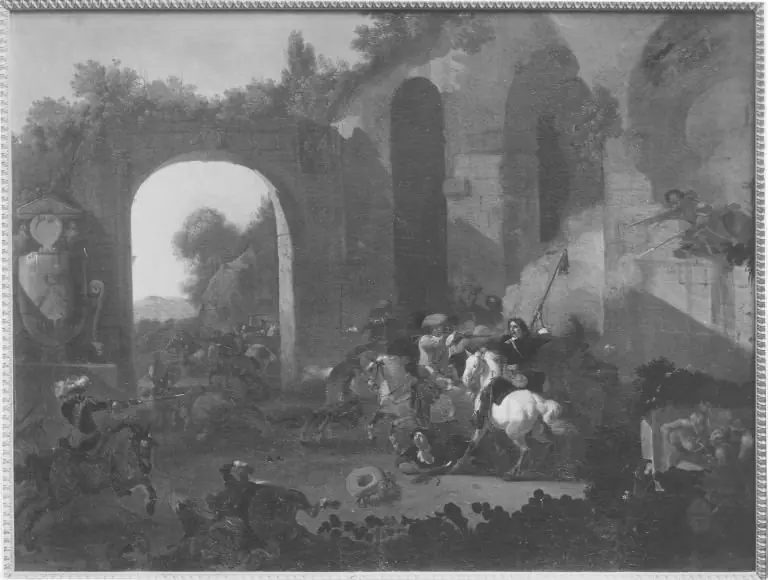 Reitergefecht
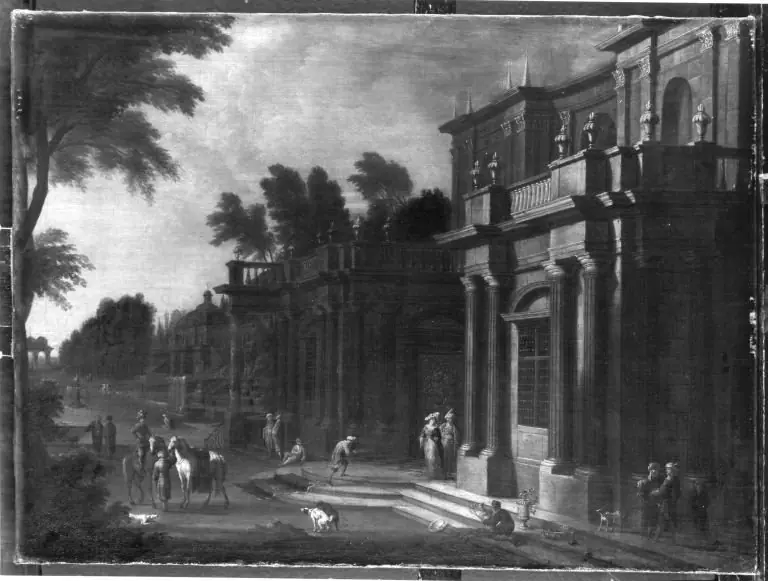 Architectural image
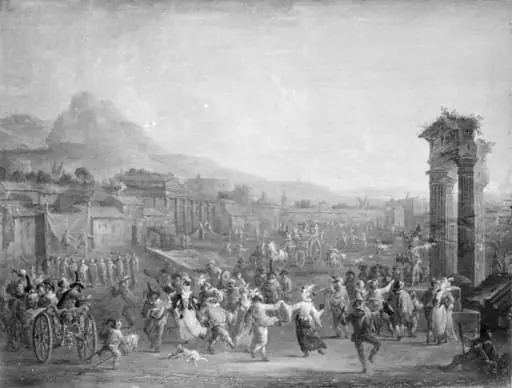 Italian Landscape with Carnival and Comedians
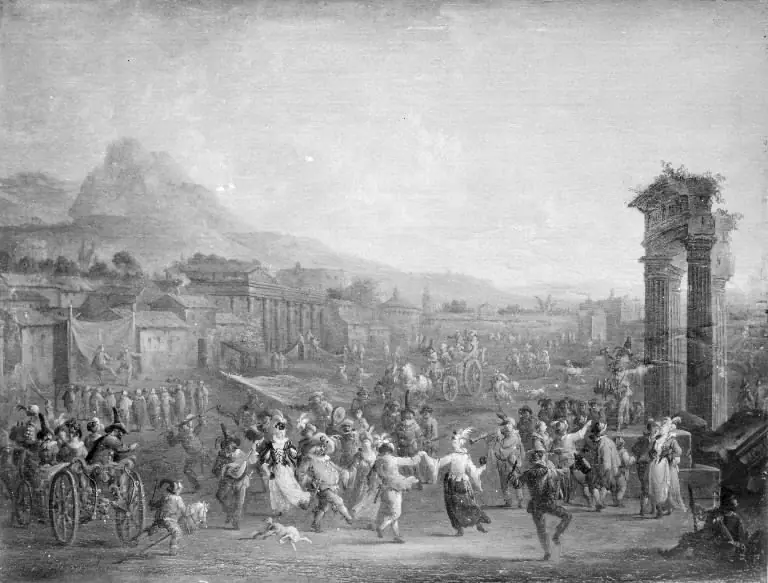 Italian Landscape with Carnival and Comedians
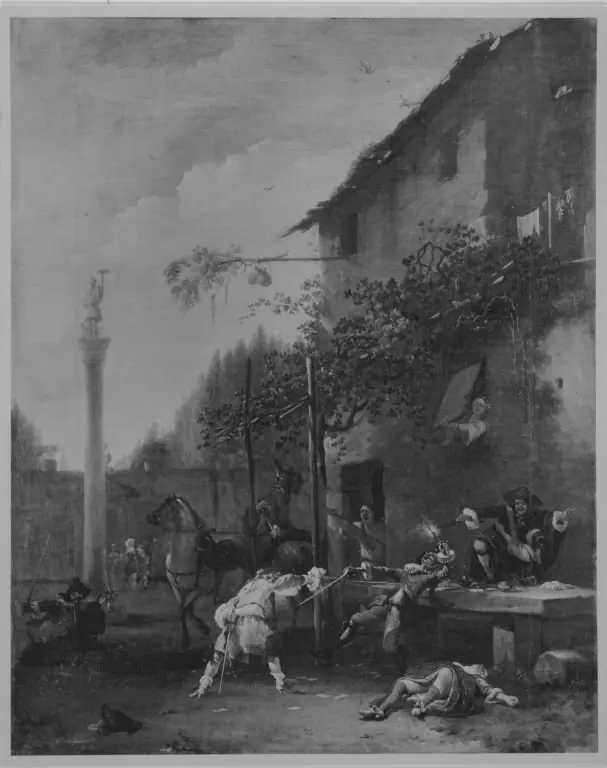 Blutiger Streit (Art des)
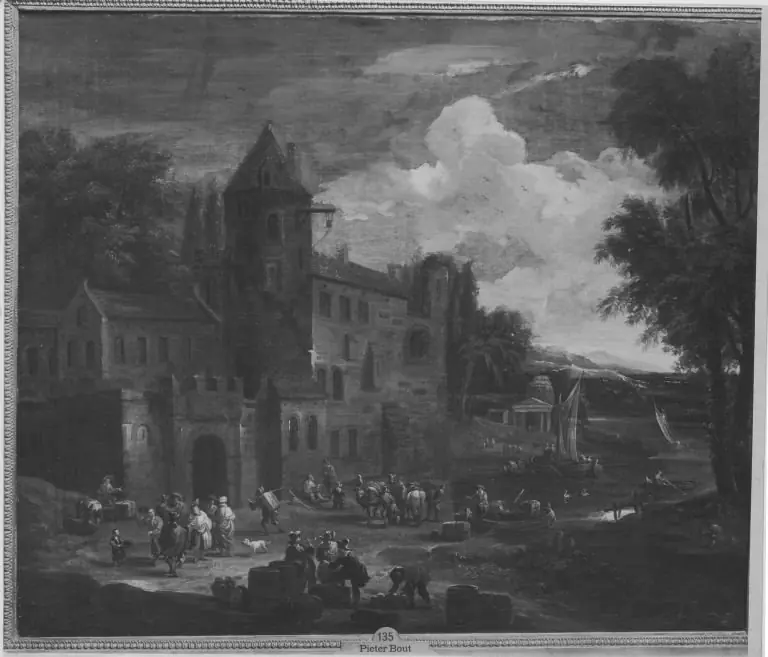 Landschaft italienischen Charakters
 Salomon receives the Queen of Sheba
 Italienische Landschaft
 Travelers at a stopping place with ruins in the background
 Fastnachtsbelustigung