Artwork
Christus und die Ehebrecherin
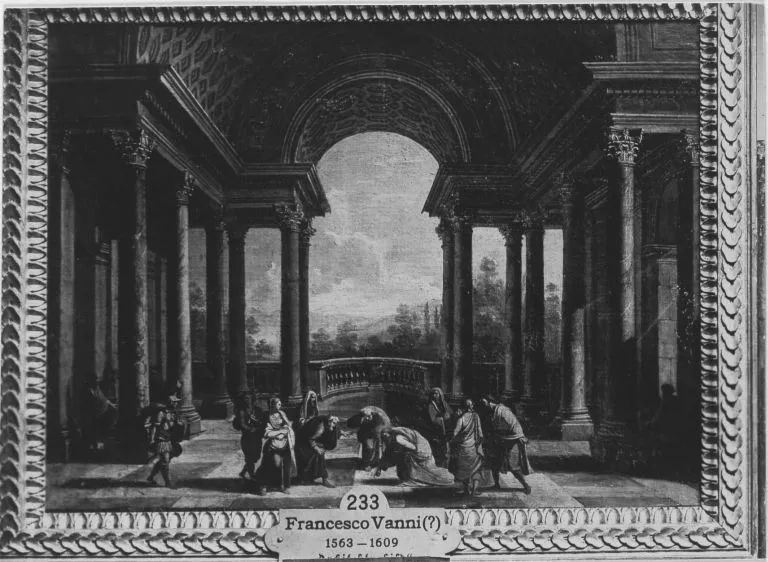
Christus und die Ehebrecherin is an unspecified painting by Alessandro Salucci. It dates from 1632 and is held in the collection of the Bavarian State Painting Collections.
About this work
Overview
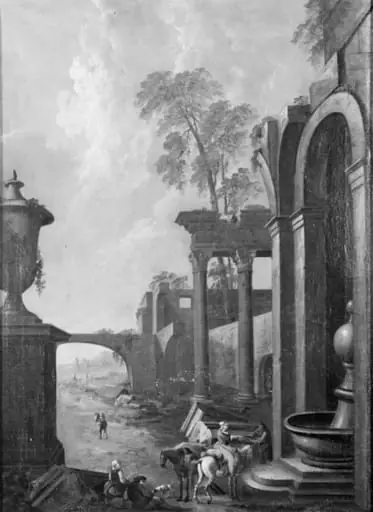
Created around 1632, *Christus und die Ehebrecherin* depicts a biblical episode set within an expansive, classically inspired architectural space. The composition balances a central group of clothed figures with a sweeping backdrop of columns, arches, and a distant bridge, all rendered under a cloudy sky.
Subject & Meaning
The work illustrates the encounter between Jesus and the woman accused of adultery, a narrative that emphasizes themes of mercy and judgment. The gathered onlookers, dressed in antiquated attire, frame the central figure on the ground, directing attention to the moral focal point of the scene.
Technique & Style
The painting merges precise architectural rendering with a more fluid treatment of the human forms, suggesting that the structural elements were executed by the artist while another hand may have added the figures. Light and shadow are employed to model depth, creating a chiaroscuro effect that guides the eye through the composition.
History & Provenance
Alessandro Salucci, an Italian painter active in Rome from the late 16th to mid‑17th century, is credited with the architectural aspects of the canvas. The piece is part of the Alte Pinakothek’s collection, reflecting the museum’s holdings of Baroque religious art.
Context
The work belongs to the tradition of vedute and capricci, genres that combine accurate cityscape detail with imaginative architectural fantasies. Salucci’s background in cityscape painting informs the structured, almost theatrical setting, situating the biblical narrative within a quasi‑urban environment.
Artist & collection
Artist
Alessandro Salucci (1590 – c. 1655–60) was an Italian painter who played an important role in the development of the genre of cityscapes (vedute) of Rome. He created capricci, i.e. imaginary architectural perspectives…

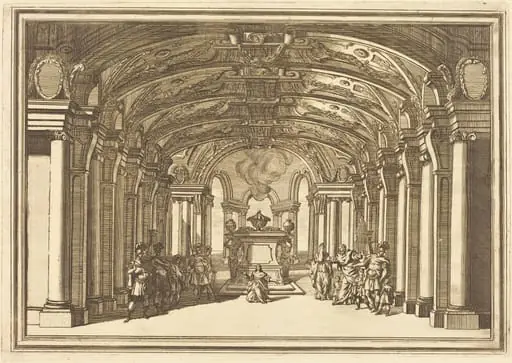 Il Greco in Troia: Plate 8
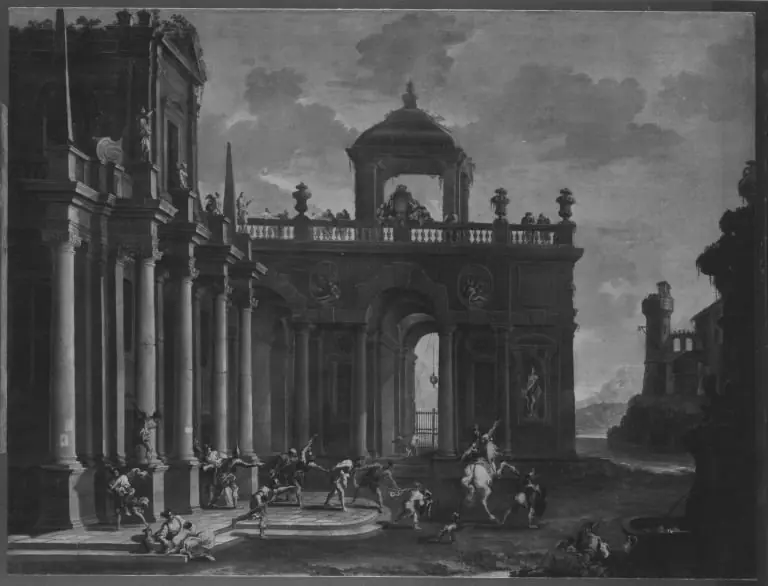 Architekturbild mit der Gefangennahme Simsons
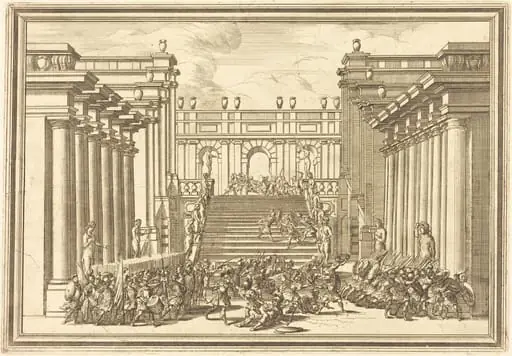 Il Greco in Troia: Plate 3
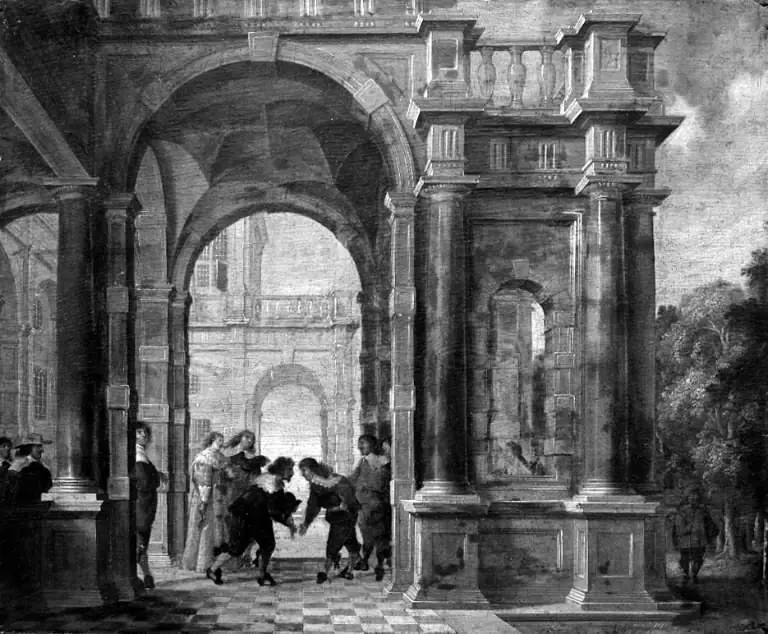 Company at a Palace
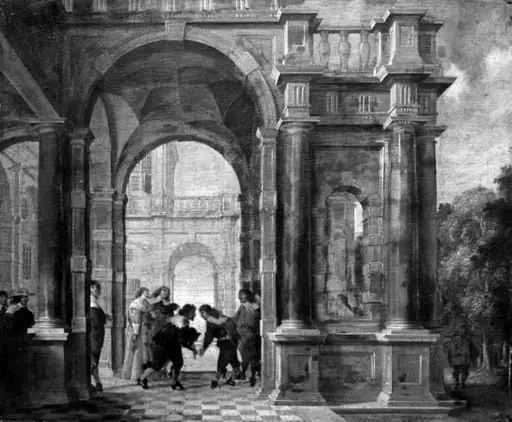 Company at a Palace
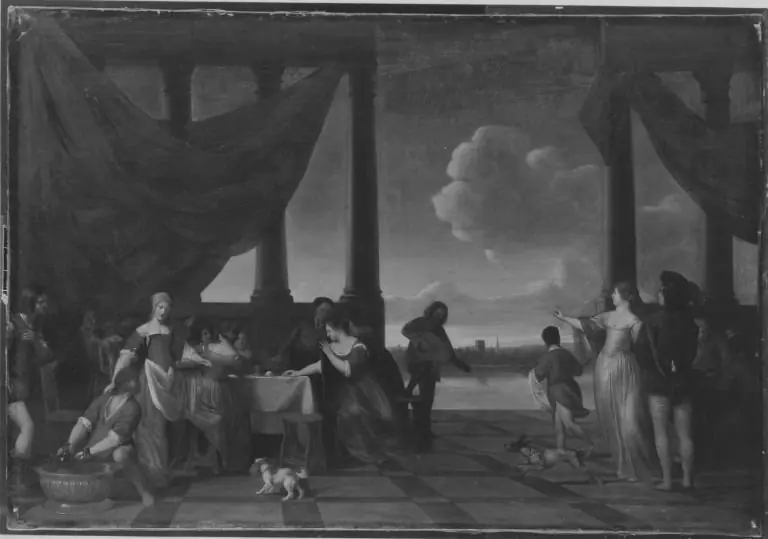 Gastmahl
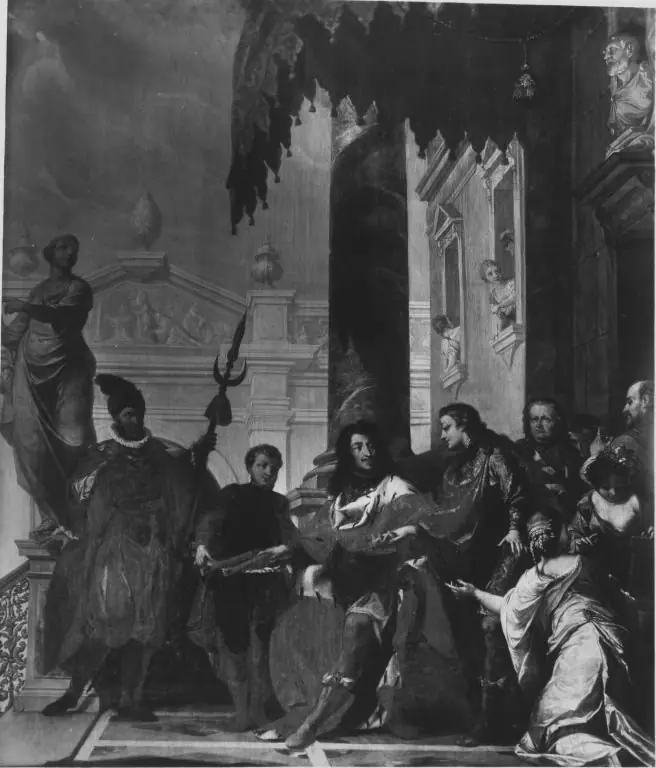 Kurfürst Johann Wilhelm übergibt den Kommandostab
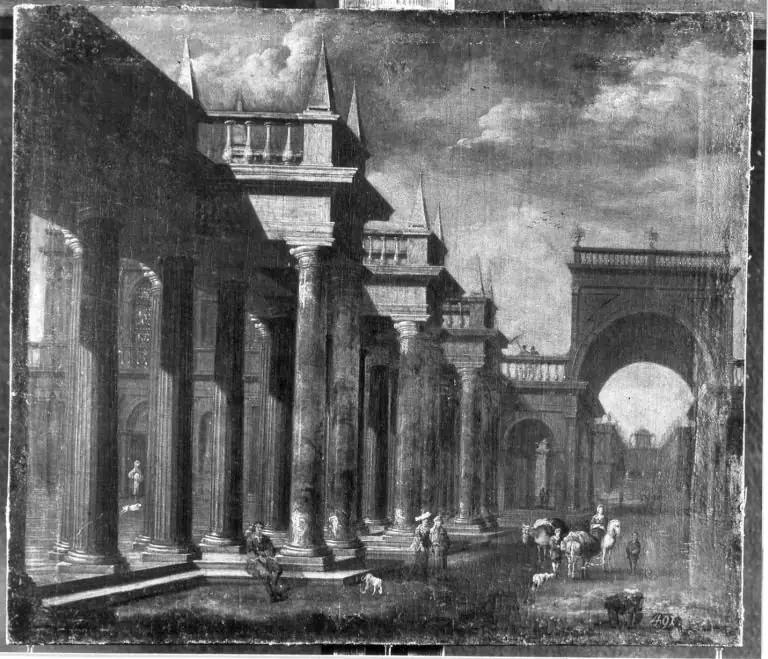 Fantasy palace with a colonade
 Ruins in a Landscape
 Funeral of Prince Francesco de Medici
 A Colonnade
 Ruiner af et græsk-romersk tempel med mange figurer