Artwork
Untitled
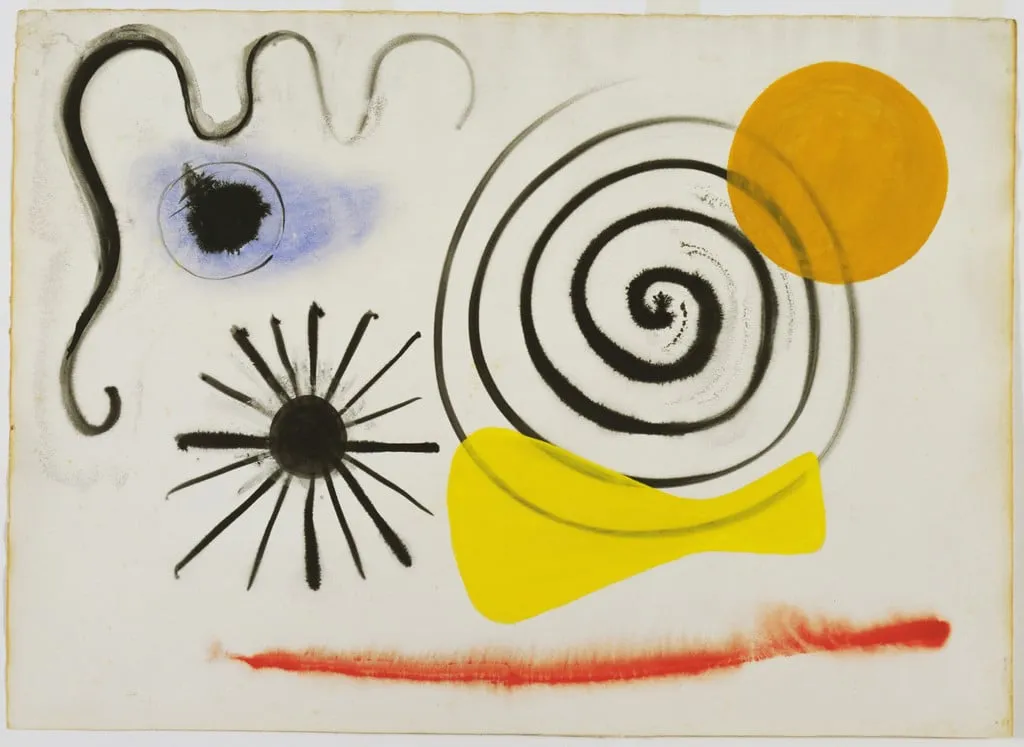
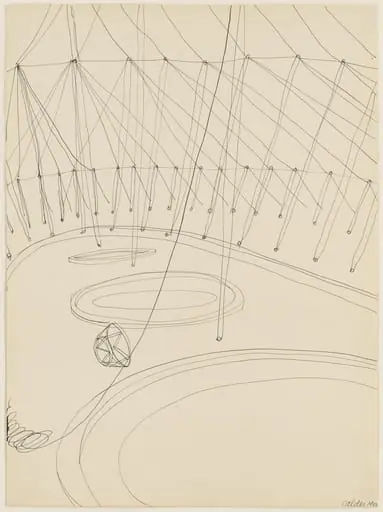
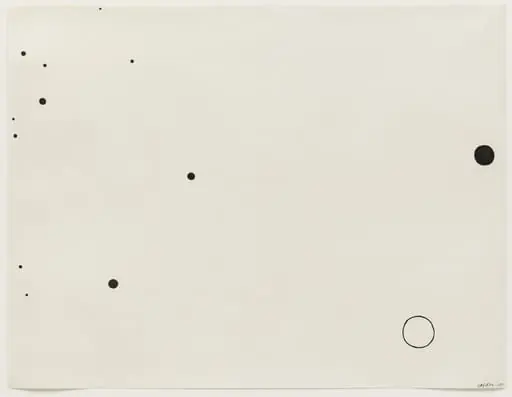
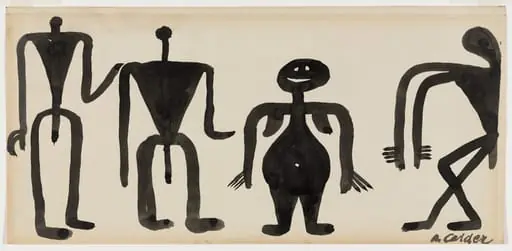
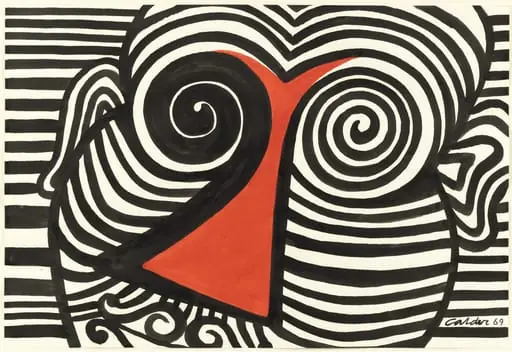
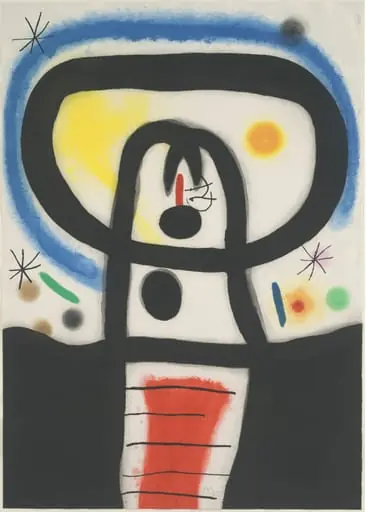
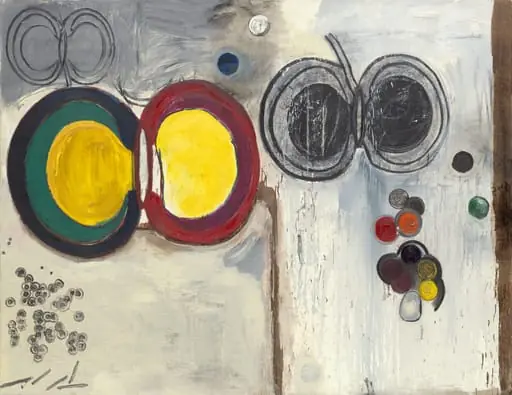
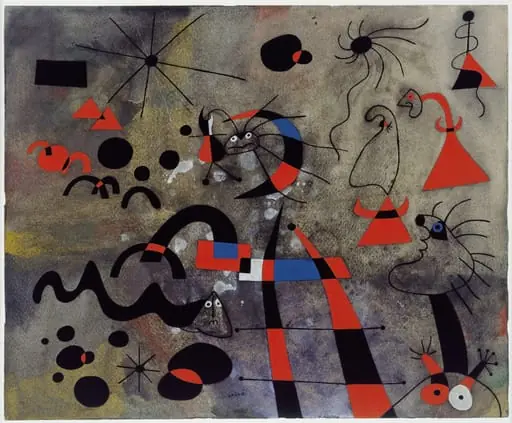
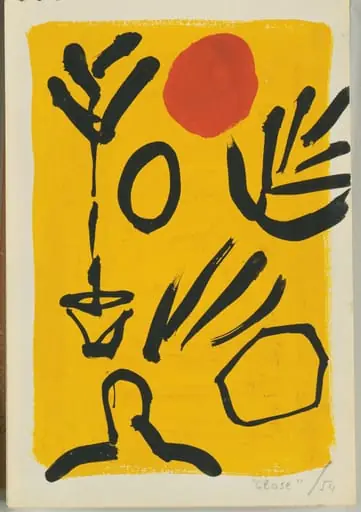
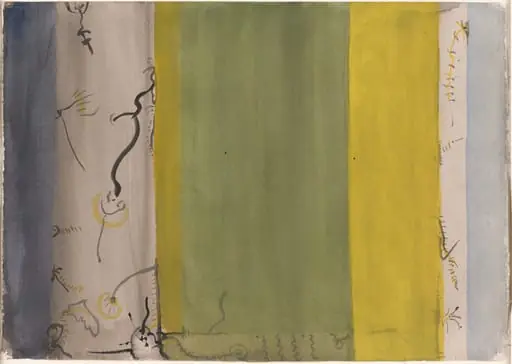
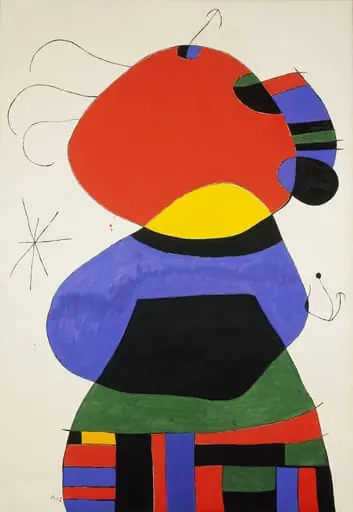
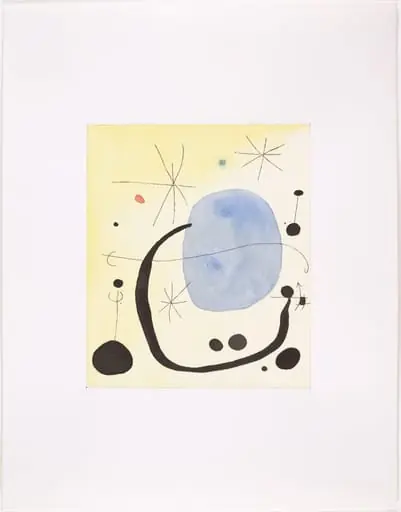
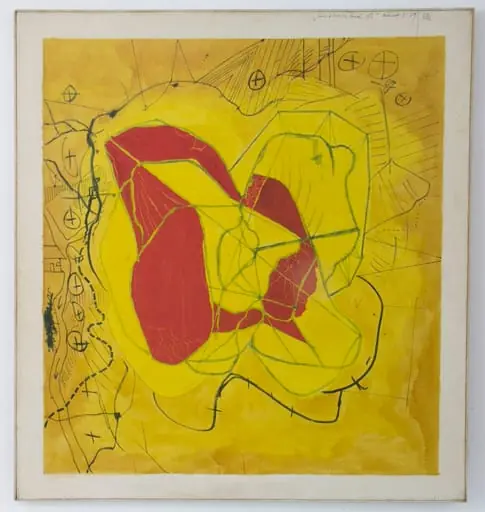
Untitled is a gouache drawing by Alexander Calder. It dates from 1941 and is held in the collection of the Museum of Modern Art. Created in 1941, this gouache work on paper is part of the Museum of Modern Art’s collection.
About this work
Overview
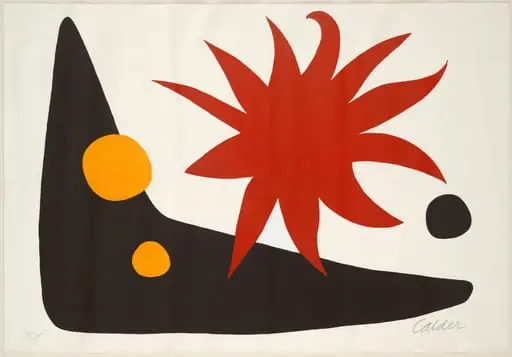
Created in 1941, this gouache work on paper is part of the Museum of Modern Art’s collection. The composition is set against a stark white field and is populated by a series of abstract forms that intersect and overlap, generating a dynamic visual rhythm.
Subject & Meaning
The drawing consists of a dominant spiral on the right, a yellow shape below it, an orange circle above, and a contrasting black sunburst on the left, accompanied by a blue oval and an irregular black line. The arrangement of these geometric elements suggests a playful tension between order and spontaneity, inviting viewers to trace movement across the surface.
Technique & Style
Calder employed gouache—a water‑based pigment with an opaque quality—to achieve vivid color blocks and subtle textural variations on paper. The medium’s matte finish allows the flat shapes to retain a sense of depth, while the crisp edges and fluid lines convey a kinetic energy characteristic of his early abstract experiments.
History & Provenance
The piece was produced during a period when Calder was transitioning from sculpture to two‑dimensional work. It entered the Museum of Modern Art’s holdings after being acquired in the mid‑20th century, reflecting the institution’s interest in documenting the artist’s broader oeuvre beyond his well‑known mobiles.
Context
In the early 1940s, Calder’s practice was marked by an exploration of color, form, and movement, paralleling developments in abstract expressionism and constructivist design. This drawing aligns with those trends, embodying a synthesis of playful abstraction and a disciplined compositional structure.
Artist & collection

Artist
Alexander "Sandy" Calder was an American sculptor known both for his innovative mobiles that embrace chance in their aesthetic, his static "stabiles", and his monumental public sculptures.