Artwork
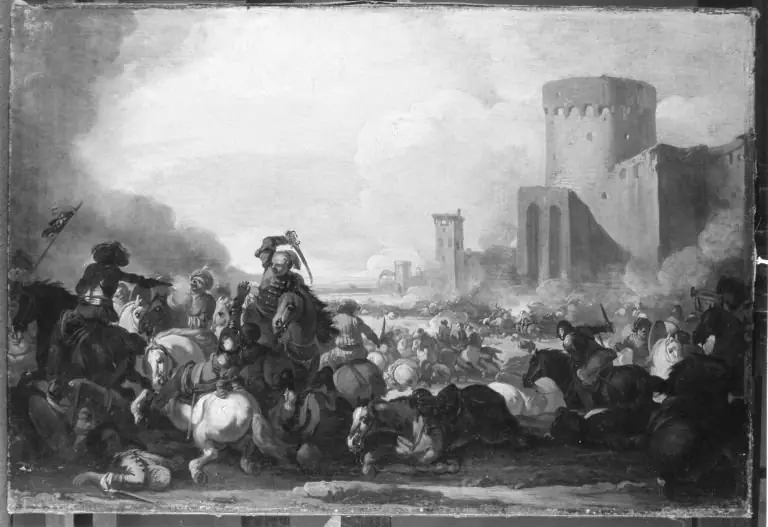
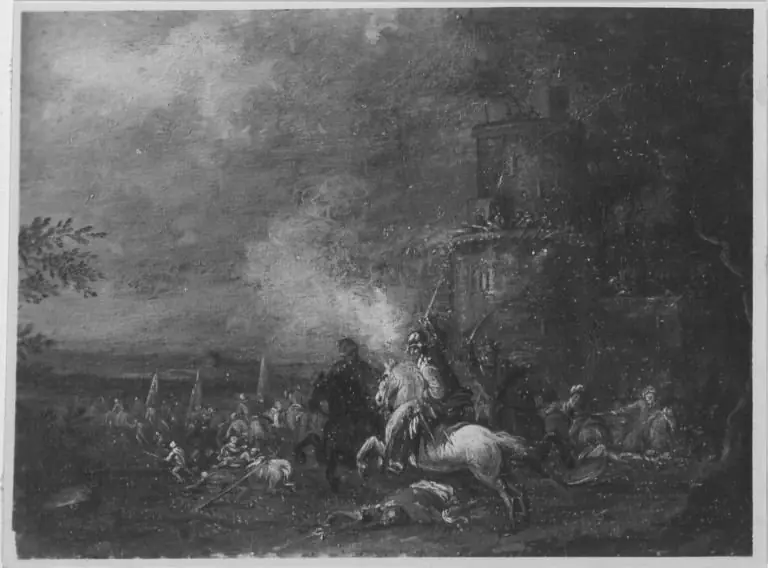
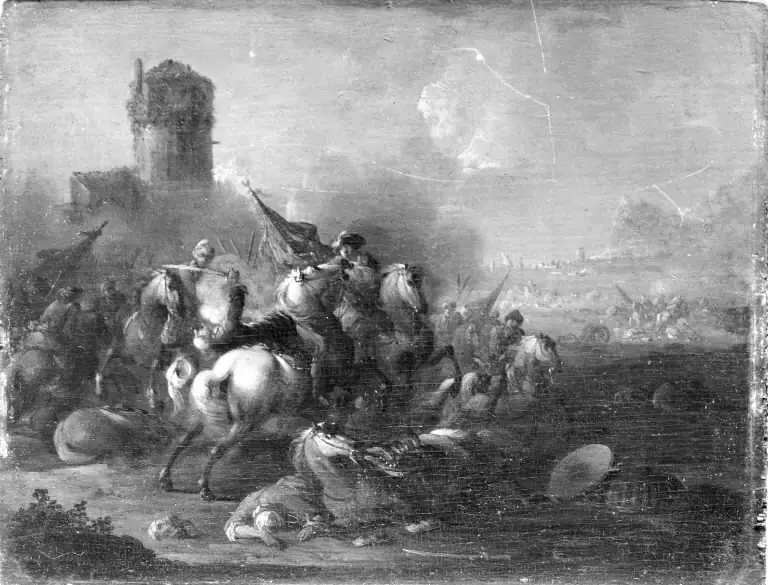
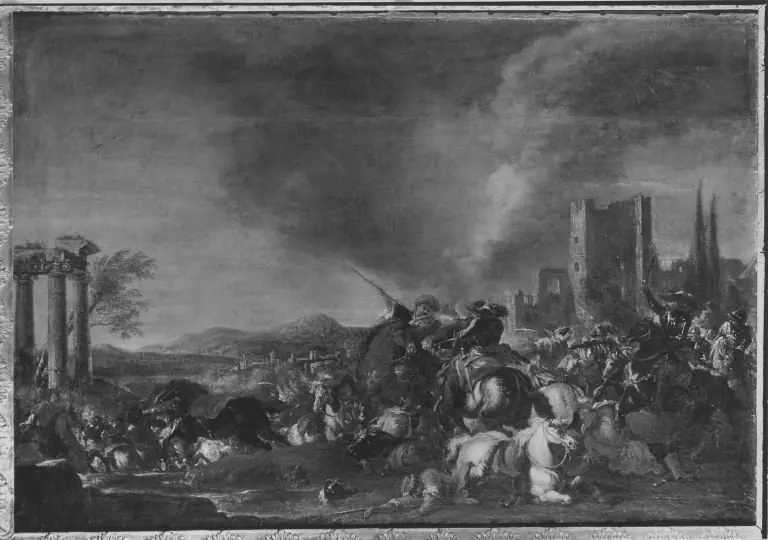
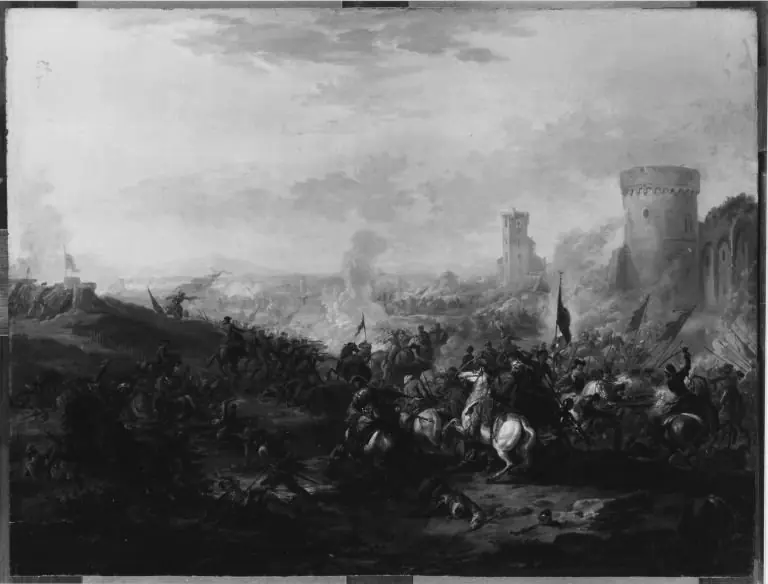
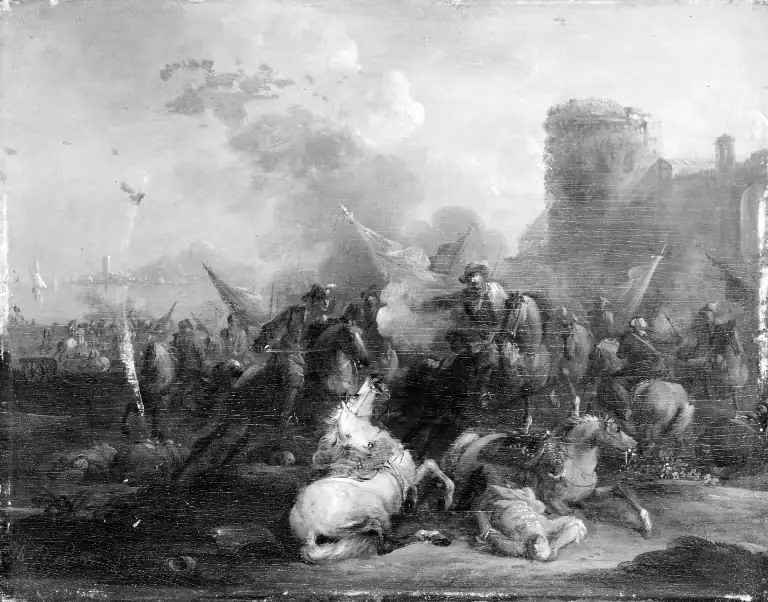
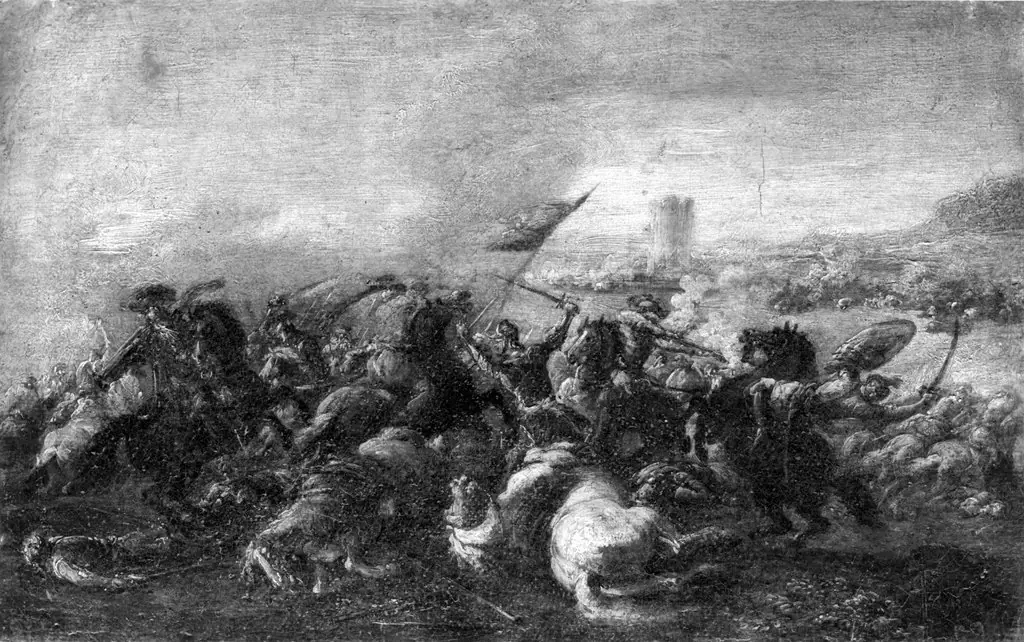
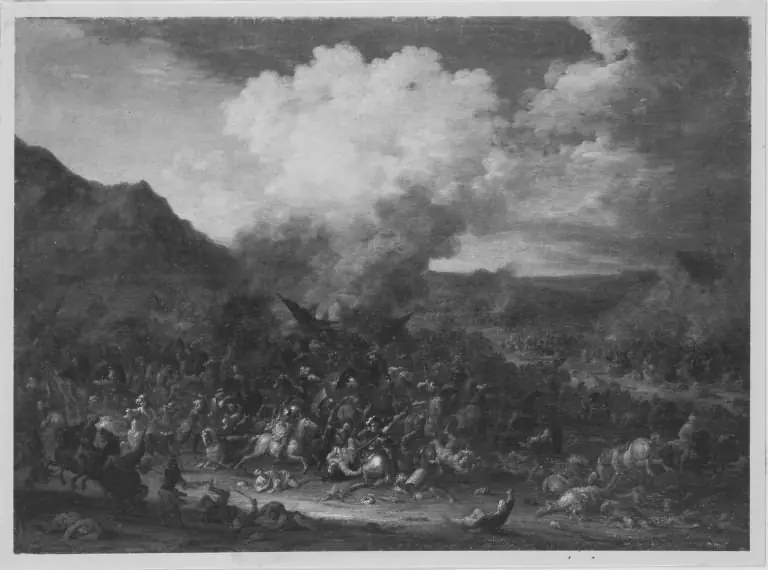
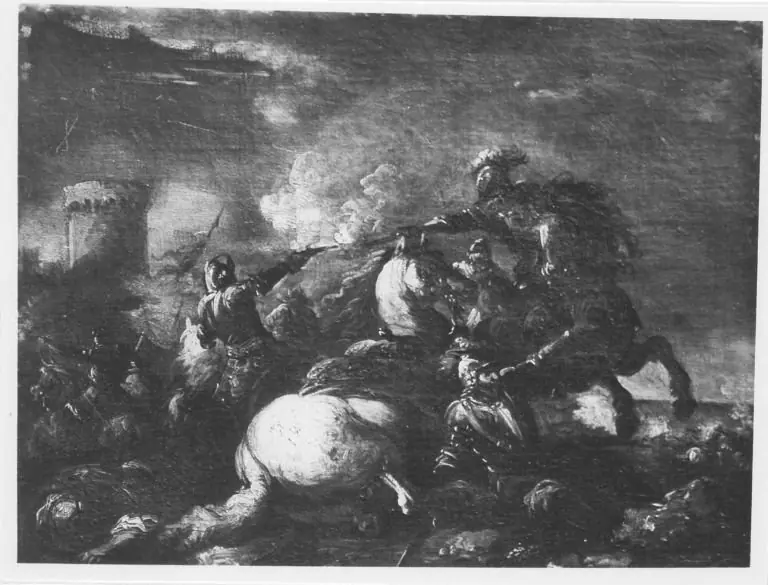
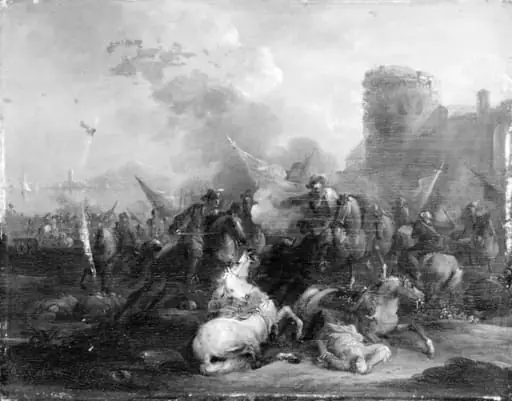
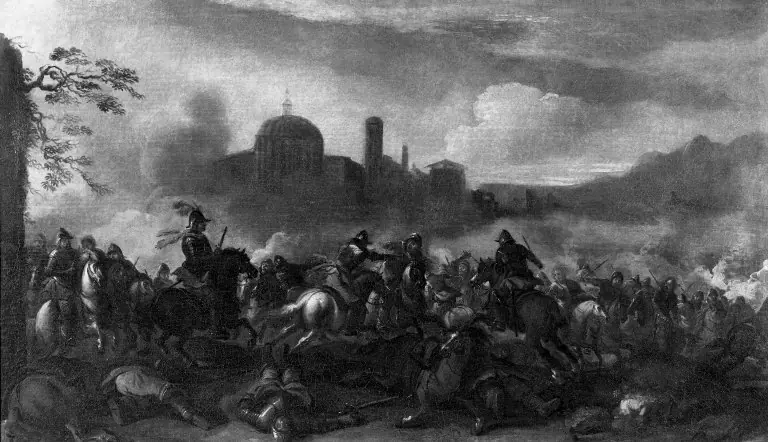
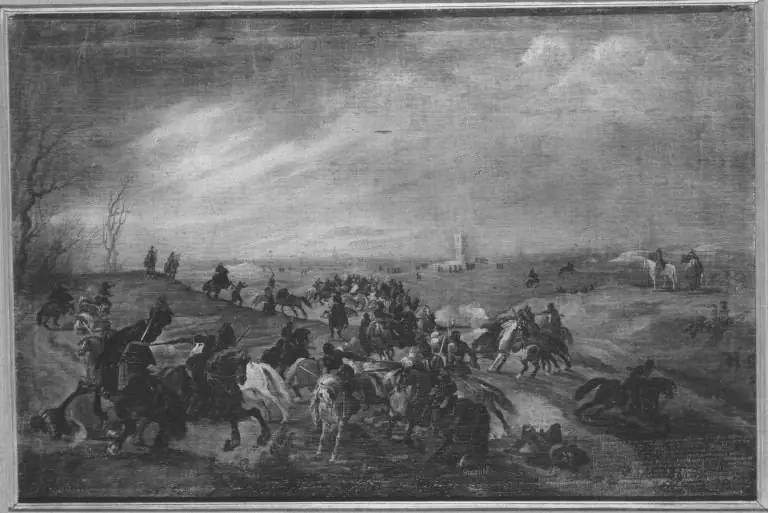
Reitergefecht gegen Türken
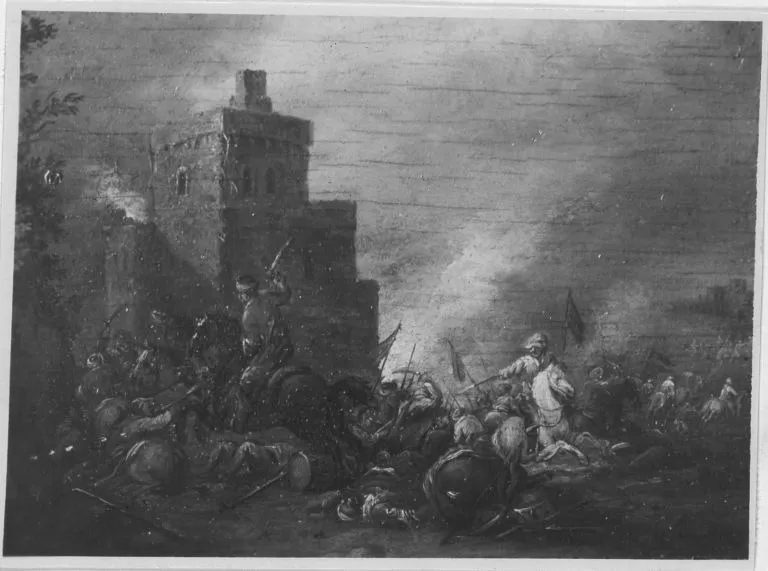
Reitergefecht gegen Türken is an unspecified painting by the Flemish Baroque painting artist Alexander Casteels the Elder. It dates from 1658 and is held in the collection of the Bavarian State Painting Collections.
About this work
Overview
The painting is held in the Alte Pinakothek in Munich, part of a broader tradition of historical combat imagery favored by collectors of the time.
Painted in 1658 by Alexander Casteels the Elder, *Reitergefecht gegen Türken* is a Flemish Baroque oil painting depicting a cavalry engagement against Ottoman troops. Casteels, known for his dynamic battle scenes and rural landscapes, rendered this work during a period when military conflicts with the Ottoman Empire remained a potent subject in Northern European art. The painting is held in the Alte Pinakothek in Munich, part of a broader tradition of historical combat imagery favored by collectors of the time.
Subject & Meaning
The scene portrays a disordered clash between mounted and foot soldiers, likely representing Christian forces resisting Ottoman incursions. While not a documented historical event, the composition taps into contemporary anxieties and propaganda surrounding Ottoman expansion. The inclusion of a distant fortified structure suggests a besieged frontier, reinforcing themes of defense and territorial struggle common in 17th-century European visual culture.
Technique & Style
Casteels employed bold, energetic brushwork to convey motion and chaos, with figures rendered in varied poses that suggest sudden action. Light and shadow are used to model forms and create spatial depth, guiding the viewer’s eye through the tangled mass of riders and weapons. The palette is restrained, dominated by earth tones and muted metallics, enhancing the grim realism of the melee without romanticizing violence.
History & Provenance
The painting entered the Alte Pinakothek’s collection in the 19th century, likely through the acquisition of private Flemish or German holdings. Its survival through centuries reflects its appeal to institutions seeking representative examples of Baroque military art. No early documentation of its commission or original owner is known, but its style aligns with works produced for aristocratic patrons interested in martial themes.
Context
In mid-17th-century Flanders, battles against the Ottomans were not direct military concerns but symbolic narratives of Christian resistance. Artists like Casteels catered to a market fascinated by exoticized warfare, drawing from prints and reports of the Habsburg-Ottoman conflicts. This painting fits within a genre that transformed distant wars into dramatic, accessible spectacles for domestic audiences.
Legacy
Casteels’ work contributed to the persistence of battle painting as a distinct genre in Flemish art, influencing later depictions of cavalry engagements. Though not widely celebrated today, *Reitergefecht gegen Türken* remains a tangible example of how 17th-century artists translated geopolitical tensions into visceral, emotionally charged imagery, preserving a visual record of contemporary fears and ideals.
Artist & collection
Artist
Alexander Casteels the Elder or Alexander Casteels (I) (c. 1635 – 1681–82) was a Flemish painter and draughtsman. He is known for his battle scenes and landscapes with hunters and elegant companies.