Artwork
Reitergefecht
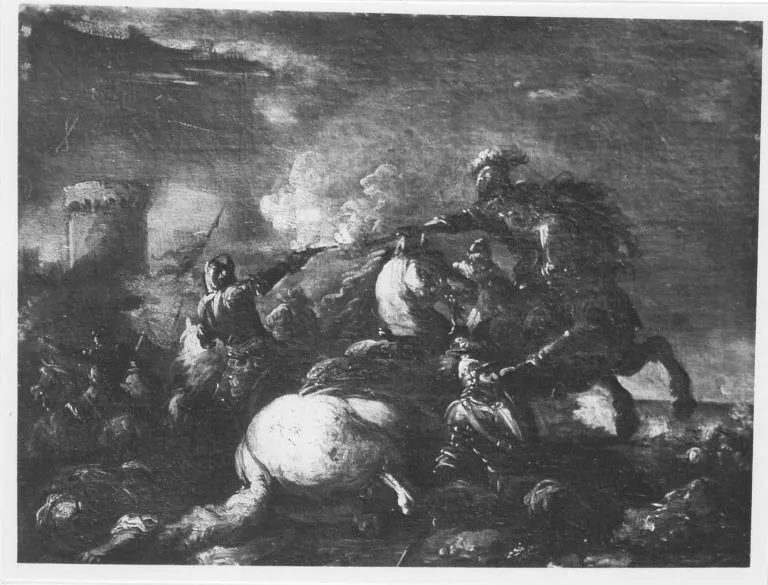
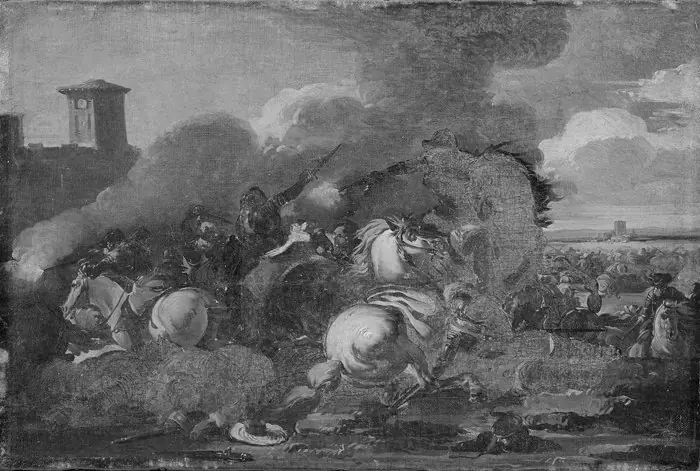
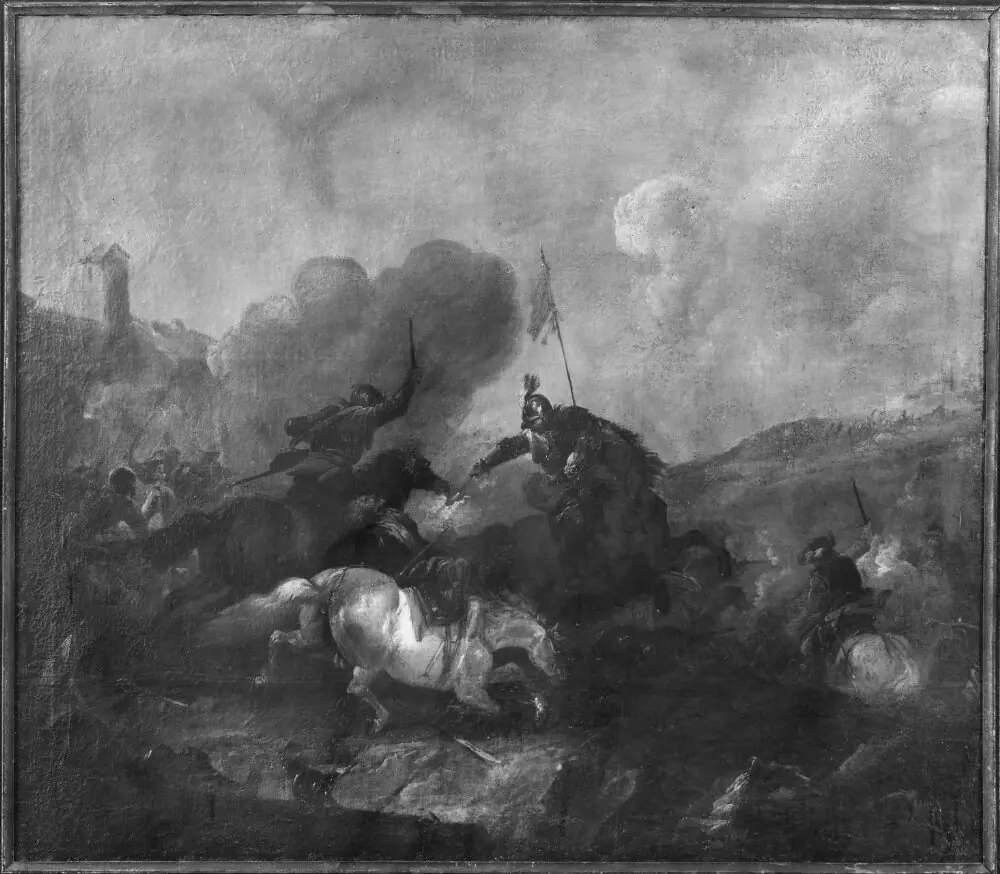
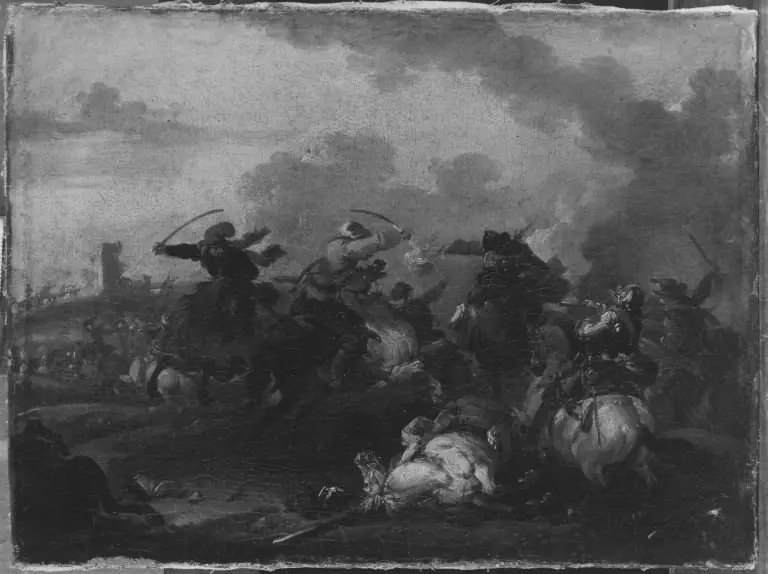
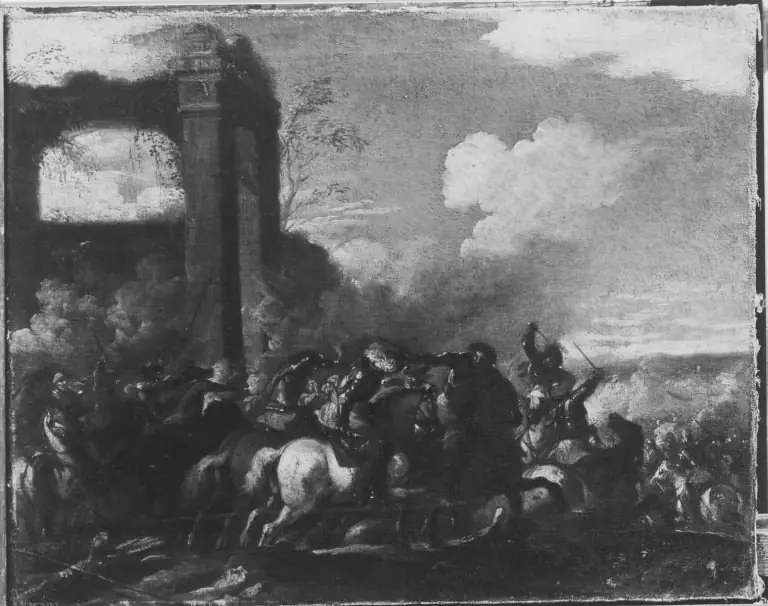
Reitergefecht is an unspecified painting by Ciccio Graziani. It dates from 1658 and is held in the collection of the Bavarian State Painting Collections.
About this work
Overview
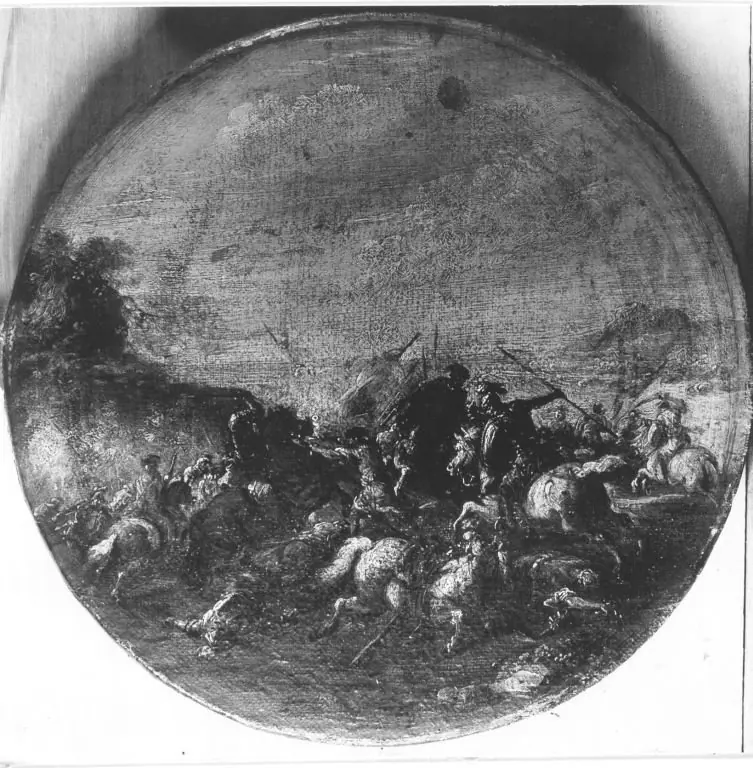
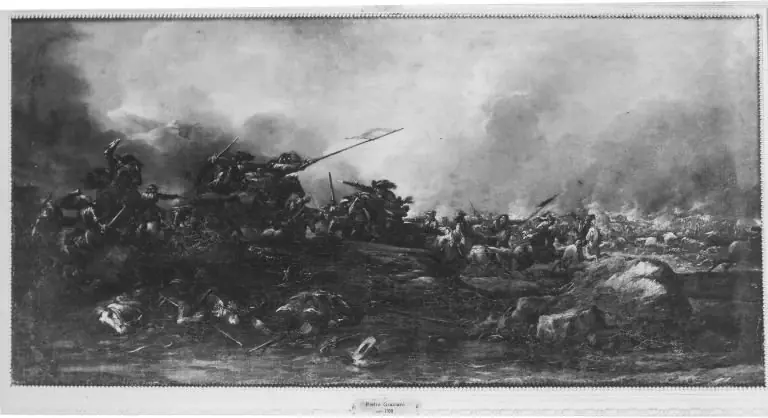
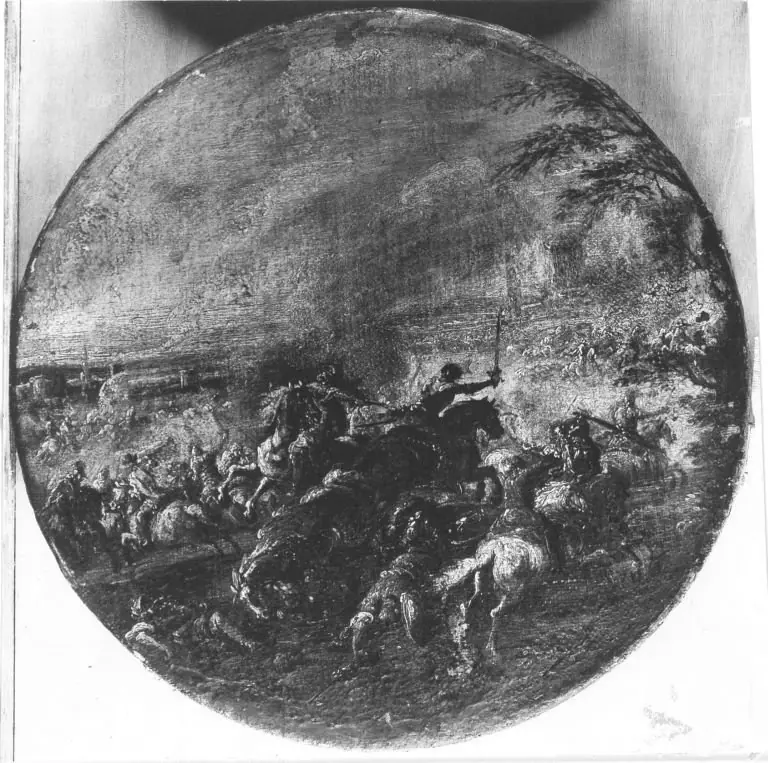
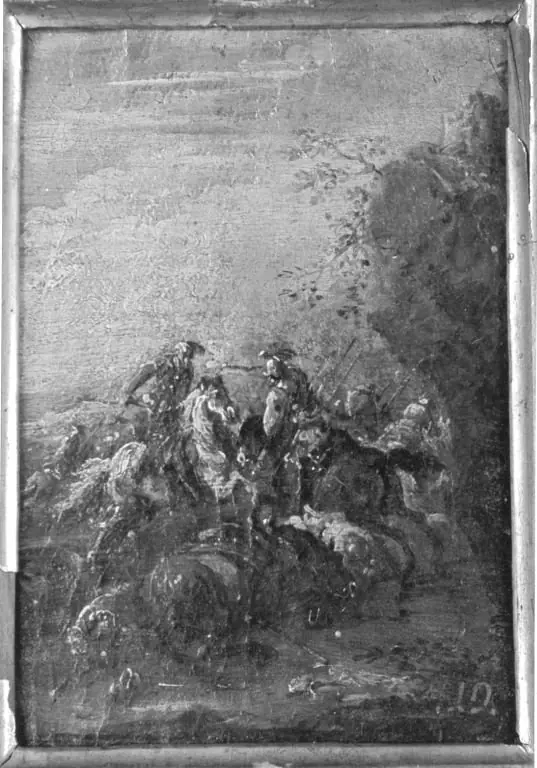
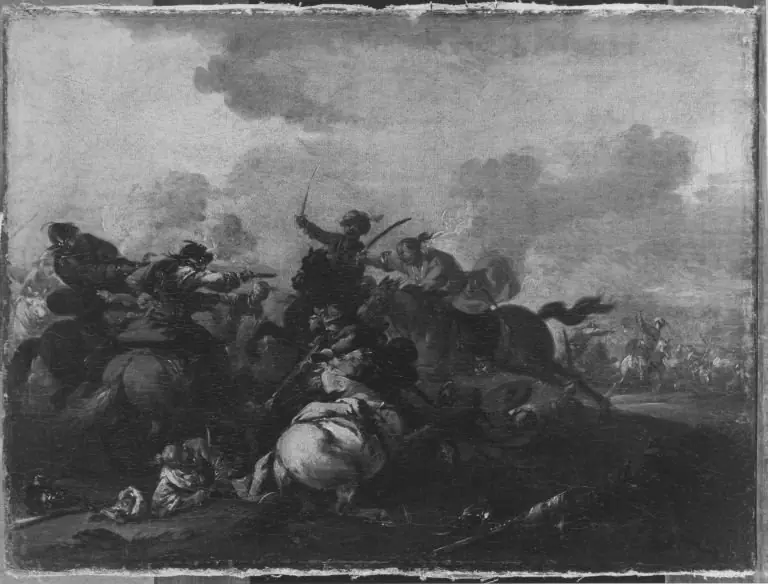
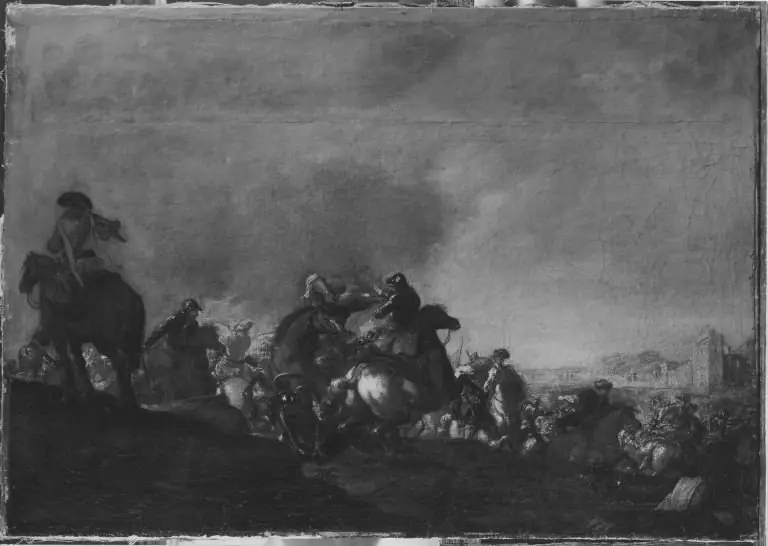
Its composition centers on a dense cluster of mounted figures in motion, rendered with dramatic contrasts of light and shadow.
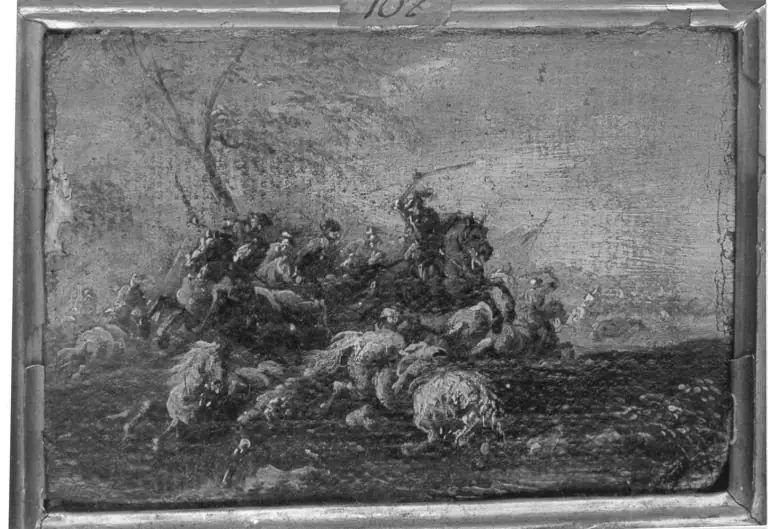
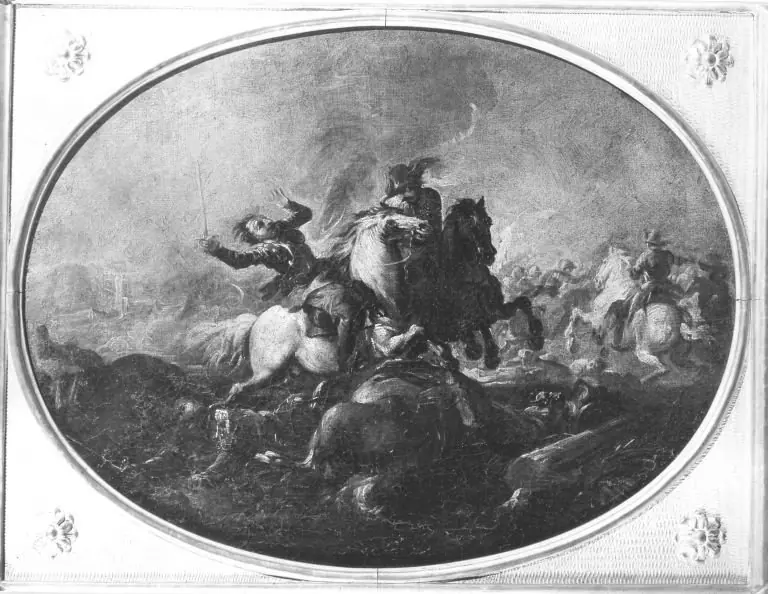
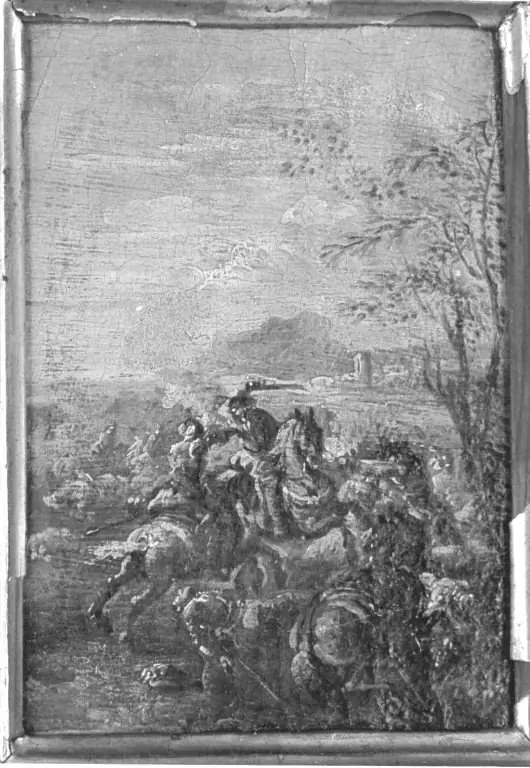
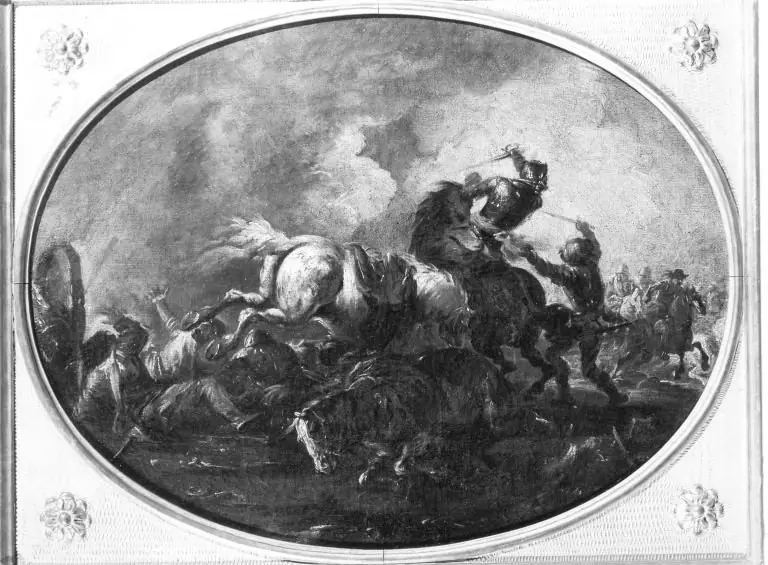
Painted around 1658 by Ciccio Graziani, Reitergefecht is an oil on canvas depicting a turbulent cavalry skirmish. The work resides in the Alte Pinakothek in Munich. Its composition centers on a dense cluster of mounted figures in motion, rendered with dramatic contrasts of light and shadow. The scene conveys disorder and kinetic energy, characteristic of Baroque interest in dynamic action and emotional intensity.
Subject & Meaning
The painting portrays a chaotic cavalry engagement, likely drawn from historical or literary sources rather than a specific documented battle. Figures on rearing horses, brandishing swords, suggest medieval or early modern combat. The absence of clear narrative markers implies the artist prioritized the spectacle of violence and movement over historical accuracy, emphasizing the visceral impact of conflict.
Technique & Style
Graziani employs chiaroscuro to heighten the drama of the scene, using deep shadows to obscure parts of the composition while spotlighting key gestures and horse forms. Brushwork is vigorous, capturing the thrashing limbs of horses and the tangled mass of riders. The dark tonality unifies the scene, directing attention to the central turmoil and reinforcing the sense of confusion and urgency.
History & Provenance
The painting entered the collection of the Alte Pinakothek in the 19th century, likely as part of a broader acquisition of Baroque works. Its attribution to Ciccio Graziani, a lesser-known Italian painter active in the mid-17th century, reflects scholarly consensus based on stylistic comparison and archival records. Little is known of its earlier ownership or commission.
Context
Created during the height of the Baroque period, Reitergefecht aligns with a European fascination with martial drama and equestrian themes. While Italian artists often depicted historical battles, Graziani’s focus on chaotic motion rather than heroic clarity suggests a more visceral, less idealized approach. The work reflects broader trends in Northern and Southern European painting that valued emotional immediacy over narrative clarity.
Legacy
Though not widely exhibited outside Munich, Reitergefecht remains a notable example of Baroque equestrian painting by a minor artist. It contributes to the understanding of how lesser-known painters adapted prevailing styles to convey movement and tension. Its preservation in a major museum underscores its value as a document of 17th-century visual culture, particularly in the treatment of violence and motion.
Artist & collection