Artwork
An Incident in the Great Plague of London
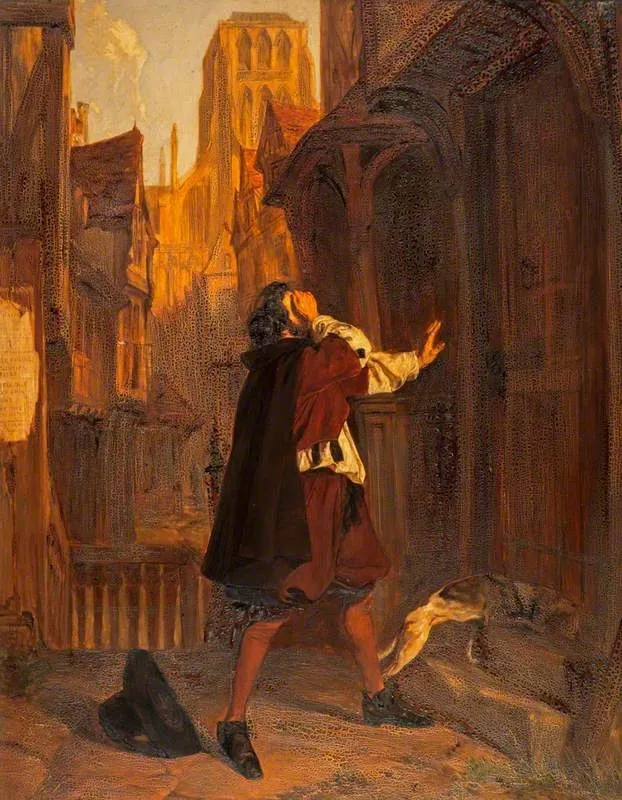
An Incident in the Great Plague of London is an oil painting by the British Romanticist artist Alexander Christie. It dates from 1840 and is held in the collection of the National Galleries Scotland.
About this work
Overview
It is held in the Scottish National Gallery and reflects his engagement with Romantic-era themes of human suffering and resilience.
Painted in 1840 by Scottish artist Alexander Christie, this oil work captures a moment from the 1665 London plague outbreak. Christie, primarily known for portraiture, turned to historical narrative in this piece. It is held in the Scottish National Gallery and reflects his engagement with Romantic-era themes of human suffering and resilience. The painting was exhibited at both the Royal Academy and the Royal Scottish Academy during his active career.
Subject & Meaning
The scene shows a figure in 17th-century dress standing before an arched gateway, pulling a rope or ringing a bell. His blurred face and dark curls obscure personal identity, emphasizing the anonymity of suffering during the epidemic. His action—likely signaling for aid or marking a death—conveys quiet urgency amid abandonment. The composition avoids melodrama, instead inviting contemplation of individual acts within collective tragedy.
Technique & Style
Christie employed muted tones and soft contrasts to evoke the grim atmosphere of plague-stricken London. The figure’s red coat stands out subtly against grayed architecture, drawing attention without disrupting the somber mood. Facial features are deliberately blurred, shifting focus from individuality to gesture. Brushwork is restrained, aligning with Romanticism’s preference for emotional resonance over hyperrealism.
History & Provenance
Completed in 1840, the painting entered the collection of the Scottish National Gallery, where it remains. Christie, a regular exhibitor at major British academies, produced few large-scale historical works; this is among his most notable. Its acquisition by the national collection suggests recognition of its emotional weight, though it was never widely reproduced or publicly discussed beyond exhibition records.
Context
In the 1840s, British artists revisited past epidemics as public health concerns resurfaced. Christie’s choice to depict the Great Plague aligned with a broader cultural interest in historical calamity and civic response. Unlike contemporary illustrations of plague doctors or mass graves, this work isolates a solitary, ambiguous act—highlighting quiet endurance rather than spectacle.
Legacy
Though not widely known today, the painting contributes to a 19th-century tradition of reimagining historical trauma through restrained narrative. Its focus on a single, faceless figure influenced later depictions of anonymous suffering in art. It remains a quiet testament to how artists of the period sought to humanize disaster without sensationalism.
Artist & collection
Artist
Alexander Christie (1901-1946) was a Scottish artist who specialised in portraiture, working mainly in oil or charcoal, occasionally in pastel. He was a regular exhibitor at the Royal Academy and the Royal Scottish Academy.

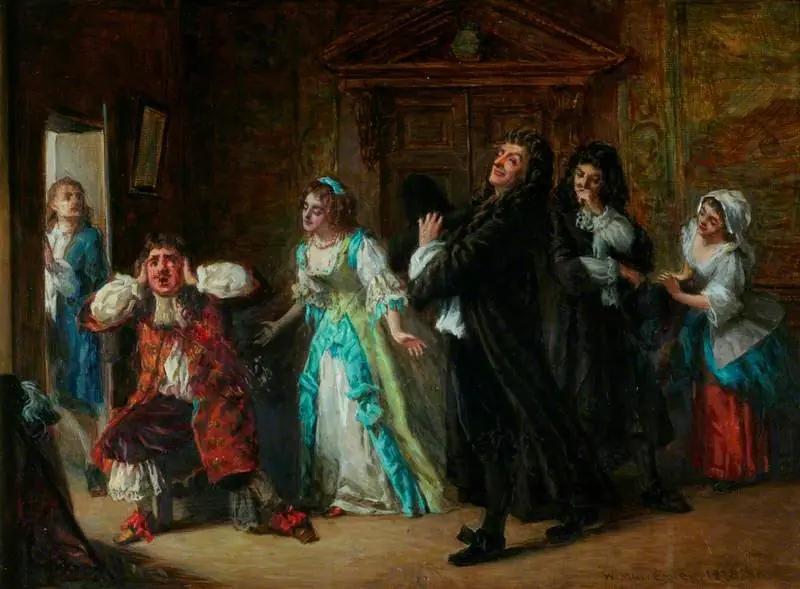 Scene from Molière's 'Le Medecin Malgré Lui'
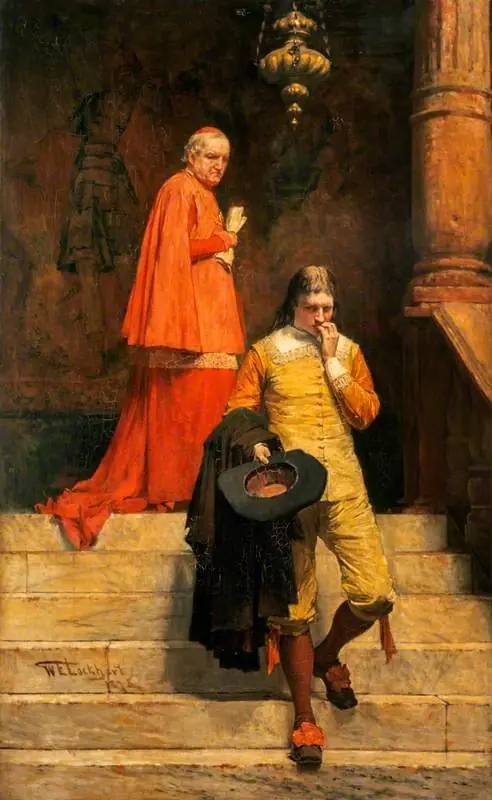 Gil Blas and the Archbishop of Granada (from Lesage's 'The Adventures of Gil Blas de Santillane')
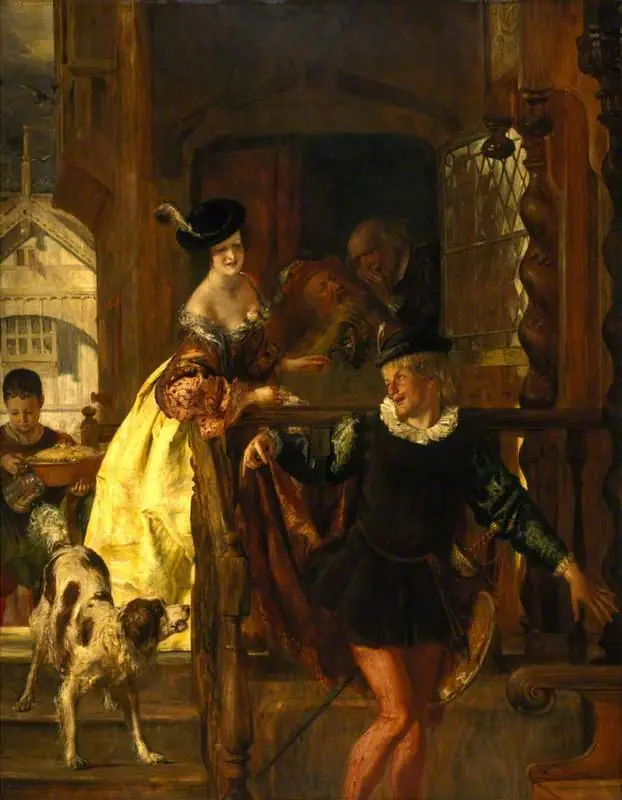 Anne Page Inviting Slender to Dinner
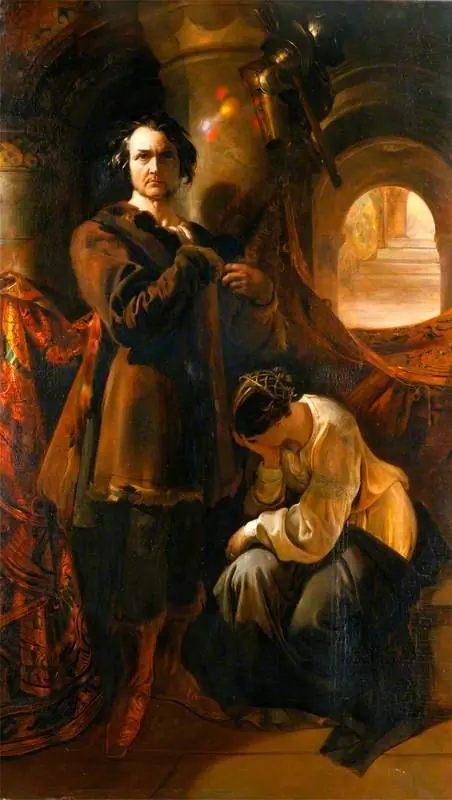 Macready as Werner
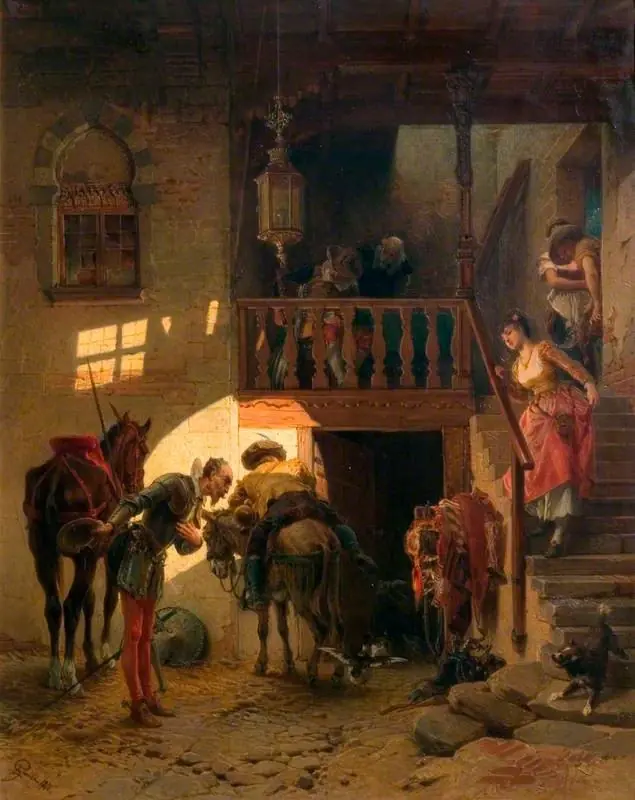 Don Quixote at the Inn (from Cervantes' novel)
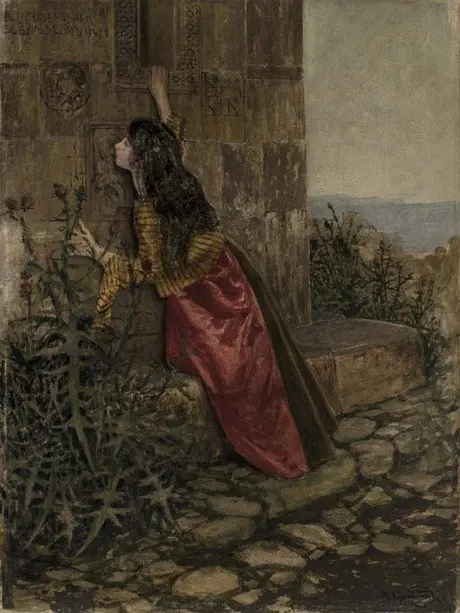 Worship
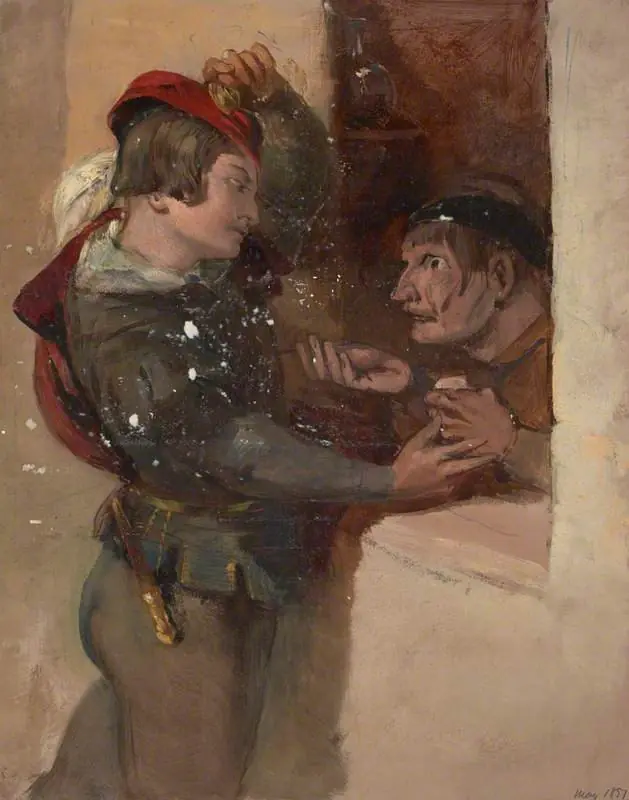 Study of Two Medieval Figures
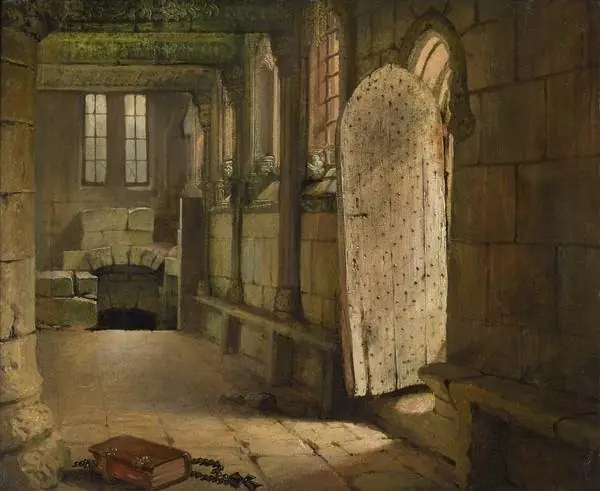 Rosslyn Chapel, South Aisle
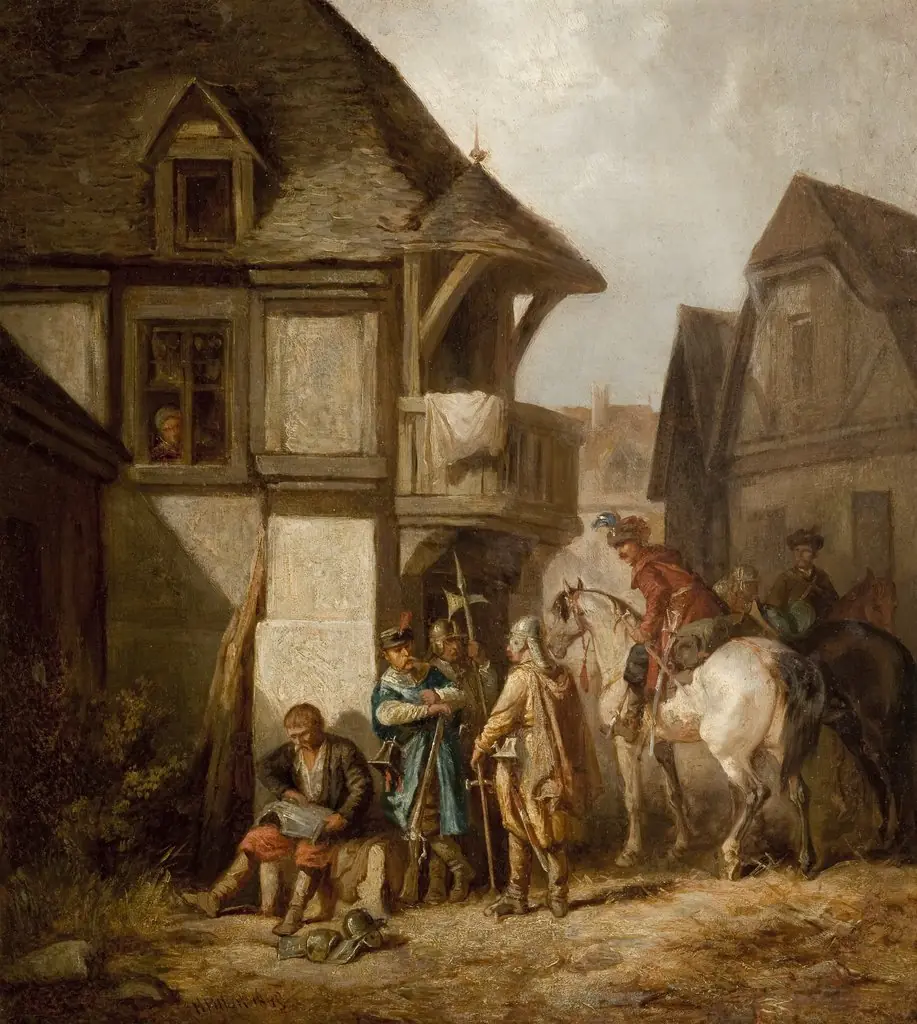 Return of the "Lisowczycy"
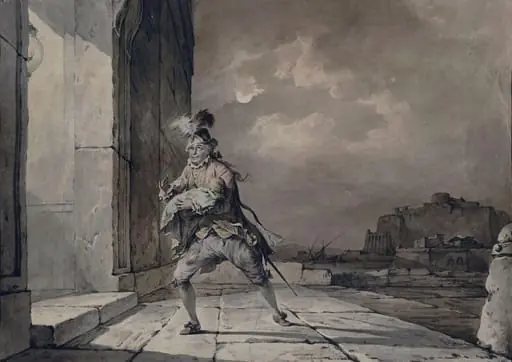 David Garrick as Don John in his adaptation of 'The Chances' by Beaumont and Fletcher, Act 1, Scene 2, with a view intended to be Naples in the background
 View from the Bishop's Throne, West from the Nave, towards the Staircase Tower in Utrecht Cathedral
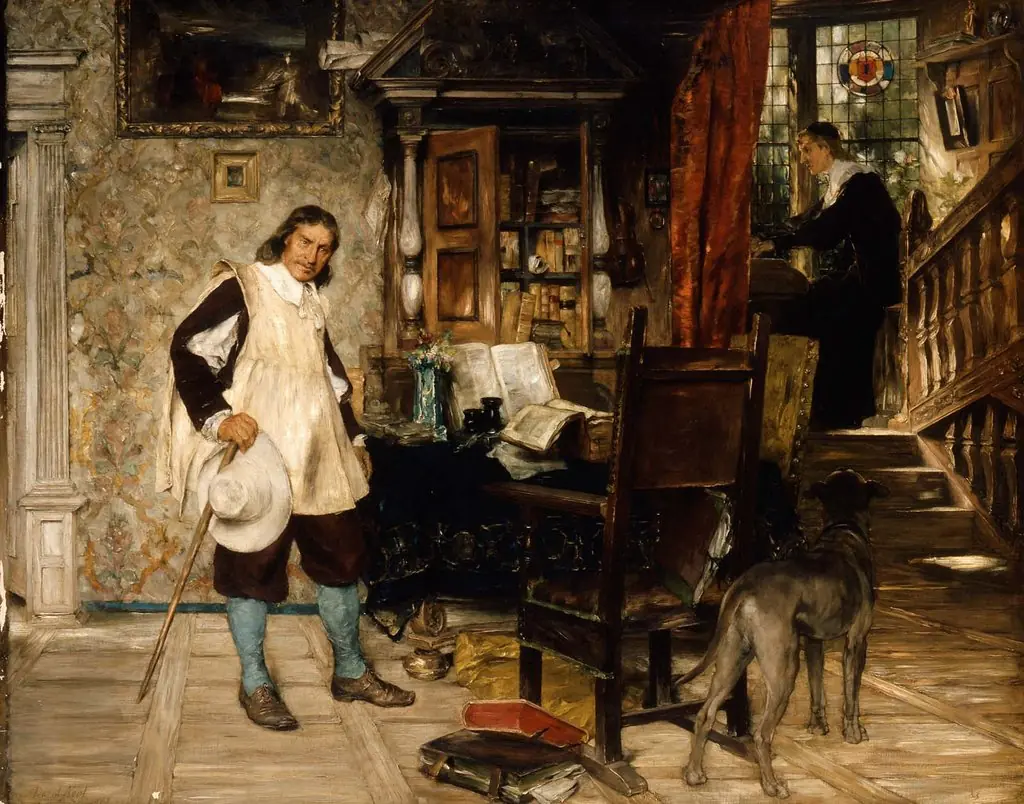 Oliver Cromwell of Ely Visits Mr. John Milton